Votre panier est vide

Most advice on aloe vera juice tablets gets the main decision backward. Buyers obsess over whether tablets are more convenient than liquid, then ignore the part that determines quality, the botanical fraction inside the bottle or tablet, and how it was processed.
A tablet is not automatically a cleaner version of juice. It can be inner-leaf gel, decolorized whole leaf, or latex-derived material, and those are not interchangeable. If you want a smart purchase, stop comparing format first and start comparing plant part, processing, and testing.
| Decision Factor | Tablets | Liquid Aloe | What Matters Most |
|---|---|---|---|
| Botanical part | Can be inner-leaf, whole leaf, or latex-derived | Can also vary widely | Plant part disclosure |
| Processing | Often compressed from dried or concentrated material | Often bottled after clarification or concentration | How the aloe was handled |
| Testing | Look for aloin and identity testing | Look for the same testing | Batch-level proof |
| Convenience | Easy to travel with | Easy to dose flexibly | Daily habit fit |
| Quality risk | A label can hide shortcuts | A label can hide shortcuts | Transparency |
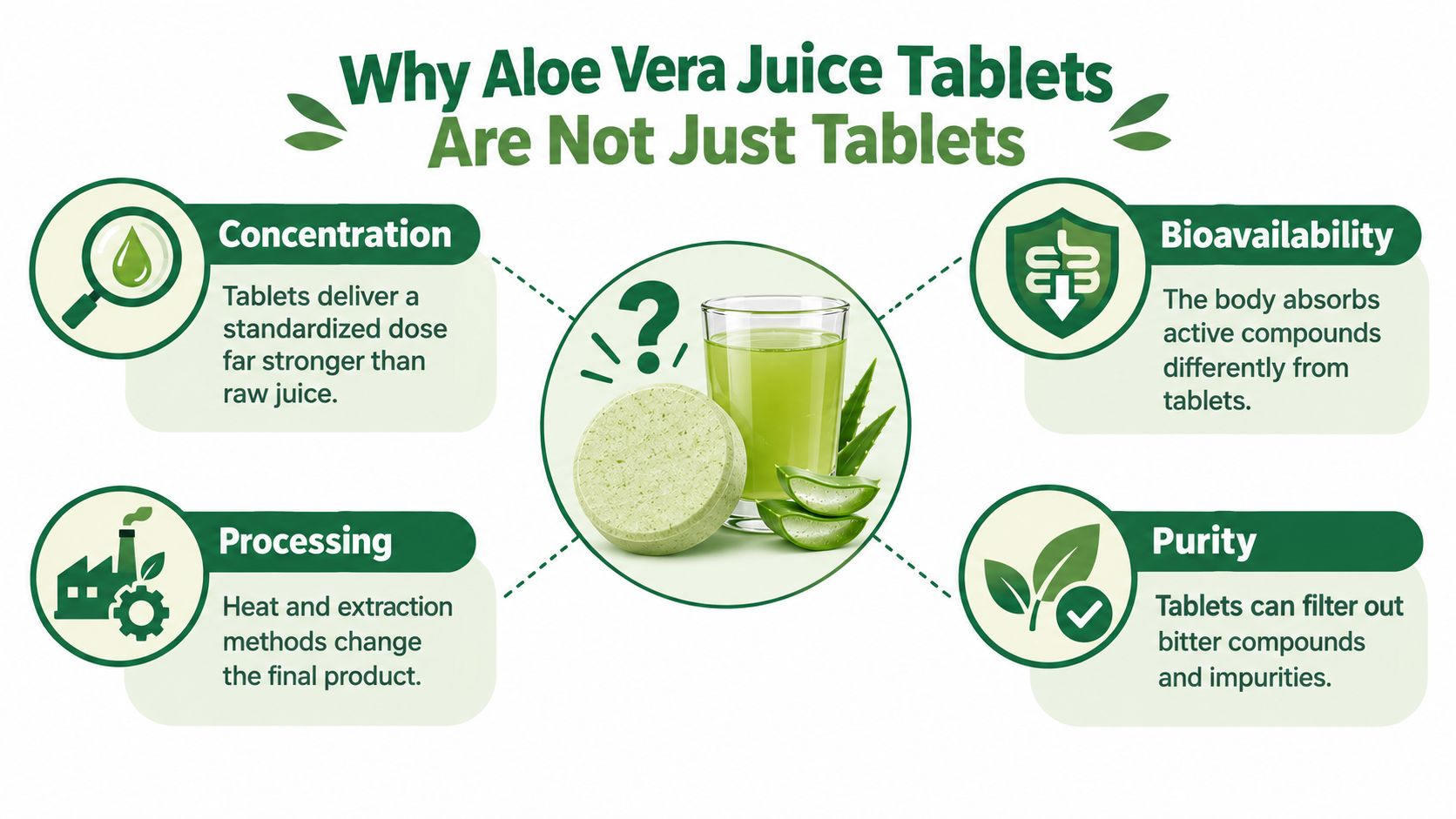
The first mistake is assuming all aloe vera juice tablets are just compressed juice. They're not. A tablet can be built from inner-leaf gel, decolorized whole leaf, or material that still carries latex fractions, and those ingredients don't behave the same in the bottle or in the body.
The divide is between the inner leaf and the outer leaf latex. Inner-leaf material is the cleaner, gentler fraction people usually want for daily wellness use, while latex-containing material is the one tied to the stimulant-laxative effect and the problems that come with it. Oral aloe research is limited and formulation-dependent, so you can't assume one tablet tells you anything about another tablet, even when the branding looks identical systematic review and oral aloe safety summary.
The practical rule is simple. If the label doesn't tell you which plant part it uses, you're buying a guessing game. If it does say inner-leaf gel or decolorized inner leaf, that's a very different product from anything built around whole-leaf material.
Practical rule: the front of the bottle sells the promise, the ingredient panel tells you whether the promise is real.
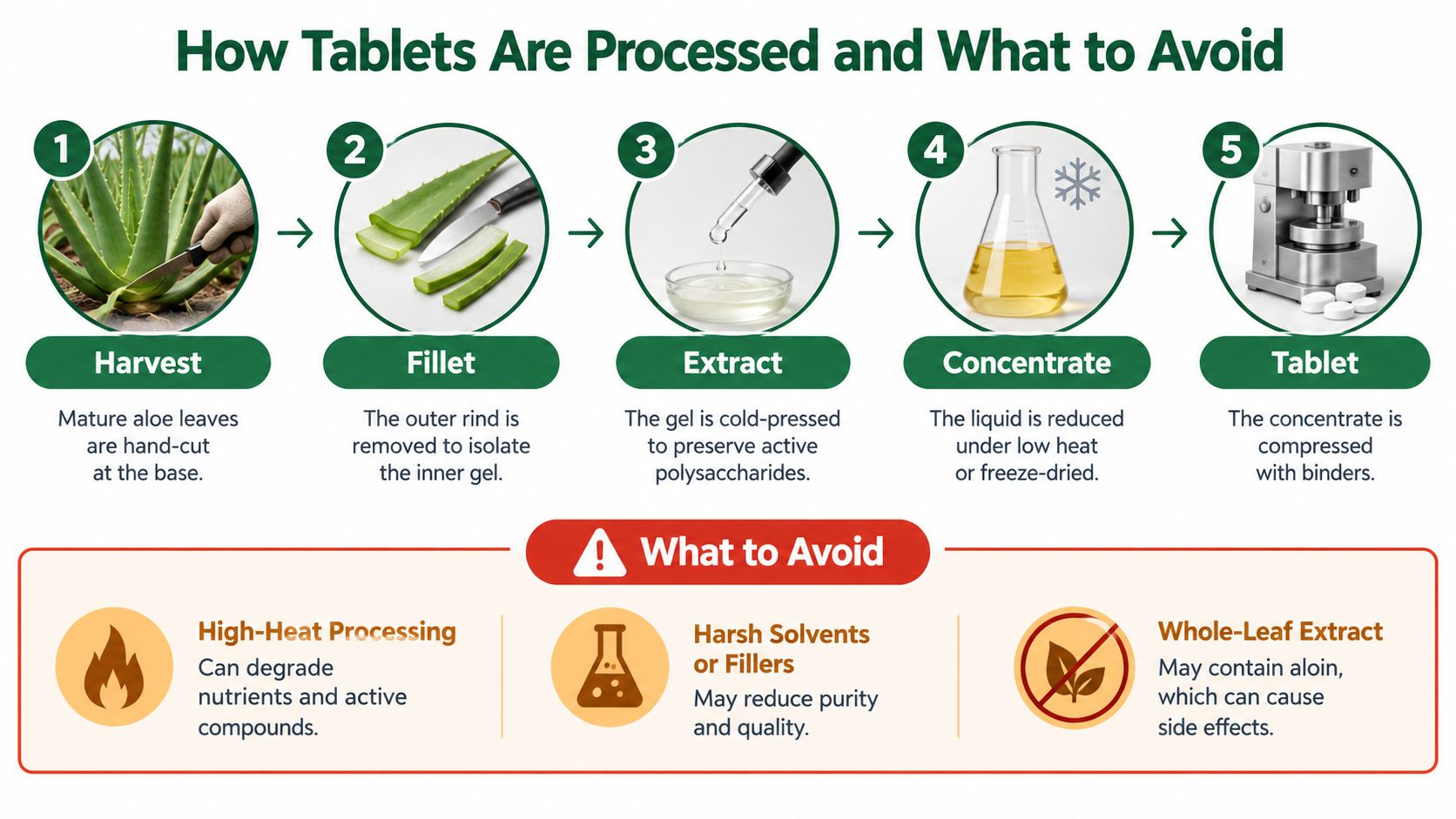
Before you compare dosage or price, check three things. Plant part, aloin control, and processing method. Those three tells you far more than a glossy claims panel ever will.
Aloe is a sloppy word in marketing and a precise one in production. One product may be a clean inner-leaf tablet with tested low aloin. Another may be whole-leaf material marketed as “natural” without any meaningful disclosure. The industry has used the same green language for products with completely different safety profiles, which is exactly why the label matters more than the logo.
The contrarian view is the right one here. Format is secondary. A tablet can be the better delivery vehicle, but only after you know what's inside it and how that material was made.
Aloe tablets are built from plant fractions, not from a "aloe" essence. The key split is inner-leaf gel versus outer-leaf latex, with the tablet serving as the delivery vehicle for whichever fraction the manufacturer selected.
Inner-leaf gel is the fraction suited to daily, non-laxative use, which is the use case most tablet buyers have in mind. Latex is the bitter outer material, and that is where the anthraquinones sit. Whole-leaf products can contain both unless processing removes the unwanted part, so the words whole leaf should make you ask how the material was cleaned up.
For tablet shoppers, aloin is the cleaner checkpoint. A practical benchmark for orally consumed aloe products is below 10 ppm, and the International Aloe Science Council quality standard sets that aloin limit for single-strength inner-leaf or purified whole-leaf juice while also specifying minimum acetylated mannan and solids thresholds for raw materials IASC quality standard. That does not certify a finished tablet by itself, but it gives you a real number to ask a seller for.
Read the label in this order:
The National Center for Complementary and Integrative Health notes that short-term oral aloe gel use appears safe for up to 42 days, while aloe latex can cause abdominal pain, cramps, and diarrhea NCCIH aloe overview. That is why the contents matter more than the tablet shape. A compressed tablet is only as good as the material that went into it.
| Aloe Plant Fraction and Their Tablet Implications | Aloin Level | Processing Required | Suitability for Tablets |
|---|---|---|---|
| Inner-leaf gel | Low when properly cleaned and tested | Separation from outer rind, controlled drying, batch testing | Best fit for daily wellness tablets |
| Decolorized whole leaf | Should be reduced by processing | More aggressive cleaning and aloin removal | Acceptable only with documented testing |
| Outer leaf latex | High | Not appropriate for a daily wellness tablet | Poor fit for routine tablet use |
Processing decides whether an aloe tablet is a clean delivery system or a shortcut in a capsule shell. The difference is not marketing polish, it's what gets stripped out, preserved, or diluted before the tablet ever reaches the shelf.
Chemical decolorization, activated charcoal filtration, enzyme treatment, and reconstitution from concentrate all alter the final material. Sometimes that's done to reduce bitterness or lower aloin. Sometimes it's done to make a weak raw input look better on paper. The problem is that a tablet can test “clean” while having lost much of what made the aloe worth buying in the first place.
That's why I care about process transparency more than poetic label language. “Natural” means nothing if the material was pushed through a series of aggressive steps and rebuilt into a bland powder. A cleaner path is hand-harvested aloe, processed on-site quickly after harvest, with minimal intervention and no chemical detours.
Low-temperature dehydration and freeze-drying are the methods I trust most because they're designed to preserve more of the original profile than heat-heavy methods. The European Medicines Agency's summary of aloe pharmacokinetics also reinforces a bigger point, nominal dose doesn't tell you how a product behaves, because exposure depends on extract identity and how the anthraquinones were handled EMA aloe assessment.
A tablet that's been cleaned up with shortcuts can look compliant and still be underwhelming. The goal is not just low aloin, it's keeping the useful aloe profile intact.
If you want a genuine comparison point, look for inner-leaf sourcing, low-heat or freeze-dried processing, and a published aloin result. Anything less and you're trusting a bottler's story instead of the material itself.
For readers who want a deeper look at concentrate handling, see this overview of aloe vera juice concentrate processing.
Tablets and liquid each win in different situations, but the winner changes once you stop using vague claims and start checking the label. The useful comparison is not “which is better,” it's which one matches your habit, dosing style, and tolerance for processing differences.
Bioavailability is where liquid often gets the benefit of the doubt, because the product is already in fluid form. Tablets, on the other hand, often deliver more controlled serving sizes and travel better. That doesn't make tablets inferior, it makes them a different tool.
Dosage precision usually favors tablets. A tablet or capsule gives you a repeatable serving, while liquid can be easier to adjust up or down. Portability clearly favors tablets, especially if you travel or hate refrigeration.
Shelf life also tends to favor tablets because the water has been removed. Taste and daily ease depend on the user. Some people hate the taste of liquid aloe and will stick with a tablet. Others want the flexibility of liquid and don't mind the bottle.
| Tablets vs Liquid Aloe Across Five Decision Criteria | Tablets | Liquid Aloe | Best Fit |
|---|---|---|---|
| Bioavailability | More dependent on processing and disintegration | Often easier to take as-is | Liquid for users prioritizing a fluid format |
| Dosage precision | Stronger control per serving | Flexible, but easier to overpour | Tablets for consistent daily routines |
| Portability and convenience | Excellent for travel | Less convenient outside home | Tablets for commuters and travelers |
| Shelf life | Usually easier to store | Often more sensitive after opening | Tablets for simple storage |
| Taste and daily use | No taste issue after swallowing | Easier to sip, but flavor matters | Liquid for people who want flexible use |
If you want a product you can throw in a bag and use without thinking, tablets win. If you want to fine-tune intake and don't mind the bottle, liquid wins. If a brand says the tablet is cheaper, ask what kind of aloe it used and what got removed during processing, because cost per serving says less than plant part plus testing.
Bottom line: the format matters less than the starting material and the processing that produced it.
The best format depends on the goal, not the trend. A clean inner-leaf tablet is a different tool from a liquid, and neither one should be treated like a magic label.
For daily digestive comfort, I'd favor an inner-leaf tablet or a clean liquid taken consistently with water. The point is steady use, not dramatic effect. A label that says inner leaf only or decolorized gives you a better starting point than one that hides the fraction behind brand language.
For joint support, aloe is often best used as part of a broader plant-based routine rather than as a stand-alone promise. That means looking for formulas built around a clear wellness purpose, not a random pile of trendy ingredients. The same is true for sleep support, where aloe is usually paired with other ingredients in capsule form rather than sold as a solo product.
For skin vitality from within, liquid tends to appeal to people who like a flexible daily ritual, while tablets appeal to people who want no-fuss convenience. Neither format wins automatically. The better choice is the one you'll take consistently, with a formula that names its aloe fraction and testing.
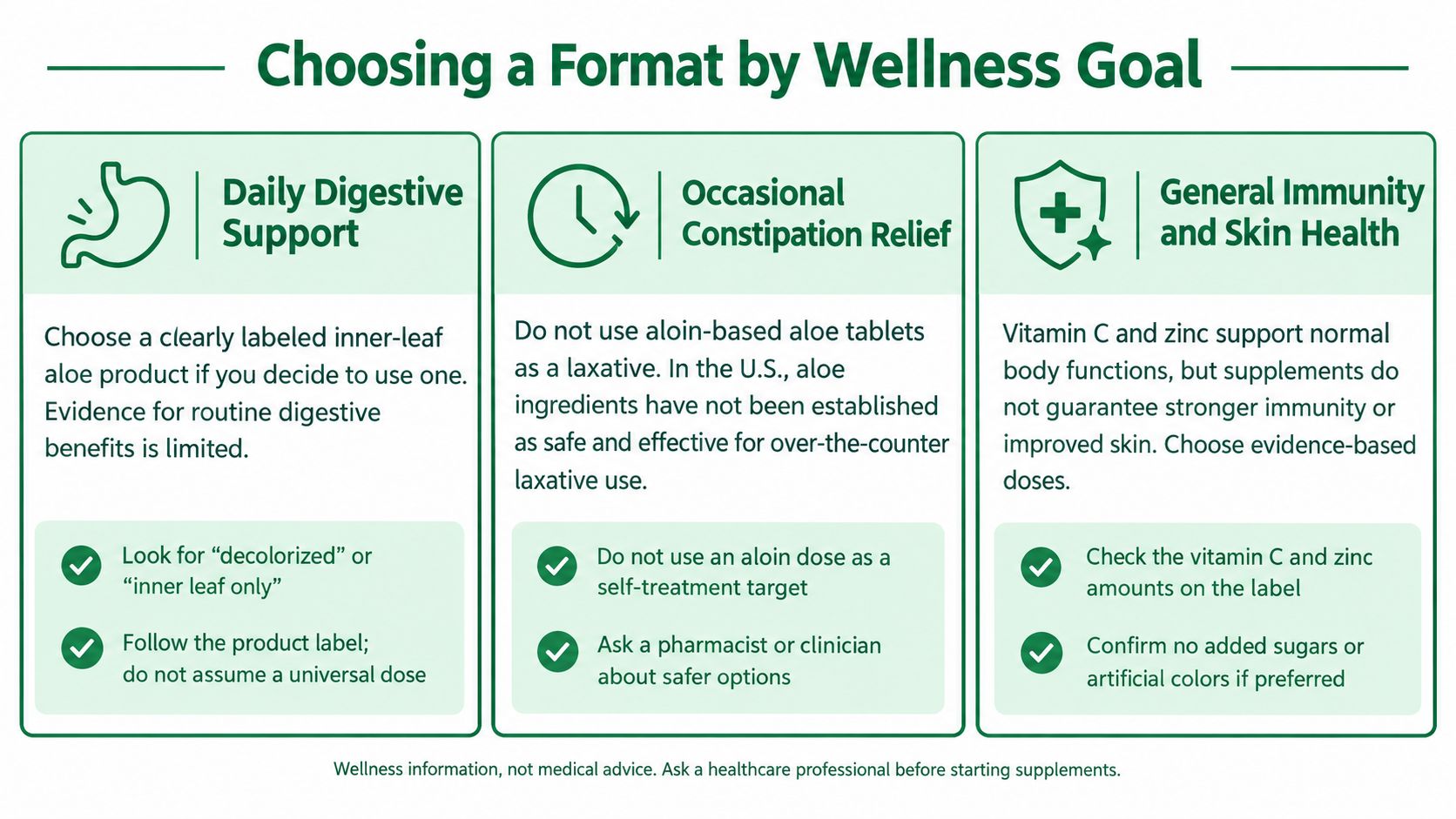
The common mistake is buying a low-aloin tablet and expecting whole-leaf style potency, or buying a liquid and assuming every bottle is equally clean. That's not how the category works. Plant part and processing decide what you're getting.
The safety line on oral aloe is simple. If a product can behave like a laxative, treat it like one, not like a casual daily wellness drink. The FDA drew a hard line on aloe-laxative ingredients in the United States, classifying aloe and related extracts as not generally recognized as safe and effective, or misbranded, for over-the-counter stimulant-laxative use FDA final rule history. That rule targets stimulant-laxative constituents, not every modern inner-leaf tablet.
What matters in practice is fraction and testing. A tablet can look clean on the front and still conceal latex residue or a poorly controlled aloe blend. Keep your standard strict. Demand aloin testing, clear disclosure of the aloe fraction, and a product that does not hide whole-leaf material behind marketing language.
The processing method changes the risk profile. Government materials also note that a study of non-decolorized whole-leaf aloe extract found carcinogenic activity in rats, which is another reason to be cautious with whole-leaf products FDA and National Toxicology Program overview. I would not buy a whole-leaf tablet unless the brand can show tight decolorization, residue control, and a reason for using that fraction at all.
Duration matters, too. Oral aloe gel is generally treated as short-term use, and oral leaf extracts have also been linked to cases of acute hepatitis in the clinical literature. If a brand pushes daily long-term use, ask why the formula is still carrying laxative-style aloe pressure instead of a cleaner inner-leaf profile. That is the trade-off.
For a practical comparison point, CBD safety tips from HempWell USA is a useful parallel read because it shows the same habit of checking timing, caution signals, and interaction risk before adding a supplement. Use that same discipline here.
If you want a plain-language summary of common problems, this guide on aloe vera side effects is a useful cross-check.
Start with the ingredient line, not the front-panel claims. A serious aloe tablet tells you whether it uses inner-leaf gel, decolorized whole leaf, or anything tied to latex. If that distinction is missing, the product is hiding the part that matters most.
Certifications help only when the paperwork is real. USDA organic labeling has specific requirements, and the USDA says organic can be used only when products are produced and handled under USDA organic regulations or an equivalent approved certification program. For products labeled organic, the USDA processor guide requires at least 95% organic ingredients, excluding water and salt, plus a product profile and ingredient quantities for verification USDA organic labeling requirements.
That matters because the word organic means little without the records to prove it. Traceability matters just as much. A producer that farms, processes, and manufactures on-site can show consistency more easily than a brand buying anonymous raw material and turning it into tablets elsewhere.
If you want a second lens on ingredient quality, how to evaluate NMN supplements uses the same documentation-first logic for a different category. The habit is the same across supplements, ask who made it, what they used, how it was processed, and what testing is documented.
For a cleaner way to read supplement labels in general, this internal guide is a solid reference: how to read supplement labels.
Start with the label, then ignore the marketing copy. Is it inner-leaf gel, and is aloin tested? If a seller cannot answer both clearly, skip the product.
Tablets suit travelers and people who want a fixed serving. Liquid suits buyers who want more control over how much they take and how they mix it into a routine. If your routine covers more than one goal, a combined approach usually works better than forcing one format to carry every job.
A producer that farms, processes, and manufactures on-site deserves more attention than a brand that buys anonymous raw material and repackages it elsewhere. That is the filter. Use the supplement quality and safety checklist if you want a clean way to pressure-test any aloe claim before you buy.
These statements have not been evaluated by the Food and Drug Administration. This product is not intended to diagnose, treat, cure, or prevent any disease.
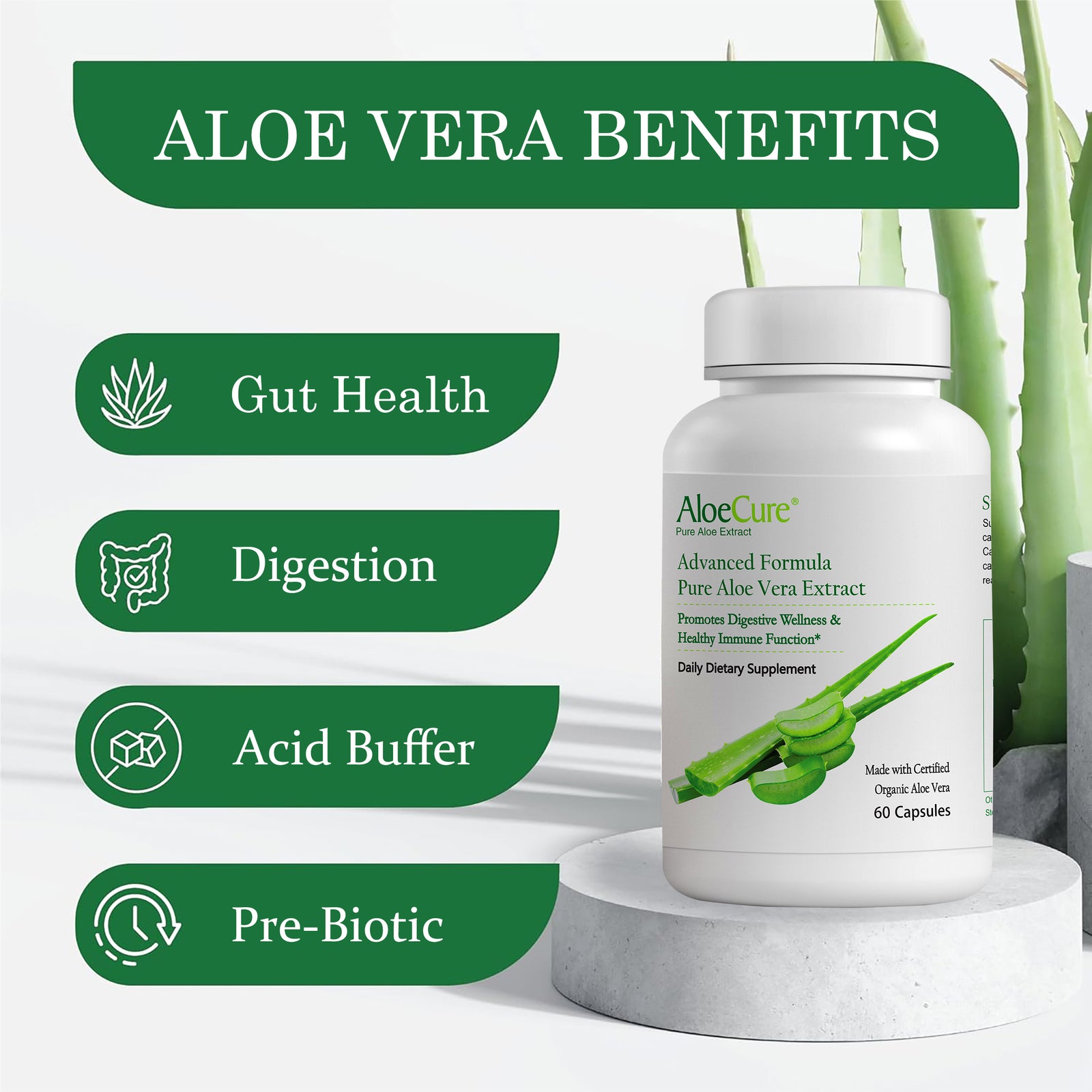
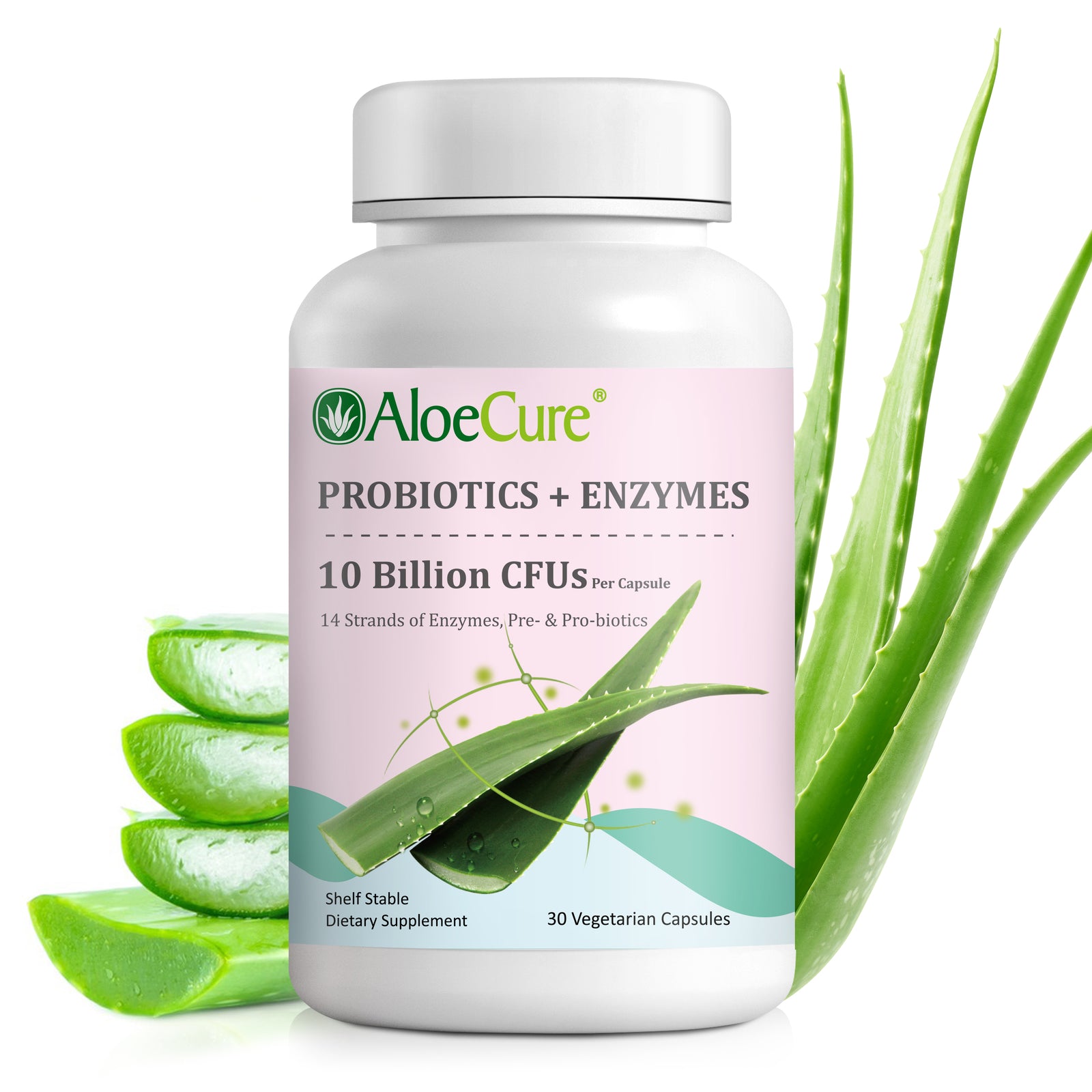
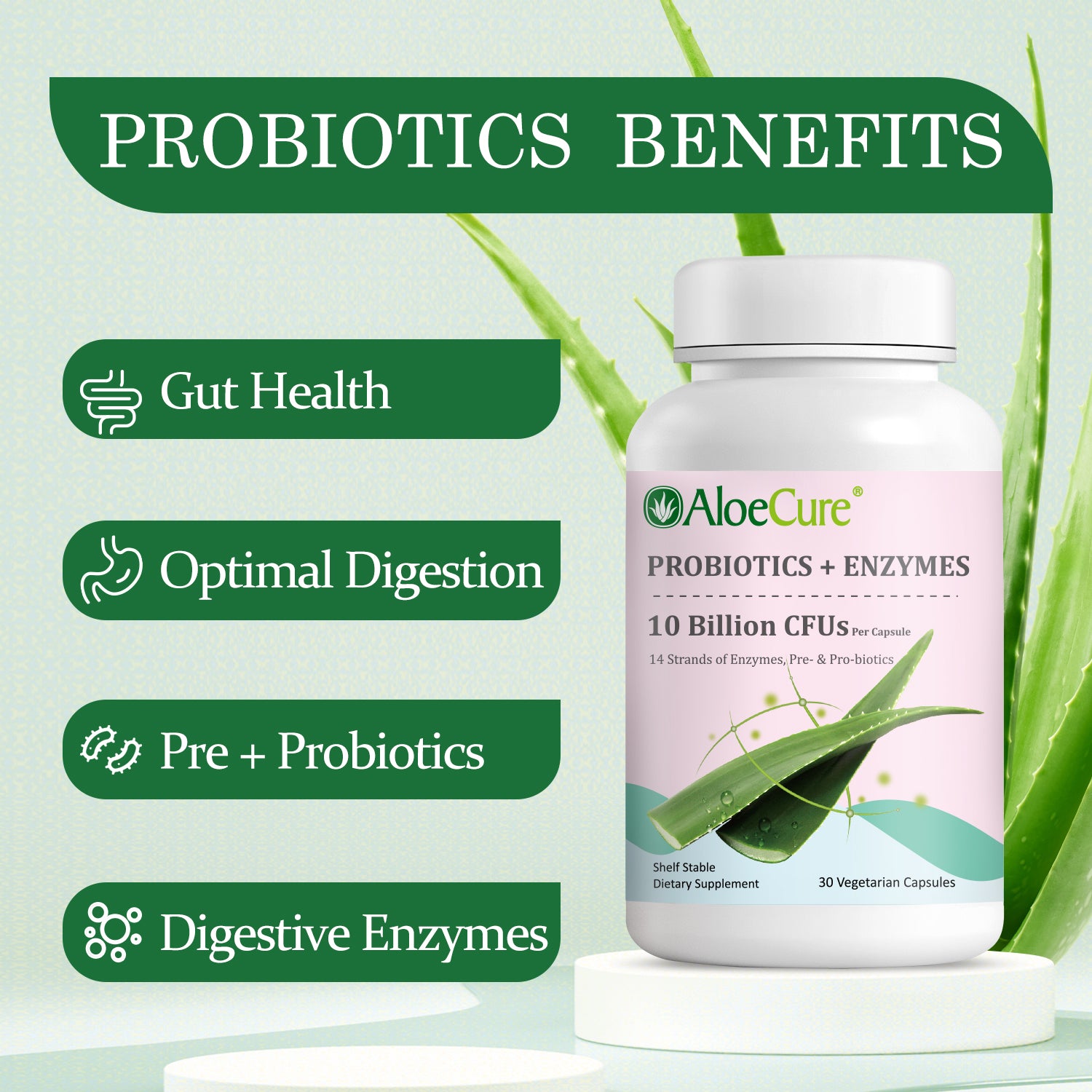
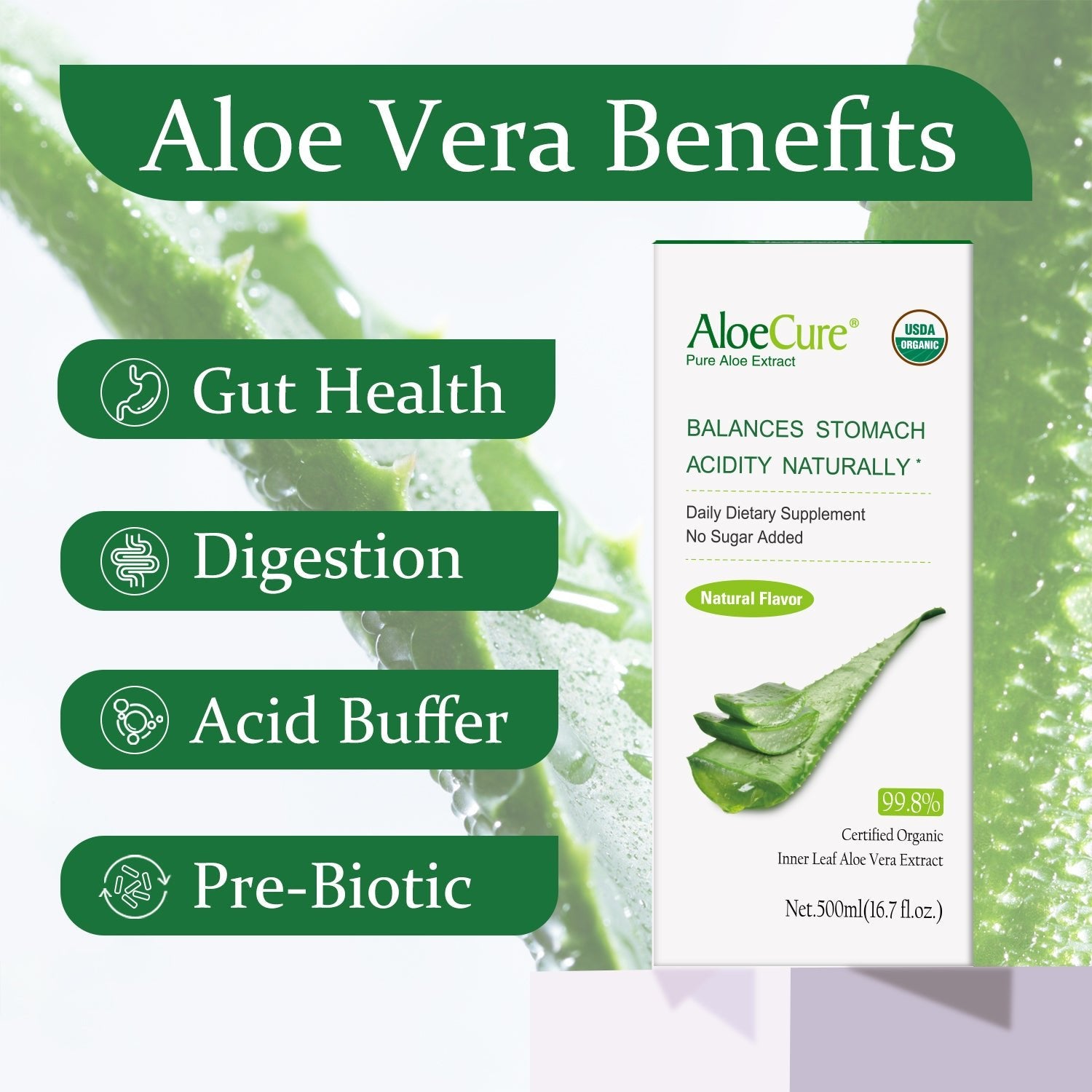
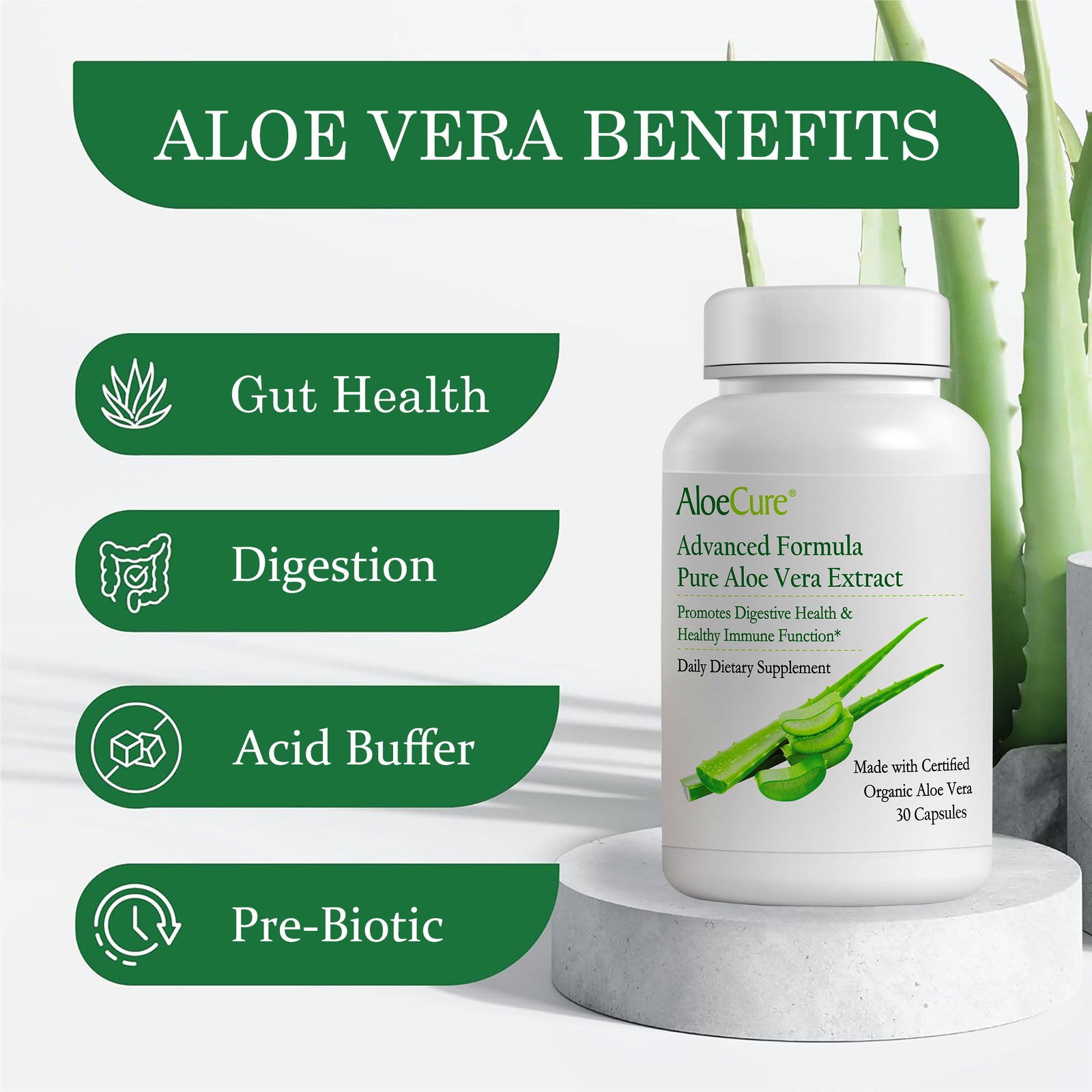
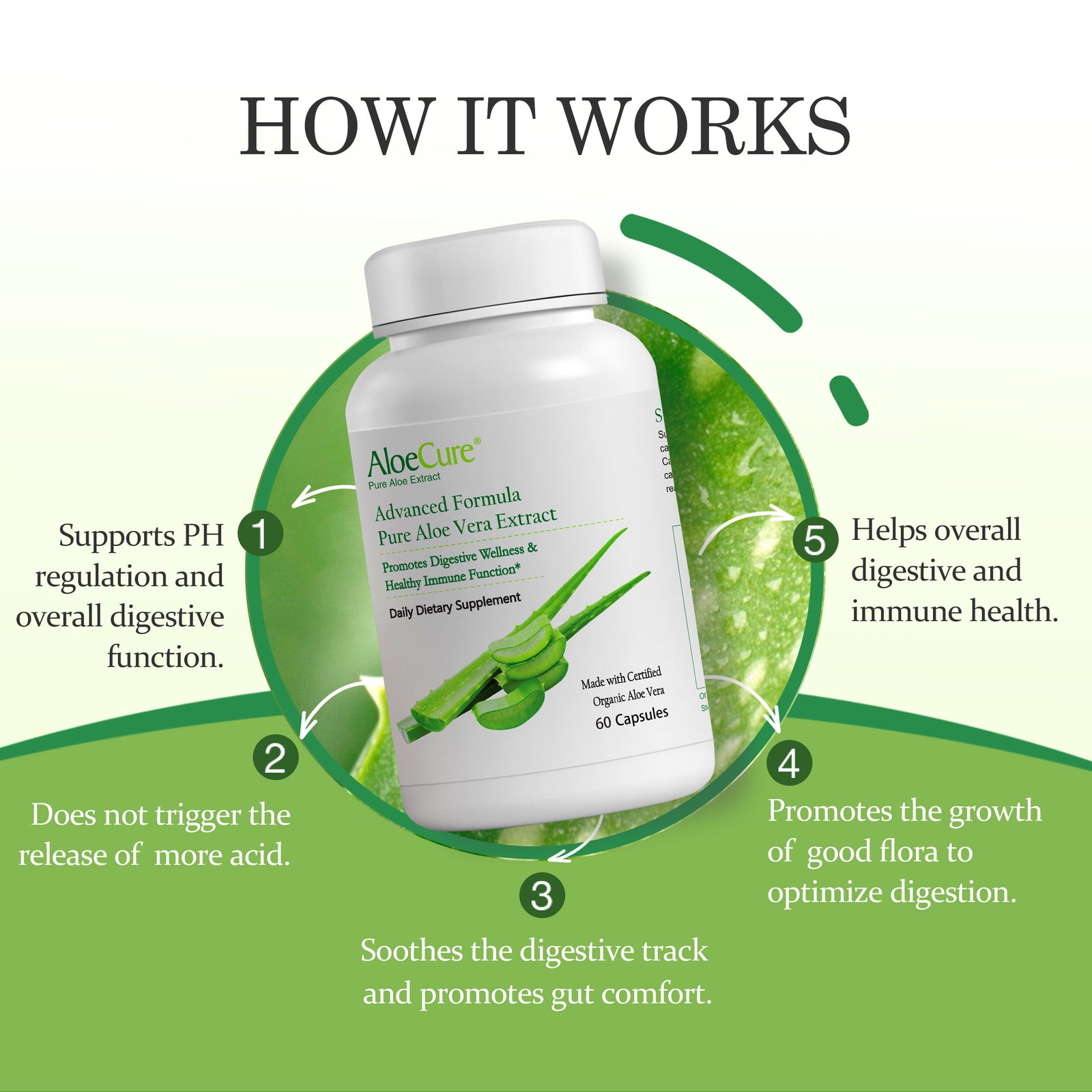
If you want aloe that is farmed, processed, and bottled with fewer shortcuts, AloeCure fits that standard. Visit AloeCure to compare aloe vera juice tablets and liquid options, then choose the format that matches your routine and quality expectations.
Les commentaires sont approuvés avant leur publication.