Votre panier est vide


You're standing in the beverage aisle with a cart already half full, and every bottle seems to promise gut health. Kombucha, kefir, aloe drinks, probiotic sodas, fiber blends, enzyme shots, the shelf can feel less like shopping and more like decoding a label puzzle while your stomach is telling you to make a good call.
Digestive health drinks are beverages designed to support normal digestive function with functional ingredients. That can mean live cultures, prebiotic fibers, enzymes, aloe compounds, or herbal ingredients, but the category is broader than any one trend. A useful way to think about them is simple, some drinks hydrate, some add functional support, and some are closer to everyday wellness beverages than to traditional food.
The first thing to get straight is what these drinks are not. They're not a shortcut around persistent digestive symptoms, and they shouldn't be marketed like a medical answer. FDA guidance allows structure/function language that describes normal body support, so wording like supports healthy digestive function or helps maintain normal digestive wellness fits the lane much better than disease language (FDA structure/function guidance).
A practical example helps. If you want a fermented option, Saporia's organic turmeric kombucha shows how a drink can sit in the wellness space while still being a beverage first, not a treatment product. That's the mindset to bring to every bottle you pick up, what does it do, and what is it only implying?
A digestive health drink is any beverage built to support digestive wellness through a functional ingredient, not to promise a cure or a fix. That sounds obvious until you're staring at a label that says “gut-friendly,” because that phrase can hide very different formulas. One bottle might rely on live cultures, another on fiber, another on aloe, and another on plant extracts that make the drink feel lighter or more routine-friendly.
The easiest way to sort the aisle is by function. Some drinks are meant to help feed beneficial microbes, some are made to deliver live cultures, some are built around a smoother daily routine, and some are just designed to make hydration more appealing. The mechanism matters, because a beverage that supports normal digestive function in one person may do very little for another if the ingredients, dose, or processing differ.
That's also why the label language matters so much. FDA-compliant structure/function wording focuses on body support, not disease claims, so phrases like promotes digestive wellness or helps maintain normal digestive function stay on safer ground (FDA label and notification requirements). If you see copy that drifts into diagnosis, prevention, or recovery language, that's your signal to slow down.
Practical rule: if the bottle talks about support, it's in the wellness lane. If it talks about fixing a condition, it's crossing into medical territory.
Most digestive health drinks fall into four functional families. Probiotics deliver live microorganisms, prebiotics feed them, enzymes help break food into smaller parts, and fiber changes how a drink behaves in the body by adding structure and slowing things down. Aloe-based drinks sit a little differently, because their value often comes from plant compounds and careful processing rather than from live cultures alone.
If you know those families, label reading gets much easier. You stop asking, "Is this good for digestion?" and start asking, "What is this drink built to do?"

Video can also help make the ingredient families easier to picture, especially if you like learning visually.
A bottle can look simple on the shelf and still work in very different ways once it reaches the body. Some ingredients add live cultures, some feed the microbes already there, some help break food into smaller pieces, and some change how a drink moves through the system. That is why the label matters more than the marketing.
Probiotics deliver live microorganisms that may support digestive wellness when used in sufficient amounts (NIH probiotic overview). Prebiotics feed the organisms already present. One adds the organisms, the other helps create conditions where they can do their job.
That distinction matters because “fermented” and “probiotic” are not the same thing. A fermented drink may contain live cultures, but fermentation alone does not guarantee a probiotic product. Product handling also matters, because live organisms can lose strength if storage or processing is poor.
Digestive enzymes help break food into smaller parts, which can make a meal easier to process. Fiber works like the framework in a kitchen, it adds structure and changes how quickly a drink moves through the body. A useful way to remember the difference is to compare it with a pantry: enzymes break down ingredients, while fiber changes the texture of the finished blend.
Aloe-based drinks fit differently. Their role often depends on the plant compounds used and on careful processing, which is why label transparency matters as much as the ingredient itself. If you want a plain-language comparison of how these ingredients are often paired, see this digestive enzyme and probiotic support guide.
The wording on the bottle should stay precise. A compliant statement points to support or normal function, not diagnosis or recovery. A second label check is also useful, because not every fermented food or drink counts as a probiotic product under a health standard (FDA dietary supplement labeling guidance).
Once you know the ingredient families, the aisle gets easier to read. The difference between digestive health drinks is not the marketing phrase on the front, it's the way the drink is built, how stable it is, and what kind of daily comfort goal it's trying to support.
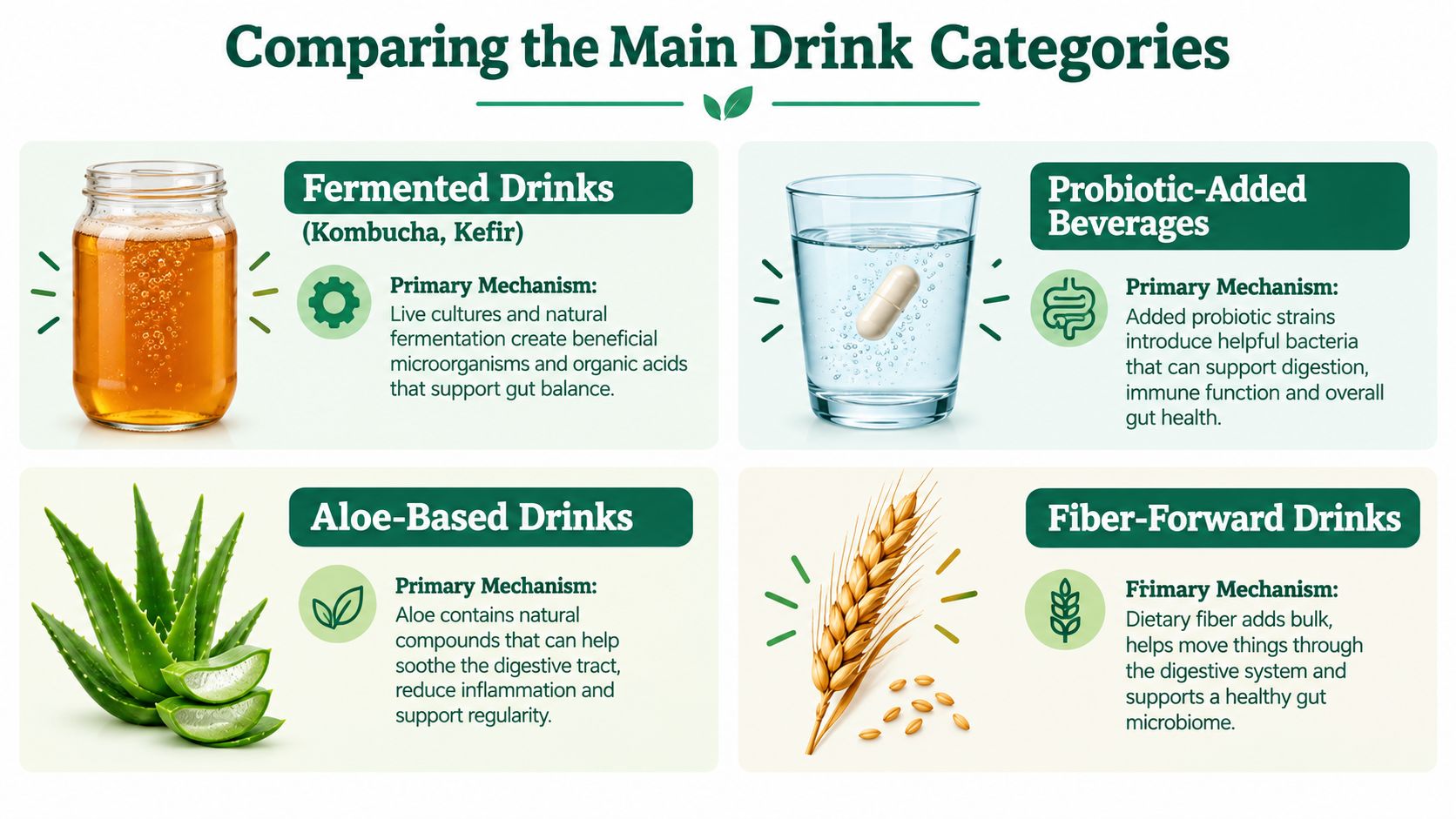
| Category | Typical Functional Ingredient | Key Watchouts | Best Fit |
|---|---|---|---|
| Fermented drinks | Live cultures from fermentation | Acidity, fizz, sugar, alcohol in some styles | People who enjoy tangy, fizzy drinks and tolerate them well |
| Probiotic-added beverages | Added live microorganisms | Survival of added organisms, storage conditions | People looking for a targeted culture addition |
| Aloe-based drinks | Aloe compounds and careful processing | Processing quality, label transparency | People who want a gentler daily routine option |
| Fiber-forward drinks | Soluble or added fiber | Tolerance, fluid pairing, gradual introduction | People wanting more structure in a daily beverage |
Fermented drinks such as kombucha or kefir may appeal to people who like tartness and carbonation. Probiotic-added beverages sound similar, but the added organisms may behave differently in the bottle and in the body, so the product line matters more than the buzzword.
Aloe-based drinks usually sit in a quieter lane. They're often chosen for a simpler routine and a cleaner ingredient profile, especially when the processing is transparent. Fiber-forward drinks lean more functional, but they also ask more of the consumer, because the body's response depends on dose, format, and tolerance.
The easiest mistake is assuming all “gut health” drinks do the same thing. They don't. One person wants a tart morning drink, another wants a low-sugar option for everyday use, and another wants something with more substance in it.
Herbal teas for digestive support can also fit the same decision tree if you prefer a warm beverage over a cold one. The useful question isn't which category sounds healthiest, it's which one you can use consistently without discomfort.
The science around digestive health drinks is promising, but it's not uniform. A review of fermented-food intervention studies found changes in microbiome composition in the studies that measured it, but the findings weren't consistent enough to prove that every fermented drink creates the same effect. That matters, because the label might say “gut support,” yet the result depends on the strain, the food matrix, the dose, and the person drinking it (critical review of fermented-food intervention studies).
A good example is fiber. In controlled studies, 10 g of extrinsic wheat fiber increased fecal wet weight when it was delivered in solid, fiber-enriched foods, but the same fiber dose in a drink did not significantly increase fecal wet weight (PubMed study). That tells you something important, the drink format is not just a delivery vehicle, it can change the body's response.
So when a beverage claims fiber support, the finished product matters more than the ingredient panel alone. A juice, a bar, and a drink mix can all show the same fiber amount on paper and still behave differently in practice.
Microbiome changes sound exciting, but sequencing data doesn't automatically mean the drink will feel better in daily life. For consumers, the more meaningful outcome is usually how the drink affects normal comfort, routine, and tolerance over time. That's why you should look for brands that identify the organism, the ingredient source, and the storage conditions instead of leaning on vague “balance” language.
Simple test: if a product can't explain the ingredient, the format, or the expected use in plain language, it probably doesn't have a very precise claim.
A reasonable takeaway is modest but useful. There is evidence that some fermented and fiber-containing drinks can support digestive wellness, but the benefit is not universal, and the details matter more than the trend.
The right drink depends on the comfort goal you have in mind. A person who wants a more regular morning routine needs something different from someone who just wants a lighter alternative to soda, and both of them need to think about tolerance first.
If your goal is routine digestive support, a low-sugar aloe-based drink or a carefully formulated probiotic beverage may be a sensible place to start. If you want something that feels active and bright, a fermented drink may suit you better, as long as you tolerate acidity and fizz. If your goal is to add structure to a drink, fiber-forward formulas make more sense, but they should be introduced gradually.
That gradual part matters. Fast changes in fermentable ingredients can be uncomfortable for sensitive people, so a slow trial is usually smarter than jumping in with a full serving. Daily use also works better when the beverage fits your actual schedule, not just your ideal routine.
Some drinks look healthy but carry trade-offs. Carbonation can feel heavy for people who are sensitive to fizz. High sugar can turn a wellness drink into a dessert-like habit. Added caffeine or alcohol changes the whole profile, especially in tea-based or fermented products.
| Watchout | Why it matters | Smarter label check |
|---|---|---|
| Carbonation | Can feel too heavy for some people | Check whether the drink is still fizzy after opening |
| Sugar | Can change the daily use pattern | Compare serving size to sweetness |
| Caffeine or alcohol | Shifts the beverage away from a simple wellness routine | Read the full ingredient and nutrition panel |
| Strong acidity | Not everyone tolerates tang well | Test a small serving first |
Persistent or severe digestive symptoms need medical evaluation, not more experimentation. A drink can support normal wellness, but it can't stand in for a proper assessment when something keeps happening.
The same aloe leaf can end up as a carefully processed wellness drink or a heavily altered commodity ingredient, and that difference changes what lands in the bottle. Processing can strip away plant compounds, dilute the finished formula, or introduce unnecessary steps that make the product harder to trust. For digestive health drinks, quality is not just about what the label promises, it's about what survived production.
The cleanest sign of quality is transparency. You want to see where the ingredient came from, how it was processed, and whether the company can show batch-level testing or traceability. USDA Organic and EU Organic certifications are useful trust markers because they show a baseline level of oversight, while published testing gives you another layer of confidence.
What aloe vera juice is made of is a helpful example of how a brand can explain ingredient composition without hiding behind vague claims. A good label doesn't force you to guess.
When a company farms, processes, and bottles its own aloe, it controls more of the chain. That matters because every handoff is a chance for quality to drift. If a producer cuts corners with charcoal filtration, enzymes, or concentrates, the finished drink may look similar on shelf but behave differently in real use.
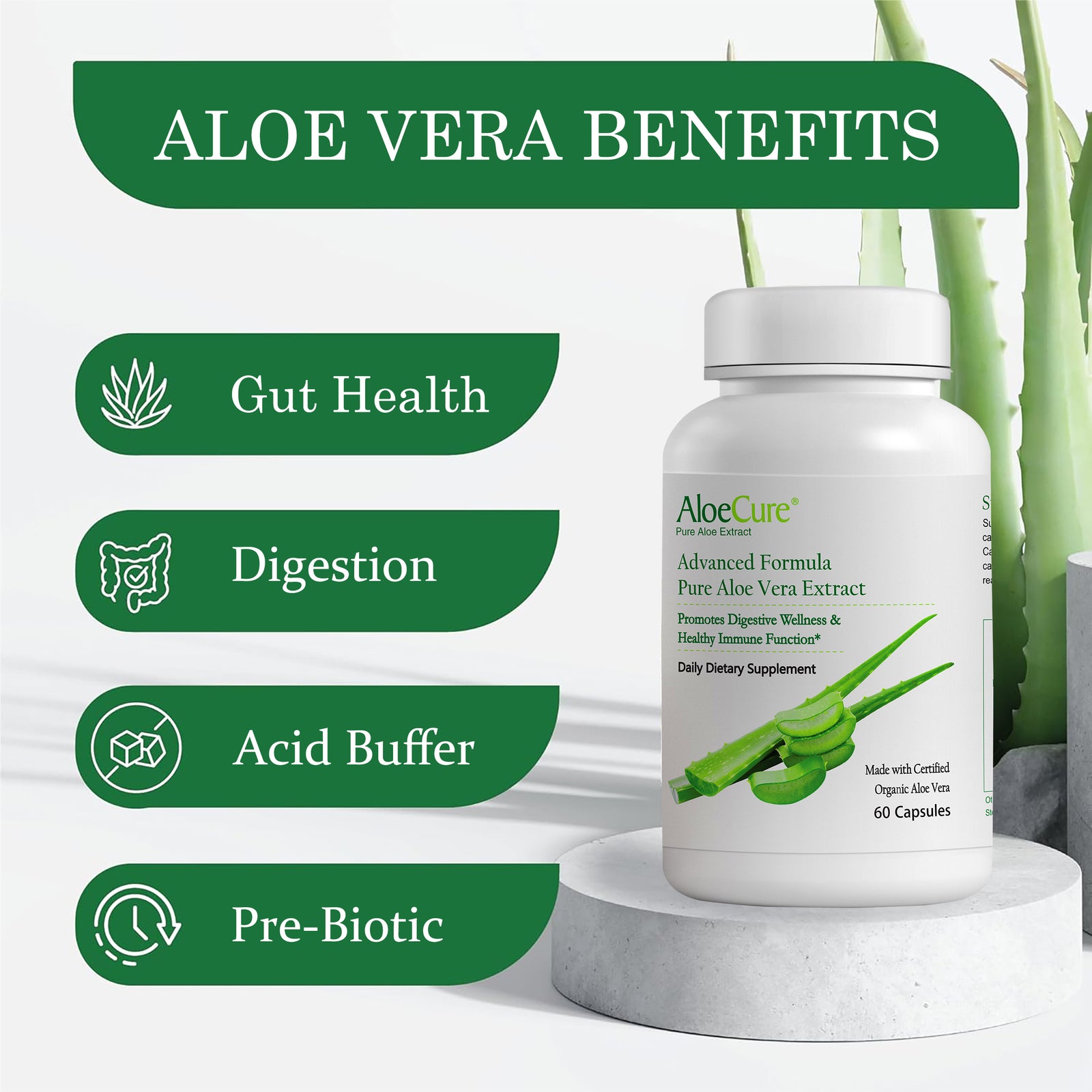
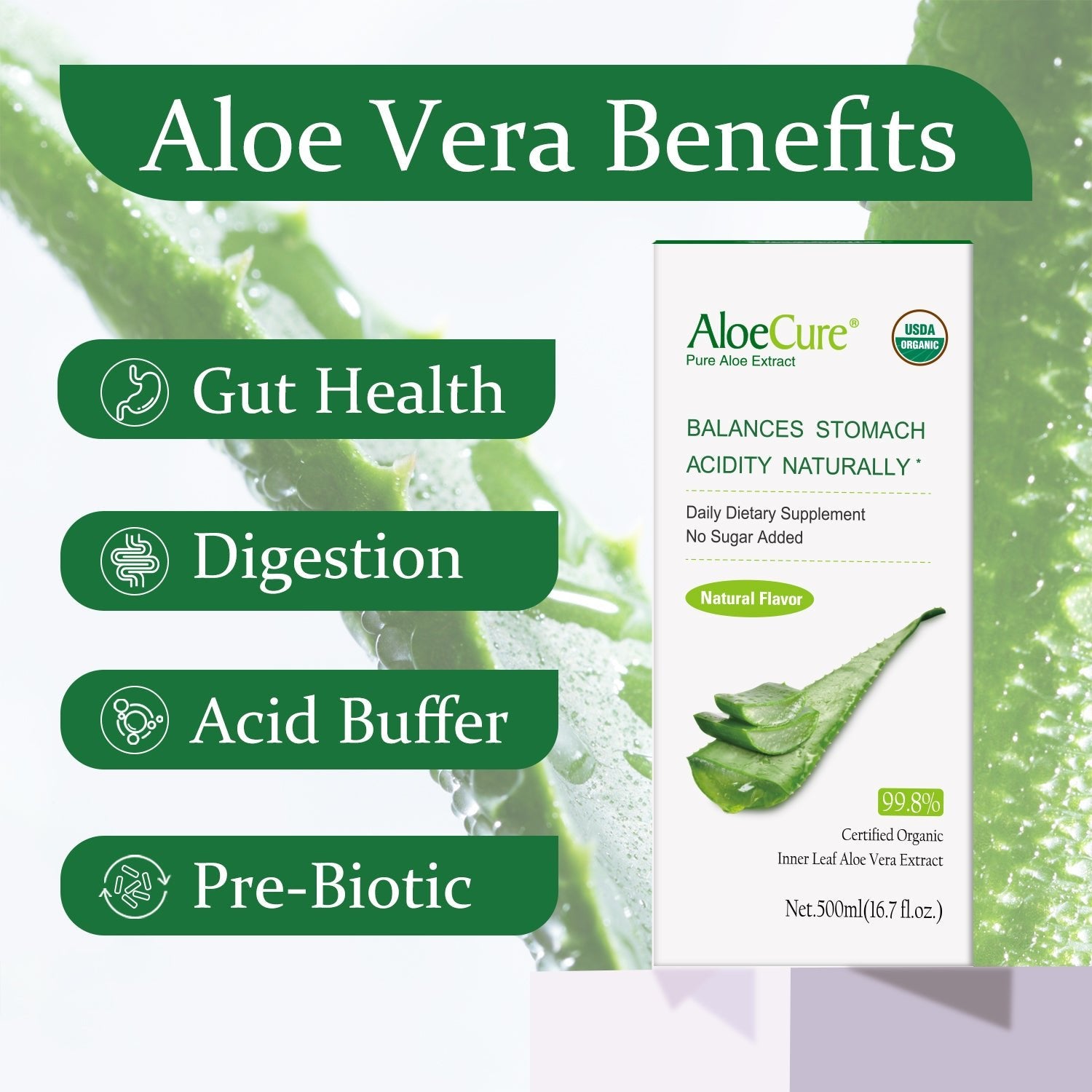
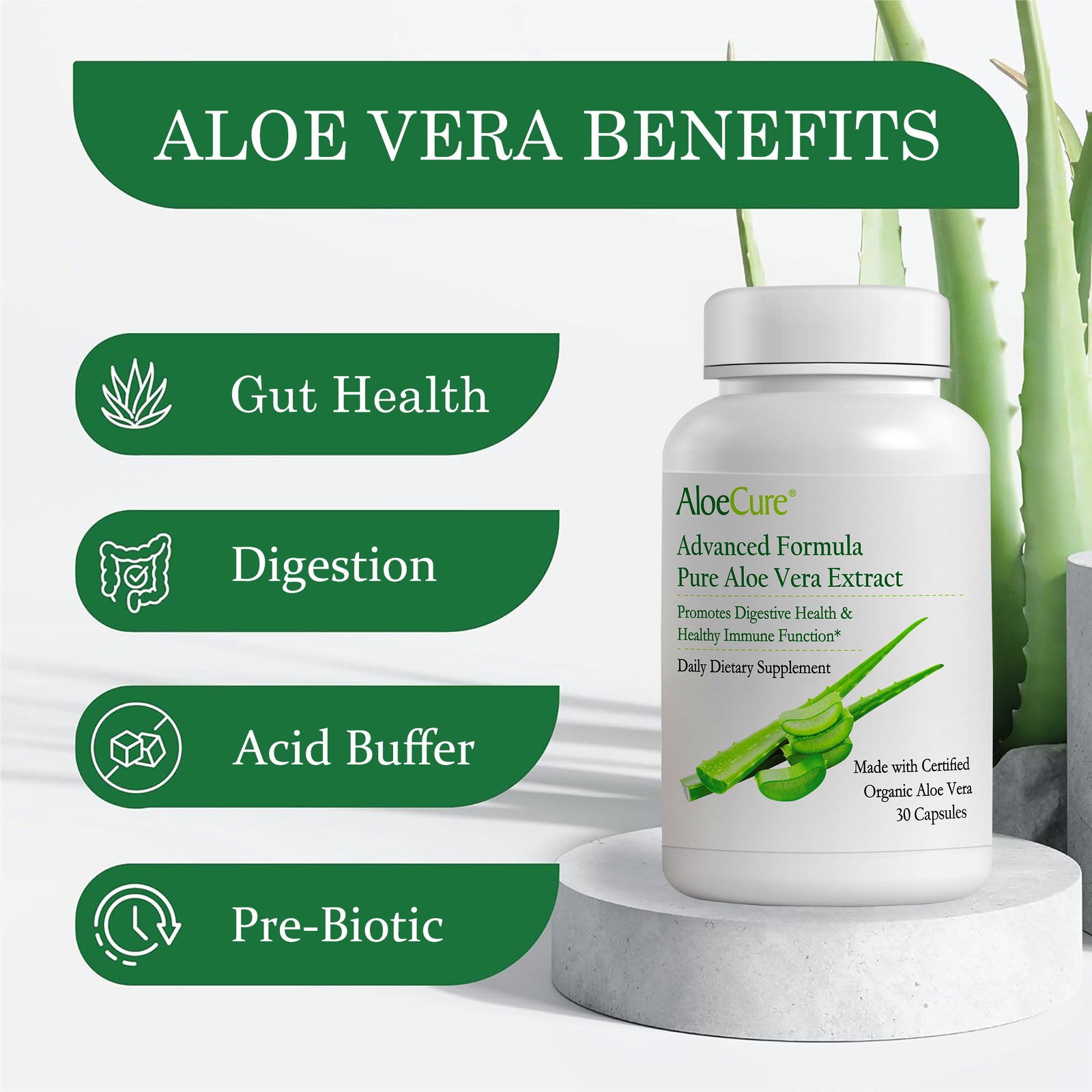
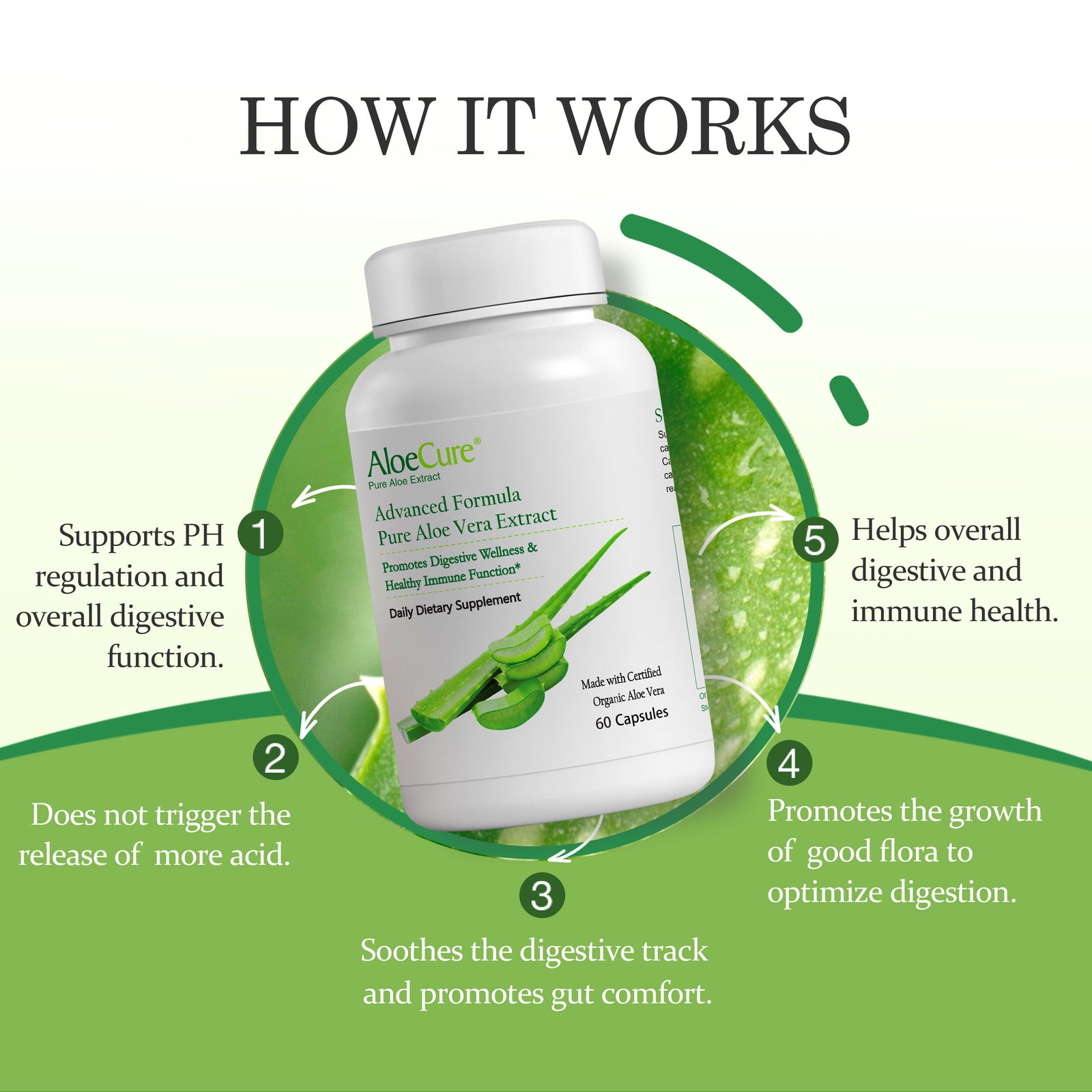
For aloe-based drinks, that's why processing method belongs in the same conversation as ingredient source. A beverage can only support daily digestive wellness credibly if the product is made with care, tested thoroughly, and described in plain language. AloeCure is one example of a brand built around that model, but the bigger lesson is simple, look for traceability before you look for hype.
The easiest routine is also the one people stick with. Start with a small serving, keep the rest of your diet steady, and give the drink a fair trial before you judge it. That approach helps you see whether the beverage fits your body instead of blending it into everything else you ate that week.
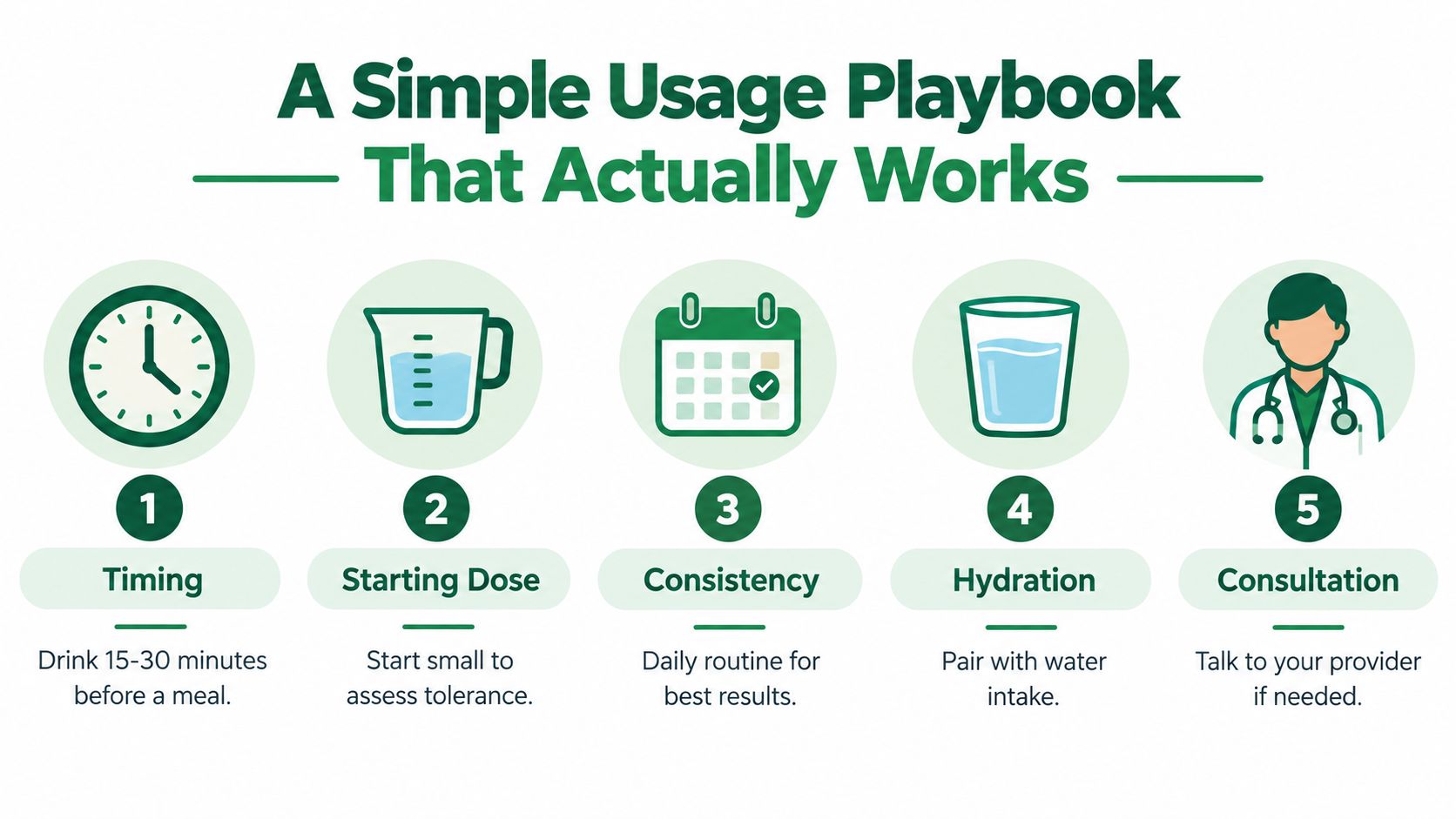
The value of this approach is that it gives you data from your own body. Keep a simple note on timing, serving size, energy, and comfort so you can tell whether the drink is doing anything useful.
Also check the label language. A compliant bottle should use structure/function wording and show the required disclaimer in bold: “This statement has not been evaluated by the Food and Drug Administration. This product is not intended to diagnose, treat, cure, or prevent any disease.” That line is part of the buying decision, not an afterthought.
The clearest path is the simplest one. First, decide what comfort goal you want to support, then match that goal to the ingredient family that fits, then inspect the label for processing quality and compliant language. That sequence keeps you from buying a trendy bottle that does not fit your routine.
Aloe-based drinks, fermented beverages, probiotic-added formulas, and fiber-forward options all live under the same broad umbrella, but they do different jobs. One may suit a light morning habit, another may fit a tangy preference, and another may make more sense if you want a carefully processed plant-based drink with a clean label. The smartest choice is the one you can use consistently and tolerate well.
If you want a practical starting point, AloeCure offers aloe vera drinks built around organic aloe and clean processing, along with Subscribe & Save convenience and a 90-day money-back guarantee. Explore the options at AloeCure and choose the format that fits your daily routine, then try it with a small, steady trial so you can judge it on real use rather than front-label promises.
Les commentaires sont approuvés avant leur publication.