Your Cart is Empty

The most popular advice about aloe vera juice concentrate is to treat the word “concentrate” as a quality guarantee. It isn't. Concentrate only describes a processing format. The more demanding questions are: which part of the leaf was used, how was water removed, and what did processing preserve or strip away?
A well-made concentrate can be practical, consistent, and easier to transport. A poorly handled one can look polished on a label while offering little transparency about polysaccharides, aloin, filtration, or heat exposure. This guide shows you how to tell the difference, with an emphasis on clean, vertically integrated production.
Aloe vera juice concentrate is liquid aloe juice with some water removed. The result is denser and occupies less volume than the original juice, much like reducing a stock in a kitchen or freezing espresso into a smaller, stronger portion for later dilution. The format can simplify transport, storage, and manufacturing, but it doesn't automatically tell you whether the source material or processing method was excellent.
That distinction matters because concentrate and quality are separate concepts. A concentrate may begin with inner-leaf gel or whole-leaf material. It may be reduced under carefully controlled conditions, or exposed to more heat and longer residence times. It may contain a short ingredient list, or rely on filtration agents, enzymes, preservatives, or other processing aids.
Practical rule: Read “concentrate” as a description of what happened to the liquid, not as proof of what remains in it.
Three purchasing decisions deserve attention:
The commercial case for concentration is straightforward. Aloe vera-based drinks were forecast at USD 172.07 million in 2025, with a projection of USD 317.02 million by 2031, representing a projected 10.72% CAGR from 2026 to 2031, according to Mordor Intelligence's aloe vera-based drinks market forecast. The same forecast identified concentrate as the fastest-expanding product type, with a projected 12.05% CAGR through 2031, even though juice and drink formats held 72.15% of revenue in 2025. Concentrate's appeal is logistical: a smaller, lighter format can make global distribution and multi-region co-packing more efficient.
The word “concentrate” becomes easier to understand once you separate it from the part of the plant used. Whole-leaf aloe includes the outer rind and the material close to it, including latex-associated compounds. Inner-leaf aloe uses the clear gel filleted from inside the leaf. Either source can then be sold as a juice, gel, powder, or concentrate.
The plant part affects the starting profile. Whole-leaf material generally requires more intensive clarification because the outer portions contain bitter anthraquinone-associated compounds, including aloin. Inner-leaf gel typically offers a cleaner and less bitter base, although the final result still depends on filtration, stabilization, concentration, and storage.
A concentrate isn't a third leaf type. It's a format that can be made from either source. That's why two bottles using the same word may differ substantially in taste, composition, and processing history. For a useful visual explanation of the source-material distinction, compare whole-leaf aloe with inner aloe gel.
| Attribute | Whole Leaf Aloe | Inner Leaf Gel | Concentrate |
|---|---|---|---|
| Source material | Outer rind, inner gel, and nearby latex-associated material | Filleted clear gel from inside the leaf | A denser liquid made by removing water from aloe juice |
| Processing intensity | Usually requires more clarification and control of bitter compounds | Starts with a cleaner material profile | Depends on whether it was made from whole leaf or inner leaf |
| Bitterness | May be more pronounced if latex-associated compounds remain | Usually milder and cleaner | Can range from mild to bitter depending on source and processing |
| Typical use cases | Ingredient systems requiring extensive purification and specification | Drinkable aloe products and gentle formulations | Manufacturing, transport, dilution, and multi-region production |
The most useful label question is therefore not, “Is this concentrate?” Ask, “What was concentrated?” A clearly identified inner-leaf concentrate gives you more information than a vague concentrate statement without a declared plant part.
The concentration route is one of the most important quality decisions in the entire process. Producers need to remove water while limiting the heat, time, and chemical handling that can change aloe's functional constituents.
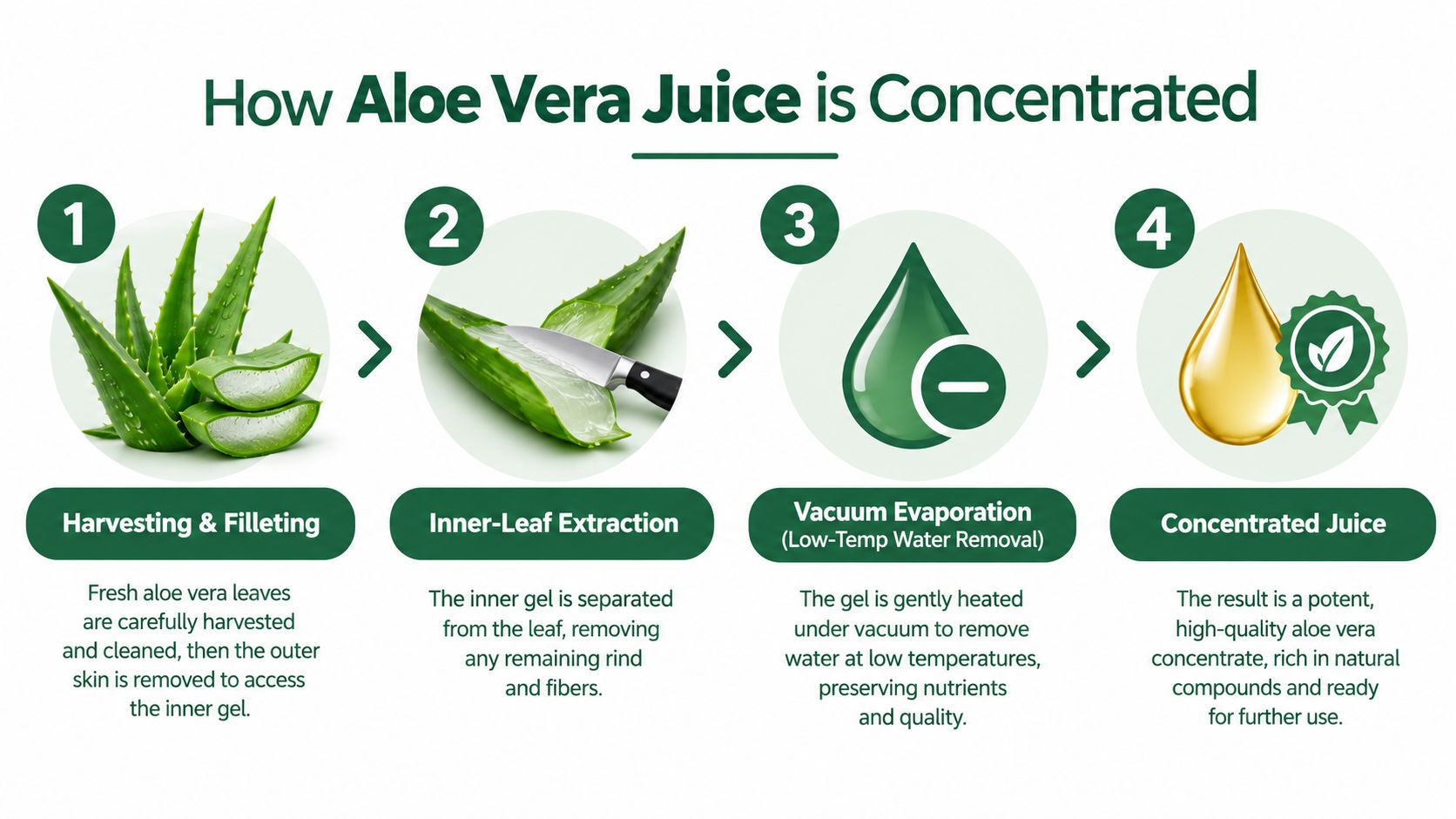
Vacuum evaporation lowers the pressure around the juice, allowing water to leave at a lower temperature than it would under ordinary atmospheric conditions. A peer-reviewed review reports that aloe juice can be concentrated without losing biological activity when the process stays below 125 mm Hg, below 50 °C, and under 2 minutes, as described in the technical literature summarized by Aloe Vera Processing.
Those limits illustrate the central tradeoff. Higher temperatures and longer exposure can reduce the effectiveness of bioactive constituents. The same literature reports maximum polysaccharide stability around 70 °C, while barbaloin showed greater heat sensitivity as temperature and duration increased. A producer that tracks the complete temperature and residence-time profile has a stronger basis for evaluating retention than one that only describes a finished liquid as “pure.”
Reverse osmosis uses a membrane to separate water from larger dissolved components. It can raise solids without relying on evaporation as the only water-removal step. Membrane systems still require careful validation, because pressure, filtration configuration, and downstream handling can influence the final composition.
Charcoal filtration can improve clarity and reduce certain compounds, but it can also alter flavor and remove other constituents. Chemical decolorization may strip anthraquinone-associated compounds more aggressively, yet the resulting liquid may no longer reflect the starting juice as closely. Enzymes can modify viscosity or help clarify a liquid, while preservatives can support shelf stability, but each addition changes the clean-label discussion.
You can read more about aloe's starting material and juice composition in what aloe vera juice is made of. The key lesson is simple: the same fresh juice can become very different concentrates depending on pressure, heat, time, filtration, enzymes, and preservation.
A premium-looking bottle doesn't tell you whether the concentrate retained the constituents buyers care about. Acemannan and aloin provide two different quality lenses. Acemannan helps indicate polysaccharide standardization, while aloin control addresses a key anthraquinone-associated concern in aloe leaf juice.
The United States Pharmacopeia monograph for Aloe Vera Leaf Juice Concentrate specifies at least 0.04% acemannans, calculated as aloeverose on a single-strength juice basis. It also specifies a maximum of 0.05 μg/g aloins on that same basis. You can review the monograph details in the USP Aloe Vera Leaf Juice Concentrate standard.
These figures aren't a complete product evaluation, but they demonstrate why a buyer should request both a polysaccharide specification and a contaminant specification. A product that only advertises “high purity” leaves the most useful questions unanswered.
| Benchmark | What It Measures | Good Sign | Red Flag |
|---|---|---|---|
| Acemannans | A standardized polysaccharide marker | A declared value meeting the relevant specification | No measurable polysaccharide information |
| Aloins | Anthraquinone-associated compounds on a single-strength basis | A declared value at or below the applicable limit | No aloin disclosure or unclear testing basis |
| Processing basis | How the result was achieved | Traceable, controlled processing with supporting documentation | Broad claims without method or batch records |
| Finished-liquid identity | Appearance and sensory profile | Clear to light yellow or beige, mild aroma, and mild taste consistent with the IASC aloe quality standard | Unexplained color, strong odor, or pronounced bitterness |
The International Aloe Science Council standard also describes charcoal-filtered, decolorized aloe liquids as clear to light yellow or beige, odorless to mildly vegetative, and tasteless to mildly bitter, with a slippery feel that can dry slightly tacky. Those details give shoppers practical clues, but lab documentation remains more reliable than sensory inspection alone.
A concentrate is only as traceable as the supply chain behind it. When farms, processors, warehouses, and bottlers are separate businesses, the final brand may have limited visibility into the harvest timing, handling conditions, and processing decisions that shaped the ingredient.
A vertically integrated producer controls the major steps from cultivation through finished product. AloeCure's model centers on farming its own aloe, processing its own aloe, and producing its own products, rather than treating the concentrate as an anonymous purchased input. That structure can make it easier to align harvest timing, inner-leaf preparation, stabilization, testing, and bottling.
The argument for integration isn't that ownership magically guarantees quality. It's that direct control creates fewer handoffs and more opportunities to verify what happened. A farm-to-bottle producer can document the journey more directly than a brand that receives a standardized ingredient after several independent transfers.
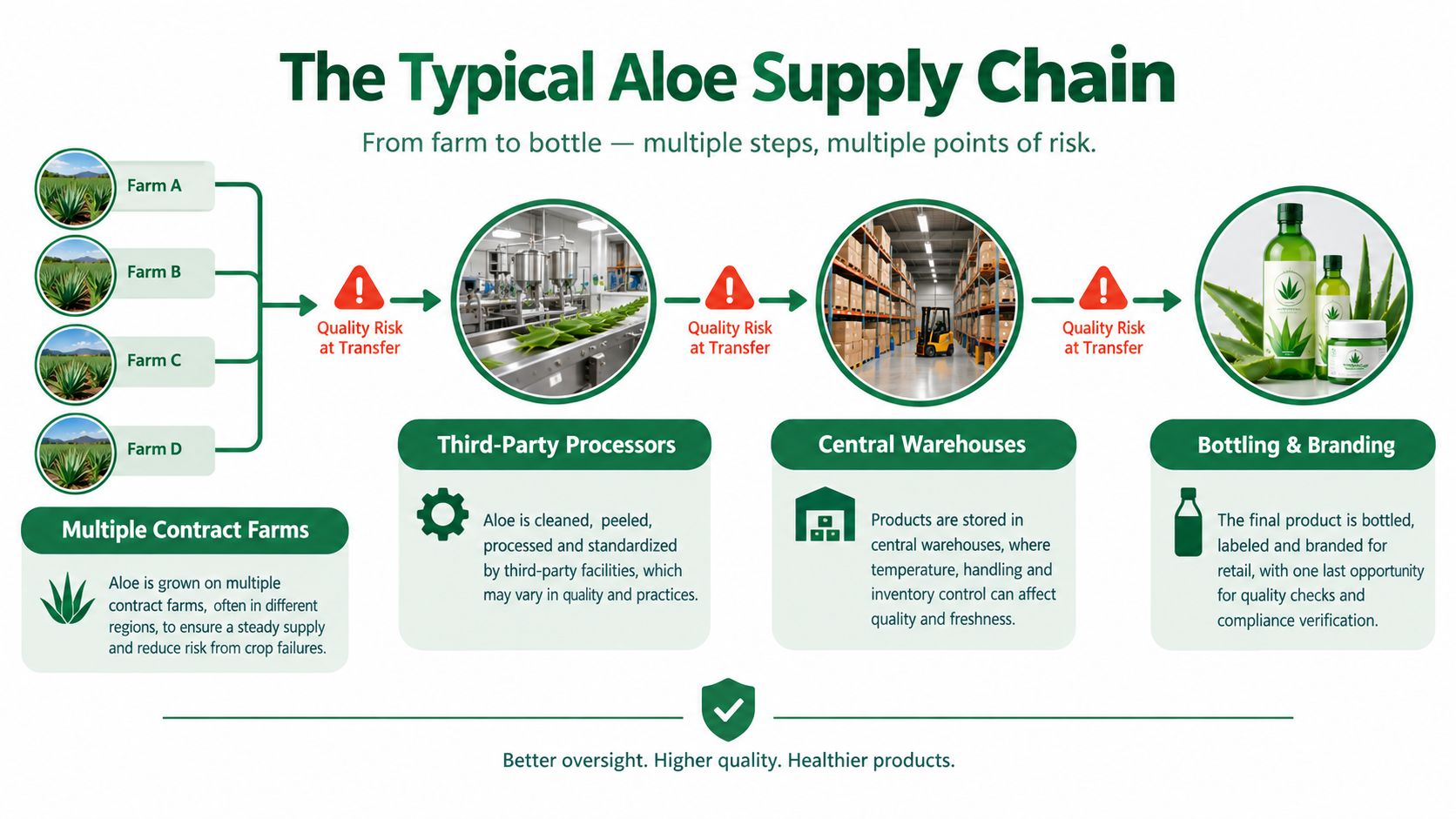
Fresh aloe leaves are living plant material. Handling decisions begin before concentration, so a careful evaporator cannot fully correct every issue created earlier in the chain. Rapid movement from harvest to processing, controlled clarification, and a validated temperature-time profile all support a more defensible quality program.
A clean-label approach also means explaining what the producer doesn't use. Avoiding unnecessary chemical decolorization, enzyme processing, and charcoal filtration can reduce the number of interventions that need to be explained to the buyer. It doesn't remove the need for testing, though. A credible producer still needs finished-product specifications for identity, polysaccharides, and aloin control.
The video below provides additional visual context for aloe processing and farm-to-bottle production.
Vertical integration changes the equation because the producer can connect field practices, harvest handling, processing choices, and final testing in one quality system. That's more meaningful than putting “concentrate” in large type on the front label.
A concentrate label can reveal whether concentration preserved the material that matters, or removed water and left shoppers with vague claims. Read it in this order: which part of the leaf was used, how strong is the liquid, which constituents are measured, and what else is in the bottle? “Inner leaf” or “inner fillet” identifies the source more clearly than a general aloe statement. “Whole leaf” calls for closer review of clarification and aloin control.
A ratio or strength statement gives the label more context. FDA guidance explains that liquid dietary supplement extracts may be labeled by weight or volume, and may optionally show a starting-material-to-final-solvent volume ratio. The FDA small-entity guide to identity and labeling outlines the relevant labeling framework. For a broader explanation of how to assess supplement panels, use this guide to reading supplement labels.
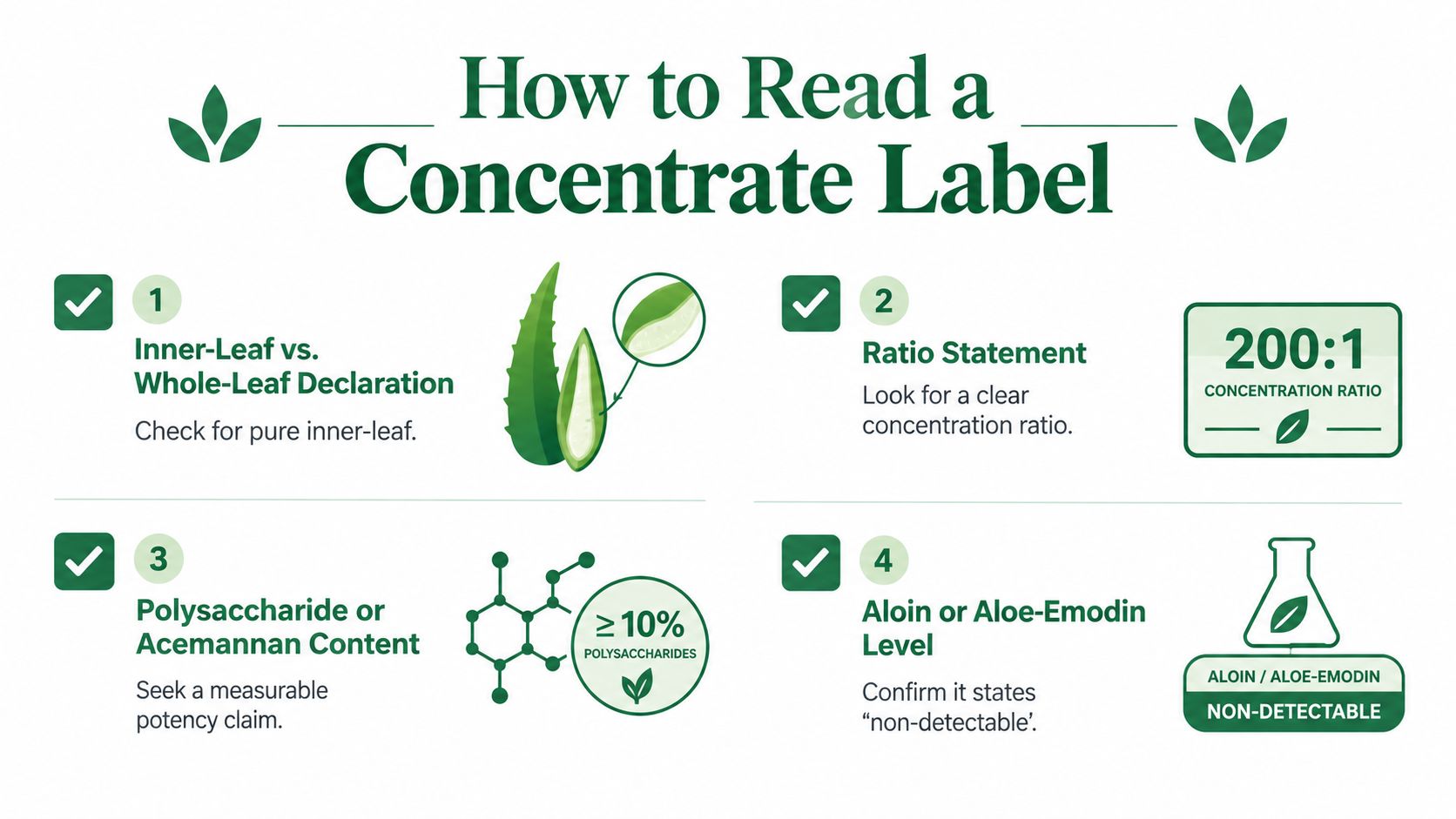
A consumer-lab reference to IASC guidance states that drinkable aloe juices, gels, liquid extracts, and distillates should contain at least 0.25 mg of D-acemannan per mL, based on an expected 0.5% solids level and a minimum 5% D-acemannan concentration in those solids, as described in ConsumerLab's aloe testing overview. Use that figure only when the product's testing basis and serving information are comparable.
Before buying, ask the brand:
The FDA lists aloe extract within the U.S. food-substance framework under 21 CFR Part 172.510, as shown in the FDA food substances listing for aloe extract. That context supports careful identity and labeling, not broad wellness promises.
You can narrow your options in a few minutes by applying four filters:
The right routine depends on the product's directions and your own tolerance. For a 32-ounce bottle, follow the serving instruction, dilute it as directed, keep the bottle refrigerated after opening when the label calls for it, and use a clean measuring tool rather than guessing from the bottle neck. If you're adding it to a morning drink, juice, or smoothie, keep the preparation consistent so you can evaluate taste and convenience without changing several variables at once.
Aloe products also sit naturally alongside broader wellness routines. Readers comparing plant-based formulas may find a curated resource on skincare supplements useful when considering how internal and topical product categories differ. Choose products based on their stated use, documented specifications, and transparent manufacturing rather than on promises that exceed the label.
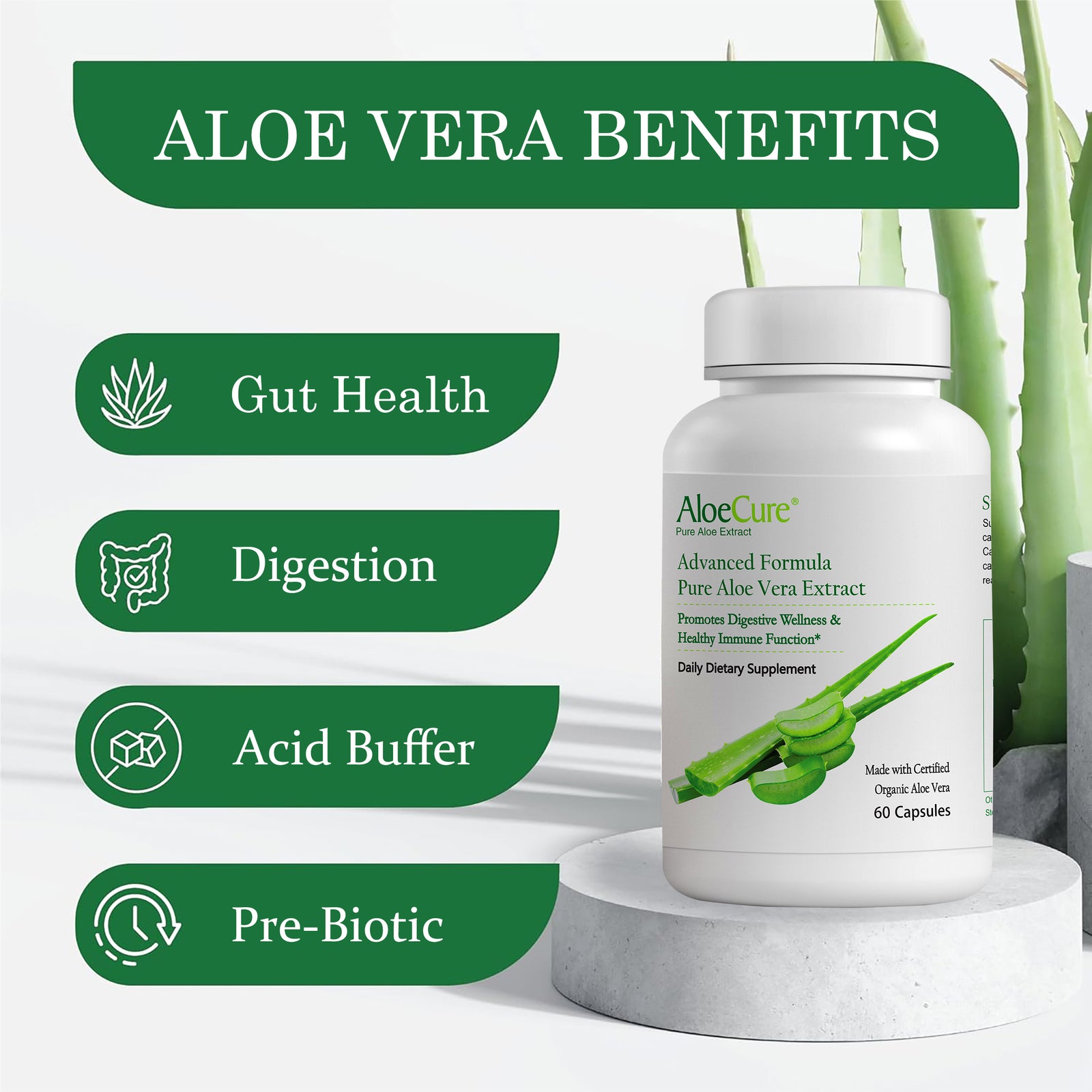
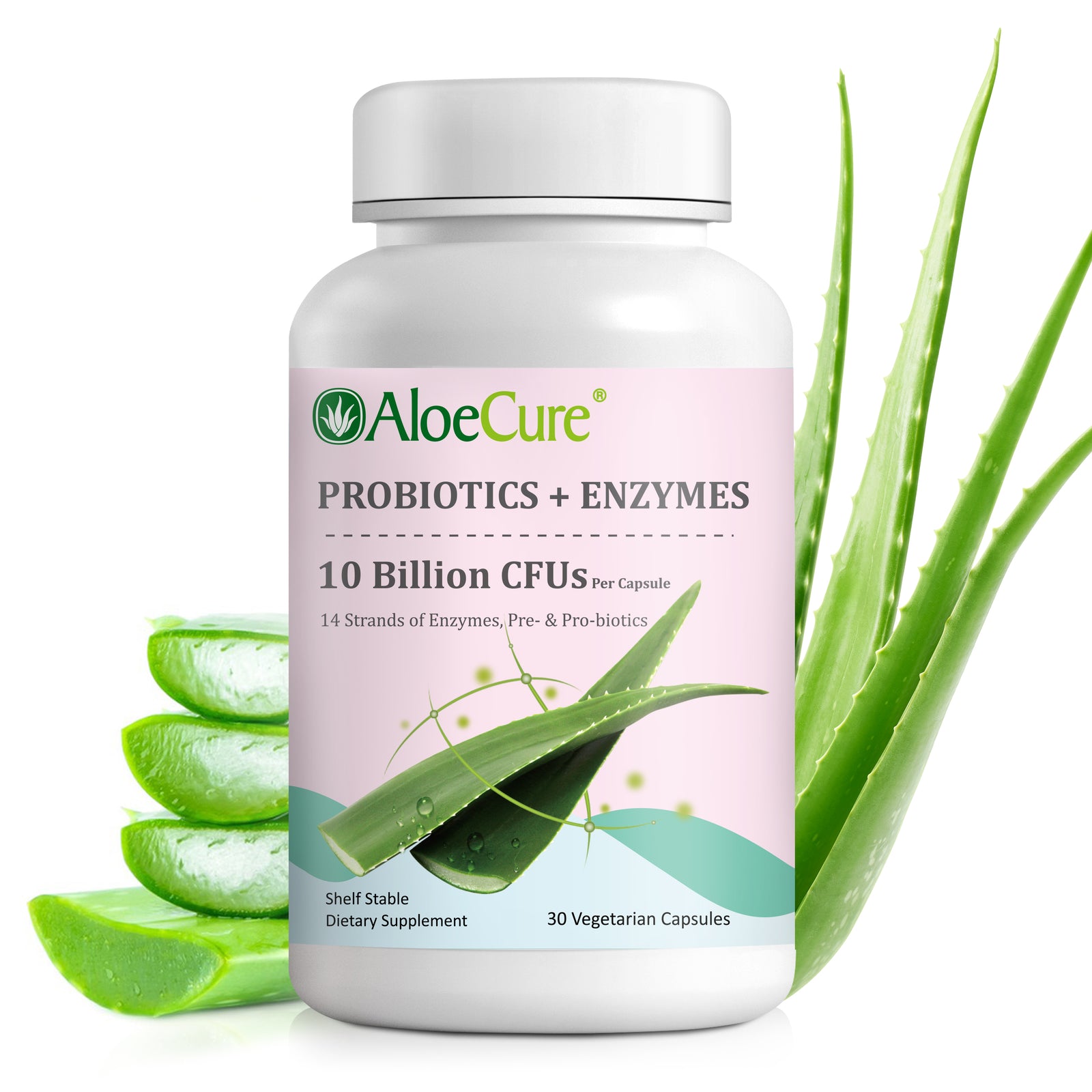
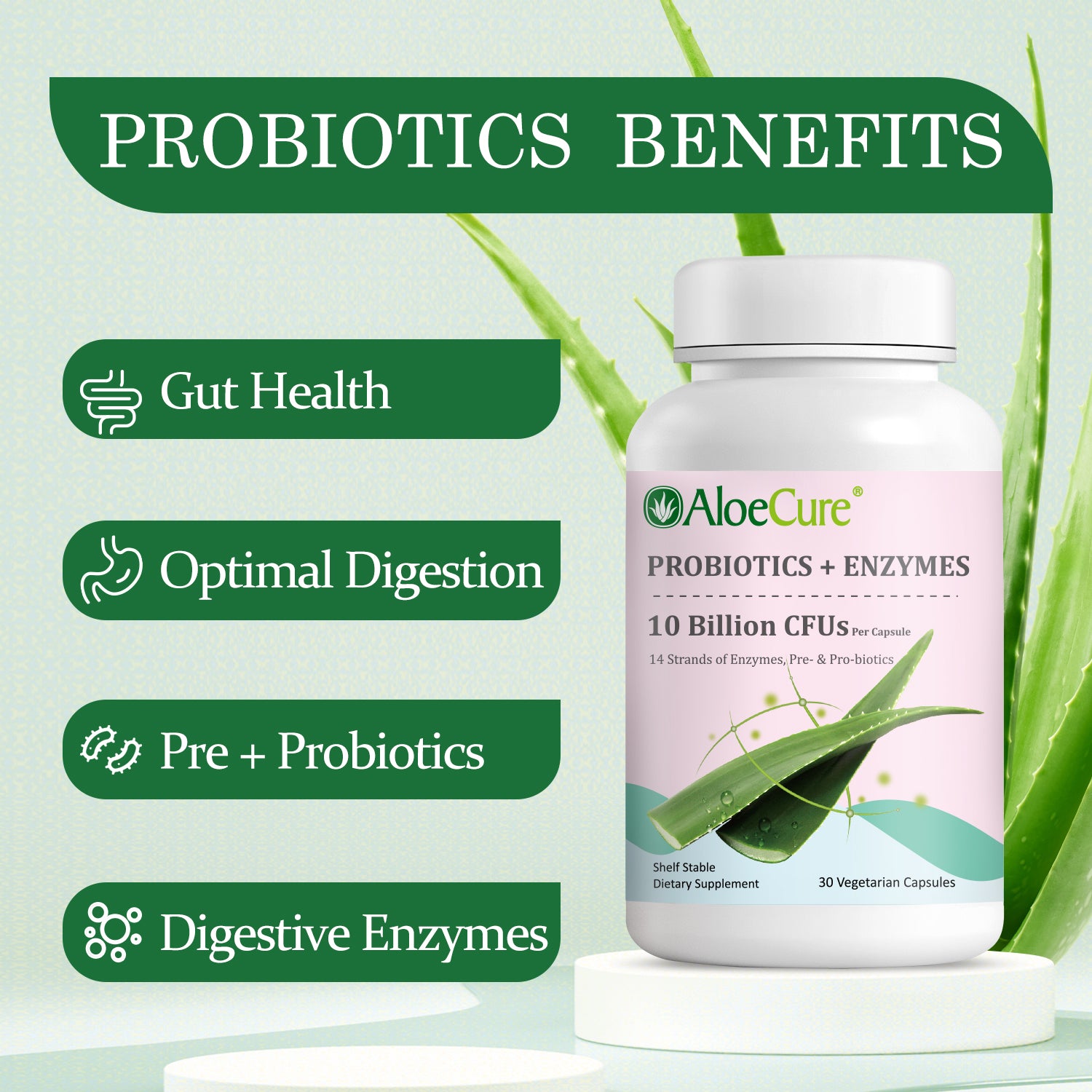
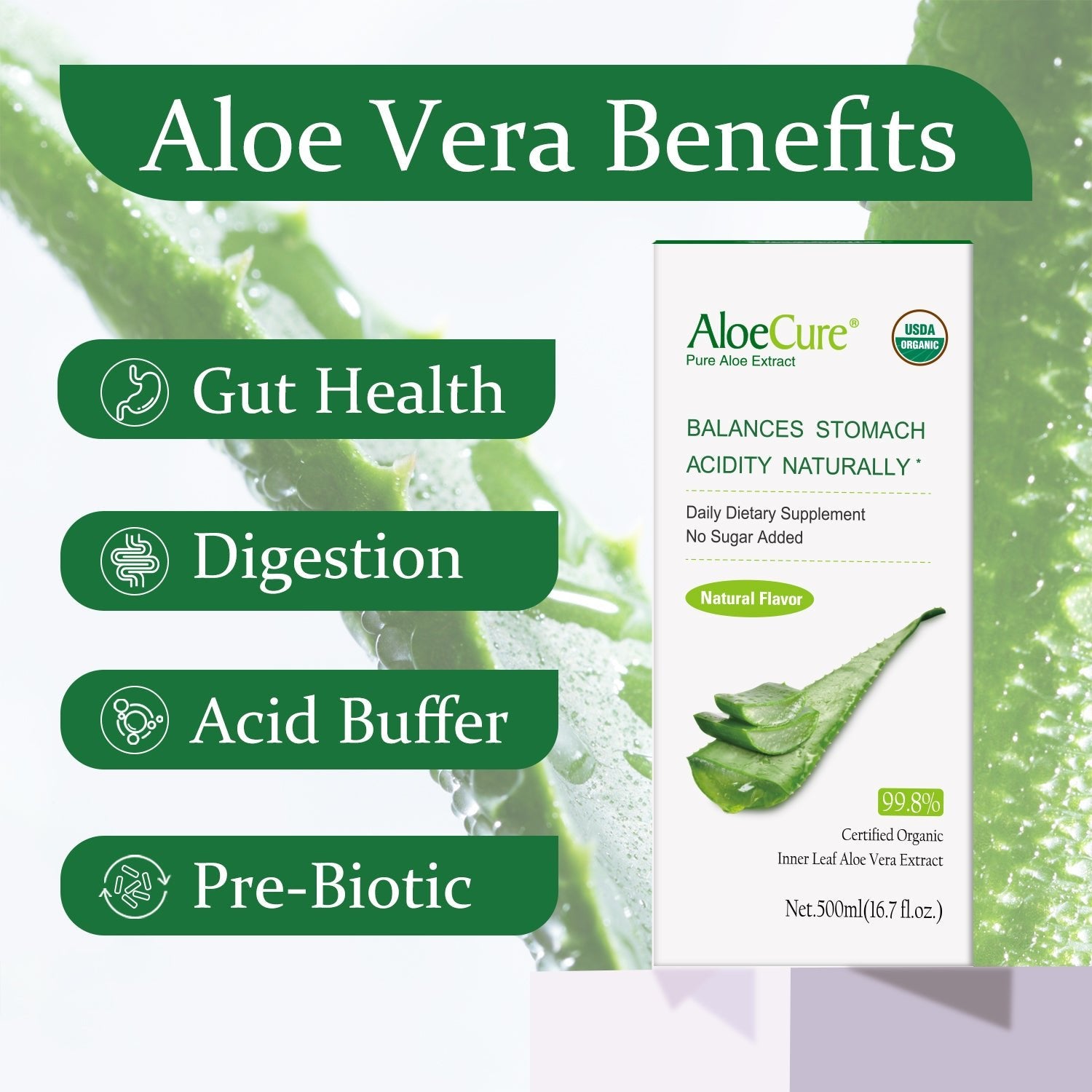
AloeCure offers farm-grown, vertically integrated aloe products, including liquid aloe options, with subscription delivery available for shoppers who prefer a set cadence and 20% off subscriptions. Visit AloeCure to review the product details, compare the available formats, and choose the option that matches your label and processing priorities.
These statements have not been evaluated by the Food and Drug Administration. This product is not intended to diagnose, treat, cure, or prevent any disease.
Comments will be approved before showing up.