Votre panier est vide


Commercially available aloe vera berry juice isn't made from an aloe fruit. Aloe vera produces dry, seed-filled capsules, while the beverage generally uses inner-leaf gel with berry flavoring, and a 2010 review identified eight human trials involving 5,285 participants studying defined oral aloe preparations, not every flavored drink on the market.
That distinction matters because the word “berry” can make a product sound like a fruit juice with automatic nutritional benefits. In practice, it may describe a flavor, a blend, or a marketing name. The useful questions are more practical: Which part of the aloe leaf is used? How much added sugar is present? Has the finished product been tested for aloin? Does the label clearly identify the ingredients and serving size?
Aloe can fit into a thoughtful wellness routine, but quality starts with understanding what is in the bottle. The sections below separate botanical fact from flavor language, explain why inner-leaf processing matters, and give you a straightforward label-reading framework.
The phrase aloe vera berry juice suggests that aloe produces a juicy berry. Botanically, that isn't accurate. Aloe vera is a perennial succulent in the Asphodelaceae family, associated with arid regions of the Arabian Peninsula and northeastern Africa. After flowering, it develops dry, ovate capsules containing numerous seeds, not fleshy berries suitable for pressing into a conventional fruit beverage. The capsules reportedly mature in approximately 60–67 days, typically during summer, before drying and releasing their seeds.
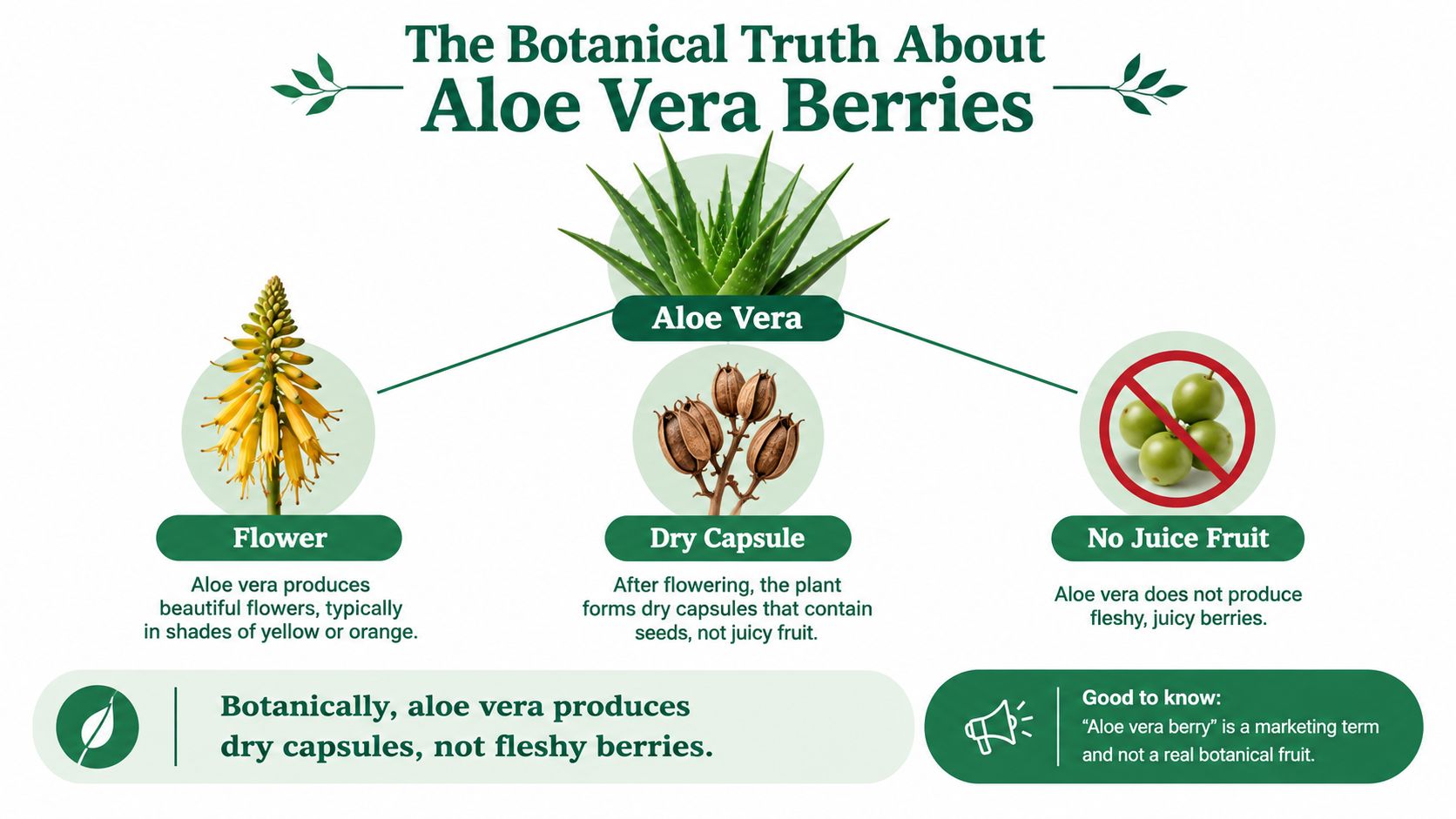
So what does “berry” mean on a beverage label? Usually, it points to flavor, not the botanical source of the aloe. The aloe portion generally comes from the clear gel inside the leaf, while berry notes may come from natural flavor, fruit ingredients, or a formulated blend. A red or purple color also doesn't prove that the drink contains aloe fruit.
Aloe's history is older than modern wellness packaging. Aloe was recorded on Sumerian clay tablets around 2100 BCE, and the Egyptian Papyrus Ebers, dated to approximately 1550 BCE, includes an early detailed discussion of medicinal plants including aloe. Its scientific naming also has a traceable history. Carl Linnaeus described the plant in 1753 as Aloe perfoliata var. vera, while Nicolaas Laurens Burman reclassified it as the species Aloe vera in 1768. Aloe vera history and botanical background
Those facts establish aloe as a historically documented plant, but they don't turn every aloe beverage into the same product. The plant's history tells you where aloe comes from. The ingredient panel tells you what you're drinking today.
Practical rule: Treat “berry” as a flavor clue until the label identifies a specific fruit ingredient.
For broader food planning, readers who enjoy building simple routines around beverages and meals can also explore meal planning ideas for the week. The same habit applies here: identify the actual ingredients before assigning a wellness meaning to the product name.
Pure aloe inner-leaf gel usually has a mild, watery character with a faint bitterness or tart edge. Berry flavoring changes the experience by adding sweet, tangy notes that make the beverage easier to enjoy consistently. The result is less like pressing a berry and more like combining a light aloe base with a fruit-inspired flavor profile.
A typical ingredient panel may include:
The front label may emphasize “berry,” but the ingredient list answers the more important question. A product can taste strongly of berries while containing little or no actual berry juice. Conversely, a beverage may use fruit ingredients that add sweetness and color. Neither approach automatically makes it better. The right choice depends on your preference for flavor, sweetness, and ingredient simplicity.
Look for the botanical part used, such as inner-leaf gel or whole-leaf material. Then check whether the product identifies added sugar, natural flavor, fruit juice, concentrates, or other sweetening ingredients. A serving that tastes like a dessert may not align with a routine focused on a lighter beverage.
Texture also provides clues, although it isn't a substitute for label information. A clear, thin drink may contain filtered gel, while a pulpy product may retain aloe solids or added fiber. Neither texture alone confirms purity or safety.
For more detail on the sensory side, this guide to what aloe juice tastes like can help you set realistic expectations before choosing a flavored formula.
Aloe vera berry juice can be positioned as a flavored inner-leaf aloe beverage for general wellness, not as a universal answer to every health concern. FDA-compliant structure/function language keeps the focus on normal body processes. Depending on the product and its substantiation, appropriate descriptions may include supports healthy digestive function, helps maintain normal hydration, promotes everyday wellness, or supports the body's natural processes.
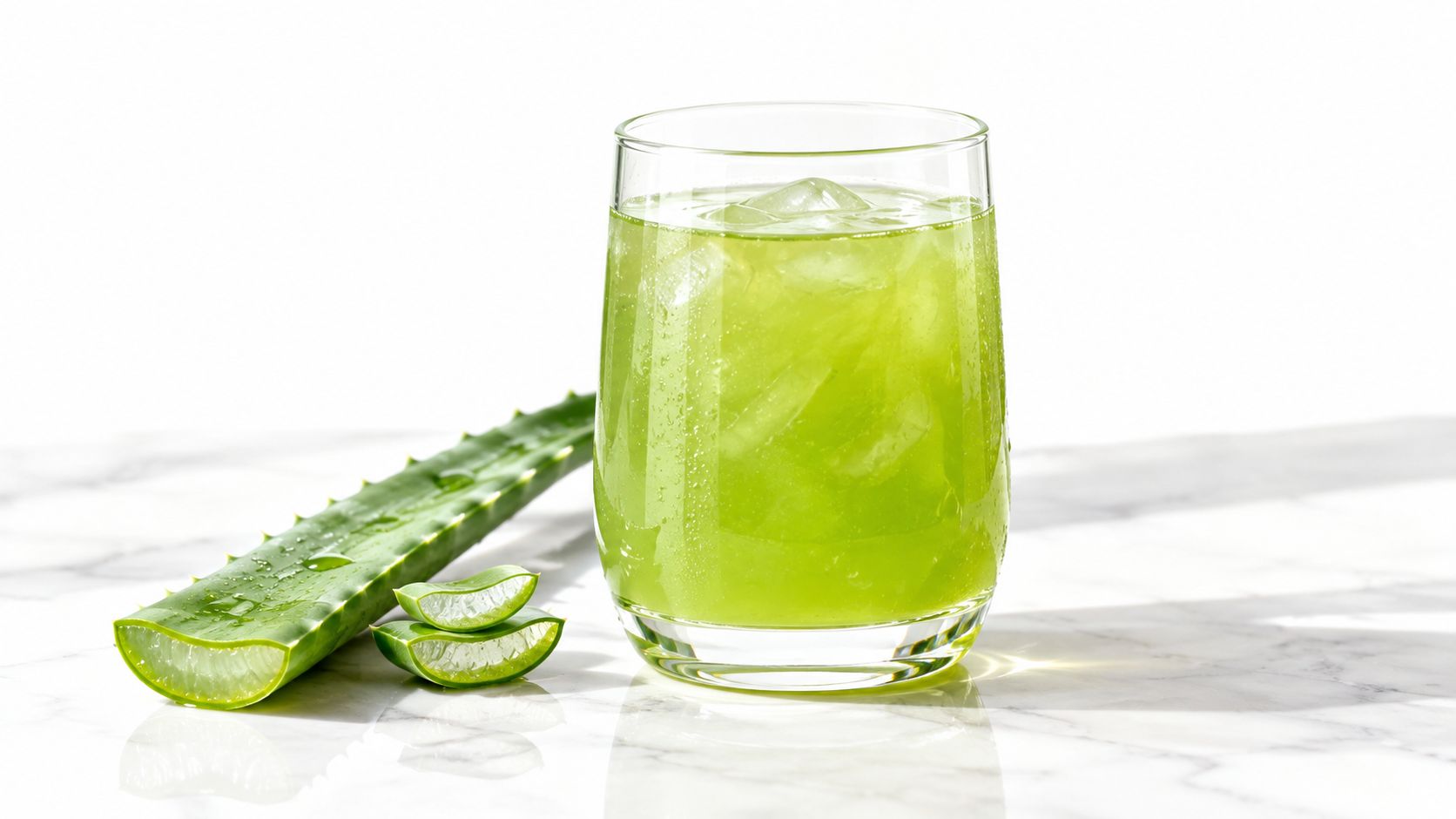
The most sensible way to add it to a routine is to start with the product's labeled serving rather than copying advice from another bottle. Different formulas can vary in aloe concentration, sweetness, texture, and processing. Drink it as directed, pay attention to how your body responds, and avoid assuming that a stronger flavor or more pronounced effect means higher quality.
A practical routine can be uncomplicated:
Water quality also contributes to the overall beverage experience. If you're comparing household options, this resource on purified water for families offers general background on choosing water for everyday use.
A 2010 review found that oral aloe research was product-specific and limited. It identified eight human trials involving 5,285 participants, with seven studies examining diabetes-related outcomes and six assessing lipid-related outcomes. One placebo-controlled study involved 72 adults with high fasting blood glucose who received one tablespoon of investigator-prepared aloe juice twice daily for 42 days. These results shouldn't be transferred automatically to a berry-flavored beverage, especially when the formula and processing are different. Review of oral aloe evidence and safety
Pregnancy, breastfeeding, kidney concerns, bowel conditions, unexplained abdominal discomfort, or regular medication use call for professional advice before starting an aloe product. The product form matters, so bring the complete label rather than relying on the phrase “aloe juice.”
The meaningful quality distinction is inner-leaf gel versus whole-leaf material, not whether a drink includes berries. “Berry” usually describes added flavor, while the aloe fraction determines which plant compounds enter the beverage.
Aloe leaves have an outer latex layer that may contain anthraquinones, including aloin. These compounds are associated with laxative effects and can change a beverage's safety profile if the latex is not adequately removed. Clear inner gel comes from a different part of the leaf than the rind and latex, so purified gel and whole-leaf material should not be treated as interchangeable. A plain explanation of what aloe vera juice is made of can help clarify these raw-material differences.
The National Institute of Environmental Health Sciences reports that most liquid aloe products contain less than 1 ppm aloin, while solid or semisolid products may contain concentrations 10–100 times higher. It also notes an industry oral limit of 10 ppm, although United States labels generally do not have to state aloin concentration. NIEHS information on aloe and aloin
The International Aloe Science Council describes an oral-product standard of less than 10 ppm aloin and emphasizes analytical verification of both raw materials and finished products. That is why a test result provides more useful information than broad terms such as “purified,” “natural,” or “decolorized.” Those words describe processing or positioning, not the measured aloin level.
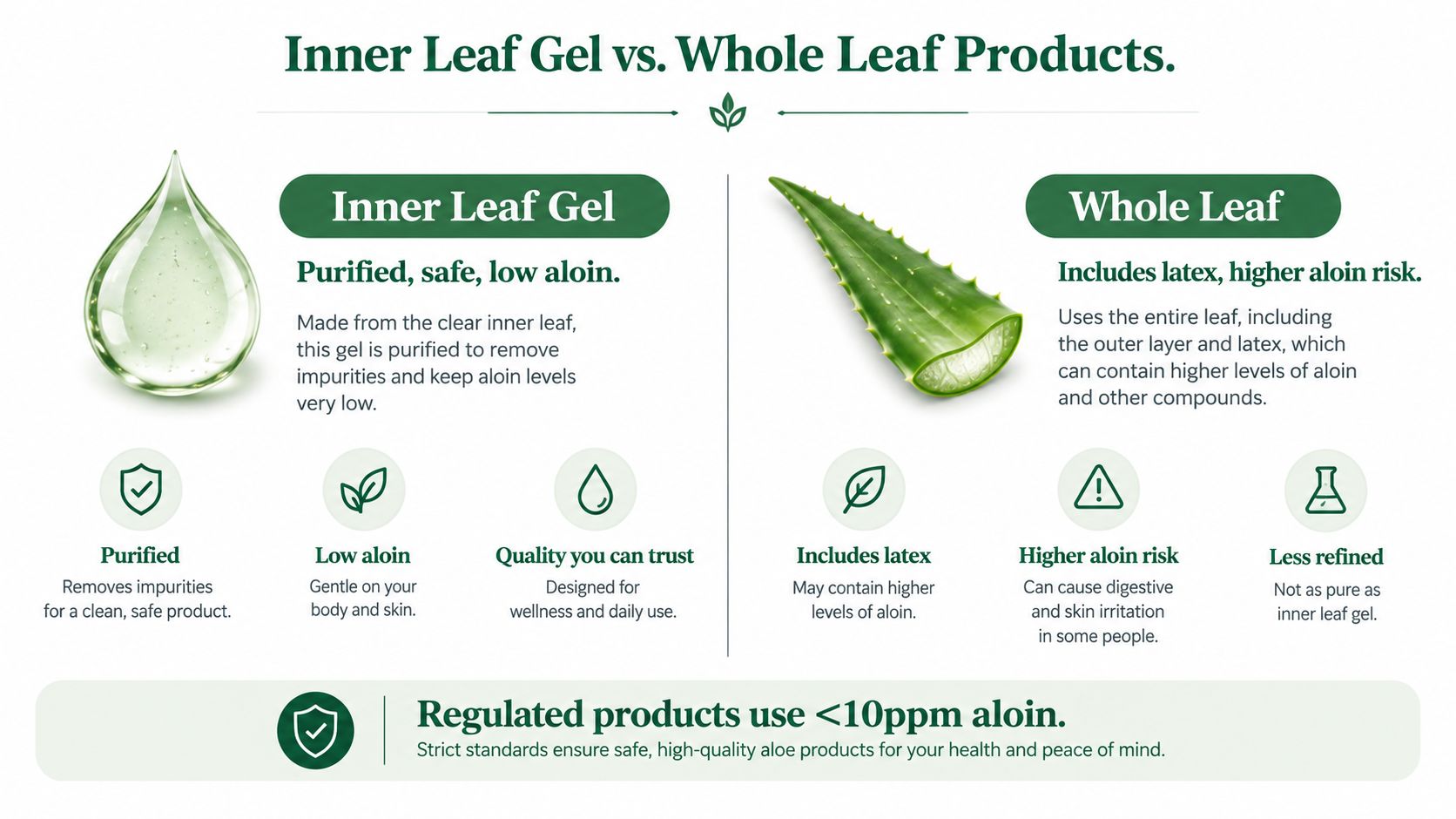
| Product feature | Purified inner-leaf gel | Whole-leaf material |
|---|---|---|
| Plant fraction | Clear gel from inside the leaf | Gel, rind, and possible latex fractions |
| Main quality question | Was purification validated? | How effectively was latex separated? |
| Aloin concern | Requires finished-product verification | Greater concern when latex remains |
| Label priority | Botanical part and testing information | Exact processing and aloin data |
A peer-reviewed study of a formulated aloe beverage with tropical fruits measured 0.0012 micrograms per milliliter of aloin, equal to 1.2 micrograms per liter, after pasteurization. The same beverage reached ascorbic acid concentrations as high as 158 mg per 100 mL. These findings show what documented formulation and processing can achieve, not a universal benchmark for every aloe berry drink. Study of a formulated aloe and tropical-fruit beverage
A transparent label should identify the leaf fraction, explain processing, and provide analytical results together. That combination separates a precisely defined aloe product from one relying mainly on flavor language or vague purity claims.
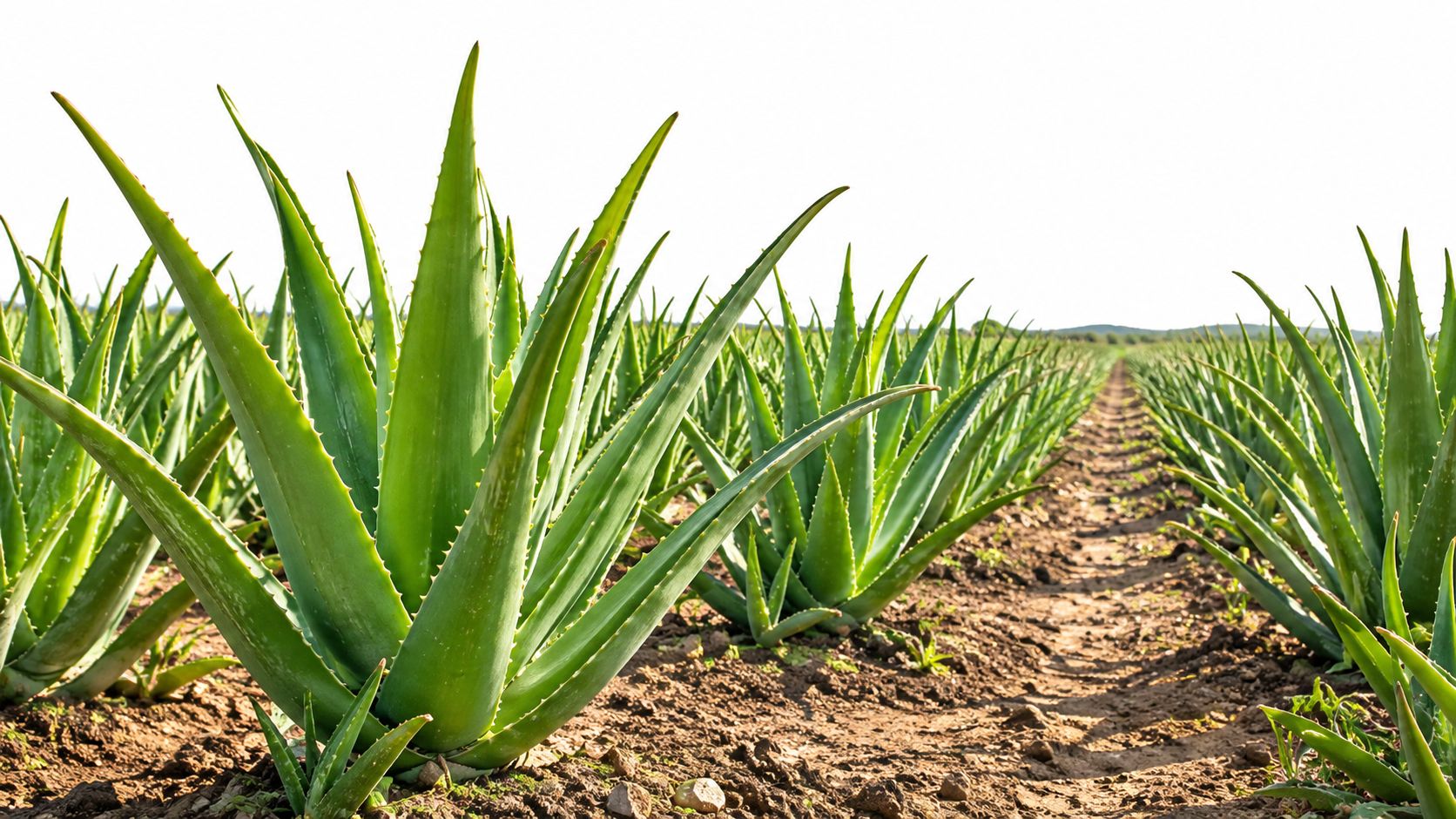
Aloe quality begins before the bottle reaches a retailer. The farm, harvest method, processing window, filtration choices, stabilization process, and finished-batch testing all influence what appears on the ingredient panel and in the glass.
A vertically integrated producer controls more of those steps directly. When a company farms its own aloe, processes the harvested leaves, and manufactures the finished product, it can maintain a clearer chain of custody than a business buying anonymous bulk material from multiple suppliers. That doesn't make every vertically integrated product automatically superior, but it creates a stronger basis for traceability and consistent specifications.
A credible quality program should be able to explain:
AloeCure describes a vertically integrated model in which its parent company owns aloe farms, processes aloe, and manufactures its products. Its published brand information also describes organic certifications, on-site processing, third-party certifications, and an eight-step traceability promise. Those are product-specific details to verify against the current label and documentation before purchase.
The practical advantage of this model is accountability. A producer that controls cultivation and processing can investigate variation at the source instead of trying to correct uncertainty after purchasing finished bulk juice. For shoppers, the takeaway is simple: traceability is more meaningful than a colorful flavor name.
“Berry” on the front label describes flavor, not a botanical part of the aloe plant. To assess whether a product is genuinely transparent, start with the back panel, then use the front label to confirm that its marketing matches the formula.
| Label area | What to look for | Why it matters |
|---|---|---|
| Aloe source | Inner-leaf gel or clearly defined leaf material | Identifies the plant fraction |
| Ingredient order | Aloe listed clearly, with flavor and sweeteners disclosed | Shows what the formula contains |
| Serving information | Serving size and servings per container | Helps you compare products fairly |
| Sugar information | Added sugars and sweetening ingredients | Berry flavor does not guarantee a low-sugar formula |
| Aloin documentation | Quantitative results in ppm or a clear testing statement | Provides information beyond marketing language |
| Certification | Current organic or third-party certification details | Supports sourcing and quality review |
| Supplement Facts | Every dietary ingredient and amount per serving | Required for dietary supplement presentation |
Read the ingredient list as a recipe, with the first item generally representing the largest component by weight. Check whether “berry” identifies a natural flavor, a named fruit, or a broader blend. Then compare the serving size and sugar information with plain or lightly flavored alternatives. Organic certification describes a production standard, not the absence of sweeteners or added flavor.
Aloin information deserves separate attention. Labels may use terms such as “purified” without showing a measured result, so a company that provides quantitative testing gives shoppers a clearer basis for comparison. If the product provides only a general testing statement, treat that as different from a reported result.
Aloe's flavor and a product's wellness claims answer different questions. For dietary supplements, structure/function claims must be truthful, not misleading, and supported by substantiation. FDA requires notification no later than 30 days after a supplement is first marketed with a structure/function claim, along with the required disclaimer when applicable. FDA structure/function claim requirements
Review the company website as well as the bottle. FDA considers supplement information presented online, and a product page should match the label and show a complete Supplement Facts panel with serving size, servings per container, each dietary ingredient, and the amount per serving. FDA supplement labeling guidance
For applicable structure/function claims, the required disclaimer is:
These statements have not been evaluated by the Food and Drug Administration. This product is not intended to diagnose, treat, cure, or prevent any disease.
A berry-flavored aloe beverage works best when the recipe lets its flavor remain noticeable without burying the aloe under heavy sweetness. Pour it chilled over ice for the simplest option, or combine it with sparkling water and fresh berries for a lighter, more textured drink.
For a smoothie, use aloe vera berry juice as part of the liquid base with mixed berries, coconut water, and a spoonful of plain yogurt or a plant-based alternative. Keep the serving aligned with the product label, especially when the smoothie includes other sweet ingredients.
You can also freeze the drink into small ice cubes and add them to water, or spoon a modest amount over a fruit bowl. A berry-forward aloe beverage pairs naturally with oats, chia pudding, and breakfast bowls, where its flavor can replace some of the sweetness from syrups.
The best recipe is one you'll prepare consistently. Read the label first, choose a formula with transparent ingredients, and use the product as directed rather than assuming that a stronger flavor signals a stronger wellness effect.
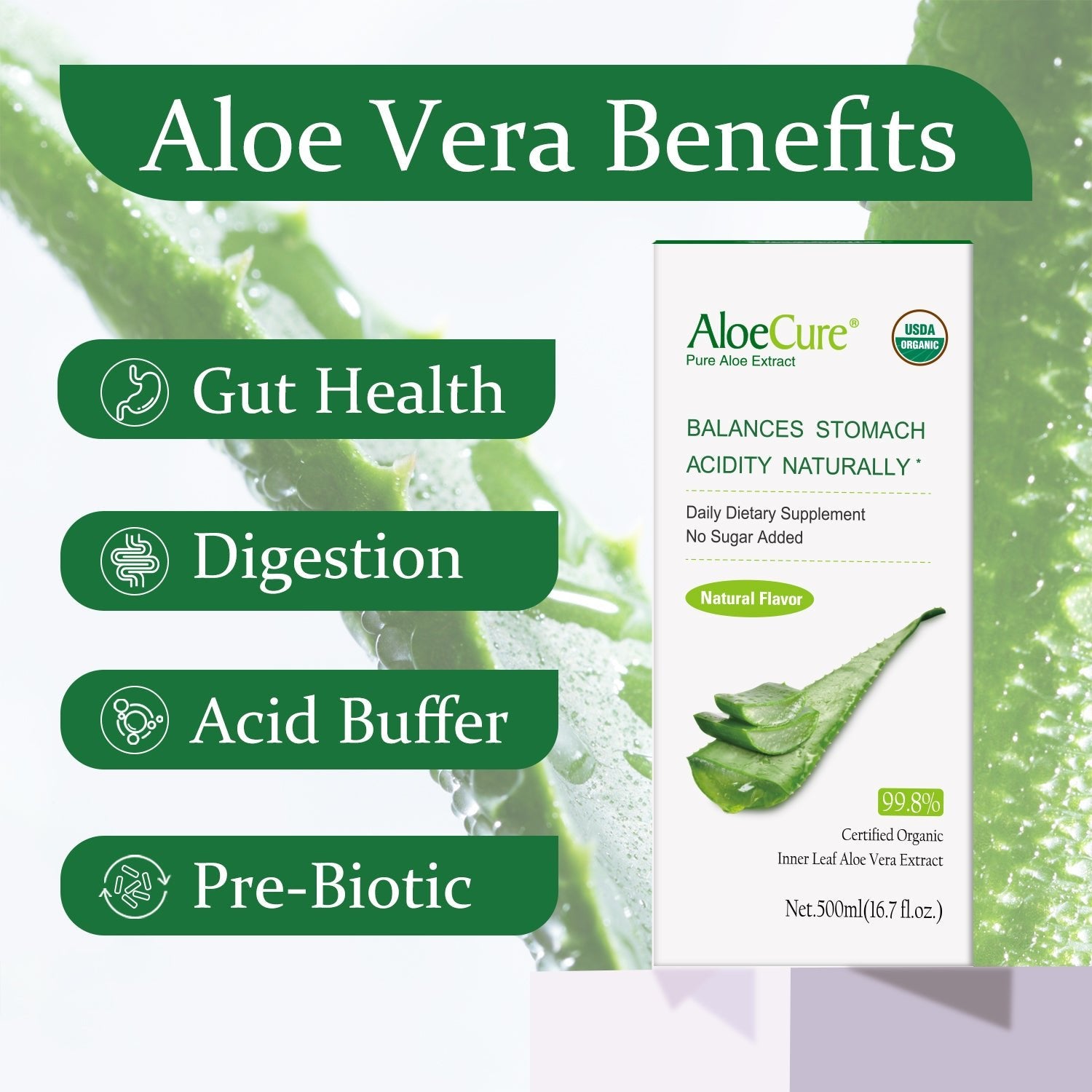
AloeCure offers organic aloe vera juice in a grape flavor, providing a berry-style option made from aloe rather than an aloe fruit. Visit AloeCure to review the current product details, compare subscription options, and explore Subscribe & Save for 20% off recurring orders.
Les commentaires sont approuvés avant leur publication.