Your Cart is Empty


You finish dinner, settle onto the couch, and notice that familiar heaviness under your ribs. Lunch passed without much thought, but the evening meal seems to linger. Your abdomen feels full, tight, or gassy, and once you lie down, the sensation becomes much harder to ignore. This experience often gets described as slow digestion at night, but it may involve more than food moving slowly through the stomach.
Nighttime changes the setting in which digestion occurs. Your internal clock, lower activity, sleep-related changes in motility, meal size, body position, and microbial gas production can all influence how the evening feels. Understanding those layers makes it easier to choose practical habits that support normal digestive function without blaming yourself for a response that has a biological basis.
By the time Maya finishes dinner, she feels comfortably satisfied. An hour later, she notices a heavy sensation beneath her ribs. Her abdomen feels stretched, her stomach seems sluggish, and small pockets of gas move without passing easily. She turns on the couch, loosens her waistband, and wonders why the same kind of meal felt fine earlier in the day.
That evening pattern can include upper abdominal fullness, tightness beneath the ribs, a gassy or weighted feeling, mild nausea, and repeated restlessness in bed. The sensations don't always arrive immediately. Sometimes they build gradually as the person becomes less active, stops moving around the house, and reclines.
Practical rule: A meal can feel more noticeable at night because digestion is happening during a lower-motility period and in a body position that changes how pressure is perceived.
Daytime discomfort may fade into the background because you're walking, working, and staying upright. At night, the same sensation competes with quiet surroundings and the transition toward sleep. Lying down can make fullness or pressure feel stronger, even when the meal itself wasn't unusual.
The phrase slow digestion at night also covers different experiences. One person may mainly notice food-related fullness, while another feels distension and gas several hours after dinner. A useful overview of digestive wellness signs is available in AloeCure's guide to signs of poor gut health.
Occasional evening discomfort isn't the same as a persistent pattern. If symptoms repeatedly interrupt sleep, appear with other concerning changes, or steadily become more intense, it makes sense to speak with a qualified professional. For everyday episodes, the next question is why nighttime creates such a different digestive environment.
Your digestive system doesn't run at one fixed speed all day. Circadian regulation influences motility, digestion, absorption, and electrolyte balance across the gastrointestinal tract, while nighttime bowel activity is typically minimal compared with daytime activity, as described in this review of circadian rhythms and digestive physiology.
During the day, movement, meals, and normal alertness support active digestive work. As evening arrives, physical activity usually falls and the body begins shifting toward rest. The migrating motor complex, which helps coordinate movement between meals, also functions within this broader daily rhythm. The result isn't a complete shutdown, but a gradual reduction in the conditions that help food and gas move along comfortably.
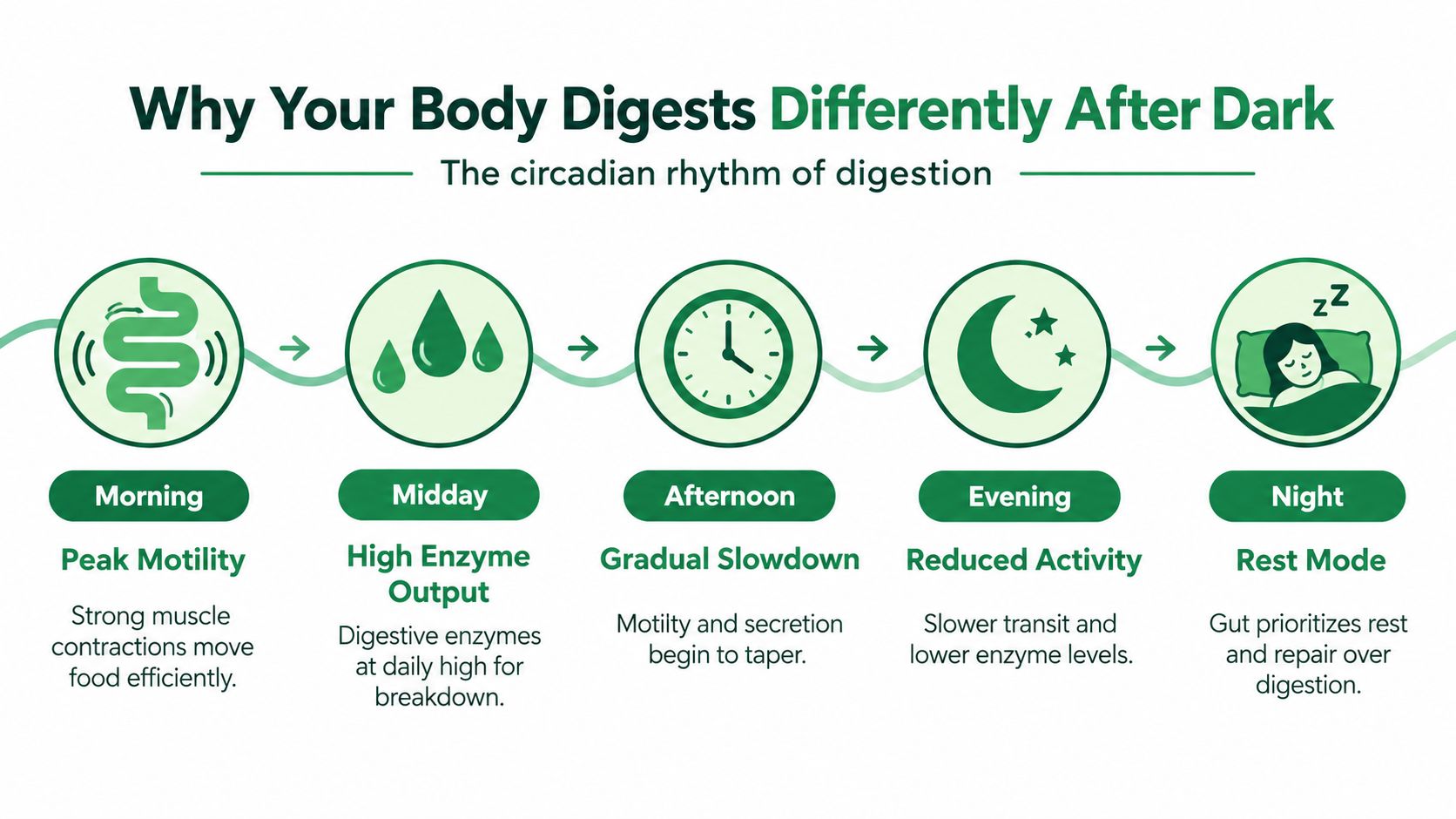
Sleep adds another layer. A review of sleep and digestive physiology reports that gastric emptying is slow during sleep, while REM sleep is associated with faster gastric emptying. It also describes gastric cycling at 2 to 4 cycles per minute, with cycle amplitude declining during NREM sleep and returning during REM sleep. These findings help explain why clinical gastric-emptying tests are commonly scheduled in the morning after an overnight fast, often following at least 4 to 6 hours without food (sleep and digestive physiology review).
Human meal-timing research shows the effect directly. In one classic study of 16 healthy men, evening gastric emptying half-times were significantly longer than morning half-times, and evening emptying time increased by 53.6% overall. A review also summarized a more than 220% delay in gastric-emptying half-time when the same meal was eaten at 23:00 instead of 08:00 in two healthy adults (classic study of meal timing and gastric emptying).
The practical meaning is simple. A meal eaten at noon gets more support from movement and daytime digestive rhythms than the same meal eaten close to bedtime. That difference isn't a personal failure or proof that your body is “broken.” It reflects a normal daily pattern that can make a large evening meal feel heavier.
A discussion of the relationship between the nervous system and digestion appears in AloeCure's explanation of the gut-brain axis.
A slower nighttime baseline doesn't act alone. Evening discomfort often develops when several manageable factors arrive together, such as a large meal, reclining soon afterward, and little movement for the rest of the night.
Large portions create more work at the least convenient time. A generous dinner occupies more space and takes longer to process than a modest meal. The problem becomes more noticeable when dinner is also the day's heaviest meal.
Fat can extend the meal's stay in the stomach. Sources discussing nighttime digestion note that a light snack may need about 1 hour, while a large or fatty dinner can require 3 to 4 hours or more before comfortable sleep (meal size and nighttime digestion timing). A creamy pasta dish, fried entrée, or rich dessert may therefore feel very different from a lighter plate eaten at the same hour.
Lying down soon after eating removes the helpful effect of gravity. Reclining can also make pressure easier to notice because the abdomen is no longer supported by an upright posture. A tight waistband adds external pressure, especially after a large meal.
Alcohol with dinner may compound the situation by appearing alongside rich foods, later eating, and reduced activity. Stress matters too. A tense evening can change breathing, eating speed, muscle tension, and the ability to notice fullness before the plate is empty.
The most useful approach is accumulation rather than blame:
For food ideas that fit a calmer evening routine, browse SleepHabits' guide to sleep-promoting foods. You can also compare common meal-related triggers in AloeCure's food guide for digestive comfort.
Small changes can stack. Reducing portion size may help, but pairing that change with earlier timing and a short walk often creates a more comfortable overall pattern.
Evening heaviness doesn't always mean food is sitting in the stomach. A less obvious possibility is fermentation and gas handling farther along the digestive tract. Gut microbes break down carbohydrates and fibers that weren't fully absorbed earlier, producing gases including hydrogen, methane, and carbon dioxide.
When motility slows at night, gas may have more time to build before it moves through. Lying down can make that pressure feel more concentrated, so a person may describe bloating, tightness, or fullness even when the main issue isn't delayed stomach emptying. This distinction matters because a strategy designed to “move food faster” may miss a pattern driven mostly by microbial gas.
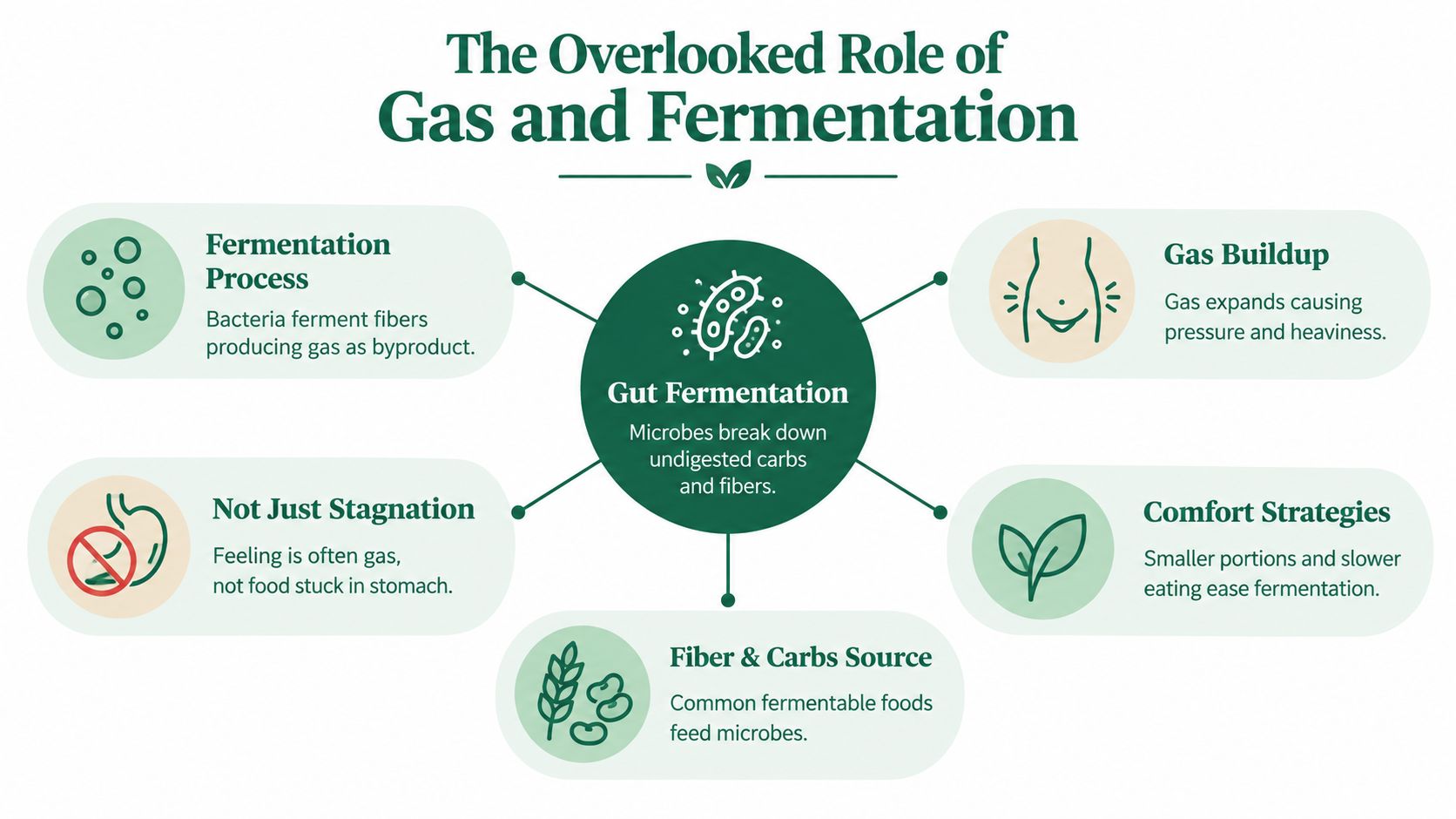
A stomach-centered pattern often begins relatively soon after a meal and feels like fullness beneath the ribs. A fermentation-centered pattern may emerge later, shift location, and feel more like expanding pressure or passing gas. These descriptions aren't a diagnosis, but they can help you observe what happens instead of assuming every evening sensation has one cause.
Dinner ingredients can increase the fermentation load. Onions, beans, apples, some dairy foods, and wheat are examples of foods often discussed in relation to fermentable carbohydrates. Carbonated drinks add gas directly, while chewing gum can increase swallowed air. A clinical explanation of nighttime gas discusses these factors and offers practical suggestions in Cleveland Clinic's guide to gas at night.
If fiber-rich foods are part of your evening meals, Rip Van's explanation of high-fiber diets and gas provides additional context. The answer isn't automatically to remove nutritious foods. Instead, notice portions, combinations, eating speed, and timing.
This reframing can be reassuring. The sensation may reflect slower transit and gas accumulation rather than a single meal becoming permanently stuck. That points toward calmer eating, smaller portions, less carbonation, and more upright movement as useful experiments.
Start with the clock. Finishing the last full meal at least 2 to 3 hours before lying down gives the stomach time to begin emptying while you remain upright. This window is commonly recommended for reducing the digestive load carried into sleep (nighttime meal timing guidance).
The meal itself doesn't need to be tiny or joyless. A moderate portion with a balanced mix of foods is usually easier to manage than a very large, rich dinner eaten late. Lowering the evening fat load can also shorten the period of heavy fullness, while keeping portions of highly fermentable ingredients reasonable may reduce the amount of material available for gas production.
Slow your pace enough to notice the transition from hungry to satisfied. Put the utensil down between bites, chew thoroughly, and avoid washing the meal down with large amounts of carbonation. These habits don't force digestion to speed up. They reduce the amount of work and swallowed air arriving at once.
Remain upright after eating. A relaxed walk can support normal movement without turning dinner into an exercise session. If you prefer to sit, choose a chair that keeps your torso comfortably raised rather than curling into a deep couch.
Evening swaps can be simple:
Digestive bitters are sometimes used in wellness routines, but individual tolerance varies and evidence isn't uniform across products. Treat them as optional rather than essential. The same principle applies to herbal tea. A warm, noncarbonated drink can become part of a calming ritual, but it shouldn't replace attention to meal timing and portion size.
A comfortable evening usually comes from several modest choices, not one dramatic intervention.
Body position at bedtime is personal. Some people find side-lying more comfortable than lying flat, and a gentle elevation can change how pressure feels. Choose a stable, comfortable setup that doesn't strain your neck or back. If nighttime symptoms persist despite these adjustments, professional guidance is more appropriate than continually adding products.
Eating late can also prolong post-meal glucose elevation when physical activity drops during sleep, so earlier meals generally align more closely with the body's normal metabolic rhythm, as discussed in this review of late eating and circadian metabolism.
For adults who want a plant-based addition to an evening wellness routine, organic inner-leaf aloe vera juice may provide gentle support for normal digestive comfort. Aloe inner-leaf juice has a long-standing reputation for a cooling, soothing place in digestive wellness traditions, while its plant polysaccharides are commonly discussed in relation to supporting a comfortable gut lining.
The label deserves careful attention. “Organic” refers to how the agricultural and handling standards are verified, not to a green logo or a natural-sounding description. USDA organic certification operates under 7 CFR Part 205 through the National Organic Program, a concrete compliance framework for substantiating organic claims (USDA organic certification framework).
“Inner-leaf” refers to the clear inner portion of the aloe leaf, distinct from the outer latex layer. Quality processing typically includes removal of aloin, a naturally occurring compound associated with the leaf's outer material. Consumers should look for clear labeling, testing information, and a processing method that explains how the finished juice is made.
AloeCure farms its own aloe, processes the plants, and produces its own finished products. This vertical integration gives the company control across the path from field to bottle, rather than relying only on a commodity ingredient from an outside supplier. The brand describes hand-harvesting USDA- and EU-certified organic aloe and processing it on-site within 12 hours of harvest, with a proprietary process that avoids chemicals, enzymes, concentrates, and charcoal filtration.

That traceability can matter when you're comparing a directly processed juice with a product reconstituted from concentrate. It doesn't make aloe a substitute for evaluation when symptoms persist, and it doesn't guarantee that every person will respond in the same way. It does give shoppers specific quality questions to ask.
If aloe vera juice fits your routine, follow the product label and consider a small serving during the evening, well before lying down. AloeCure offers organic juice options and a subscription choice for people who prefer consistent delivery. These statements have not been evaluated by the Food and Drug Administration. This product is not intended to diagnose, treat, cure, or prevent any disease.
A routine works best when it feels easy to repeat. Start about 3 hours before bed by finishing a light, balanced dinner. Keep the meal moderate, eat slowly, and leave enough time for upright digestion rather than treating bedtime as the end of the meal.
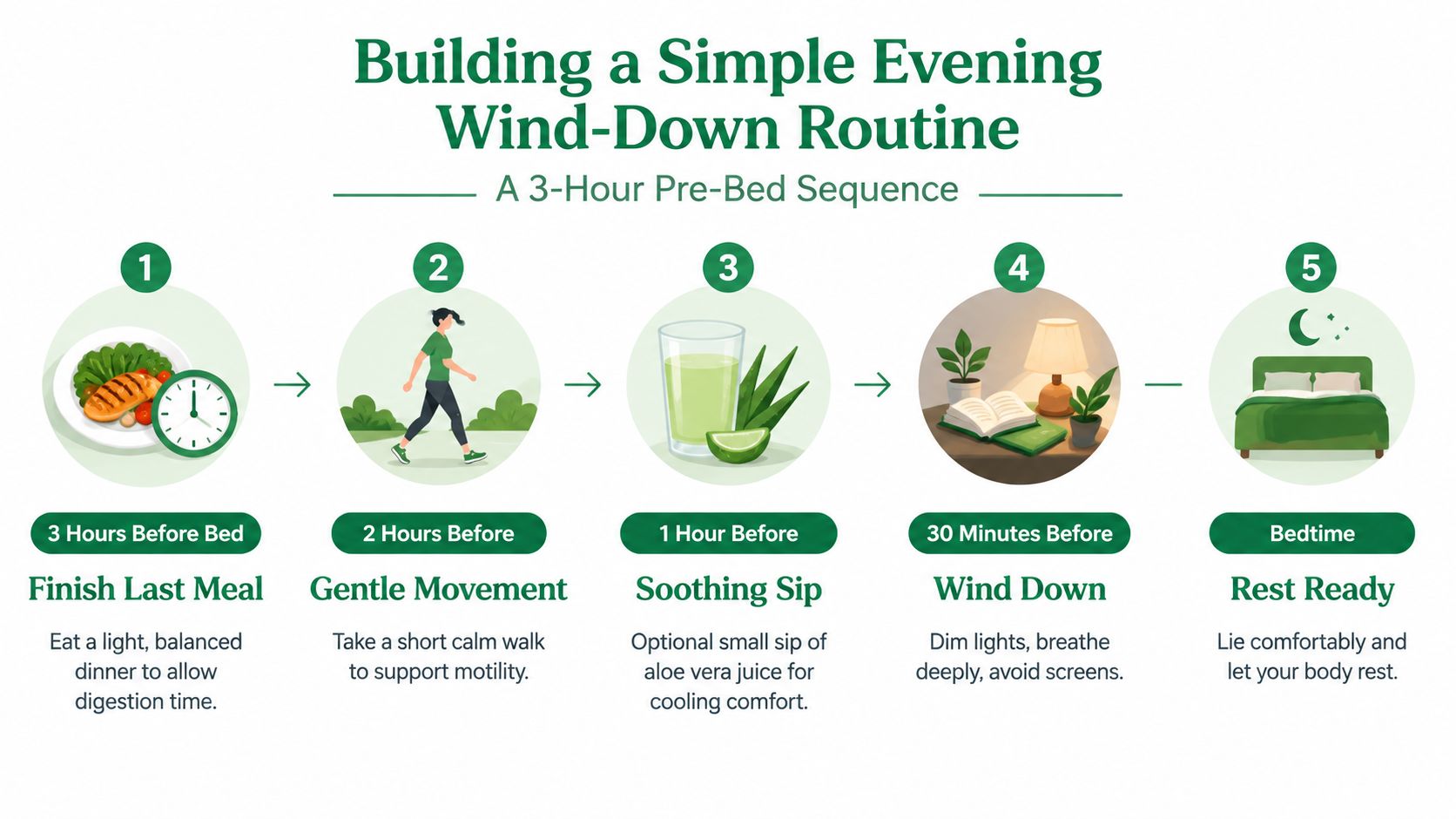
At roughly 2 hours before bed, take a short, relaxed walk. It doesn't need to be fast or strenuous. The purpose is to keep the body gently active while giving your mind a clear transition out of dinner and into the quieter part of the evening.
About 1 hour before bed, dim the lights and, if it suits you, take a small serving of aloe vera juice alongside a noncarbonated herbal tea. Follow the product directions, and treat the aloe as an optional wellness choice rather than the central feature of the routine.
At around 30 minutes before bed, choose a low-stimulation activity. Read a paper book, stretch gently, or practice slow breathing. Keep screens dim or set them aside if they encourage late snacking and alertness.
When you go to bed, use a comfortable position that keeps your upper body gently raised if that feels better for you. A wedge pillow can provide a stable angle, but comfort matters more than forcing a particular posture.
The sequence works through stacking. Earlier food intake gives digestion more time, walking preserves gentle activity, a quieter hour reduces rushed eating and late snacking, and a raised position avoids moving directly from dinner to horizontal rest. You don't need perfect consistency. Repeating the parts that fit your schedule can help you learn which changes make your evenings feel lighter.
Occasional fullness after a late or rich meal is different from a recurring pattern that affects daily life. Consider speaking with a qualified health professional if nighttime symptoms repeatedly interrupt sleep, if swallowing becomes difficult, if you notice unintentional weight changes, or if persistent throat clearing or hoarseness accompanies the pattern.
A professional conversation also makes sense when you find yourself relying increasingly on over-the-counter antacids or when symptoms occur more than twice weekly. Nighttime discomfort that continues for several nights in a row deserves attention, especially if your usual food and timing changes haven't altered it.
A clinician can help distinguish among different contributors, such as functional changes in digestion, food sensitivities, medication side effects, or other causes. Depending on your history, they may recommend observation, basic testing, or a short-term care plan. Bring a simple record of dinner time, meal size, ingredients, body position, and the time symptoms begin.
You don't need to wait until the experience becomes overwhelming. Earlier questions often make it easier to identify the pattern and choose an appropriate next step. The habits in this article can still support normal wellness alongside professional guidance, but persistent symptoms shouldn't be managed only through trial and error.
AloeCure offers organic inner-leaf aloe vera juice made through a vertically integrated process, from its own farms through processing and production. Visit AloeCure to explore the juice options and Subscribe & Save plans, including 20% off subscriptions, and choose an evening wellness routine you can follow consistently.
Comments will be approved before showing up.