Your Cart is Empty


What if the core question isn't how many billions of CFUs are on the bottle, but whether the strains, the fiber, and the quality controls work together effectively? Most shoppers are taught to scan one number and move on. A smarter way is to look at the whole formula, because a pre and probiotic supplement is only as useful as the specific microbes, the prebiotic substrate they can use, and the way the product is made and stored.
A heavy, overfull feeling after a meal can make any supplement label look promising. The harder part is that prebiotics and probiotics do different jobs, so mixing them up makes a formula harder to judge.
The gut works like a garden. Probiotics are the living microorganisms you add to that garden, while prebiotics are the material those microbes can use as fuel. One brings in live organisms, the other feeds the ecosystem around them.
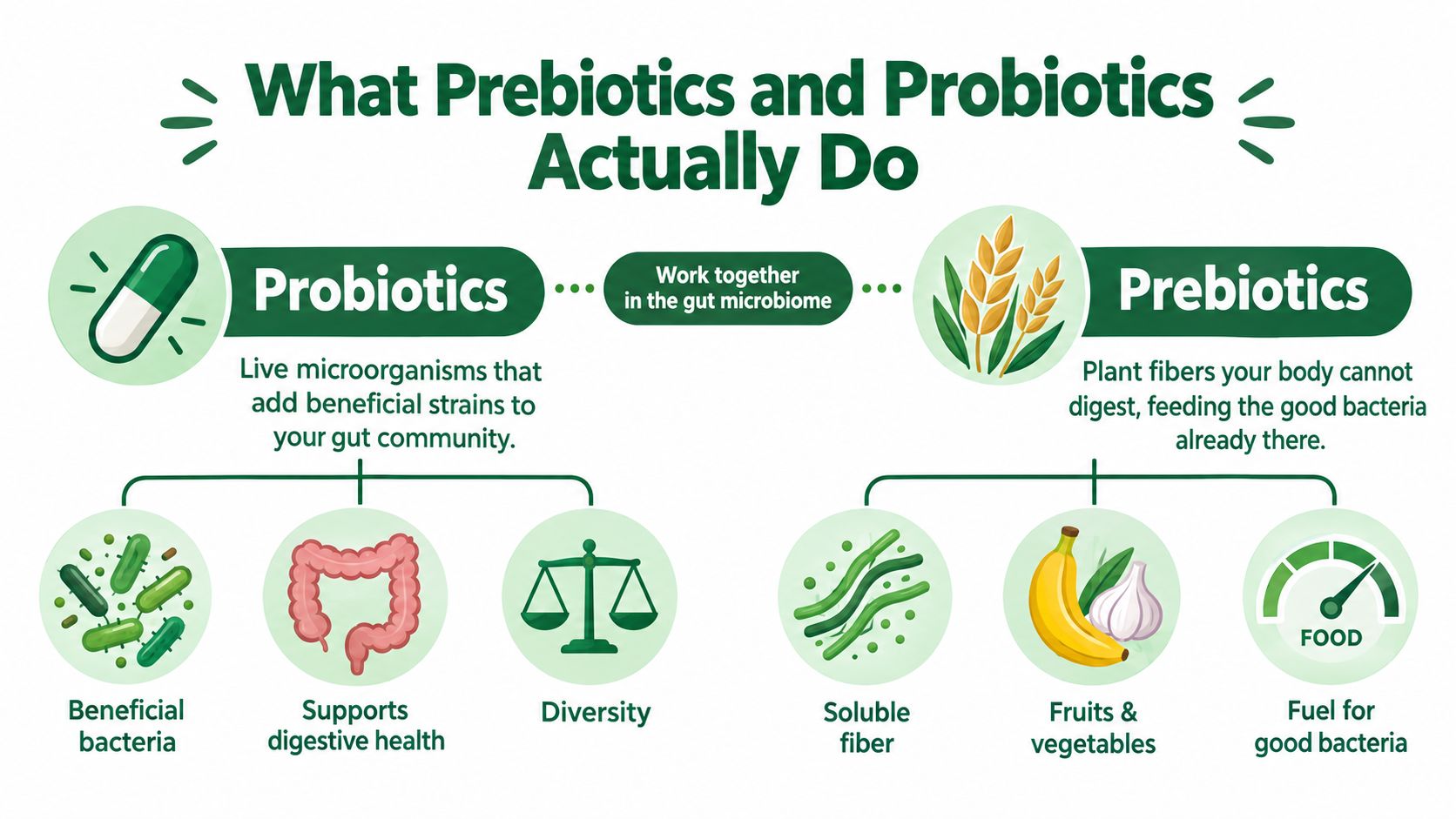
The definition of probiotics is precise. They are live microorganisms that, when given in adequate amounts, confer a health benefit on the host. Later guidance from the World Gastroenterology Organisation stresses that probiotic effects depend on the specific strain, dose, formulation, and the population studied, which is why one strain should not be treated like another (World Gastroenterology Organisation).
Prebiotics were defined later as a scientific concept. The accepted definition requires a substrate that is selectively used by host microorganisms and linked to a health benefit (World Gastroenterology Organisation). That is why a fiber ingredient is not automatically a prebiotic just because it sounds healthy.
A plain-language comparison can help. A microbe label should tell you what strain is included. A prebiotic label should tell you what fiber or substrate it uses. If either side is vague, the formula is harder to assess.
Practical rule: if a label does not tell you what microbe it contains, or what fiber it uses, you are not looking at a clear formula.
If you want a very specific use-case example, probiotic mints for fresh breath from Mouthology show how a product can be designed around a narrow goal. For a broader comparison, AloeCure also has its comparison guide on the difference between prebiotics and probiotics.
A probiotic by itself is a bit like planting seeds in bare ground. Some may take hold, but they usually do better when the soil already has the right support. A paired formula gives the microbes both a living strain and the food source they can use after they arrive.
That pairing is often called synbiotic support, meaning a prebiotic and probiotic are formulated to work together. The idea is straightforward. The probiotic brings in a strain, while the prebiotic serves as selective fuel that can help shape the ecosystem around that strain and related beneficial microbes.
The World Gastroenterology Organisation's 2023 guideline update reviewed 800 bibliographical entries covering research from 2017 through 2021, and it emphasized that benefits need to be assessed for the specific ingredient, not the category name alone (WGO guideline update). That distinction matters because the same label can hide very different outcomes.
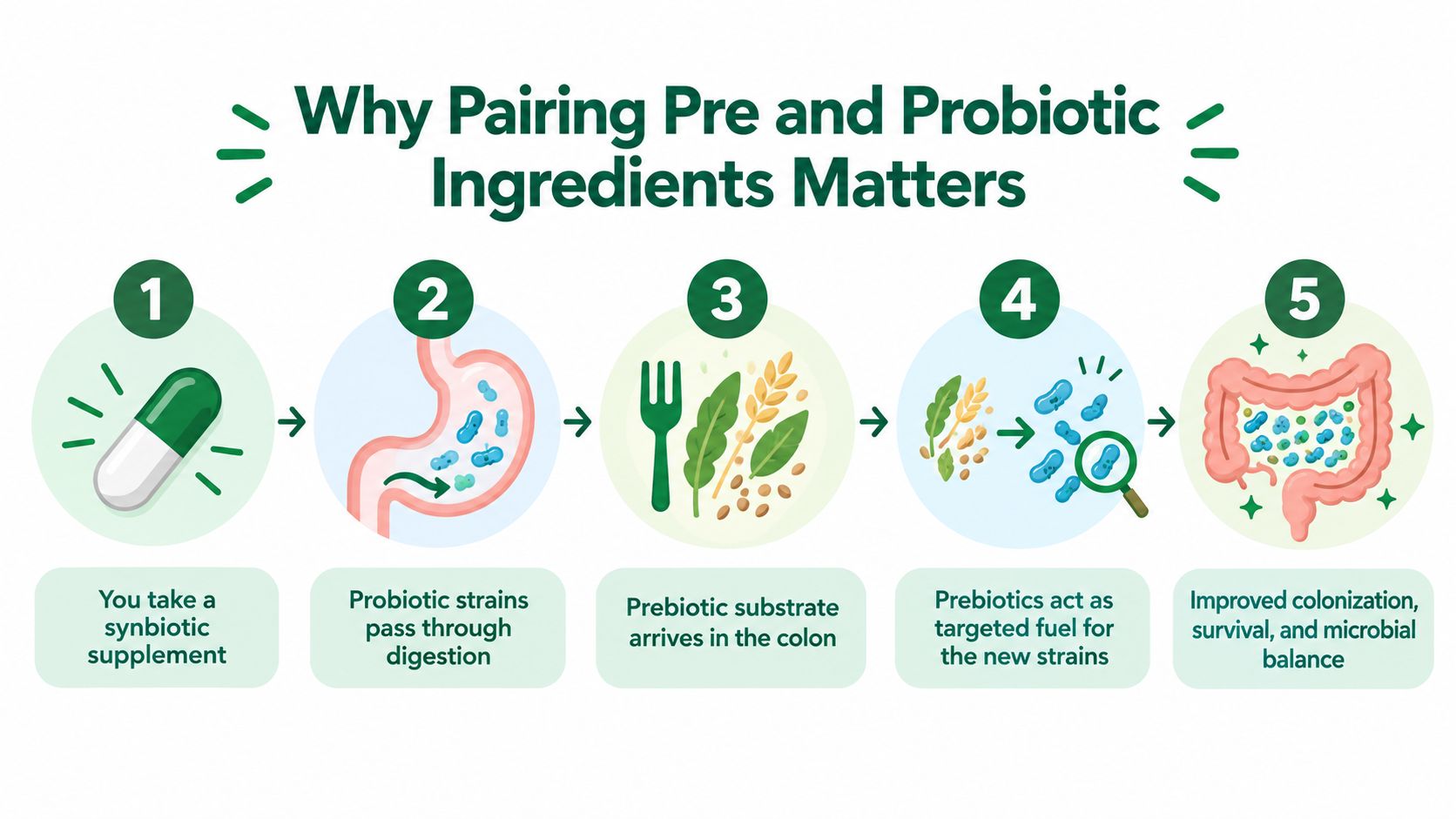
Recognized prebiotics commonly support beneficial taxa such as Bifidobacterium and Lactobacillus, and they can increase short-chain-fatty-acid production, but responses vary because baseline microbiota, diet, dose, and duration all differ (ISAPP/ILSI resource). That is why a combined formula should not be judged by the probiotic count alone.
In practice, the decision matrix goes beyond CFU numbers. Strain specificity matters, the prebiotic substrate matters, and viable potency through shelf life matters too. A formula can look strong on the label and still be a poor match if the strain is vague, the substrate is unhelpful, or the microbes do not stay viable long enough to matter.
A good pairing does not promise magic. It gives the microbes a better environment to do their job.
If you want to see that idea in plain language, the digestive enzyme and probiotic overview from AloeCure is a useful companion read. It shows how a multi-part formula can be built around daily support rather than a single headline ingredient.
People usually do not buy a pre and probiotic supplement because they want a lesson in microbiology. They buy one because they want their daily routine to feel steadier, lighter, and more predictable. The useful way to describe benefits is through structure/function language, not disease promises.
A well-built formula can support healthy digestive function, promote normal gastrointestinal wellness, help maintain balanced gut flora, and assist the body's natural processes. Those are wellness claims, not medical claims, and they fit dietary supplement rules when they are truthful and substantiated (FDA structure/function claims; FDA compliance guide).
A strain-specific example helps make the point. The NIH Office of Dietary Supplements summarizes evidence that Saccharomyces boulardii reduced antibiotic-associated diarrhea in a meta-analysis of 21 randomized controlled trials involving 4,780 participants, with incidence falling from 17.4% to 8.2% versus placebo or no treatment (NIH ODS probiotics fact sheet). That kind of result matters because it comes from a named strain in a defined setting.
A probiotic label can look simple while still leaving key questions unanswered. Benefits in trials often apply to particular strains or defined combinations, not to unrelated products with similar names, as noted in the VA nutrition and food service probiotic resource. If a label only lists a species, or only highlights a CFU number, you still do not know whether it matches the evidence.
That is why the comparison is broader than count alone. Strain specificity matters, the prebiotic substrate matters, and viable potency through shelf life matters too.
For a food-first perspective that fits into daily meals, the top gut-friendly foods guide from Gym Snack is a useful companion. Food choices and supplements can work together, but they serve different roles.
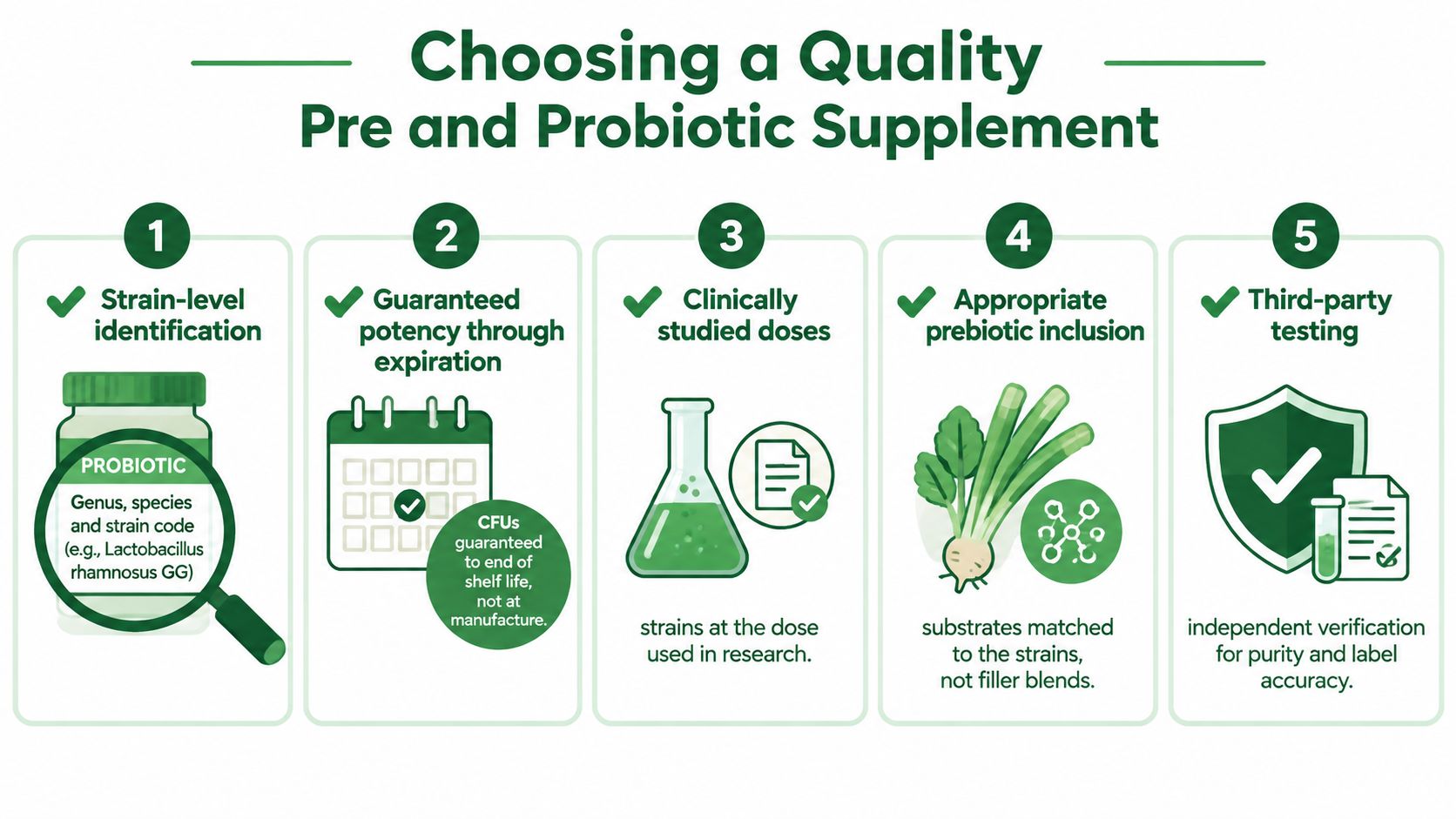
What should you look for first on a pre and probiotic supplement label? Start with the parts that let you judge the formula itself, not just the headline number. A bigger CFU count can sound convincing, but it does not tell you whether the strains match the research, whether the prebiotic feed is well chosen, or whether the organisms are still viable when you open the bottle.
The FDA's fiber labeling rules offer a useful benchmark for clarity. Dietary fiber is defined using specific technical criteria, and when a label makes a claim about soluble or insoluble fiber, it needs to list the relevant quantity (FDA food labeling guide)). That is the level of precision prebiotic labeling should aim for too.
Traceability matters because it shows how much of the process the brand can account for, from raw material handling to final packaging. A vertically integrated company does not automatically make a formula better, but it can make quality control easier to verify and reduce the number of weak points hidden from view.
A good label should answer the same practical questions every time. Which strain is it? What prebiotic substrate is included? Is the potency guaranteed through shelf life? Has the product been tested in a way the brand can explain clearly?
Simple test: if the brand can't explain the strain, the substrate, and the shelf-life guarantee in plain language, keep looking.
A label that answers all five checks in plain language is usually a label you can trust.
The right routine starts with reading the label the way a careful shopper reads any food or supplement panel. CFU count tells you how many viable organisms are in a serving, but it doesn't tell you whether those organisms match your goal, whether they survive storage, or whether the prebiotic part is doing anything useful.
Some people do better taking a capsule with food, while others prefer a different timing pattern based on the product design. The label should guide you, and your own tolerance should finish the decision. If a formula includes digestive enzymes, pairing them with meals makes practical sense because enzymes are meant to assist the body's normal breakdown of food.
A simple personal trial can be more informative than guessing. Pick a routine and track it for two to four weeks, watching for how you feel after meals, whether your tolerance changes, and whether the routine is easy to keep. If a product makes you uncomfortable or doesn't fit your day, that tells you something useful.
The best routine is the one you can keep. That sounds simple, but it's where most supplement plans succeed or fail.
A supplement label should answer a simple question before you buy: what is in the bottle, how much is included, and who should be cautious? If it cannot answer that clearly, pause.
Some people need extra care before starting a pre and probiotic product, especially if they manage a condition, take prescription products, or are pregnant. A qualified practitioner can help judge whether a formula fits that person's situation.
Start with the label itself. Does it name the strain and the prebiotic ingredient clearly? Does it show a shelf-life guarantee? Does it use structure/function language instead of drifting into disease language?
That last point matters because supplement claims have rules. Under FDA labeling guidance, a dietary supplement may use a structure/function statement only when the claim is truthful and not misleading, the company notifies FDA within 30 days after first marketing with that claim, and the label carries the required disclaimer in bold type: “This statement has not been evaluated by the Food and Drug Administration. This product is not intended to diagnose, treat, cure, or prevent any disease.” (FDA notifications and claims).
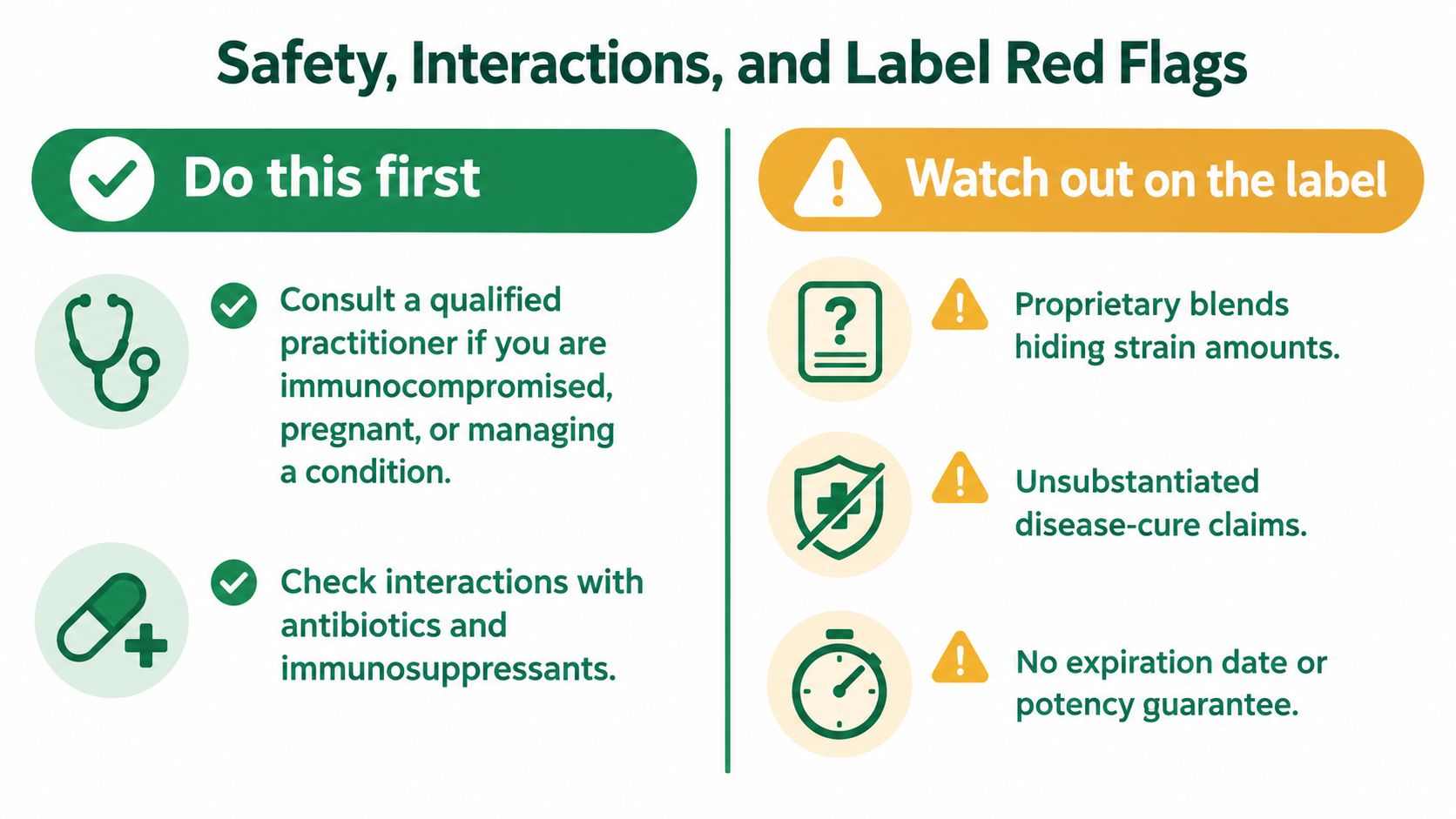
A good label also helps you compare formulas with less guesswork. AloeCure's supplement label guide is a useful plain-English reference for that kind of review. Five minutes spent checking the fine print can save you from buying a bottle that looks tidy but tells you very little.
Some formulas are built by assembling ingredients from different suppliers. Others are built from a tighter chain of control. AloeCure's Pre+Probiotic & Digestive Enzyme Capsules fit into the second category, with a vertically integrated aloe operation that AloeCure says includes 25 years of USDA- and EU-certified organic aloe farming and on-site processing within 12 hours of harvest.
That production model matters because traceability starts at the source. When a company farms, processes, and manufactures more of its own raw material, it has more control over consistency, timing, and documentation. For a wellness supplement, that supports a cleaner story around ingredient sourcing and quality control.
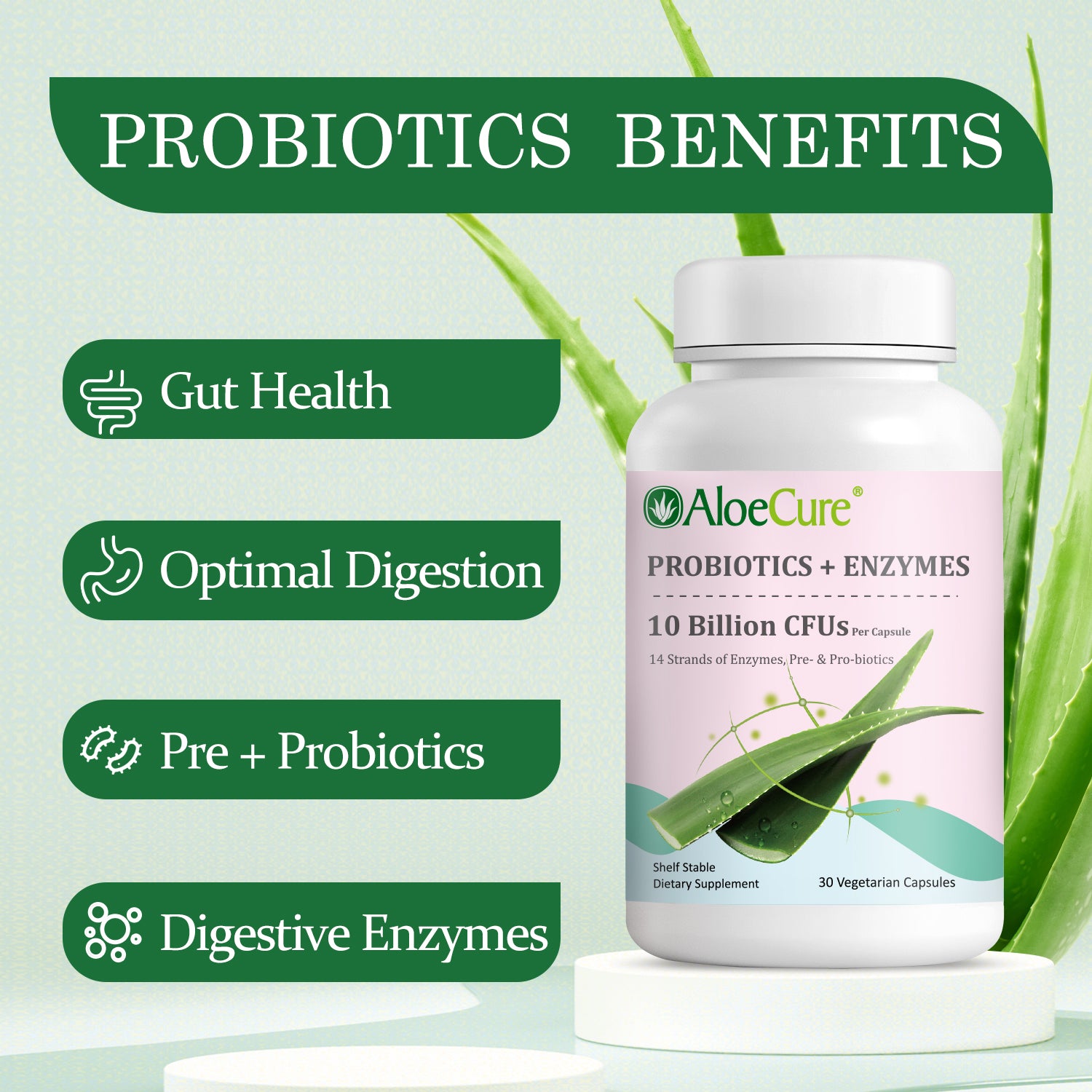
The capsule also combines eight probiotic strains, five prebiotics, and 14 digestive enzymes, which places it squarely in the synbiotic-plus-enzyme category described earlier. It's designed as a daily capsule, and AloeCure positions it as part of a broader product line that includes AloeCure Aloe Vera Juice and other supplements for readers who want to explore adjacent options on the site.
AloeCure also highlights a 20% Subscribe and Save option, free shipping on qualifying orders, and a 90-day money-back guarantee, which lowers the risk of trying a new routine. Those terms don't prove efficacy, but they do make the purchase decision easier for someone testing a product thoughtfully rather than committing blindly.
Good fit test: if you want a formula that combines probiotics, prebiotics, and enzymes in one capsule, look for transparent sourcing and clear daily-use directions before you look at the front label claims.
If you're comparing options, judge this capsule the same way you'd judge any other supplement, by strain identification, substrate clarity, shelf-life potency, and company transparency. The closer a product gets to those checks, the easier it is to evaluate with confidence.
The easiest next step is to stop shopping by CFU alone. Choose a formula with named strains, a clearly identified prebiotic, and potency information that lasts through the end of shelf life. Then give it a short, honest trial, store it correctly, and see whether it fits your daily routine.
Keep the goal modest and practical. A good pre and probiotic supplement should fit into a broader wellness pattern that includes food, water, movement, and sensible expectations, not replace them. If you're unsure about interactions or whether a product suits your situation, ask a qualified practitioner.
Every statement in this article uses structure/function language and is intended for wellness education only. These statements have not been evaluated by the Food and Drug Administration. This product is not intended to diagnose, treat, cure, or prevent any disease.
If you want a formula built around aloe, prebiotics, probiotics, and digestive enzymes, AloeCure offers a vertically integrated option that's designed for daily use and backed by clear purchasing terms. Explore the product line, review the label details, and see whether it fits the routine you want by visiting AloeCure.
Comments will be approved before showing up.