Your Cart is Empty

The popular advice is simple: choose the aloe vera capsule with the largest milligram number. That shortcut is unreliable. A high number can describe concentrated powder weight without telling you which part of the leaf was used, how the material was processed, or whether unwanted anthraquinones were controlled.
The best aloe vera gel capsules are defined by traceability, inner-leaf sourcing, transparent processing, and batch-level testing. Use this guide to compare what's inside the capsule, not just what appears in large type on the front of the bottle.
| Buying priority | Stronger choice | Weaker choice |
|---|---|---|
| Plant fraction | Clearly identified inner-leaf gel | Vague “aloe vera” or unexplained whole leaf |
| Anthraquinone control | Stated aloin specification with batch testing | No aloin result or only a general purity claim |
| Processing | Method disclosed, with no unexplained chemical steps | Processing details hidden |
| Identity | Botanical identity and active-compound testing | No certificate of analysis or lot information |
| Ingredients | Short, fully disclosed formula | Several undisclosed carriers or fillers |
| Manufacturing | Documented quality controls | Marketing language without verification |
| Intended use | Clear wellness positioning and serving guidance | Broad promises or disease-related claims |
Aloe milligrams aren't a quality ranking. They may describe the weight of a powder, an extract, or a concentrated material made from a different plant fraction. Two products can display very different numbers while offering no comparable information about the finished capsule.
The first question should be what was concentrated. A purified inner-leaf gel and a whole-leaf extract aren't interchangeable. Whole-leaf material may retain aloe latex and hydroxyanthracene derivatives, including aloin. The National Center for Complementary and Integrative Health overview of aloe vera reports that oral aloe latex can cause abdominal pain, cramping, and diarrhea, while research suggests short-term oral use of aloe gel for up to 42 days is safe. It also notes reported cases of acute hepatitis after oral aloe leaf extract exposure lasting from 3 weeks to 5 years.
That doesn't mean every gel capsule has the same profile. It means a milligram figure can't answer the safety questions that matter most. You need to know whether the manufacturer uses inner-leaf gel, decolorized whole-leaf material, or an undefined extract.
Aloin control deserves more attention than front-label potency. The National Institute of Environmental Health Sciences explains that solid or semisolid aloe products can contain aloin concentrations 10 to 100 times higher than typical liquid products. Orally ingested products have an industry self-regulatory upper limit of 10 parts per million, yet manufacturers generally aren't required to print aloin levels on the label.
That gap makes documentation a deciding factor. A strong product page or certificate of analysis should identify the plant fraction, explain purification or decolorization, and show testing for aloin and related anthraquinones. The absence of that information is more important than an impressive aloe number.
Practical rule: Don't buy based on the biggest milligram claim. Buy based on what the manufacturer can document about the material inside the capsule.
Use a label-reading framework such as this guide to reading supplement labels to compare the serving size, botanical material, inactive ingredients, lot details, and testing disclosures. A quality-first approach asks what you don't want in the capsule, not just how much aloe the manufacturer says it contains.
An aloe vera gel capsule is a unit-dose delivery format. A dried aloe material sits inside a shell, usually made from vegetable cellulose or gelatin, with small amounts of flow agents sometimes added to keep the powder moving through manufacturing equipment. Silica and rice flour are examples of carriers or processing aids that may appear in the inactive-ingredient panel.
The important distinction comes before the capsule shell. Inner-leaf gel is the clear material collected from the inside of the leaf after the outer rind and latex layer are removed. Whole-leaf extract uses more of the leaf and can include material from the latex-rich area. Because those fractions have different compositions, the label should identify which one the manufacturer uses.
Inner-leaf products are generally the cleaner starting point for buyers who want a straightforward wellness supplement. Whole-leaf products require additional controls because the material can contain hydroxyanthracene derivatives. The European Food Safety Authority's conclusion on hydroxyanthracene derivatives states that compounds including aloe-emodin and emodin, along with extracts containing them, raise genotoxicity concerns. European Union action in 2021 prohibited certain listed derivatives and hydroxyanthracene-derivative-containing aloe preparations in food, while the United Kingdom's 2024 interim position continued to describe these derivatives as genotoxic and carcinogenic unless contrary evidence exists.
Those findings don't make every aloe gel capsule equivalent. They make plant-part disclosure and anthraquinone control essential.
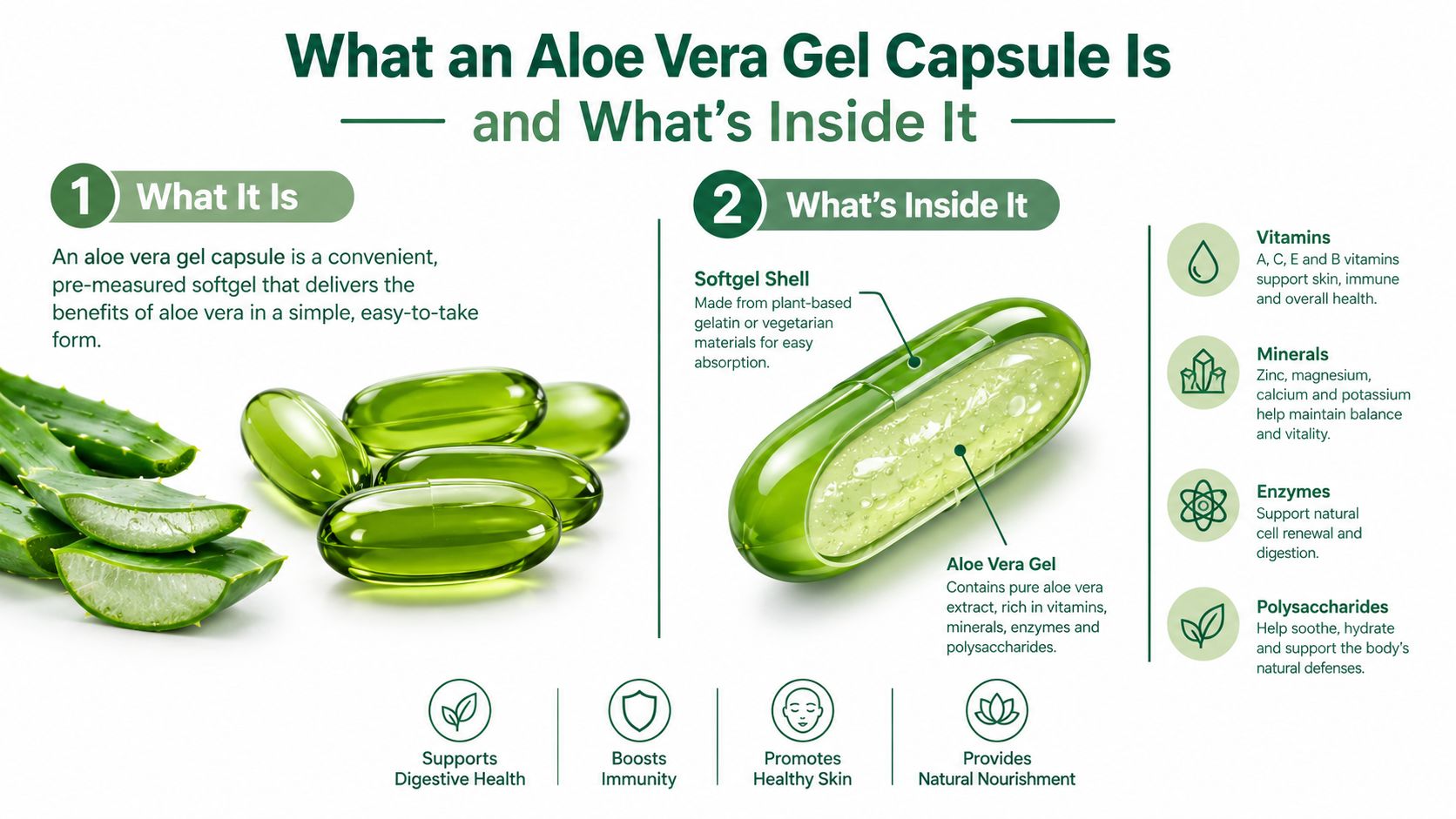
You may see formats described as 200:1, 100:1, freeze-dried, spray-dried, or gel powder. Those descriptions tell you something about concentration or dehydration, but they don't prove that products are comparable. A ratio may refer to the amount of fresh plant material used before drying, while powder weight refers to the finished ingredient.
Processing can also affect the integrity of polysaccharides. Ask whether the company measures acemannan or total polysaccharides, which analytical method it uses, and whether the result applies to the actual finished batch. A helpful primer on this key aloe compound is what acemannan is.
A clean comparison should put products on the same axes. The strongest criteria are not flashy claims. They're details a buyer can verify.
| Criterion | What to Look For | Why It Matters |
|---|---|---|
| Plant fraction | Inner-leaf gel or clearly identified whole-leaf extract | Different leaf fractions can carry different anthraquinone exposure |
| Aloin testing | Stated specification and batch-level result | Shows contaminant control rather than relying on vague purity language |
| Certifications | Organic, NSF, or other relevant independent certification | Adds external review to the manufacturer's own claims |
| Processing | Clear method, temperature controls, and solvent disclosure | Processing affects what remains in the finished powder |
| Active markers | Acemannan and polysaccharide testing with method details | Helps compare meaningful composition instead of raw powder weight |
| Formula transparency | Full ingredient list, capsule shell, carriers, and allergens | Reveals what else you are taking |
| Serving and safety | Clear directions, lot number, and contaminant testing | Connects the label to responsible everyday use |
Organic certification can support sourcing transparency, but it doesn't automatically prove low aloin content or clinical performance. NSF or another independent certification can add useful manufacturing oversight, yet buyers should still look for the actual scope of the certification. A logo alone isn't a substitute for a certificate or testing record.
The same logic applies to acemannan. A product that gives a measured amount per serving is easier to compare than one that only says “high potency.” The FDA's dietary supplement manufacturing guidance says manufacturing controls should address identity, purity, quality, strength, composition, and contamination by substances such as pesticides and heavy metals.
A supplier certificate for incoming aloe isn't enough by itself. The finished capsule should have a lot number and testing relevant to that batch. Look for identity, microbial, heavy-metal, and anthraquinone information, plus a clear serving size.
For broader supplement-selection context, readers may also find personalised supplement advice from VitzAi useful. Treat any general recommendation as a starting point, then return to the actual aloe label and certificate of analysis.
Start with the Supplement Facts panel, then move to the ingredient list and the manufacturer's testing page. Don't begin with the front label. Front panels are designed to sell a product, while the details needed for comparison usually sit elsewhere.
Look for phrases such as inner-leaf gel, inner fillet, or a clearly named whole-leaf extract. A label that only says “aloe vera” leaves a major question unanswered. If it uses whole leaf, look for a specific aloin limit and an explanation of how the material was purified.
Next, inspect the processing language. “Decolorized,” “filtered,” or “purified” can describe anthraquinone-control steps, but those words aren't enough on their own. Ask for the measured result. A manufacturer should be able to identify the testing method, the specification, and whether the result applies to the current lot.
The FDA's guidance on structure and function claims supports wording such as “supports healthy digestive function” or “helps maintain normal body function” when substantiated and not presented as a disease-related purpose. The label must also carry the required disclaimer when applicable.
Raw aloe weight is a weak comparison point. Acemannan per serving, total polysaccharide content, and the method used to measure those compounds provide more useful context. If a company publishes only a large aloe number but gives no information about active markers, you can't judge how comparable the product is to another powder.
The serving panel should state how many capsules make a serving and how often the manufacturer recommends using it. Don't assume that one capsule equals one serving. Also check whether the capsule is vegetable cellulose or gelatin, and scan inactive ingredients for carriers, flow agents, colors, or allergens you prefer to avoid.
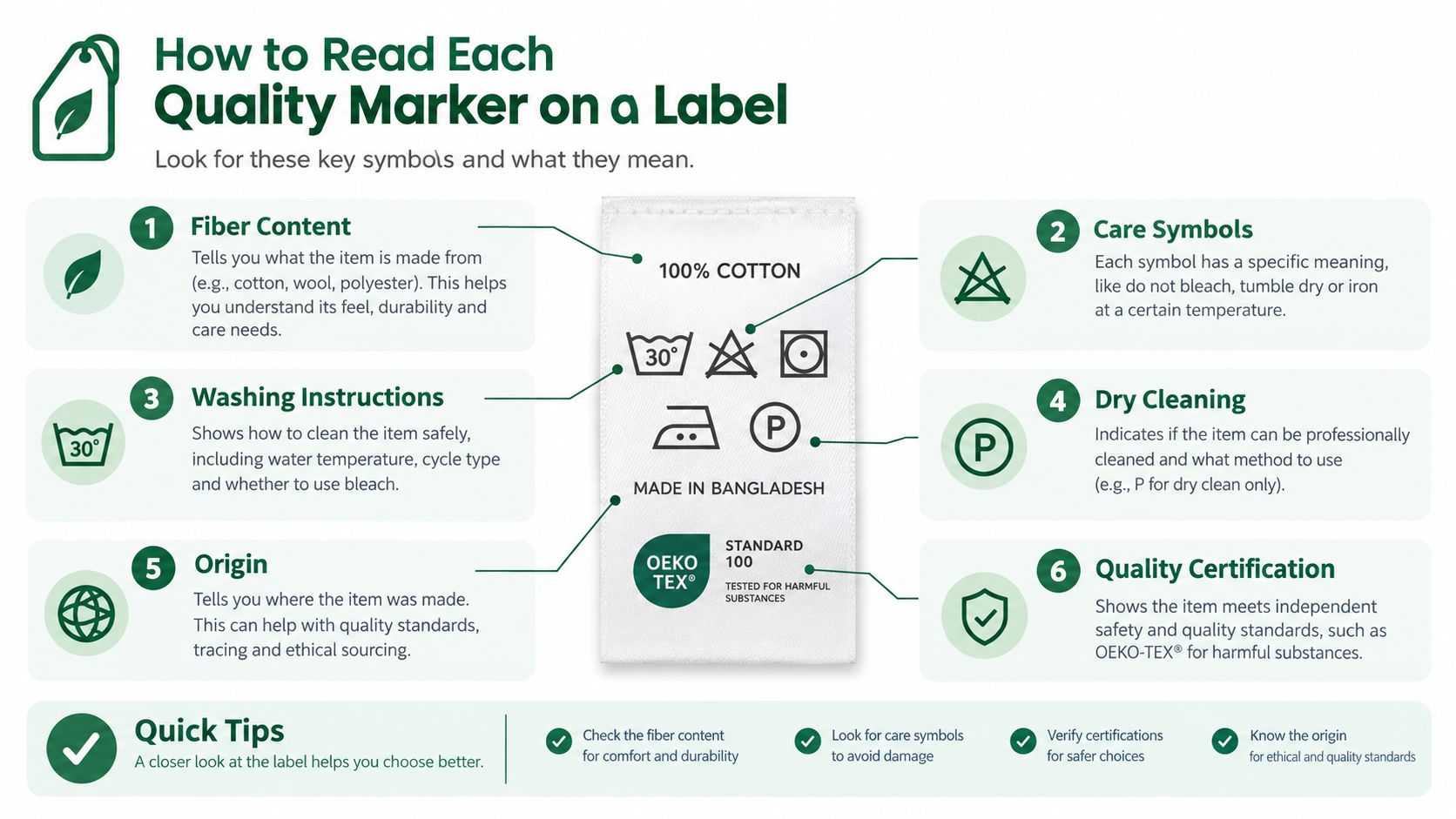
Organic certification speaks to farming and handling requirements within its certification scope. NSF certification can indicate that an independent organization has assessed defined aspects of the product or facility. Neither mark should be treated as proof of every benefit claimed on a product page.
Independent testing deserves its own check. The FDA's small-entity compliance guide for supplement manufacturing states that manufacturers generally must conduct at least one appropriate test or examination to verify the identity of each dietary ingredient they receive, unless an exemption applies. Read more about what to ask for in third-party supplement testing.
If the label hides the plant fraction, serving equivalence, active-marker method, or testing scope, the product fails the quality checklist.
The right capsule depends on the routine, not on a universal ranking. Someone taking a capsule with breakfast has different priorities from someone packing a bottle for travel or building a broader wellness plan.
A person focused on daily digestive comfort may prefer a simple inner-leaf capsule with a short ingredient list, low filler content, and clear serving directions. The priority is predictability. The product should disclose anthraquinone testing, identify the gel fraction, and fit easily into a breakfast routine without requiring preparation.
A different buyer may want aloe as part of a joint-support routine that already includes fish oil and turmeric. That person might place greater value on measured acemannan and polysaccharide content, provided the manufacturer explains how those markers were tested. The premium is justified by documentation and comparability, not by a larger front-label number.
Travel creates another profile. A portable capsule should have a sturdy, shelf-stable bottle, a compact format, an intact seal, and a clear lot number. A travel-friendly product still needs the same plant-part and aloin disclosures. Convenience doesn't excuse weak quality information.
| Use Case | Best Profile Match | Key Features to Prioritize | Avoid |
|---|---|---|---|
| Daily digestive comfort | Inner-leaf capsule with a simple formula | Low filler content, clear serving, aloin result | Vague plant-part language |
| Joint-support routine | Inner-leaf capsule with measured active markers | Acemannan and polysaccharide method, transparent testing | Unsupported broad wellness promises |
| Travel and convenience | Compact, shelf-stable capsule bottle | Secure packaging, lot traceability, easy directions | Unlabeled repackaged powder |
These profiles are not medical protocols. They're buying profiles. Keep the intended use within ordinary wellness language, and obtain professional advice before oral use if you're pregnant, breastfeeding, have a medical condition, or regularly use medications. The NCCIH safety information also cautions that oral aloe products may be unsafe during pregnancy and breastfeeding.
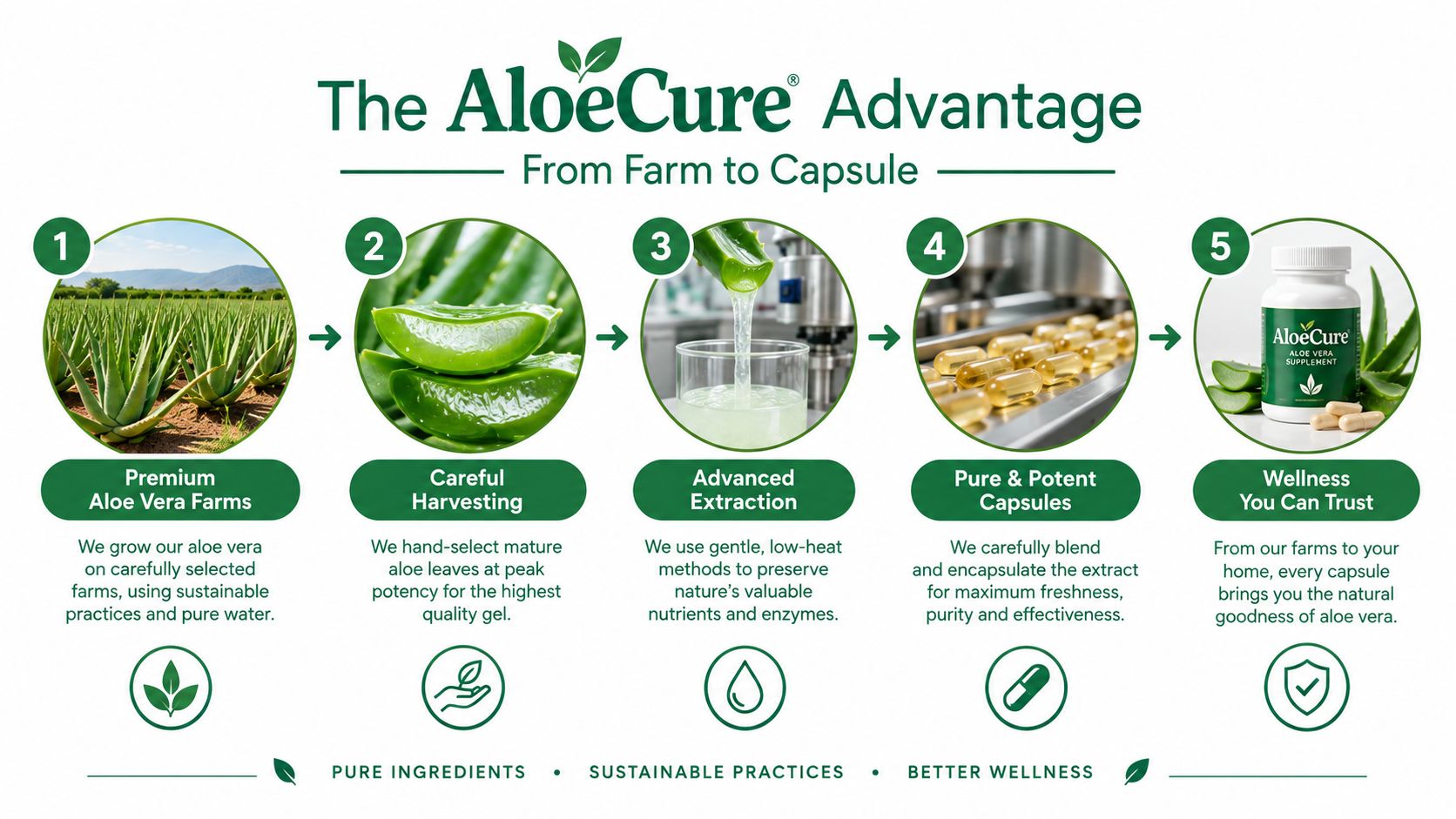
Vertical integration matters because every handoff creates another point where identity, purity, and traceability can become less clear. A producer that farms, processes, and makes its own capsules can connect the raw leaf to the finished lot more directly than a company that buys a finished powder.
The benchmark is straightforward. The producer should identify its growing practices, explain how the inner fillet is separated from the latex-rich outer material, disclose the processing approach, and show how each batch is tested. A chemical-free process, no synthetic fertilizers, and no herbicides can strengthen the sourcing story, but the finished product still needs analytical verification.
Look for evidence across the entire chain:
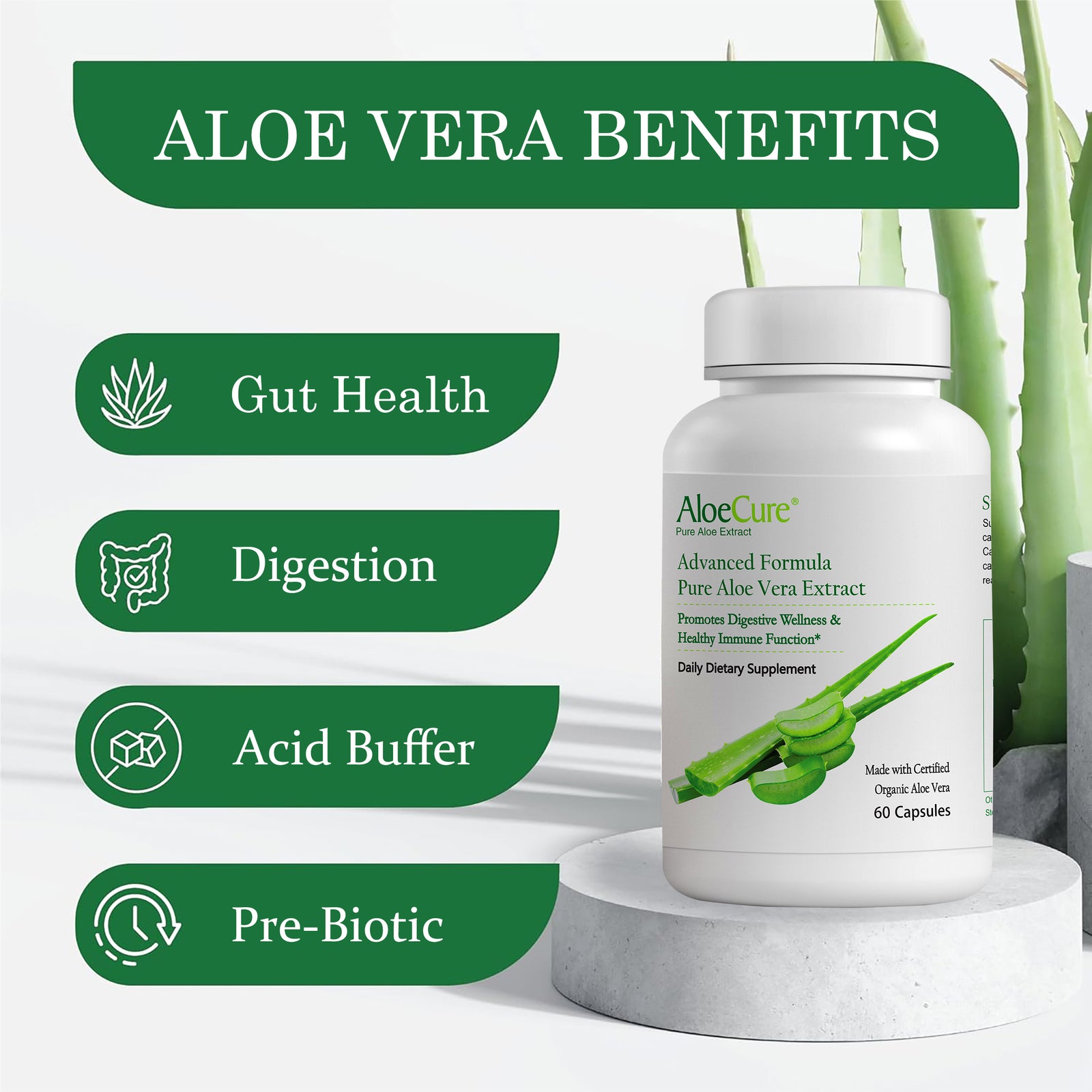
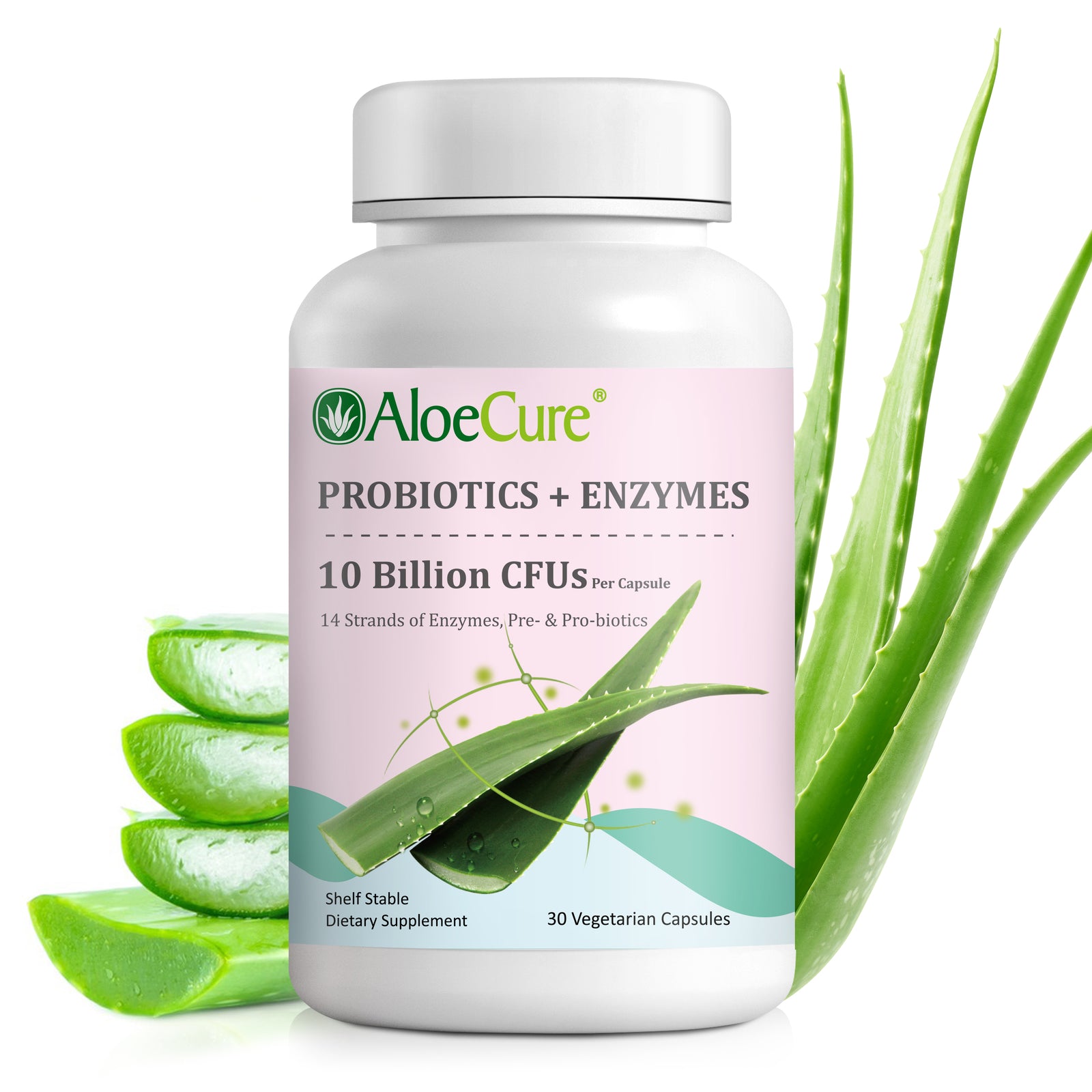
This is the standard that AloeCure's stated vertically integrated model is designed to meet. The company describes its own farms, on-site processing, inner-leaf material, and third-party testing as part of its production approach. Buyers should still review the current product documentation rather than accepting any brand claim without evidence.
A separate aloe vera beauty set can make sense for shoppers interested in topical aloe products, but topical and oral formats shouldn't be judged by the same criteria. For capsules, inner-leaf identity, anthraquinone control, serving transparency, and finished-batch testing remain the decisive markers.
The strongest product story is therefore not “more aloe.” It's clearer control from plant to capsule. That approach gives buyers a practical way to evaluate whether the marketing matches the material actually being sold.
Use a 60-second audit before you compare price or subscribe. Open the Supplement Facts panel, the certifications line, and the manufacturer's processing page. Then answer these questions:
Drop any product that hides several of these answers. A low price can't compensate for an unknown plant fraction or missing anthraquinone information.
The vertically integrated, inner-leaf approach described above aligns with this checklist, as does a subscription model that gives you consistent delivery and access to current product documentation. Before enrolling, confirm the current discount, delivery terms, serving instructions, and testing information on the product page.
For additional wellness reading, a CEO guide to sleep supplements may be useful when comparing supplement categories, but it doesn't replace the aloe-specific label audit.
These statements have not been evaluated by the Food and Drug Administration. This product is not intended to diagnose, treat, cure, or prevent any disease.
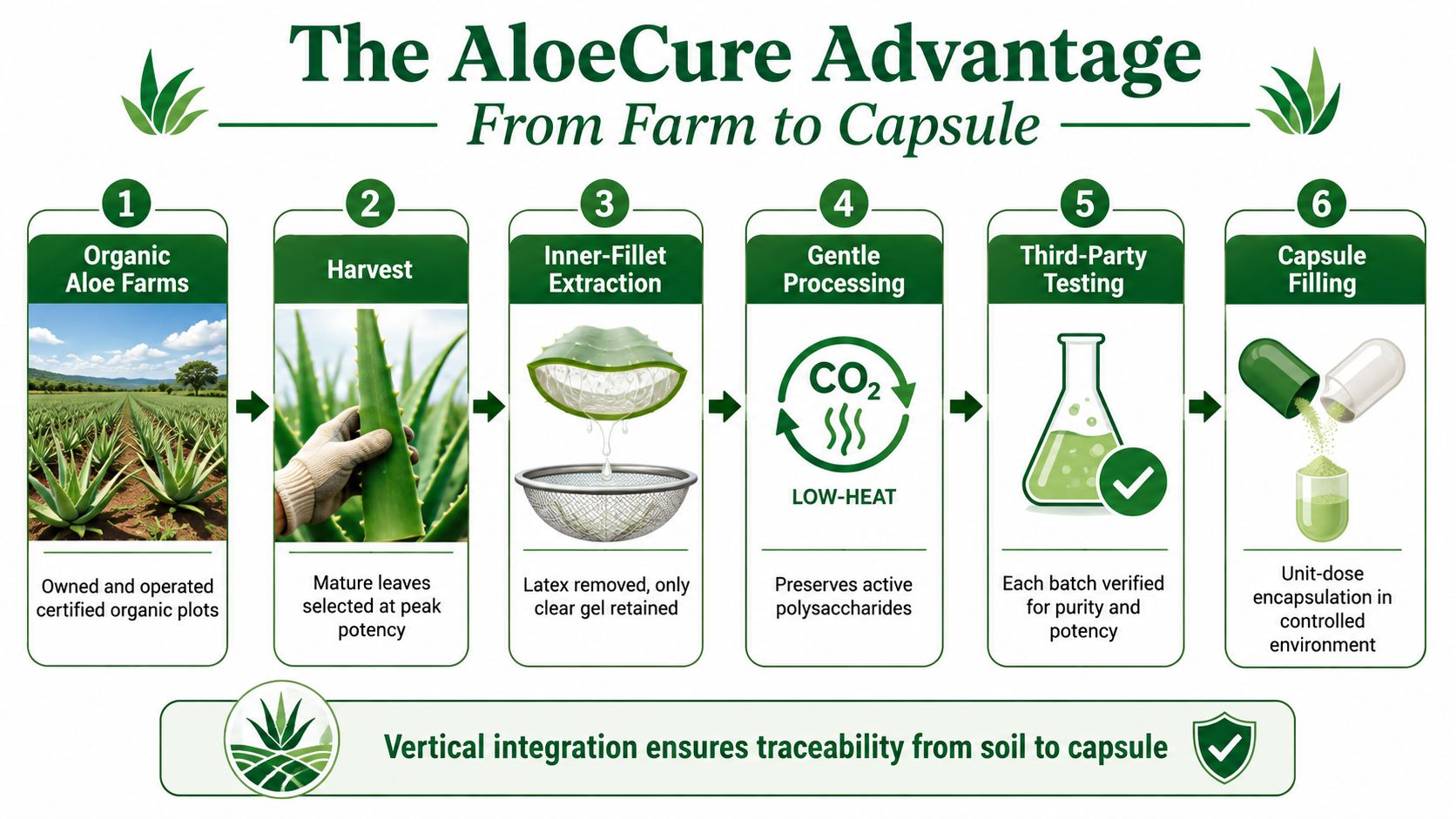
AloeCure offers vertically integrated, inner-leaf aloe capsules with a documented focus on processing, traceability, and batch testing. Visit AloeCure to review the current capsule details, explore subscription delivery, and check whether the available Subscribe & Save option fits your routine.
Comments will be approved before showing up.