Votre panier est vide


You buy a daily multivitamin because you want to do something good for your body. You read the front label, see a long list of nutrients, and assume more coverage means better support. Then you start wondering whether your routine is as personalized as it looks.
That question matters more than generally understood. A standard multivitamin is built for the broadest possible audience, not for your individual needs, food patterns, or supplement stack. If you already get certain nutrients from fortified foods, powders, drinks, or other capsules, a “complete” formula can become less helpful and more cluttered.
Vitamin B6 is a good example. It’s an essential nutrient, but that doesn’t mean every person benefits from taking it in supplemental form every day. For some people, choosing a multivitamin without vitamin b6 is a thoughtful way to keep their routine simpler, more targeted, and easier on a sensitive system.
That approach isn’t about fear. It’s about precision.
A cleaner routine often starts with two habits. First, question the idea that every multivitamin should include everything. Second, look for formulas that support your goals without automatically adding ingredients you may not want. The same mindset applies to foundational wellness products too. Pure, well-formulated supplements make it easier to build a routine with purpose instead of piling on extra inputs.
Many health-conscious people follow the same pattern. They eat reasonably well, try to stay consistent, and add a daily multivitamin as nutritional backup. On paper, that sounds sensible.
But real life is messier. You might also drink a fortified beverage, use a greens powder, take an energy mix, or rotate other supplements through the week. A nutrient that looks harmless in one bottle may appear again and again across your routine.
That’s where a one-size-fits-all multivitamin can fall short. The issue isn’t that vitamins are bad. The issue is that your body doesn’t need a generic formula if your needs are specific.
Some people do best when they simplify. Instead of taking a broad formula packed with standard add-ins, they look for a targeted option that leaves out ingredients they’d rather manage through food or separate supplements. For certain shoppers, vitamin B6 falls into that category.
A multivitamin without vitamin b6 can make sense if you want more control over your daily intake, if you prefer to be selective about B-vitamin forms, or if you’re trying to reduce unnecessary overlap between products.
A smart supplement routine doesn’t start with “How many ingredients can I fit in?” It starts with “What actually belongs here for me?”
B6 sounds simple until you read labels. Sometimes it appears as pyridoxine. Sometimes as pyridoxine HCl. Sometimes as P-5-P or pyridoxal-5-phosphate. Some people assume those are completely different nutrients. They’re not. They’re different forms of vitamin B6, and form matters.
That’s why label reading, product quality, and overall routine design matter so much. If you’ve been looking for a cleaner, more intentional approach, learning how to choose a B6-free multivitamin is a practical place to start.
Choosing a multivitamin without vitamin b6 can seem odd at first. After all, B6 is often grouped with “must-have” nutrients. The catch is that essential doesn’t always mean helpful in every supplement, for every person, in every amount.
Think of your nutrient intake like a finely tuned instrument. If one note gets played too loudly and too often, the whole sound changes. The same principle applies when one nutrient keeps showing up across several products.
Many people don’t just take one supplement. They combine a multivitamin with wellness powders, hydration mixes, fortified foods, or other capsules. That overlap can make a routine look balanced even while pushing one ingredient higher than intended.
A useful real-world example comes from a discussion of vitamin B6 sensitivity and low-dose exposure. It describes a 2023 case study of a 73-year-old man who developed feelings of numbness and tingling in his extremities from just 6 mg daily, which is a common multivitamin dose. The same source explains that excess pyridoxine can inhibit pyridoxal 5'-phosphate, or PLP, the body’s active form of B6.
That detail surprises many readers. They assume more B6 means more support. In some cases, the opposite may be true.
A B6-free formula can be appealing for people who want to:
This choice doesn’t mean B6 has no place in nutrition. It means some people would rather get it from food or from a more intentional, separate product if needed.
Practical rule: If you use more than one supplement daily, don’t judge your intake by the front label of a single bottle. Look at the full stack.
Some bodies are more tolerant of standard formulas than others. That’s true for flavors, botanicals, minerals, and vitamin forms. It’s also true for B6.
If you’re someone who prefers a calm, minimal routine, a multivitamin without vitamin b6 may feel like a cleaner fit. You still get broad nutritional support, but you skip one ingredient that has become a point of concern for many careful shoppers.
Here’s the broader takeaway:
| Common assumption | More useful way to think about it |
|---|---|
| A multivitamin should include every standard vitamin | A multivitamin should match your actual needs |
| More B vitamins are always better | Form, total intake, and context matter |
| If the dose looks modest, it must be fine for everyone | Individual responses can differ |
| “Complete” means optimal | “Targeted” is often more useful |
That shift in thinking is what makes a B6-free approach so practical. It turns supplement shopping from autopilot into informed choice.
Most confusion starts on the label. A bottle may never say “contains extra B6” on the front, yet the Supplement Facts panel tells a different story. If you want a multivitamin without vitamin b6, label reading is the skill that protects you.

Vitamin B6 may appear under several names. The most important ones are:
According to Healthline’s overview of vitamin B6 forms, pyridoxine HCl is the most common synthetic form in multivitamins and the one most associated with accumulation, while pyridoxal 5'-phosphate is the active form. The same source notes that some individuals have difficulty converting pyridoxine to PLP.
Use this three-step check whenever you pick up a bottle:
If your goal is a true multivitamin without vitamin b6, “low B6” and “gentle B-complex” are not the same thing as “no B6.”
| What you see on the label | What it means |
|---|---|
| Vitamin B6 | Contains B6 |
| Pyridoxine | Contains B6 |
| Pyridoxine HCl | Contains B6 |
| Pyridoxal-5-Phosphate | Contains B6 |
| No B6 listed anywhere | Likely B6-free, but still check all sections |
If you want a broader primer on B-vitamin basics before comparing products, this guide to organic vitamin B complex options helps explain how different B vitamins are commonly used in supplement routines.
The main point is simple. Don’t rely on product names like “clean,” “whole body,” or “advanced.” Rely on the label.
The interest in B6-free formulas reflects a bigger change in wellness. People aren’t only asking what a supplement includes. They’re also asking what it leaves out, how it’s made, and whether the formula supports a calm, intentional routine.
That same standard applies to aloe-based support products.
A personalized routine works best when it has a clean base. If your multivitamin is targeted, your other daily products should follow the same principle. That means fewer unnecessary extras, clear ingredient logic, and attention to how ingredients work together.
One of the most overlooked pairings in this category is aloe with a carefully chosen multivitamin. A product page discussing aloe in a low-acid multivitamin formula notes that formulations like this already pair organic aloe vera with other nutrients for better absorption and gentleness, and it also states that aloe’s polysaccharides can enhance mineral uptake by up to 30%.
That’s an important idea. Instead of forcing a formula to do everything, some supplement routines work better by combining a clean foundational product with a precisely selected multivitamin.
When evaluating any wellness product, look for signs that the brand controls quality at every step. The strongest formulas usually come from companies that pay close attention to sourcing, processing, testing, and consistency.
Here’s what that standard often includes:
Some of the best supplement routines aren’t built around “more.” They’re built around purity, compatibility, and consistency.
Aloe belongs in this conversation because many people seeking a multivitamin without vitamin b6 are also looking for products that feel gentler and more intentional overall. They’re often simplifying their stack, not expanding it.
In that context, aloe can serve as foundational support while the multivitamin handles broader nutrient coverage. It’s a practical pairing for people who want a routine that feels clean, measured, and easy to maintain.
A better supplement routine often starts with subtraction. If your current multivitamin feels overly broad, the smartest move may not be adding another product. It may be removing the one that no longer fits.
That’s the basic idea behind an omit-and-replace strategy. You omit the formula that includes ingredients you don’t want, then replace it with a more precise option or with a few individual products that make better sense for your goals.
Specialized formulas aren’t a fringe idea. They’ve already become standard in performance-focused nutrition.
A good example comes from Virtuoos and its B6-free multivitamin design. The company developed a B6-free multivitamin after observing that many top athletes had significantly high B6 levels from standard supplements. Their goal was broad support for immunity, energy, and muscle function without B6 accumulation.
That matters because it shows something important. High performers don’t assume “standard” is good enough. They adjust the formula to the person.
Try this framework:
| Goal | Possible routine style |
|---|---|
| General daily support | B6-free multivitamin plus a simple foundational product |
| Mobility support | Targeted daily multi plus a separate formula chosen for joint support |
| Evening routine | B6-free multi used earlier in the day, with a dedicated nighttime product later |
| Minimalist stack | Fewer products, each selected for a clear purpose |
If you’re not sure how long it takes to notice changes after updating a supplement routine, this article on how long supplements take to work gives a useful reality check.
Your best routine should be easy to explain in one sentence. If you need a spreadsheet to understand it, it may be too complicated.
A registered dietitian or healthcare professional can also help you tailor your plan, especially if you use several products at once. The point isn’t to build the biggest stack. It’s to build one you can trust.
When you’re standing in a store aisle or comparing products online, it helps to have a filter. Not every “clean” multivitamin is simple, and not every sensitive-system formula is B6-free.

The strongest B6-free options usually share a few traits:
Some product pages look clean until you read the fine print.
A good companion skill here is understanding absorption and form, not just ingredient presence. This guide to the bioavailability of supplements is worth reading before you compare formulas.
Sometimes the right next step is to learn from adjacent supplement categories. For example, people choosing a prenatal, performance formula, or reproductive wellness product often need the same label-reading discipline. If that’s relevant to your household, Hera Fertility offers practical advice on male fertility vitamins that shows how targeted shopping works when nutrient details matter.
Here’s a final purchase check you can use:
| Before you buy | Ask yourself |
|---|---|
| Ingredient panel | Does it list any form of B6? |
| Formula style | Was it designed thoughtfully or just marketed well? |
| Supporting ingredients | Do they match a gentler, more selective routine? |
| Overall stack | Will this duplicate what I already take? |
A smart shopper doesn’t look for the most nutrients. A smart shopper looks for the right formula.
The most useful lesson here is simple. Personalized nutrition often starts when you stop assuming every standard formula is right for you. A multivitamin without vitamin b6 isn’t a niche idea anymore. For many people, it’s a practical way to build a cleaner and more intentional routine.
You don’t need to become a supplement expert overnight. You just need a few solid habits. Read labels closely. Watch for hidden forms of B6. Choose products that explain their formulation clearly. Build your stack around your actual goals instead of defaulting to “more.”
That same mindset applies across wellness categories. Athletes have already pushed the conversation toward custom formulas, and the rest of the market is following. If you’re interested in the broader role of nutrient balance in everyday performance, RxGainz offers a useful perspective on optimizing performance with micronutrients.
A routine built on purity, compatibility, and consistency is usually easier to stick with. That’s especially true when your foundation comes from products made with care, transparent sourcing, and thoughtful processing.
These statements have not been evaluated by the Food and Drug Administration. This product is not intended to diagnose, treat, cure, or prevent any disease.
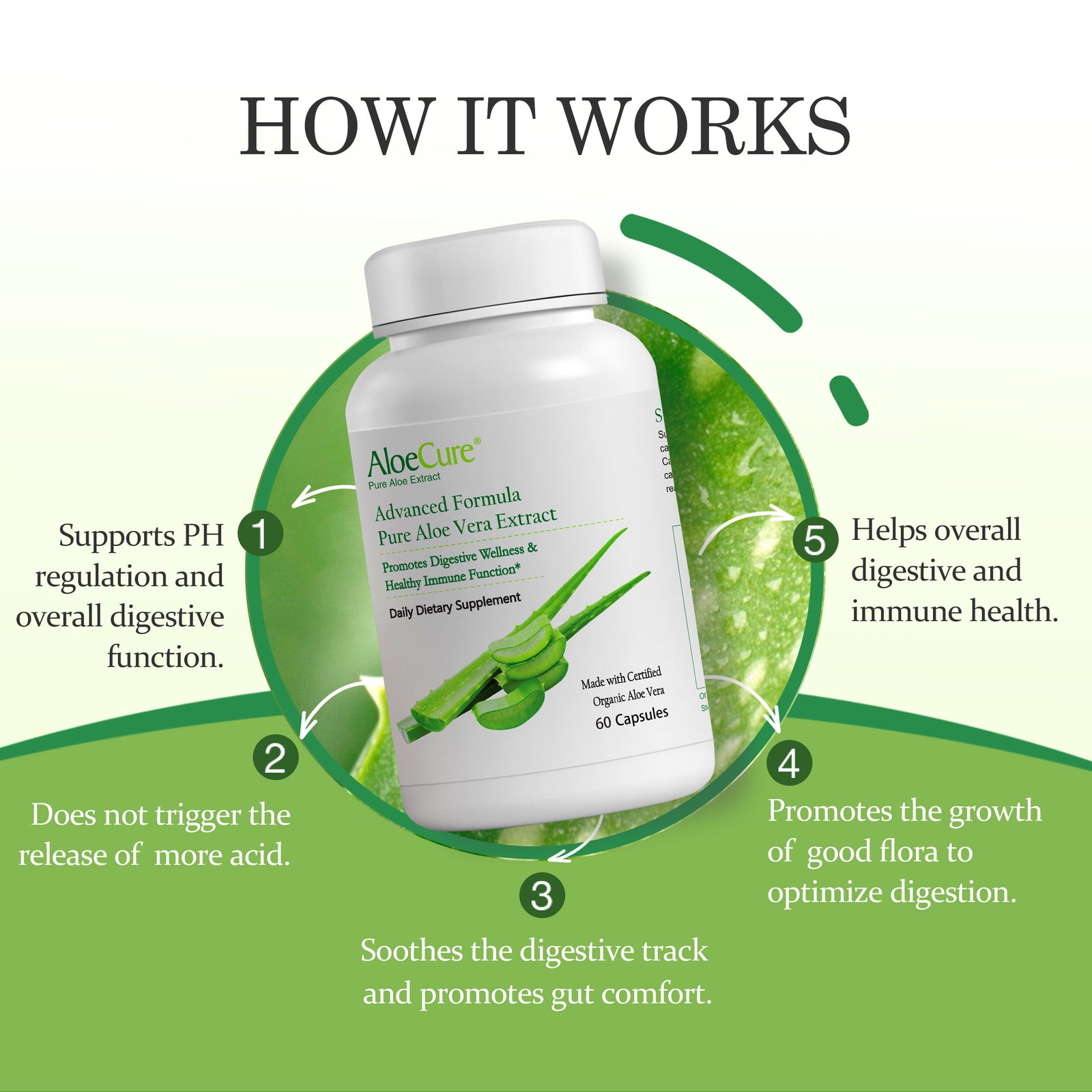
If you want to build your routine on a cleaner foundation, explore AloeCure for pure, organic aloe vera juices and targeted wellness formulas. AloeCure grows, harvests, processes, and produces its own aloe, giving you a vertically integrated standard of quality from plant to finished product. You can also subscribe for 20% off with flexible delivery options, making it easier to stay consistent with a routine built around purity and trust.
Les commentaires sont approuvés avant leur publication.