Votre panier est vide


Are you choosing enzyme rich foods based on a vague idea that “raw is better,” without knowing which foods contain which enzymes, or whether those enzymes are likely to matter once the food reaches your plate? That's the gap most articles skip. They name pineapple, papaya, and a few fermented staples, but they rarely explain the difference between proteases and amylases, or why the body still does most of the digestive work on its own.
That distinction matters. Johns Hopkins explains that the body's main digestive enzymes are amylase, lipase, and protease, produced primarily by the pancreas, and it also notes there is “no real evidence” that foods often marketed as enzyme-rich, such as pineapple and avocado, help digestion in a clinically meaningful way through food alone Johns Hopkins on digestive enzymes and supplements. So enzyme rich foods are best understood as supportive foods, not a replacement for your body's own normal enzyme production.
Still, these foods can be useful. Health-focused nutrition sources commonly point to foods like pineapple, papaya, mango, bananas, honey, kefir, sauerkraut, kimchi, miso, and kiwifruit because they contain natural enzymes or enzyme-producing microbes, and fermented foods have become especially prominent as gut-health eating has gone mainstream Healthline's overview of natural digestive enzymes. A practical way to think about them is simple: some are better known for helping break down protein, some are tied more closely to carbohydrate breakdown, and many fermented foods may offer a combination of enzymes, microbes, and organic acids.
Cooking and processing matter too. Enzymes are proteins, and heat can reduce their activity. That's why fresh fruit, raw honey, and unpasteurized fermented foods are usually the most discussed forms. At AloeCure, the focus is different but related. The company uses a proprietary, chemical-free process to preserve the natural integrity of aloe from farm to finished product, which fits well into a daily wellness routine built around whole foods and consistent habits.
If you enjoy fermentation projects, Perfecting natto at home is an interesting next read.

Papaya is one of the classic enzyme rich foods because it's associated with papain, a protease. Proteases are the enzyme group linked with protein breakdown, so papaya makes the most sense when you're thinking about meals centered on fish, beans, eggs, yogurt, or other protein-containing foods.
That doesn't mean papaya does all the work for you. It means papaya is a food that fits naturally into a meal pattern built around supporting normal digestive function.
Papaya is also easy to use in real life. You don't need a complicated recipe. A bowl of fresh papaya with breakfast, a few slices before lunch, or a smoothie with papaya and aloe vera juice is enough to make it part of your routine.
A simple example is a post-workout snack with papaya, plain yogurt, and chia. Another is a small fresh papaya bowl paired with a balanced lunch that includes grilled chicken or lentils.
Practical rule: If you're choosing papaya for its enzyme content, eat it fresh rather than heavily cooked.
A few ways to use it well:
If you're curious about growing conditions and fruit development, this papaya plant guide gives useful context. Papaya also pairs well with a daily aloe routine. Mixing fresh papaya into a smoothie with AloeCure Pure Aloe Vera Juice is a simple way to build a supportive wellness habit without overcomplicating your kitchen.
Pineapple is the other fruit people usually mention first, and for good reason. It's associated with bromelain, another protease. Like papaya, that puts pineapple in the protein-support category rather than the starch-support category.
Fresh pineapple also has a practical advantage. It's easy to add to meals in more than one way. You can serve chunks alongside breakfast, blend it into a smoothie, or use a little fresh pineapple salsa with a savory meal.

Pineapple works best as a whole-food add-on, not as a promise. That's especially important because, as noted earlier, Johns Hopkins is cautious about the idea that so-called enzyme-rich foods create clinically meaningful digestive changes on their own. Pineapple is still a smart food choice, but it belongs in the “supportive” category.
For everyday use, the core is worth remembering. Many people discard it, but it can be blended into smoothies if your blender is strong enough.
If you want a broader food-first perspective, AloeCure's guide to plant-based digestive enzymes pairs well with this list. Pineapple also combines well with AloeCure Advanced Formula Aloe Capsules or Pure Aloe Vera Juice if you want a more consistent daily rhythm for digestive wellness support.
Ginger feels different from the fruit entries because it's widely recognized as a kitchen staple before being considered an enzyme-containing food. Fresh raw ginger is commonly associated with zingibain, which is discussed as a protease. In plain terms, that puts it in the same broad “protein-support” conversation as papaya and pineapple, even though the flavor experience is completely different.
Raw ginger is sharp, warming, and concentrated. A little goes a long way.
The easiest approach is to treat ginger like a booster ingredient rather than the whole star. Grate a little into a smoothie, stir some into a room-temperature citrus drink, or shave thin slices into a slaw. Keeping it raw or only gently warmed makes the most sense if your goal is preserving what's naturally present.
One practical habit is a morning blend with cucumber, fresh ginger, and AloeCure Pure Aloe Vera Juice. Another is adding grated ginger to a carrot salad served with lunch.
Fresh ginger is often more realistic as a daily habit than an occasional intense shot.
A few smart habits help:
For more ideas on building meals around digestive comfort and daily function, AloeCure's article on foods for optimum digestion is a useful companion read.
Kiwi deserves more attention than it usually gets. It's often overshadowed by pineapple and papaya, but it's one of the better-known fruits in the protein-digestion conversation because it contains actinidin, a protease. If your usual enzyme rich foods list stops at tropical fruits, kiwi broadens the picture in a very approachable way.
It's also easy to portion. One or two kiwis fit naturally into breakfast, a snack plate, or a light dessert.
Kiwi doesn't require much prep. Slice it in half and scoop it with a spoon, or dice it over yogurt or oats. It also pairs well with savory foods, especially grain bowls or salads that include nuts, seeds, or lean protein.
Some people enjoy kiwi peeled. Others eat the skin after a good wash for extra texture and fiber. Either way, it's one of the easiest fresh fruits to work into a busy day.
Kiwi is a good reminder that enzyme rich foods don't have to be exotic or complicated. Sometimes the best food is the one you'll buy, prep, and eat consistently. Blending kiwi with AloeCure Pure Aloe Vera Juice and a handful of spinach creates a quick green smoothie that supports a steady routine.
How do you add enzyme-rich food to a meal when you do not want another sweet fruit? Miso is one of the clearest answers. This fermented paste, usually made from soybeans and koji, brings the enzyme conversation into the protease and amylase category. During fermentation, koji helps break down proteins and carbohydrates into smaller parts, which is one reason miso develops such a deep, savory taste.
That flavor is a clue. Fermentation acts a bit like slow prep work in advance. Microbes and their enzymes begin transforming the food before it reaches your bowl.
Miso also helps explain an important point about enzyme-rich foods. Raw and lightly handled foods may retain more natural enzyme activity, while high heat can reduce it. With miso, that means how you use it matters. Stirring it into warm broth after cooking is different from boiling it hard for several minutes.
Researchers at the Harvard T.H. Chan School of Public Health describe miso as a fermented food made with koji and note that fermentation changes the food's texture, flavor, and nutritional profile, which helps explain why miso is often discussed in gut-health conversations even though the benefits may involve more than enzymes alone. You can read their overview of miso and fermented soy foods.

A few habits make miso easier to use well:
If you are also sorting out the bigger gut-health picture, it helps to understand the difference between probiotics and prebiotics, because fermented foods often get grouped together even when they support digestion in different ways.
A simple way to use miso is a rice bowl with greens, tofu, and a miso-tahini dressing. For added digestive support, pair that meal with AloeCure Pure Aloe Vera Juice. Miso brings fermented-food complexity, while aloe offers a steady, easy-to-use addition to a daily routine.
Sauerkraut is one of the most accessible fermented foods for beginners. It's just fermented cabbage, but that simplicity is exactly what makes it useful. You can add a forkful to sandwiches, grain bowls, egg dishes, or roasted vegetables without changing your entire diet.
It also helps illustrate an important point. Fermented foods may be valued not only for enzymes, but also for microbes and the byproducts of fermentation.
Cleveland Clinic's overview of digestive enzymes points out a key gap in many conversations about enzyme rich foods. Fermented foods like kefir, sauerkraut, kimchi, and miso are often mentioned, but the evidence doesn't clearly show meaningful digestive benefits from their native enzymes alone, and its effect may involve enzymes, probiotics, acids, or a combination of all three Cleveland Clinic on digestive enzymes and food examples.
That's a more grounded way to use sauerkraut. Think of it as a supportive fermented food, not a magic ingredient.
A few practical guidelines help:
For readers who want to better understand the broader gut-health conversation, AloeCure's article on the difference between probiotics and prebiotics gives helpful context. Sauerkraut also pairs well with a daily glass of AloeCure Pure Aloe Vera Juice as part of a simple digestive wellness routine.
What happens when fermented cabbage also brings garlic, ginger, radish, and chili to the table? Kimchi gives you a more layered fermented food than plain cabbage alone, and that matters if you are trying to understand enzyme-rich foods by category instead of by hype.
Kimchi is often discussed alongside foods linked to proteases, amylases, and lipases because fermentation involves microbes that can produce enzymes related to breaking down protein, carbohydrates, and fats. In real life, that does not mean kimchi acts like a stand-alone digestive enzyme supplement. It means kimchi belongs in the category of supportive fermented foods, where the potential value comes from the full package: vegetables, fermentation byproducts, acidity, and live microbes that may still be present if the product is unpasteurized.
Cooking changes that picture. Heat can reduce enzyme activity and also affect live cultures, which is why kimchi is usually most interesting from an enzyme perspective when it is added after cooking, not boiled for a long time in a stew. Processing matters too. Refrigerated kimchi is often the better choice if you want a product closer to its active fermented state.
A simple way to use it is to pair a small serving with a protein-heavy meal. The logic is practical. Kimchi is commonly associated with microbially produced proteases, so it fits naturally beside eggs, tofu, chicken, fish, or beef, while its acidity and strong flavor can make a rich meal feel lighter and easier to enjoy.
Here's a useful demo if you want to see the process in action:
A small side serving is often the easiest way to make kimchi a repeat habit.
Try a spoonful in a rice bowl, alongside salmon, or tucked into lettuce wraps. If spicy foods are new for you, start small.
Kimchi also pairs well with AloeCure Pure Aloe Vera Juice as part of a broader digestive routine. That pairing makes sense because food-based enzymes and fermented foods can be helpful pieces of the puzzle, while a consistent supplement routine gives you steadier support than relying on one food alone.
Kombucha is the beverage version of the fermented-food trend. It's made from fermented tea, and people often choose it when they want something lighter than yogurt or fermented vegetables.
What makes kombucha different is context. It's less of a meal ingredient and more of a swap. You might drink it in place of soda, a very sweet afternoon drink, or a heavy dessert beverage.
Kombucha is often grouped with enzyme rich foods because fermentation creates a living product with microbes and other compounds, but it's best used thoughtfully. Flavor, acidity, sweetness, and carbonation vary a lot by brand and batch.
A practical starting point is a small glass with lunch or in the afternoon. Plain or lightly flavored options are often easier if you want a cleaner taste and fewer extra ingredients.
Kombucha can also be diluted with a splash of AloeCure Pure Aloe Vera Juice and cold water if you want a milder flavor. That combination won't turn it into something magical, but it can make it easier to enjoy regularly.
Raw honey gives the list a different kind of enzyme source. It's not fermented in the same way as kimchi or miso, and it isn't a fruit. Instead, it's commonly discussed because honey naturally contains enzymes.
That makes it one of the easiest enzyme rich foods to add in tiny amounts. You don't need a recipe overhaul. You just need a spoonful in the right place.
Raw honey works well stirred into room-temperature drinks, drizzled over yogurt, or spooned onto fruit. The key idea is to avoid high heat if your goal is to preserve its natural properties.
A realistic daily example is plain yogurt with kiwi, pumpkin seeds, and a little raw honey. Another is a simple glass of water with aloe vera juice and a touch of honey for taste.
Raw honey is especially useful for people who want a gentle entry point into this category. You can start with very small amounts and layer it into foods you already eat.
Sprouted grain juice is the most niche item on this list, but it belongs here because sprouting changes a seed from dormant storage into active growth. That process is why sprouted foods are often discussed in enzyme-centered wellness circles.
If papaya and pineapple are the familiar options, sprouted grain juice is the enthusiast's option. It takes more effort, but some people enjoy that hands-on connection.
Modern diets rely heavily on cooked and processed foods, and some wellness brands argue that this reduces natural enzyme intake. That idea isn't the same thing as clinical proof, but it helps explain why raw sprouts and sprouted juices continue to attract interest as people look for less processed foods in their daily routine.
Freshly juiced sprouted grains are usually used in very small servings. People often add them to smoothies or take them as a quick shot alongside other whole-food habits.
A simple approach looks like this:
This is the least convenient item on the list, so it isn't for everyone. But if you enjoy home food projects and want a minimally processed option, sprouted grain juice can be an interesting addition to a broader wellness routine.
Which enzyme-rich food fits your goal best: breaking down a protein-heavy meal, adding more fermented foods, or choosing something easy enough to use every week? A side-by-side view helps because these foods do not all work in the same way. Some are discussed for proteases that act on proteins, some for amylases that act on carbohydrates, and some offer fermentation-related enzymes and live microbes instead of a single standout enzyme.
Preparation changes the picture too. Raw papaya, fresh pineapple, unpasteurized ferments, and raw honey keep more of the enzyme activity people are usually looking for. Heat and heavy processing can reduce that activity, which is why the form of the food matters almost as much as the food itself. If you want food-first support plus a more consistent routine, some people pair these options with AloeCure supplements as a practical backup.
| Item | Primary enzyme type | Implementation complexity 🔄 | Resource requirements ⚡ | Expected outcomes 📊 | Ideal use cases 💡 | Key advantages ⭐ | Key limitations |
|---|---|---|---|---|---|---|---|
| Papaya (Pawpaw) | Protease, mainly papain | Low, eat fresh or blend | Low, fresh fruit, seasonal | Helps break down protein; may feel gentler after heavy meals | Pre-meal fruit, smoothies, light digestive support | High papain activity, vitamin C, easy to use raw | Enzyme activity drops with heat and over-ripening; seasonal |
| Pineapple | Protease, mainly bromelain | Low, use fresh core or juice | Low to moderate, fresh fruit or stem supplements | Supports protein digestion and may help with post-meal heaviness | Fresh with meals, blended drinks, higher-protein eating patterns | Well-known protease source, flavorful, versatile | Can irritate the mouth; enzyme activity falls with heat; medication interactions matter |
| Ginger (Fresh Raw) | Protease-related activity, including zingibain | Low, grate or juice raw | Low, fresh root | Supports digestive secretions and stomach comfort | Raw tonics, tea after cooling, meal prep add-in | Useful beyond enzymes because it also supports motility and nausea relief | Cooking lowers enzyme activity; strong flavor can bother sensitive stomachs |
| Kiwi Fruit | Protease, mainly actinidin | Low, eat whole, skin optional | Low, widely available fruit | Helps with protein breakdown and may support regularity | Simple snack, breakfast add-on, pre-meal fruit | Convenient, fiber-rich, easier to keep in rotation than niche options | Lower enzyme intensity than papaya or pineapple; ripeness affects texture and taste |
| Miso (Fermented Soybean Paste) | Fermentation-derived enzymes, including protease and amylase activity | Moderate, add after cooking or use in dressings | Moderate, unpasteurized miso, refrigeration | Adds fermented compounds that support digestion and nutrient use | Stir into warm, not boiling, soups; sauces; marinades | Fermentation changes the food in ways many people find easier to digest | High sodium; histamines can be an issue; boiling reduces enzyme activity |
| Sauerkraut (Unpasteurized) | Fermentation-derived enzymes | Moderate, buy refrigerated or ferment at home | Low to moderate, cabbage and salt or specialty product | Supports digestion through live cultures and fermentation byproducts | Small servings with meals, especially heavier ones | Plentiful lactobacilli, better nutrient availability, budget-friendly | Must be unpasteurized for live activity; high sodium; can cause gas at first |
| Kimchi (Fermented Spiced Vegetables) | Fermentation-derived enzymes | Moderate, fermenting and seasoning required | Moderate, ingredients plus fermentation time | Digestive support with added flavor complexity | Side dish with rice, eggs, or protein-rich meals | Live cultures plus garlic, ginger, and chili bring a broader functional mix | Spicy and salty; strong flavor; some store-bought versions are pasteurized |
| Kombucha (Fermented Tea) | Fermentation-related enzymes and organic acids | Moderate, requires SCOBY and fermentation control | Moderate, tea, sugar, SCOBY, fermenting space | Light digestive support and variety in fermented food intake | Daily beverage, especially for people who dislike fermented vegetables | Easy to drink, often more approachable than kraut or kimchi | Acidity, trace alcohol, and sugar vary by brand; DIY contamination is possible |
| Raw Honey (Unpasteurized) | Amylase, invertase, small amounts of other enzymes | Low, purchase and use raw | Low, quality source recommended | Helps break down some carbohydrates and works well as a gentle sweetener | Stir into cooled tea, yogurt, or dressings | Simple way to add enzyme-containing food without changing the whole meal | High in sugars; not safe for infants; heat deactivates enzymes |
| Sprouted Grain Juice | Broad mix, often discussed for amylase and protease activity during sprouting | High, sprout, harvest, juice quickly | High, sprouting setup, juicer, careful handling | Concentrated fresh plant enzymes in a small serving | Short shots, home wellness routines, people who enjoy DIY food prep | Wide enzyme spectrum tied to active sprouting | Time-intensive; flavor is challenging; freshness matters a lot; contamination risk |
A simple way to read this table is to match the food to the job. Papaya, pineapple, kiwi, and fresh ginger are the protein-meal group. Raw honey sits closer to carbohydrate support because of its amylase and invertase activity. Miso, sauerkraut, kimchi, and kombucha belong in the fermentation group, where the value comes from a mix of enzymes, microbes, and fermentation compounds rather than one headline enzyme.
That difference matters. Enzyme-rich foods are less like identical tools and more like a kitchen drawer. A chef's knife, a grater, and a whisk all help you cook, but each solves a different problem. AloeCure supplements can fit beside this food-first approach for people who want digestive support on days when fresh produce, raw ferments, or sprouted preparations are not realistic.
Enzyme rich foods can absolutely earn a place in a balanced diet. The most practical way to use them is to match the food to the type of support you want. Papaya, pineapple, ginger, and kiwi are often discussed for protease activity, while fermented foods like miso, sauerkraut, kimchi, and kombucha bring a different mix of enzymes, microbes, and fermentation byproducts. Raw honey and sprouted grain juice add even more variety.
The big takeaway is balance. Your body already produces the main digestive enzymes it needs, and the strongest evidence still supports these foods mainly as part of an overall healthy eating pattern rather than as substitutes for the body's own enzyme production. That's a helpful mindset because it keeps your choices realistic. You're building daily support, not chasing a single miracle food.
Preparation matters just as much as selection. Fresh fruit is usually discussed in its raw form. Fermented foods are often most interesting when they're unpasteurized and added after cooking. Raw honey is typically best used without high heat. If you cook everything aggressively or buy heavily processed versions, you may miss the main reason these foods are talked about in the first place.
Consistency is where many people struggle. Buying papaya every week, keeping kiwi at the right ripeness, storing fermented foods properly, or making sprouted juice from scratch takes effort. That's one reason some adults choose a supplement to complement a whole-food routine.
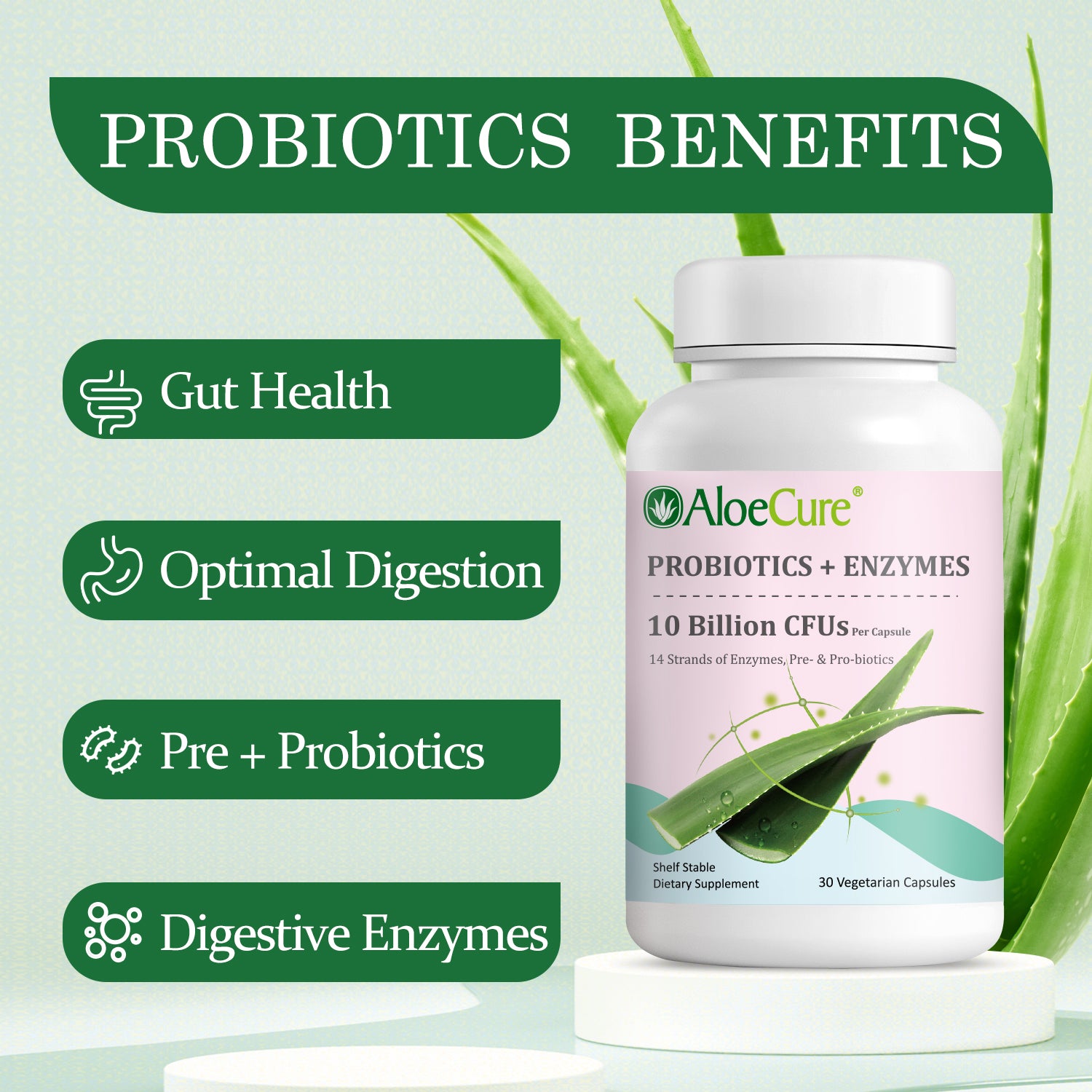
If that sounds like you, AloeCure's Pre+Probiotic & Digestive Enzyme Capsules are one option to consider for daily digestive wellness support. AloeCure also notes that it is fully vertically integrated, farming its own organic aloe, processing it on-site, and producing its own products. That kind of control can matter if you value traceability and consistent sourcing. If you prefer a liquid format, AloeCure Pure Aloe Vera Juice can also fit naturally into smoothies or simple daily wellness habits built around enzyme rich foods.
If you're ready to make this easier to sustain, focus on one small upgrade first. Add kiwi to breakfast. Keep sauerkraut in the fridge. Swap one sweet drink for kombucha. Blend papaya with aloe vera juice a few times a week. Small, repeatable steps usually do more for long-term wellness than an ambitious plan you abandon after a few days.
*These statements have not been evaluated by the Food and Drug Administration. This product is not intended to diagnose, treat, cure, or prevent any disease.
Explore AloeCure if you want to pair enzyme rich foods with a simple daily wellness routine. You can browse aloe vera juice, capsules, and subscription options, including 20% off with Subscribe & Save.
Les commentaires sont approuvés avant leur publication.