Tu carrito está vacío
Envío y manipulación gratuitos con todos los pedidos superiores a $25
Envío y manipulación gratuitos con todos los pedidos superiores a $25

You stand up from the desk after a long stretch of typing, and your back arrives a beat late. The first few steps feel short and stiff, as though the spine forgot its range somewhere around the third hour. Nothing dramatic happened. You sat in one position long enough that the muscles and joints holding you upright got comfortable staying still.
That pattern repeats in small ways all day: the commute, the sofa, the pillow that lets your lower back flatten while you dream. The World Health Organization estimated that 619 million people worldwide experienced low back pain in 2020, a total projected to reach 843 million by 2050 as populations grow and age, with roughly 90% of cases classified as nonspecific, meaning no single serious underlying cause is identified (WHO low back pain fact sheet). Most everyday stiffness is mechanical, and it responds to movement far more than to any single purchase.
Below are seven practices, each tied to a moment in an ordinary day. Try one for a week, then add another. If mornings are your worst hour, this walkthrough of loosening a stiff lower back covers the first ten minutes after waking in more detail.
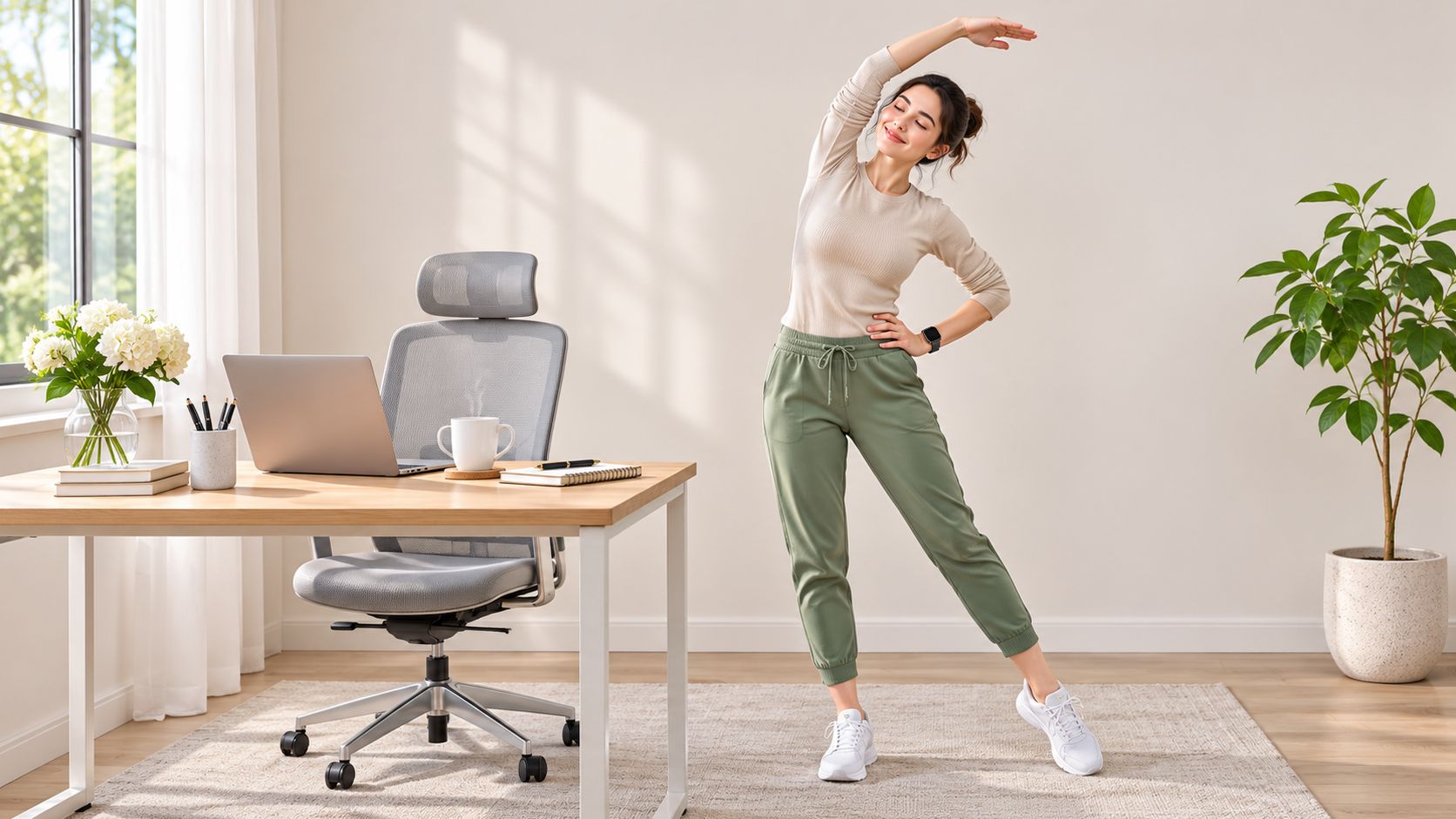
It is 3:15. The cursor has barely moved, your hips feel stuck to the chair, and the mid-back has settled into one long curve. That afternoon stiffness is a duration problem. Hold one position long enough and the tissue around the hips and spine settles into that shape. Breaking the sit every half hour does more for daily comfort than one long stretch saved for the end of the day.
Stand, walk to the kitchen, shift your weight from one foot to the other, and sit back down. That's the entire practice. Two minutes every thirty to sixty minutes keeps blood moving and reminds the spine that it owns a range beyond the chair.
Practical rule: If a movement feels sharp rather than stiff, back off. Discomfort that fades as you warm up is normal. A pinch that gets worse is a signal to change the movement, not to push through it.
Regular structured movement is associated with fewer new episodes of low back pain when the habit stays small enough to repeat. Screens can support that, but keep them in their place: a 2025 systematic review of digital interventions for workplace back complaints found moderate-quality evidence for improvements in pain, disability, and physical performance, while effects on work outcomes were inconsistent (digital interventions review). A reminder is a nudge. It isn't a physiotherapist.
I recommend one weekday plan. Use the labeled timer through the desk session, stand for the water glass each time it rings, walk the ads after dinner, and add the parking-lot lap only on drive days. Four short moments, same order, is enough to turn breaks into a daily habit.
Cat-Cow opens more yoga classes than any other movement, and it survives every style of practice because it asks for nothing except attention and breath. You alternate between a gentle arch and a gentle round, and the spine gets a full sweep of motion in about ninety seconds.
Here's the pace worth copying, slow enough that each round takes one full breath.
Start on hands and knees with wrists under shoulders and knees under hips. Inhale as you drop the belly and lift the chest, then exhale as you round the back and tuck the chin. Run eight to ten rounds, then sit back toward your heels for Child's Pose and stay there for thirty to sixty seconds while your back softens.
If your mid-back is the spot that objects, these Aspen Falls Wellness stretching tips show a supported back bend over a rolled towel that opens the thoracic spine without loading the neck. Broader joint work pairs naturally with a short spinal sequence, which is the idea behind this guide to yoga for joint health.
The evidence for this kind of gentle mobility is steady. A Cochrane review of exercise for chronic low back stiffness covering 16 randomized trials and 1,730 participants found a positive effect in every trial, with 9 trials (56%) showing a statistically favorable difference for the movement group and benefits generally held at follow-up. How you feel about the practice matters too: a 2024 meta-analysis in BMC Medicine found contextual effects accounted for 60% of pain reduction and 69% of disability reduction after exercise therapy for low back pain (BMC Medicine meta-analysis).
A cold kitchen at 6:40 a.m. is a hard place to start moving. Warmth first makes that opening stretch less stiff: a shower before you dress, a heated wrap while you read in the evening, or a warm bath before bed.
Use it as a runway, not the whole session. Ontario Health's 2025 quality standard for low back pain recommends education and individualized self-management, continued physical activity, and exercise-based care, and notes that heat may help more when it's combined with exercise than when it's used alone. The same guidance points out that hands-on therapies work better alongside physical activity than in place of it.
Warmth buys comfort. Movement keeps it. Ten minutes of heat followed by five minutes of gentle motion beats twenty minutes of heat on its own.
Keep the temperature warm rather than hot, and cap a session at about twenty minutes. Put a cloth barrier between a heating pad and bare skin, and never fall asleep on one.
After the shower, while the skin is still warm, a light, non-greasy moisturizer can carry that comfort into the first few minutes of the morning. I would keep the rub short so you still have time to move. A practical companion to that step is this guide to aloe vera heat lotion.
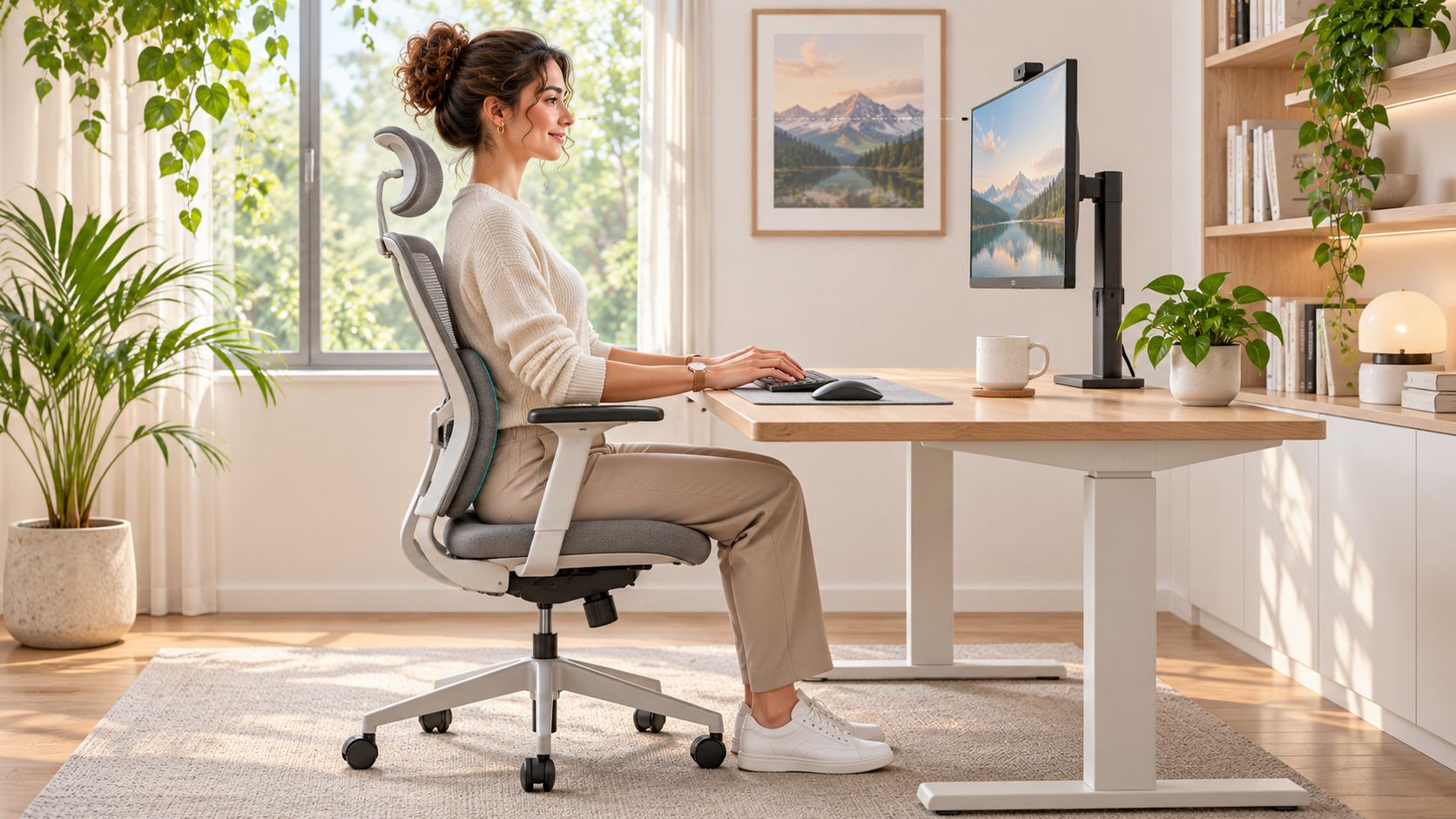
Say your day runs from a kitchen chair at eight in the morning to a car seat at six in the evening. Two long sits, one after the other, and the space between them is where the stiffness compounds. A setup that keeps the spine in neutral alignment during both is worth more than any gadget you buy.
Start with the chair. Set the height so your feet rest flat and your knees sit level with or slightly below your hips, then slide a small cushion or rolled towel into the curve of your lower back. Raise the monitor until the top of the screen sits at eye level and push it back to about an arm's length so you aren't leaning toward the glass.
If desk posture is a recurring problem for you, these better desk posture habits cover chair and monitor setup in more detail. Set it once, then photograph the arrangement with your phone so you can rebuild it in a hotel room.
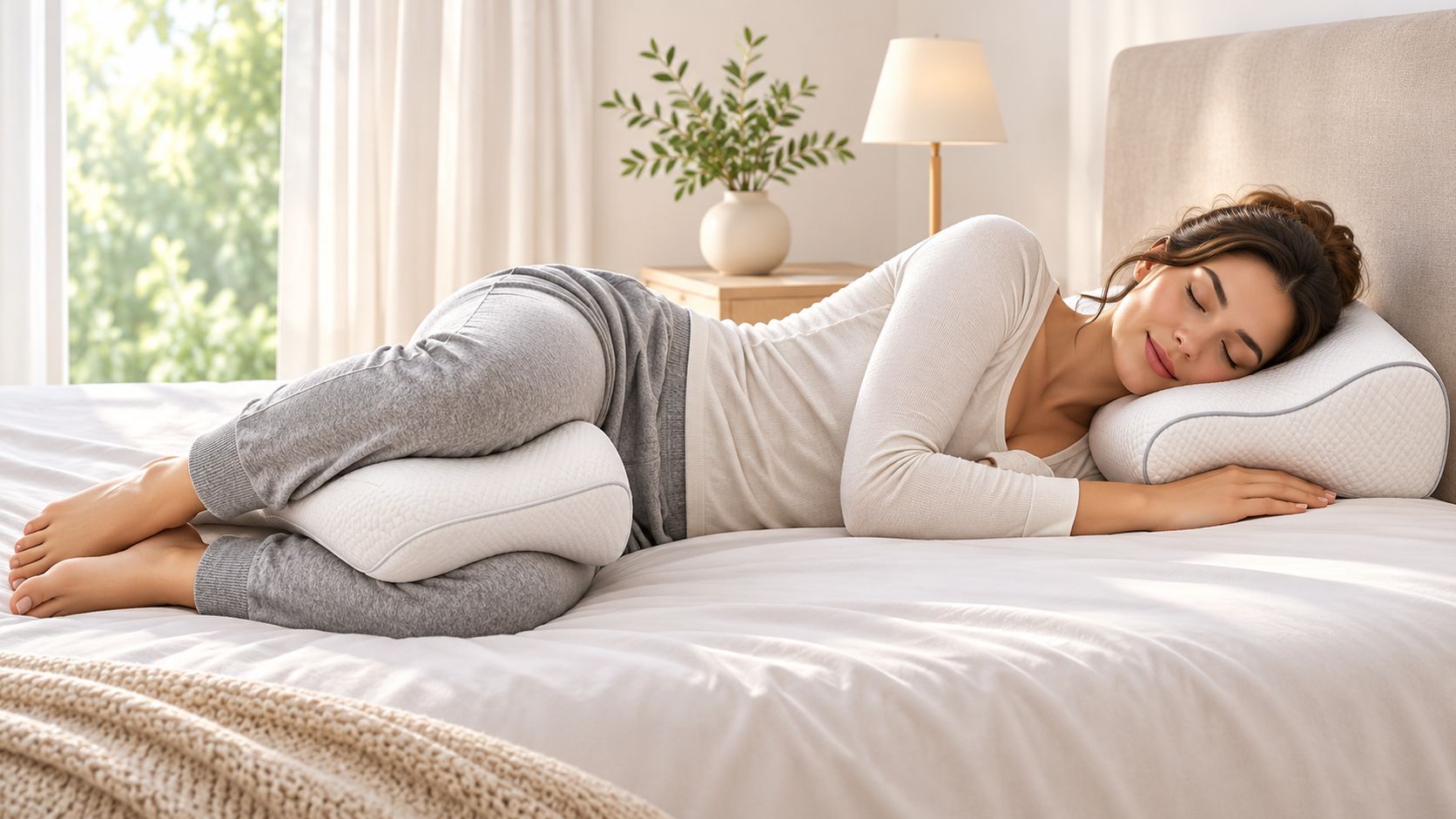
You spend a third of your life in one position, and the position wins by default if you don't choose it. The discs in the spine absorb fluid overnight while you lie still, which is why the first steps out of bed often feel the tightest. A pillow in the right place keeps the natural curves of the spine supported while you're horizontal.
Back sleepers should put a pillow under the knees to keep the lower back from flattening into the mattress, and choose a head pillow that fills the gap between the neck and the bed without pushing the chin toward the chest. Side sleepers need a pillow between the knees to keep the hips stacked, plus enough head support to keep the nose in line with the sternum.
What I'd skip: a stack of three pillows propping the head up. Height at the head end tips the whole spine forward and undoes the support you built below.
A consistent bedtime routine matters as much as the pillow geometry. This guide to improving sleep quality naturally covers the evening sequence, and it pairs well with a few minutes of gentle stretching before lights out.
Hydration is the least glamorous item here and the one many skip. A glass of water first thing, one with each meal, and one alongside each movement break covers most adults without any tracking at all. The habit is already built by the time you reach for anything else.
Read the wording on any bottle before you buy it. The FDA separates structure/function claims from disease claims: a structure/function statement describes how an ingredient may affect the body's structure or function, or helps maintain normal function, and it can't connect that effect to a named condition (FDA structure/function claims). Manufacturers must also notify the agency within 30 days of first marketing a product carrying such a statement, and the standard disclaimer has to appear prominently next to it (FDA supplement labeling guide). "Supports healthy joint function" fits that framework. "Fixes your diagnosis" does not.
Our VeraFlex Joint Support Capsules are built around two standardized bioflavonoid extracts plus organic aloe vera, formulated to support joint comfort and mobility as part of an everyday routine. Take 2 capsules twice daily for the first 7 days, then 2 capsules daily, ideally in the morning as your day starts.
We farm our own aloe, process it on-site within 12 hours of harvest, and make our own formulas, so the bottle comes from a supply chain we control from field to shelf. Our farms are certified sustainable and welcome more than 250,000 visitors a year.
Breathing is the cheapest posture cue available, and it is often done backwards. When you inhale into the upper chest and shoulders, the trunk stiffens to protect itself. When you breathe wide into the lower ribs, the diaphragm drops, the deep abdominal wall engages lightly, and the spine gets a natural brace for free.
Lie on the floor with your knees bent and place one hand on your belly and one on your ribs. Breathe so both hands rise and fall, with the ribs expanding sideways rather than the shoulders lifting. Five minutes a day is enough to make the pattern automatic, and you can then run the same check standing in a queue or at the stove.
"Ribs wide, shoulders quiet" is the whole cue. Say it to yourself at your desk and you'll feel the trunk reorganize in one breath.
The point isn't a harder core. It's a trunk that responds the moment you reach, lift, or turn, so the back doesn't absorb the whole load. Practice for five minutes, then carry the pattern into whatever you were already doing.
| Item | Time Needed | Equipment Needed | Best Setting |
|---|---|---|---|
| Short Movement Breaks Throughout the Day | 2–3 minutes per break | None | Desk, home, or while traveling |
| Gentle Spinal Mobility: Cat-Cow and Child's Pose | A few minutes | Mat or padded surface; optional pillow or folded blanket | Home, yoga class, or workplace |
| Warmth for Everyday Comfort | Up to about 20 minutes | Warm shower, heating pad, wrap, or bath | Home, before stretching or resting |
| Ergonomic Desk and Driving Setup | Ongoing adjustments | Chair, desk, monitor, and optional lumbar support | Office, home workspace, or vehicle |
| Supportive Sleep Positioning | Overnight | Pillows and a supportive mattress | Bedroom |
| Daily Hydration and Plant-Based Support Routine | Daily routine | Water; optional aloe vera juice or capsules | Home or wherever daily routines take place |
| Breath-Led Posture and Core Awareness | About 5 minutes daily | None | Home or during everyday activities |
Seven practices is too many to start on a Monday. Choose two that attach to moments you already have: a two-minute movement break every hour at work, a short Cat-Cow sequence right after a warm shower, a breath check in bed before you turn out the light. Run those three for two weeks before you add anything else.
Consistency beats intensity every time. A gentle routine you repeat daily does more than a demanding one you abandon by Thursday, and no step should feel like a test you can fail. If a movement doesn't feel comfortable, shrink it until it does. If it still doesn't, drop it and keep the rest.
Adjust the setup around the routine as well. Chair height, monitor distance, and pillow placement are passive habits that work while you're not thinking about them, which makes them the easiest gains on this list.
Some situations need a person, not a practice. If stiffness persists for weeks, gets worse rather than better, follows an injury, or arrives with new numbness, weakness, or fever, speak with a licensed health care professional. Anyone who is nursing or pregnant should consult a health care professional before taking VeraFlex, and VeraFlex should be taken as directed, or as recommended by a physician.
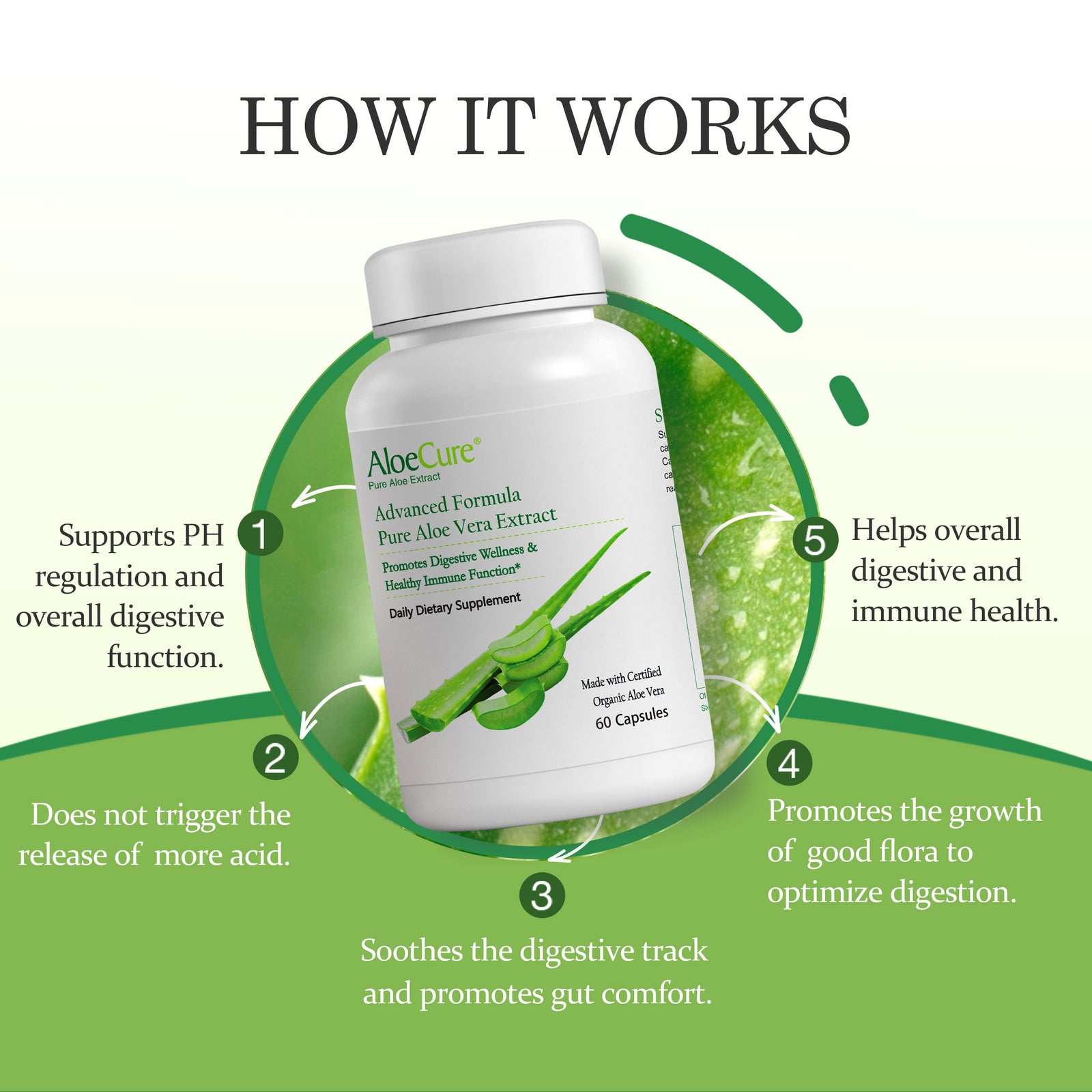
When you're ready to build the plant-based part of the routine, AloeCure sits at the same address as the habits above. Subscribe and Save takes 20 percent off with flexible delivery, and every purchase is covered by a 90-day money-back guarantee, so trying a juice or a capsule bottle carries no real risk.
These statements have not been evaluated by the Food and Drug Administration. This product is not intended to diagnose, treat, cure, or prevent any disease.
AloeCure grows its own organic aloe, processes it within 12 hours of harvest, and turns it into juices and capsules you can slot into the daily routine described above. If you'd like to start with one product rather than seven habits, the VeraFlex Joint Support Capsules and the Pure Organic Aloe Vera Juice are both worth a look. Visit AloeCure to compare the options, and remember that Subscribe and Save takes 20 percent off with a 90-day money-back guarantee behind every order.
Los comentarios se aprobarán antes de mostrarse.