Tu carrito está vacío
Envío y manipulación gratuitos con todos los pedidos superiores a $25
Envío y manipulación gratuitos con todos los pedidos superiores a $25

You set the capsule on your tongue, take a sip of water, tilt your head back, and then it happens. The capsule bobs upward, sticks around longer than you want, and suddenly swallowing feels awkward and tense. A lot of people know this exact moment.
The good news is that capsule swallowing usually gets easier once you stop treating capsules like tablets. If you want to learn how to swallow capsules easily, the biggest shift is understanding what the capsule is doing in your mouth, then matching your technique to that behavior. For some people, posture fixes the problem. For others, texture, anticipation, or a strong gag reflex matters just as much.
Small adjustments can make a stubborn daily routine feel far more manageable.
Capsules often feel harder to swallow for one simple reason. They float. That sounds minor until you notice what happens when you tilt your head back. Instead of moving neatly into position, the capsule can drift in a way that makes swallowing feel less natural.
That's where many people get mixed up. General pill-swallowing advice often lumps tablets and capsules together, even though they behave differently in the mouth. According to Harvard Health's explanation of pill-swallowing mechanics, tablets tend to benefit from a backward head tilt because they sink, while capsules float and respond better to a lean-forward or chin-tuck position. The same source notes that only 2 of 12 major sources clearly separate this capsule-versus-tablet difference with physiological reasoning, which helps explain why standard advice fails for so many people.
If you've always tipped your chin up, you're not doing anything unusual. It's an intuitive move. People assume the pill should go “down,” so the head goes back.
But for a floating capsule, that instinct can work against you. The capsule may hover near the top of the water in your mouth instead of settling into a position that feels easy to swallow.
Simple insight: If a capsule keeps “fighting” you, the problem may be physics, not personal failure.
Some people also struggle with the feel of a smooth capsule shell, the way it slides, or the anticipation of it touching the back of the throat. That's real, and it matters. If even easy-to-swallow foods tend to go down better than capsules, you may do better with methods that reduce that slippery sensation rather than forcing a posture-only approach.
If swallowing capsules regularly puts you off taking your supplements, it may also be worth exploring formats that fit your preferences better, such as this immune support vitamin C spray, which shows how some wellness routines can be built around easier delivery formats.
The lean-forward method is a recommended first technique for capsules because it works with the capsule's natural buoyancy instead of against it.

A clinical study covered by The Guardian's report on capsule-swallowing technique involved 143 individuals who consumed 283 pills. It found that the lean-forward technique improved capsule swallowing success rates by 88% compared with conventional methods like drinking from a glass. The same report notes that 96.9% of subjects reported improvement using the lean-forward technique.
Use this sequence exactly, especially the head position:
The same report notes that using at least 20 ml of water is an important part of the method. That small amount helps create enough flow and lubrication to carry the capsule smoothly.
When you lean forward, the capsule's floating behavior starts helping instead of hindering. Rather than drifting into an awkward position, it moves toward the back of the mouth where the swallow can happen more naturally.
A lot of people feel instant improvement once they stop trying to force the capsule downward by lifting the chin. The motion is gentler than it sounds. You're not bending sharply. You're allowing the capsule to line up with the swallow.
Don't rush the sip. Let the water and capsule settle together for a moment before you tuck your chin and swallow.
Seeing the movement can help if the written instructions feel abstract.
A few small habits can make the lean-forward method less effective:
If the first try feels strange, that's normal. New swallowing mechanics can feel unfamiliar before they feel easy. Give yourself a few low-pressure attempts before deciding whether it works for you.
For some people, posture isn't the main issue. The barrier is texture. A dry, smooth capsule shell can feel unnatural in the mouth, and the moment you notice that slippery feel, your throat may tense up.
That's why food-based methods help so many readers. They turn the capsule into part of a normal swallow instead of an isolated object.

Soft, smooth foods tend to work best because they coat the capsule and reduce that slippery sensation:
Place the capsule in a small spoonful or tuck it into a bite that's easy to swallow whole. Keep the portion modest. Too much food can make you chew around the capsule and notice it more.
This method can be especially useful for people whose difficulty has more to do with sensory response than swallowing skill. A community discussion documented in this Reddit thread on capsule texture and sensory barriers describes how standard pill-swallowing advice often misses that point. The post states that 90% of neurodivergent adults in that community-driven data reported success only with pre-lubrication or food-wrapping approaches such as bread or yogurt.
If the capsule feels “wrong” in your mouth before you even try to swallow, a texture-based method may be the better fit.
Food methods can be helpful, but they aren't a reason to open, crush, or alter capsules unless the label says that's appropriate or a qualified professional confirms it. The goal here is to swallow the capsule whole, just with a smoother carrier.
If you like building supplements into a calm morning routine, pairing them with a warm drink can also help reduce tension. Some people enjoy setting that rhythm with simple wellness habits like honey peppermint tea ideas before taking their capsules.
Once swallowing starts to feel difficult, the mind often joins in. You brace, your throat tightens, and a small capsule suddenly feels much bigger than it is. That reaction is common, but it can be retrained.
The most useful way to think about this is simple. Swallowing capsules is a learnable skill. It isn't a personality trait, and it isn't fixed.

A practical training protocol from Gillette Children's pill-swallowing guidance recommends practicing with candy balls of increasing size. The guidance says to achieve five consecutive successful attempts with one candy size before moving to the next larger size, with five repetitions at each level to build muscle memory.
That structure matters because it keeps practice calm and measurable. You're not “trying to get over it.” You're giving your mouth and throat repeated successful experiences.
Try a progression like this:
Confidence cue: Stop after a good session, not after a frustrating one. Ending on success helps your brain remember the skill as safe and manageable.
Confidence doesn't mean never thinking about it again. It means the swallow stops feeling like a threat. Your body becomes less reactive. Your routine feels less loaded.
If you've had a few unpleasant experiences, go gently. One calm success at a smaller size can do more for progress than repeated attempts with a full-size capsule while you're tense.
Getting the capsule down is only part of the job. What you do right after swallowing matters too, especially if capsules tend to feel sticky.

According to the University of Rochester Medical Center's guidance on swallowing pills, good post-swallow habits include remaining upright for at least thirty minutes and drinking a full glass of water, up to 8 ounces, immediately after swallowing. That helps the capsule clear the esophagus and reduces the chance that it lingers where it feels uncomfortable.
Keep it simple:
It can be tempting to open a capsule or mix its contents into food if swallowing feels annoying. But that can change how the product is meant to be taken. Check the label first and follow the product directions carefully.
That's also why reading supplement packaging closely matters. A clear label can tell you how to take the product, what form it uses, and what handling instructions matter. This guide on how to read supplement labels is useful if you want a better sense of what to check before changing your routine.
Some swallowing problems are about technique. Others are about product form, texture, or timing. Paying attention to all three usually leads to better habits.
If you're helping a younger family member build a safe routine around supplements and energy-focused products, Optimal Native's advice on teen energy offers a helpful example of why careful label reading and age-appropriate decisions matter.
These statements have not been evaluated by the Food and Drug Administration. This product is not intended to diagnose, treat, cure, or prevent any disease.
A smoother routine usually comes down to matching the method to the problem. If the capsule floats and feels awkward, use posture. If the texture is the issue, use a soft food carrier. If nerves take over, practice with smaller objects until the motion feels ordinary again.
That's the key to how to swallow capsules easily. Don't force one method that clearly isn't working. Adjust the mechanics, reduce the sensory friction, and build confidence with repetition.
For households managing daily wellness habits for more than one person, organization also helps. The Family Caregiving Kit guide to medication management systems is a practical resource for creating routines that are easier to follow consistently. And if you're curious how format and absorption fit into your supplement choices, this overview of bioavailability of supplements gives useful context.
A daily supplement routine shouldn't feel like a battle. With the right technique, the right texture, and a little practice, it can become one of the easiest parts of your day.
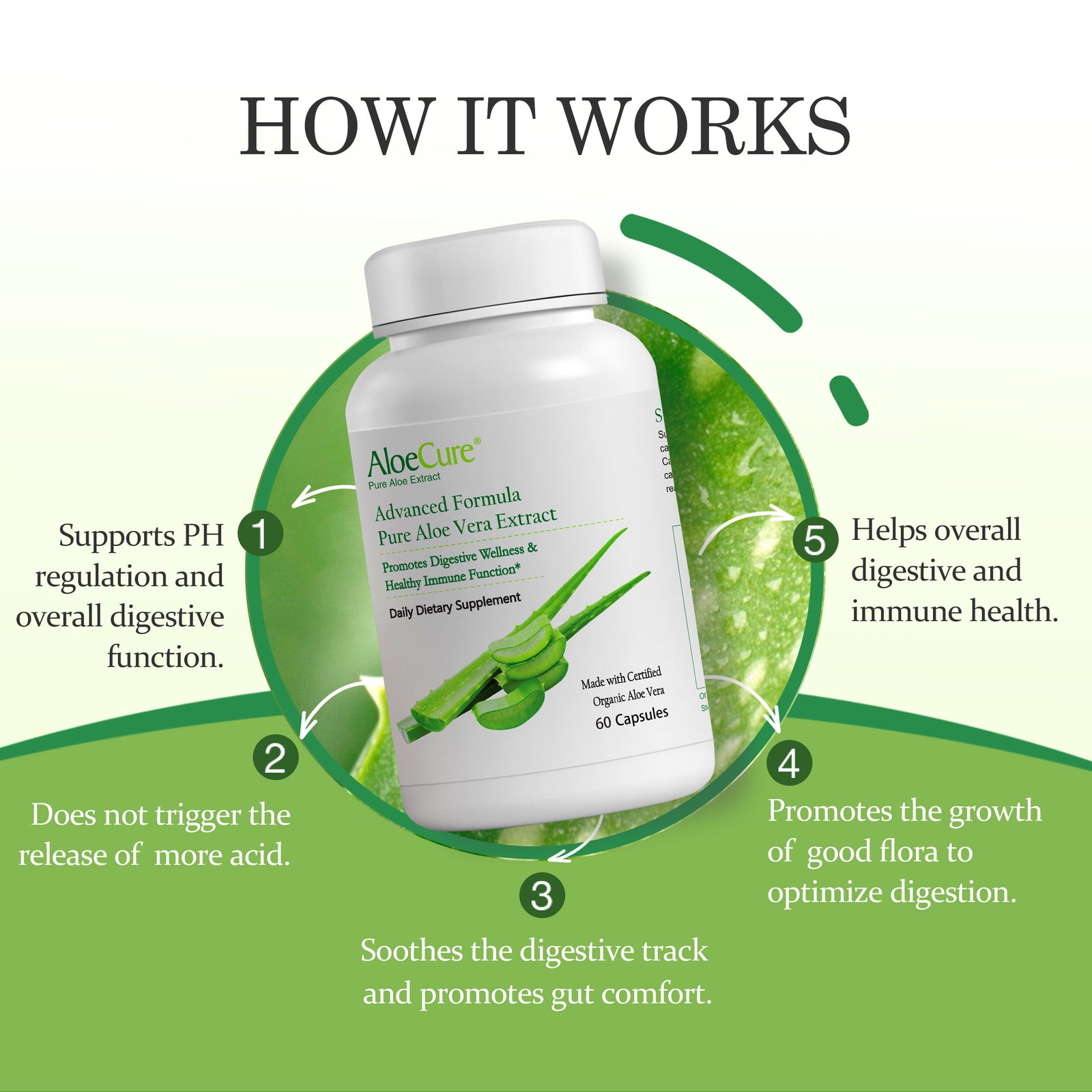
If you're ready to build a more comfortable supplement routine, explore AloeCure for high-quality aloe juices and capsules made through a fully vertically integrated process. AloeCure farms its own aloe, processes it on-site, and produces its own products for consistent quality from plant to finished formula. You can also save 20% off with Subscribe & Save and choose flexible delivery that fits your schedule.
Los comentarios se aprobarán antes de mostrarse.