Tu carrito está vacío
Envío y manipulación gratuitos con todos los pedidos superiores a $25
Envío y manipulación gratuitos con todos los pedidos superiores a $25

If an herb has been used for generations, does that automatically make it a smart choice today?
That question matters with gravel root. It has a long place in traditional herbal practice, and many people still search for gravel root benefits because they want plant-based support for everyday wellness. But history and modern quality standards aren't the same thing. A herb can be interesting, widely discussed, and still require real caution.
Gravel root is a good example. Its story includes traditional use, a few notable lab findings, and one very important safety issue that shouldn't be brushed aside. If you're curious about it, the most helpful approach is a balanced one. Learn what the plant is, why people have used it, what modern science says, and what quality markers matter before you buy anything.
Gravel root sits in that category of herbs people often hear about through folk wellness traditions rather than through mainstream clinical research. That's part of its appeal. It carries a sense of history, regional use, and plant knowledge passed down over time.

At the same time, readers often get stuck on one point. They assume that because an herb appears in old herbal references, its benefits must already be proven in people. That's not how evidence works. Traditional use can tell us why a plant became valued. It doesn't automatically confirm that it supports the body in the same way under modern scientific testing.
People usually explore gravel root for one of two reasons. Some are interested in classic herbal traditions. Others want to understand whether older plant ingredients still have a place in a careful, safety-first wellness routine.
Both are reasonable starting points. What's important is separating traditional reputation from verified modern evidence.
Practical rule: With any heritage herb, ask two questions before you use it. What is it traditionally known for, and what has actually been confirmed by modern testing?
That simple filter helps you look at gravel root more clearly. It also helps you avoid the most common mistake, which is treating folklore, lab data, and product marketing as if they all mean the same thing.
Gravel root is the common name for Eutrochium purpureum. Many people also know it as Joe Pye Weed. If you've seen different names in different books or online listings, that isn't unusual. Herbal plants often carry several folk names depending on region and tradition.
The plant itself is a tall perennial with clustered flowers and a strong underground structure. In wellness preparations, the parts most often discussed are the root and rhizome rather than the flowering tops. That distinction matters because the name of a plant and the part used aren't always the same thing.

One point can trip people up right away. The infographic above uses the older botanical name Eupatorium purpureum, a name many readers will still encounter in herbal material. Modern classification commonly places the plant as Eutrochium purpureum. If you're comparing labels, articles, or old monographs, that naming overlap can make it look like different herbs are being discussed when they're often referring to the same plant tradition.
A few common names associated with gravel root include:
Traditional herbal references often describe the root and rhizome as containing volatile oil at about 0.07% plus flavonoids such as euparin, euparone, and cistofolin, according to Herbal Reality's gravel root monograph. You don't need to memorize those names, but they help explain why the plant remains of interest to herbal researchers and formulators.
Here's the plain-language version:
| Term | What it means for the reader |
|---|---|
| Root and rhizome | These are the underground parts traditionally prepared for herbal use |
| Volatile oil | Aromatic plant compounds often discussed in herbal profiles |
| Flavonoids | Plant constituents that researchers often study for biological activity |
| Cistofolin | One named constituent that has drawn attention in lab research |
That foundation matters because it gives you a more realistic way to think about gravel root benefits. You're not looking at a mystery ingredient. You're looking at a specific plant with a traditional identity, defined plant parts, and a known phytochemical profile, even if its modern evidence base remains limited.
Long before modern supplement labels existed, herbalists valued gravel root for how it fit into broader wellness traditions. It wasn't usually framed as a miracle plant. It was used more practically, especially when people wanted support for healthy fluid movement and general bodily balance.
That traditional reputation still shapes how people talk about gravel root benefits today. The herb has a documented history in urinary and joint health support, and people have historically used it to support bladder and kidney function. But WebMD's gravel root overview also makes an important point. It says there is "no good scientific evidence" supporting many of these uses.
In traditional practice, gravel root was strongly associated with its role as a diuretic. In simple terms, that means it was used to support urine flow and the body's natural fluid-handling processes. Older herbal systems often connected this kind of support with a sense of internal clearing and general comfort.
That doesn't mean people in earlier eras used the same language we use now. Their explanations were shaped by observation, tradition, and practical trial over time. They noticed patterns, repeated them, and built a use history around them.
A simple way to understand that history is this:
Historical use tells you what people valued. It doesn't tell you, by itself, what has been proven in modern human studies.
Many wellness articles go too far. They present an herb's old reputation as if it were settled modern fact. A more responsible reading is to treat traditional use as context.
For readers who enjoy exploring heritage herbs, that context still matters. It shows why gravel root endured in materia medica and why the plant stayed relevant in herbal education. If you like learning about other botanicals with long folk histories, this guide to lovage benefits and traditional herbal use offers a useful comparison in how older plant traditions are often discussed today.
Modern interest in gravel root usually centers on a basic question. Is there anything in the science that helps explain why traditional herbalists paid attention to this plant in the first place?
There is one notable clue. A purified constituent from gravel root called cistifolin has been studied in lab settings. Researchers reported that it inhibited Mac-1 (CD11b/CD18)-dependent monocyte adhesion to fibrinogen in a concentration-dependent manner, and the paper also described activity in in vitro and in vivo models, according to the PubMed-indexed study on cistifolin. That gives the herb a plausible mechanistic signal, even though the broader evidence base remains narrow.

That sentence above is technical, so let's translate it.
Researchers looked at a specific cell-adhesion process involved in the body's natural response systems. Cistifolin appeared to interfere with that process in laboratory models; cellular adhesion is part of how the body organizes normal biological responses.
What it does suggest:
What it doesn't prove:
This is a common point of confusion in natural wellness writing. A lab finding can sound persuasive because it uses precise scientific language. But lab data and human benefit are not interchangeable.
For example, an isolated compound may show an interesting action under controlled conditions. A finished supplement may contain different amounts, different supporting compounds, or different impurities. Human bodies also add variables that lab models can't fully capture.
Here is a simple comparison:
| Type of evidence | What it can tell you |
|---|---|
| Traditional use | How people have historically used the plant |
| Lab research | Whether specific constituents show biological activity |
| Human clinical research | Whether people consistently experience measurable benefit |
Gravel root currently has more of the first two than the third.
A short visual overview can help connect those ideas:
The most accurate modern summary is modest. Gravel root may support healthy fluid balance and may have constituents worth studying for the body's natural response processes. But modern reviews also note that the scientific data on its medicinal actions remain scant.
That word matters. It means the evidence isn't substantial enough to make big promises.
A plausible mechanism is not the same thing as a proven outcome.
If you're evaluating gravel root benefits objectively, that's the standard to keep in mind.
Safety is the most important part of any discussion about gravel root. Not because the herb has no traditional value, but because product quality changes the risk picture dramatically.
Several monographs warn that many gravel root preparations may contain hepatotoxic pyrrolizidine alkaloids, often shortened to PAs. These compounds can cause liver damage, and products that are not certified and labeled "hepatotoxic PA-free" are considered likely unsafe, according to RxList's gravel root safety summary.

This is the line that should shape every buying decision. If a gravel root product does not clearly verify that it is PA-free, the conversation shouldn't move forward.
A lot of supplement shoppers focus first on dosage form. Tea or capsule? Liquid extract or powder? With gravel root, the better first question is simpler. Has the product been tested and labeled to address PA risk?
That changes the entire framework from hopeful browsing to responsible screening.
Bottom line: When PA-free certification is missing, the traditional rationale doesn't outweigh the safety concern.
Historically, gravel root has appeared in several forms in herbal practice. You may see it sold as:
Herbal literature commonly cites 2 to 4 g of dried root and rhizome one to three times daily, or 3 to 8 mL per day of a 1:3 tincture, as noted in the earlier Herbal Reality discussion. That information is useful as historical context. It is not the same as a personal recommendation.
Why the distinction matters is simple. Traditional dosage references don't account for the quality differences, contamination issues, and sourcing inconsistencies present in the supplement market.
Some groups shouldn't approach gravel root casually. Safety references list the herb as contraindicated in:
Anyone considering it should also involve a qualified healthcare professional before use, especially if they have questions about ingredient quality, label claims, or herb selection in a broader wellness routine.
For readers who prefer gentler plant-based habits like infusions and blends, this article on herbal teas for digestion support offers a practical look at how to evaluate herbal options with a more everyday mindset.
If you're thinking about gravel root, use this quick checklist:
That approach is more useful than chasing bold claims. With gravel root, safety screening comes first.
A high-quality supplement should answer your questions before you need to ask them. That applies to gravel root, and it applies to every plant product in your cabinet.
The strongest brands don't hide behind vague words like pure, premium, or natural. They show how the ingredient was sourced, how it was tested, and what standards the finished product had to meet before it reached a customer.
When you compare supplements, focus on evidence of process, not just attractive packaging.
Look for:
For gravel root, this gets even more specific. A quality-first brand should make it easy to understand whether the product has been screened for the issue discussed earlier, rather than leaving shoppers to guess.
Third-party testing helps create distance between a brand's marketing claims and the actual contents of a product. It doesn't make every supplement perfect, but it gives consumers a stronger reason to trust what's on the label.
If you'd like a practical explanation of what those checks can and can't tell you, this guide on what third-party testing means for supplements is a helpful place to start.
You can also broaden your label-reading skills by reviewing outside educational resources. For example, The Axelrad Clinic's guide gives a useful overview of what people should consider when evaluating wellness supplements in a broader routine.
Many supplement mistakes happen because people shop by promise instead of proof.
Use this comparison:
| Shop by promise | Shop by proof |
|---|---|
| “It sounds traditional” | “It states the exact herb and plant part” |
| “The bottle looks professional” | “The testing and sourcing are visible” |
| “The claims are exciting” | “The safety standards are specific” |
That mindset is especially important with herbs that have a long folk history but limited modern clinical validation. The more interesting the story, the more disciplined the quality check should be.
Gravel root is a thoughtful herb to approach, not an impulse purchase. Its long traditional history helps explain why people still search for gravel root benefits, and the lab research around cistifolin gives the plant a scientifically interesting angle. But those points don't erase the bigger reality. Modern human evidence is limited, and product quality is the deciding factor.
For many readers, the smartest next step isn't buying fast. It's slowing down and asking better questions. Is the product clearly identified? Is it appropriate for your situation? Has a qualified professional reviewed it with you? If the safety standard isn't clear, it isn't a good fit.
If you're building a broader wellness routine and want to compare herbs with other non-drug lifestyle strategies, this overview of powerful fatigue relief methods can be useful as a general education resource on how people often combine habits, nutrition, and supportive practices.
The clearest takeaway is simple. Gravel root may be historically respected, but any modern use should be informed, limited, and safety-centered. PA-free certification is the minimum standard, not a bonus feature.
These statements have not been evaluated by the Food and Drug Administration. This product is not intended to diagnose, treat, cure, or prevent any disease.
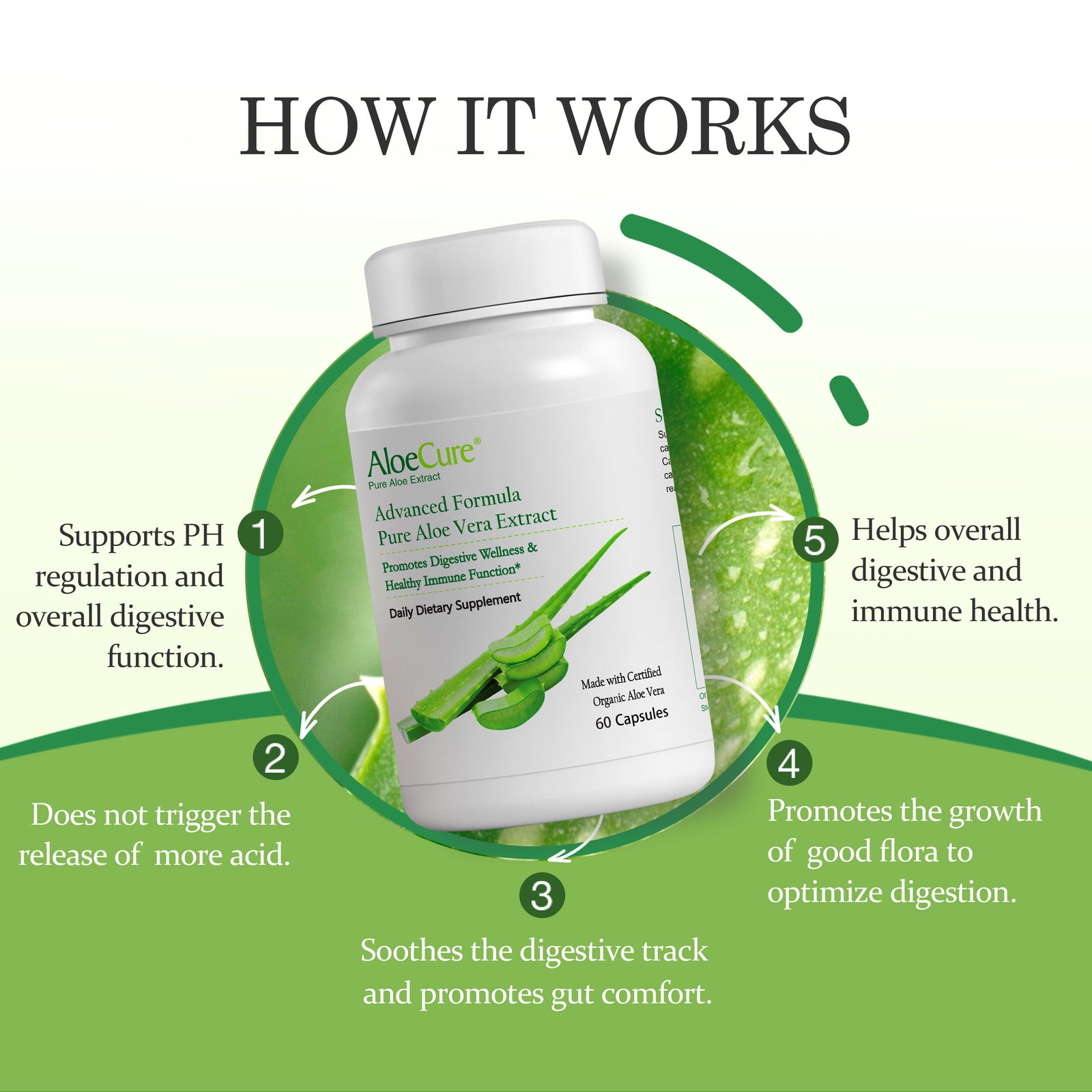
If you value careful sourcing, transparent standards, and wellness products made with real attention to quality, explore AloeCure. AloeCure grows, processes, and produces its own aloe products with a vertically integrated approach that prioritizes traceability, clean manufacturing, and rigorous testing. If you'd like to save on repeat orders, you can also sign up for Subscribe & Save and get 20% off with flexible delivery options.
Los comentarios se aprobarán antes de mostrarse.