Tu carrito está vacío
Envío y manipulación gratuitos con todos los pedidos superiores a $25
Envío y manipulación gratuitos con todos los pedidos superiores a $25

You've probably had this moment already. You eat a normal lunch, then one meal feels easy and the next one sits like a brick. That's the part many people notice first, the gap between eating and feeling settled.
A digestive enzyme probiotic formula is built for that gap. Enzymes help break food down while probiotics support the microbial environment that keeps digestion running smoothly over time. Used well, the pairing makes more sense than either ingredient alone, because digestion isn't one event, it's a sequence.
A big meal can look simple on the plate and still ask a lot from the body. Proteins, fats, starches, and plant fibers each need different kinds of help before the body can use them well, so a one-note supplement often leaves part of the job unfinished.
Digestive enzymes are the front-line workers. They help break food into smaller pieces so nutrients can be absorbed more easily, and Johns Hopkins Medicine notes they're commonly used when people need support with lactose intolerance, pancreatic insufficiency, and celiac disease concerns, while also stressing that enzymes work best when there's a specific digestive need. They act like tiny molecular scissors, getting to work as soon as food arrives.
Probiotics play a different role. They're live microorganisms that support the gut environment, and the science described in the brief shows they can act later by helping microbial balance, producing helpful compounds, and extending digestion through fibers and polyphenols the body can't fully handle on its own. A digestive enzyme probiotic pairs those roles in sequence, so one part helps with the meal itself and the other supports what happens after.
Practical rule: if food breakdown is the short-term problem, enzymes matter most right away. If the goal is broader digestive support over time, probiotics become the longer game.
That two-step pattern matters because digestion is more like a relay than a single sprint. One part hands the work off to the next, and the timing changes what people feel after eating.

A heavy meal can feel like too much work for the gut, especially when the body has to split food into forms it can absorb. Digestive enzymes are proteins that do that splitting. They are the body's meal-time tools, working on what you have just eaten rather than shaping the gut environment over time. Shoppers usually see names such as amylase, protease, lipase, and lactase, and each one points to a different part of a meal.
Amylase helps break down carbohydrates. Protease works on proteins. Lipase handles fats. Lactase supports the breakdown of dairy sugar. When a formula combines several enzymes, it is usually meant to cover a wider mix of everyday foods instead of only one narrow trigger.
Probiotics are live microorganisms that support digestive tract health and microbial balance. They do a different job from enzymes, because they do not break food apart in the same direct way. The distinction matters, since product labels and marketing often blur the two. Aloecure's overview of prebiotics, probiotics, and enzymes helps frame how these pieces fit together, and probiotics can be easier to understand when you picture them as good tenants moving into the gut neighborhood and helping keep the environment steady.
A common benchmark in probiotic writing is about 10^9 CFU/day, as noted in the brief's review summary. That does not mean every person needs the same amount, but it does show that probiotics are usually treated as a daily habit, not a one-time fix.
Probiotic formulas are also discussed in shopper education alongside broader gut-support categories, including how probiotic cleaners work, because the same word can point to very different uses depending on the product.
Enzymes act on the food in front of you. Probiotics support the digestive environment that food passes through, and they can keep doing their work after the meal is over.

The first stage begins as soon as food enters the body. Supplemental enzymes and the body's own enzymes help break macronutrients into smaller pieces, so digestion can move more easily through the rest of the process. That is why enzymes usually fit best before or right as a meal begins. They meet the food at the moment it needs to be chopped down.
Probiotics do a different job. They do not replace the first stage, and they do not cut food apart in the same direct way. Instead, they support microbial balance and help the gut handle materials the host cannot fully process, including fibers, resistant starches, and polyphenols. The practical effect is that a digestive enzyme probiotic product can cover both the meal itself and the environment that handles what comes after.
A 2024 review in the brief notes that probiotic bacteria can also contribute their own enzymes after intestinal transit, including lipase, amylase, and protease, which gives a combined formula a real mechanistic basis Frontiers review.
That same review describes broader probiotic mechanisms such as bacteriocin production, organic acid generation, hydrogen peroxide, competitive exclusion, and mucosal-barrier effects. In plain language, probiotics help shape the neighborhood where digestion happens, not just the food that arrives there.
A useful comparison is a kitchen and a pantry. Enzymes do the kitchen work at mealtime, where food needs chopping and blending. Probiotics help keep the pantry and the rest of the home in better order so the next meal starts from a steadier base.
For a broader primer on how these pieces fit together, the overview on prebiotics, probiotics, and enzymes explains the same two-stage model in a simple way.
A 2018 study of a supplement combining 9 probiotic organisms with 10 digestive enzymes found improved fermentation activity in colon reactors, faster recovery of microbial populations after exposure, restored microbial ratio balance, increased diversity, and metabolites linked with anti-inflammatory cytokines in an intestinal model PubMed study. That does not make every product interchangeable, but it does show why formulators keep pairing the two categories.
For a related example of how microbes are used in another setting, the mechanics explained in how probiotic cleaners work show the same basic idea of helpful organisms shaping their environment rather than replacing all other tools.

Digestive enzymes usually make the most sense right before or at the start of a meal. That timing matters because they need food present to work on it, and the brief's consumer references also note that enzymes are taken before or with meals for that reason. Probiotics are more flexible, and many people take them with food or shortly after so they can move through the stomach environment more comfortably.
Enzymes are the ingredient people often notice first. The effect is usually meal-by-meal, so the question is whether a specific lunch or dinner feels easier than the one before. Probiotics tend to be slower, because they support microbial balance over time rather than creating an immediate mechanical change.
The clinical research in the brief lines up with that practical distinction. A probiotic-amylase blend reported notable symptom and tolerance outcomes, including about 60% GSRS score reduction versus 25% for placebo, about 49% bloating reduction versus 25% for placebo, and 59% abdominal discomfort reduction versus 32% for placebo PubMed study. Those results are useful because they show the category can deliver targeted digestive support without requiring a disease claim.
Rule of thumb: enzymes belong at the meal edge, probiotics belong in the daily rhythm.
If you want both in one routine, taking them together is usually the easiest habit to keep. The evidence in the brief also supports that probiotics can still influence enzyme activity and gut flora when paired with meals, so the two don't cancel each other out.
A practical read on onset is this. Enzymes may feel relevant the same day. Probiotics usually reward consistency over a longer stretch. That's why shoppers who expect an overnight transformation often feel disappointed, while people who treat the pair like a daily system tend to judge it more fairly.
For a broader guide on realistic timelines, this explainer on how long supplements take to work is worth keeping nearby.
A good digestive enzyme probiotic formula should name its parts clearly. For enzymes, look for a broad mix such as protease, amylase, lipase, lactase, and cellulase when the goal is everyday meal support rather than a narrow use case. For probiotics, look beyond the word “probiotic” and check whether the label gives the genus, species, and strain.
That strain detail matters because probiotic effects are strain-specific. A label that says only “probiotic blend” leaves you guessing about what you're buying.
| Key Quality Signals for a Digestive Enzyme Probiotic Formula | Why It Matters | What to Avoid |
|---|---|---|
| Broad enzyme coverage | Covers proteins, carbs, fats, dairy sugars, and plant fibers | Single-enzyme formulas for mixed meals |
| Strain-level probiotic naming | Helps you know what was actually tested or formulated | Generic “proprietary blend” language |
| Third-party testing | Adds confidence around identity and consistency | No proof of testing or identity |
| Organic or non-GMO signals | Useful for shoppers avoiding certain crop inputs | Vague quality claims with no certification |
| Clean processing | Preserves bioactivity in plant-based ingredients | Heat-heavy, chemical-heavy, or charcoal-based processing |
Clean processing matters because heat, chemicals, and charcoal filtration can strip bioactivity from plant-based ingredients that share the capsule. If a brand is serious about formulation quality, it should be able to explain how the ingredients are handled and how the finished product is verified.
The brief also points to USDA Organic and Non-GMO Project Verified as meaningful shopping signals. Those don't tell the whole story, but they do help narrow the field when you're comparing products on a page that all claim to support digestion.
Smart shopper move: don't buy the loudest label. Buy the label that tells you exactly what's inside, how it was made, and whether the ingredients were checked.
If you want a practical way to compare labels before buying, this guide on how to read supplement labels is a useful companion. The short version is simple, if the label can't explain its enzyme mix, probiotic identity, and testing, it's probably not the clearest choice.
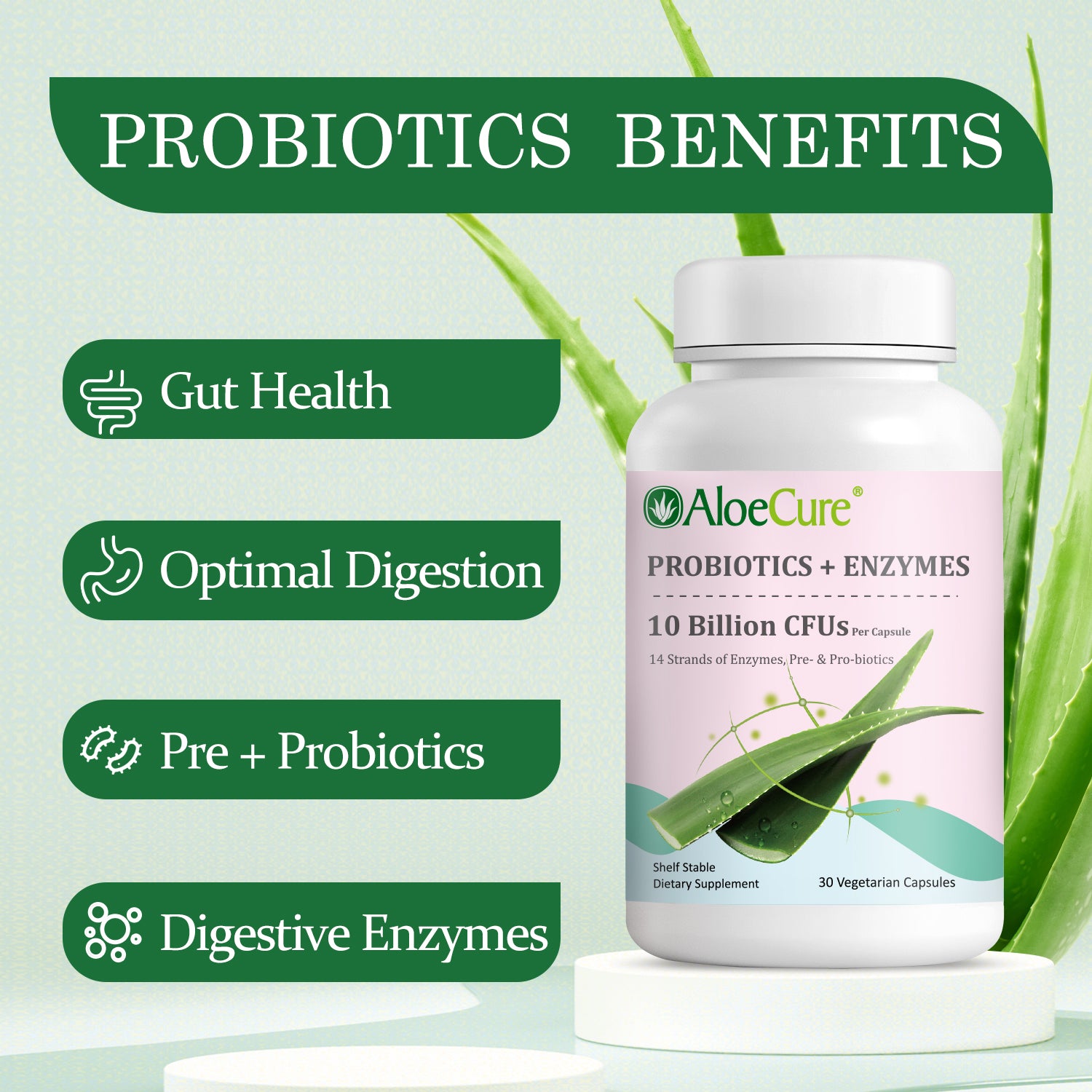
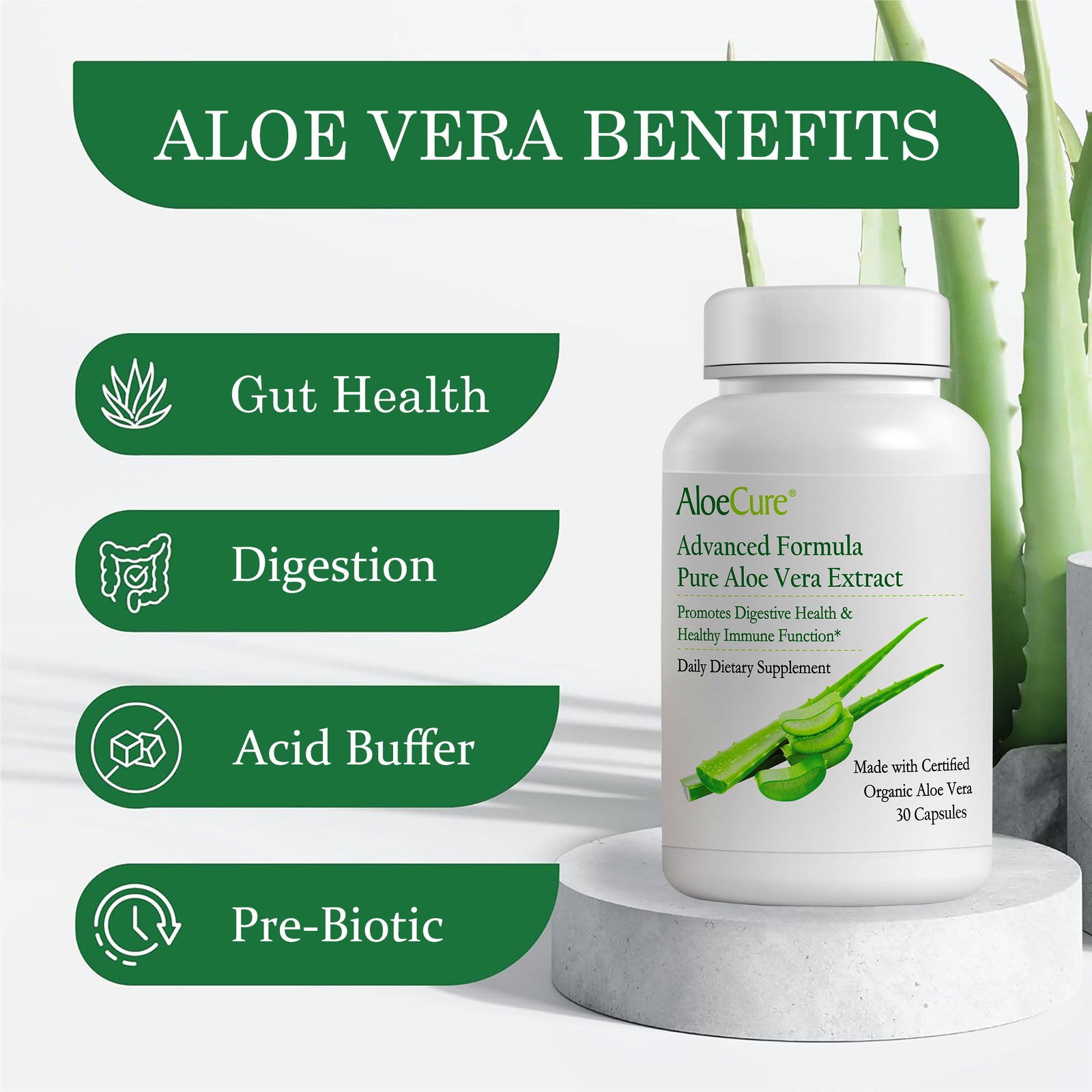
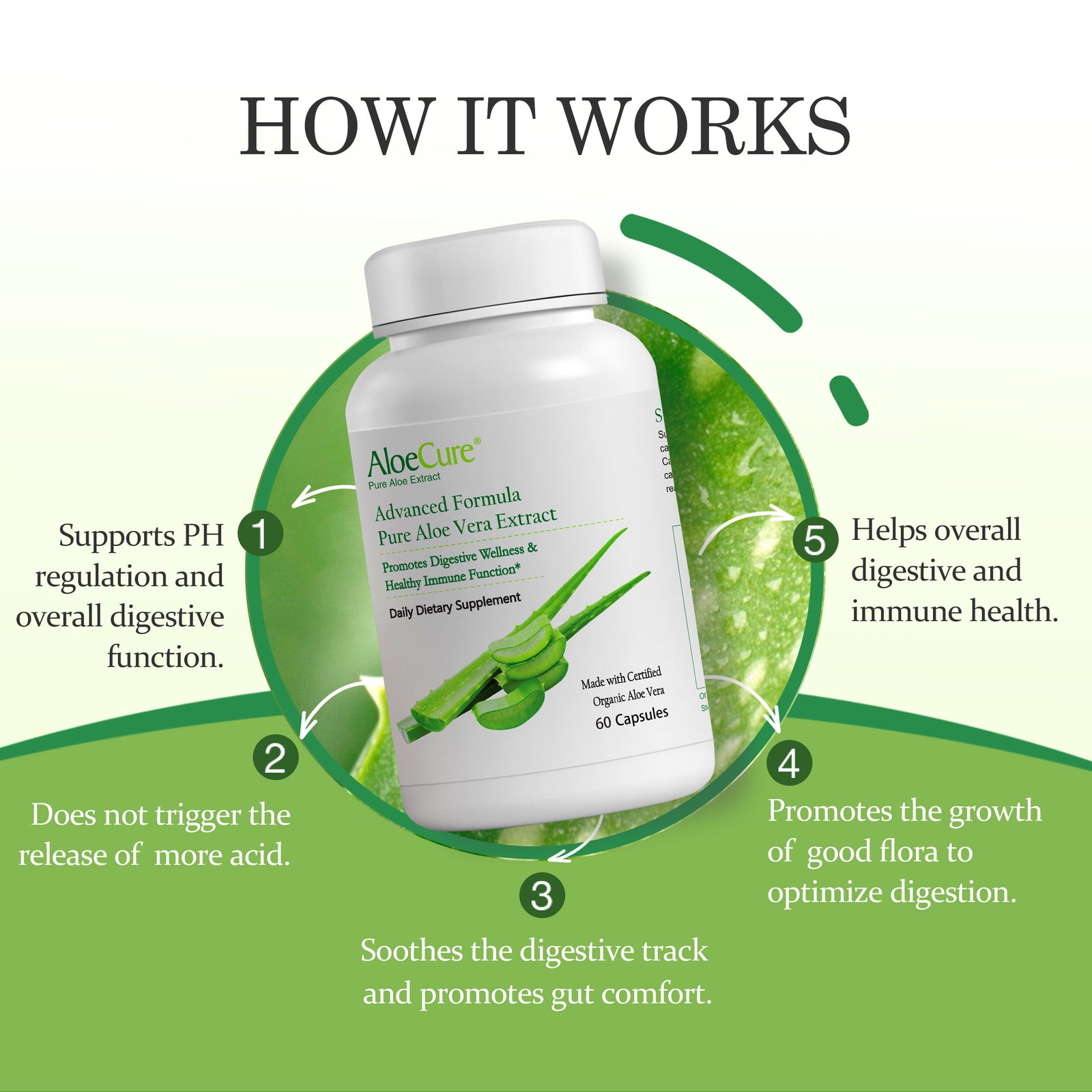
AloeCure's Pre+Probiotic and Digestive Enzyme Capsules give a practical example of the two-stage approach in a single plant-based formula. The product combines a prebiotic, probiotics, and digestive enzymes, so it reflects both sides of digestion, the immediate help enzymes provide around meals and the longer-view support that probiotics are used for.
A clean formula is easier to evaluate when you can see how the ingredients are handled from start to finish. As noted earlier, AloeCure says its parent company, AGHG, has owned and operated its own aloe farms for 25 years, uses USDA and EU certified organic aloe, and processes it on-site within 12 hours through a proprietary method that avoids chemicals, added enzymes, concentrates, and charcoal filtration. Those details line up with the quality cues shoppers usually want to see, especially organic sourcing, direct control over production, and processing that does not overwork the ingredients.
This formula sits within a broader digestive health collection, and AloeCure also offers a 90-day money-back guarantee and Subscribe & Save savings. For someone testing a new routine, that kind of setup can make the decision feel less risky and easier to stick with. If you like to keep daily routines organized, it can also help to find the best app to track what you drink so supplement timing and meal habits are easier to remember.
The point is not that every shopper needs the same capsule. The point is that this product shows how a cleaner label, organic sourcing, and a two-stage formula can appear together in one place without a lot of extra noise.
Adults often look at this kind of support when meals feel heavier than they should, when fiber intake changes from one day to the next, or when travel interrupts routine and meal timing. A two-stage digestive enzyme probiotic formula can be easier to sort through when the label stays clear about what happens at the meal and what may support the gut over time.
Healthy adults should still review any new supplement with a qualified professional if they're already taking other products, or if they're pregnant or nursing. Structure and function statements describe support, but they are not drug claims, and the standard disclosure still applies, These statements have not been evaluated by the Food and Drug Administration. This product is not intended to diagnose, treat, cure, or prevent any disease.
Clear answers make the supplement easier to judge on its own merits. The label should help you understand the two jobs it is trying to do, one around digestion at mealtime and one around longer-term gut support, instead of leaving you to guess from marketing language alone.
A clean formula is easier to compare with other options when the ingredient story stays readable from start to finish. As noted earlier, AloeCure describes its own farms, organic aloe sourcing, and on-site processing in a way that points to direct control over quality, which is the kind of detail shoppers usually want to see.
AloeCure's Pre+Probiotic and Digestive Enzyme Capsules bring the two-stage idea into one plant-based formula, with prebiotic, probiotic, and enzyme support in a format designed for everyday use. If you want to compare that approach with your current routine or explore a subscription, visit AloeCure and look at the product details for yourself.
Los comentarios se aprobarán antes de mostrarse.