Tu carrito está vacío
Envío y manipulación gratuitos con todos los pedidos superiores a $25
Envío y manipulación gratuitos con todos los pedidos superiores a $25

Does a multivitamin become a better choice because its label says it leaves something out? Not necessarily. The useful question is whether that omission fits what you eat, what else you take, and what you need.
Shopping for a multivitamin without a specific nutrient calls for more than finding the right words on the bottle. You need to confirm what's absent, understand what remains, and distinguish a focused formula from a complete source of daily nutrients.
Without has no single meaning on a multivitamin. A front-of-pack claim describes an omission, not whether the remaining formula is complete, appropriate for you, or higher quality.
This distinction matters in a large product category. According to Grand View Research, the U.S. vitamin-supplements market generated $15,638.9 million in revenue in 2025, and multivitamins represented 41.81% of that market. Shoppers encounter many variations, but similar-looking bottles can leave out very different things.
| Claim on the label | What is left out | Who usually looks for it |
|---|---|---|
| Without vitamin A | Preformed retinol, retinyl acetate or retinyl palmitate, although some products exclude all vitamin A sources | Adults combining several fortified products |
| Without iron | Iron from the formula | Adults already getting iron from food or another product |
| Without fillers or binders | Cellulose, silica, stearates and other processing agents named by the claim | Shoppers who want a shorter ingredient list |
| Without artificial colors | Synthetic FD&C dyes | Shoppers avoiding synthetic colors |
| Free from common allergens | Named allergens such as dairy, soy, wheat, shellfish, egg or tree nuts | Shoppers managing food sensitivities |
| Vegetarian or vegan | Gelatin and other animal-derived shells or ingredients, according to the specific claim | Plant-based eaters |
These claims aren't interchangeable. Vegetarian doesn't necessarily mean vegan, and an allergen claim covers the substances it names, not every ingredient someone might wish to avoid. Likewise, without fillers needs a closer look because manufacturers may use that phrase differently.
A bottle without iron may fit someone whose food or existing supplement already supplies it. For more context on that particular omission, NexiHerb LLC offers a resource to help readers find daily multivitamins without iron.
A vitamin-A-free bottle raises a different question: does the manufacturer mean no preformed vitamin A, or no vitamin A sources at all? Removing an essential nutrient doesn't remove your need to obtain it elsewhere.
Use these questions before comparing brands:
Turn the bottle around before deciding whether it belongs in your basket. On a product page, open a readable image of the actual label rather than relying on the product description.
The sequence below helps you move from a broad claim to details you can verify.
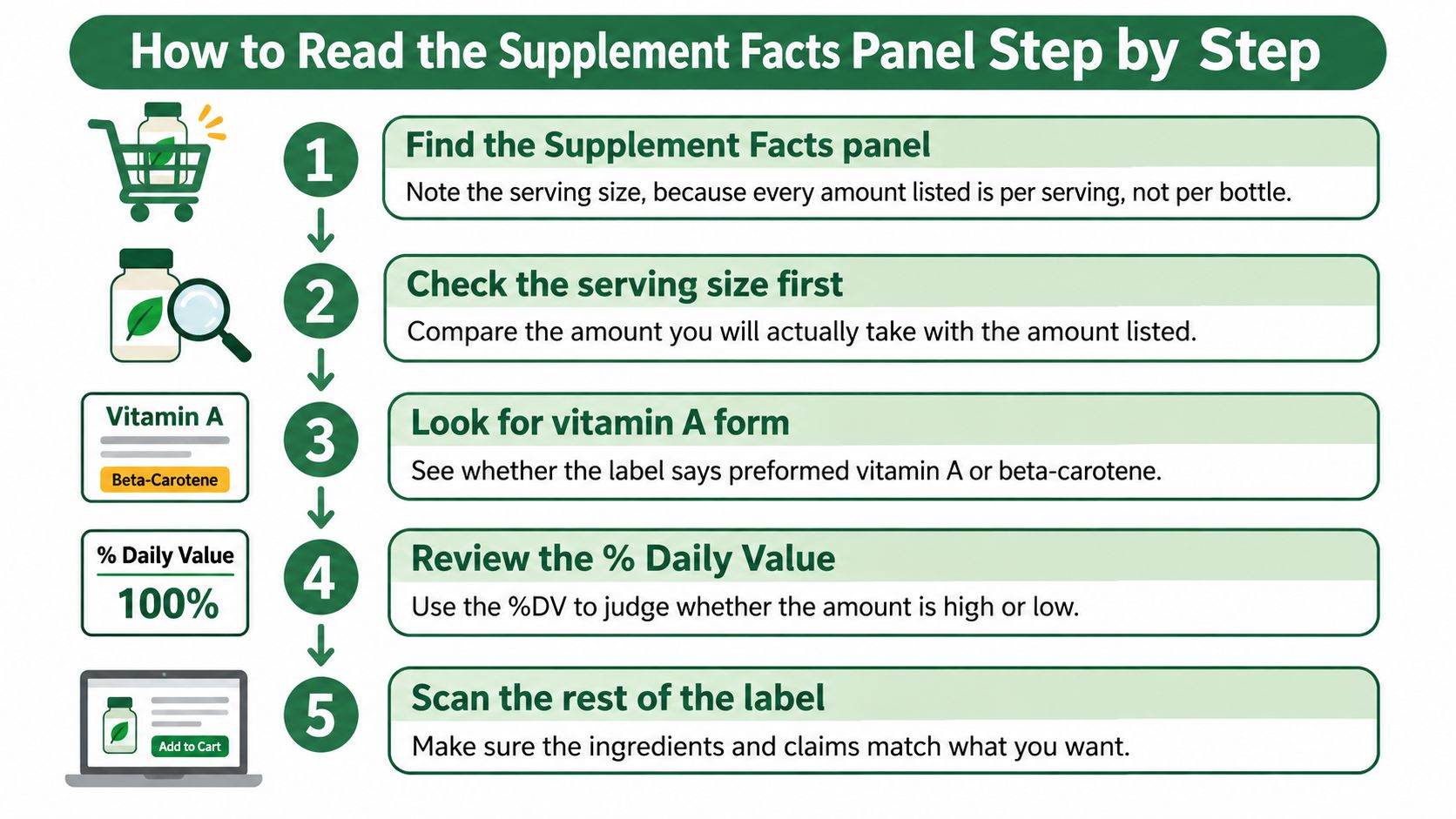
Practical rule: A claim is useful only when you can connect it to readable information elsewhere on the label.
For more help distinguishing label sections, use our guide to reading supplement labels. Keep the label image open while comparing options, especially if a retailer's description uses broader language than the manufacturer's packaging.
A complete reading leaves you with more than a reassuring phrase. You should know the serving, each relevant nutrient's amount and form, the additional ingredients, and what the manufacturing statements establish.
Preformed vitamin A is like cash that's ready to spend. Beta-carotene is more like currency that must pass through an exchange: your body converts it into vitamin A, and that conversion isn't equally efficient for every source or person.
The analogy helps explain why the same vitamin name can conceal an important difference.
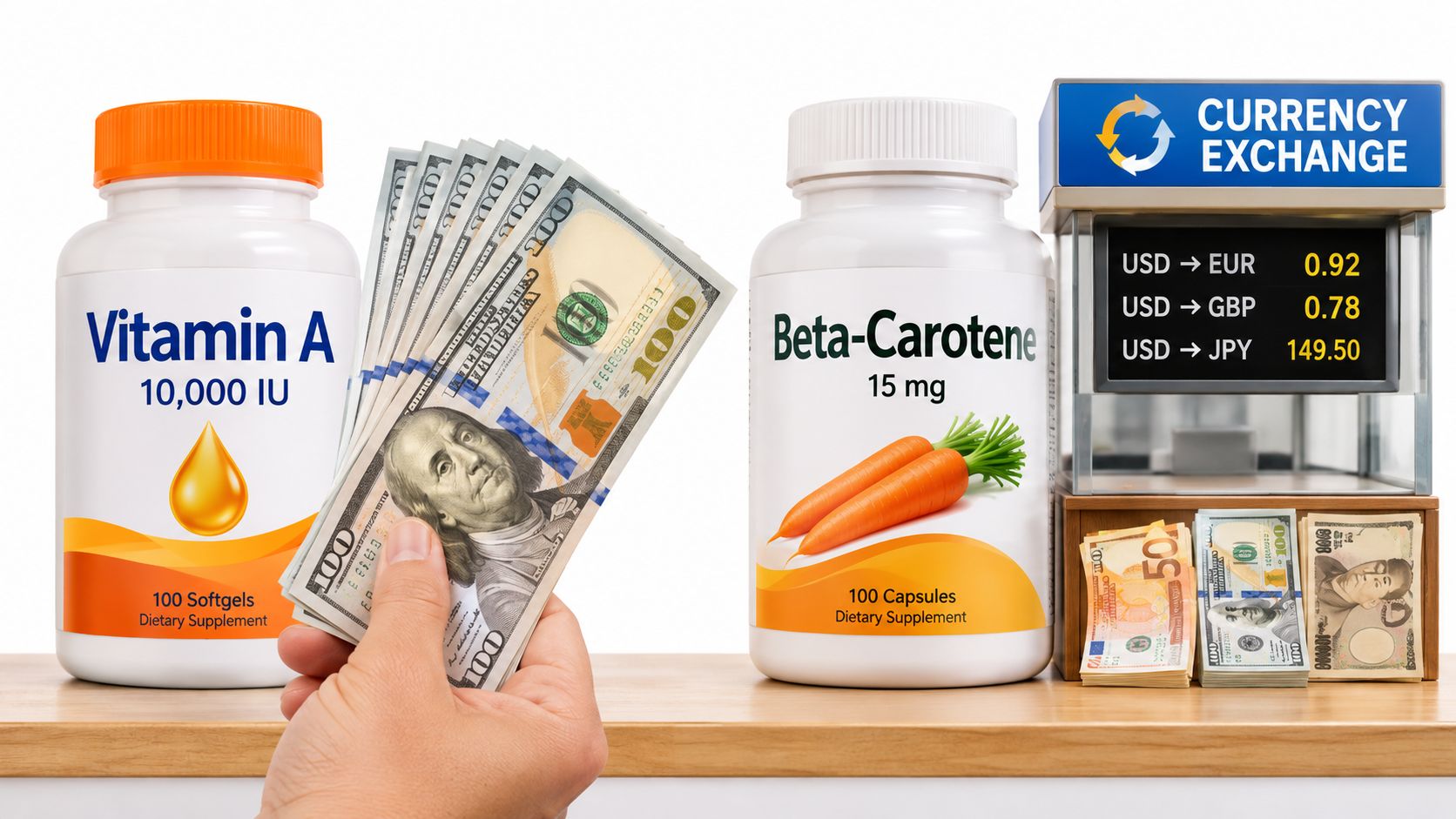
The NIH vitamin A consumer fact sheet gives adult recommended intakes of 900 mcg RAE for men and 700 mcg RAE for women, an adult upper limit of 3,000 mcg RAE daily for preformed vitamin A, and the conversion equivalents summarized below.
| Vitamin A form | Label names | What the reference value means |
|---|---|---|
| Preformed vitamin A | Retinol, retinyl acetate, retinyl palmitate | Upper limit of 3,000 mcg RAE per day for adults |
| Provitamin A carotenoid | Beta-carotene | 1 mcg RAE equals 2 mcg supplemental or 12 mcg dietary beta-carotene |
| Total adult intake | Food, fortified products and supplements combined | Recommended 900 mcg RAE for men, 700 mcg RAE for women |
RAE means retinol activity equivalents. It's a way to express vitamin A activity across sources that the body uses differently. Don't compare a beta-carotene weight directly with a retinol weight and assume they provide identical vitamin A activity.
The recommended intake and upper limit also serve different purposes. The recommendation describes an intake intended to meet nutritional needs; the upper limit isn't a goal to approach.
Preformed vitamin A can accumulate, so a formula that omits it may help someone avoid adding more retinol to an already substantial intake. Foods such as liver and fortified dairy, along with other supplements, belong in that assessment.
For pregnancy, the NIH Office of Dietary Supplements FAQ lists a preformed vitamin A upper intake level of 3,000 mcg RAE per day for pregnant women aged 19–50 and 2,800 mcg RAE per day for adolescents aged 14–18. Pregnant readers, or those planning pregnancy, should have a qualified professional review their full intake rather than choose a formula solely by its omission claim.
Use this video alongside the written label, not as a substitute for checking the product's amounts and forms.
Beta-carotene isn't automatically the right supplemental alternative for everyone. The NIH professional vitamin A fact sheet identifies additional concerns with high-dose beta-carotene supplements for people who smoke, previously smoked, or have asbestos exposure.
A formula that excludes every source of vitamin A also leaves that nutritional need unmet by the product. Check the form and the total, not just the letter A.
A nutrient omission tells you little about capsule materials, sweeteners, or processing ingredients. Read these separately, and distinguish an ingredient you prefer to avoid from evidence that the finished product is unsuitable.
The graphic highlights common shopping concerns. The written checks add the details needed to interpret them.
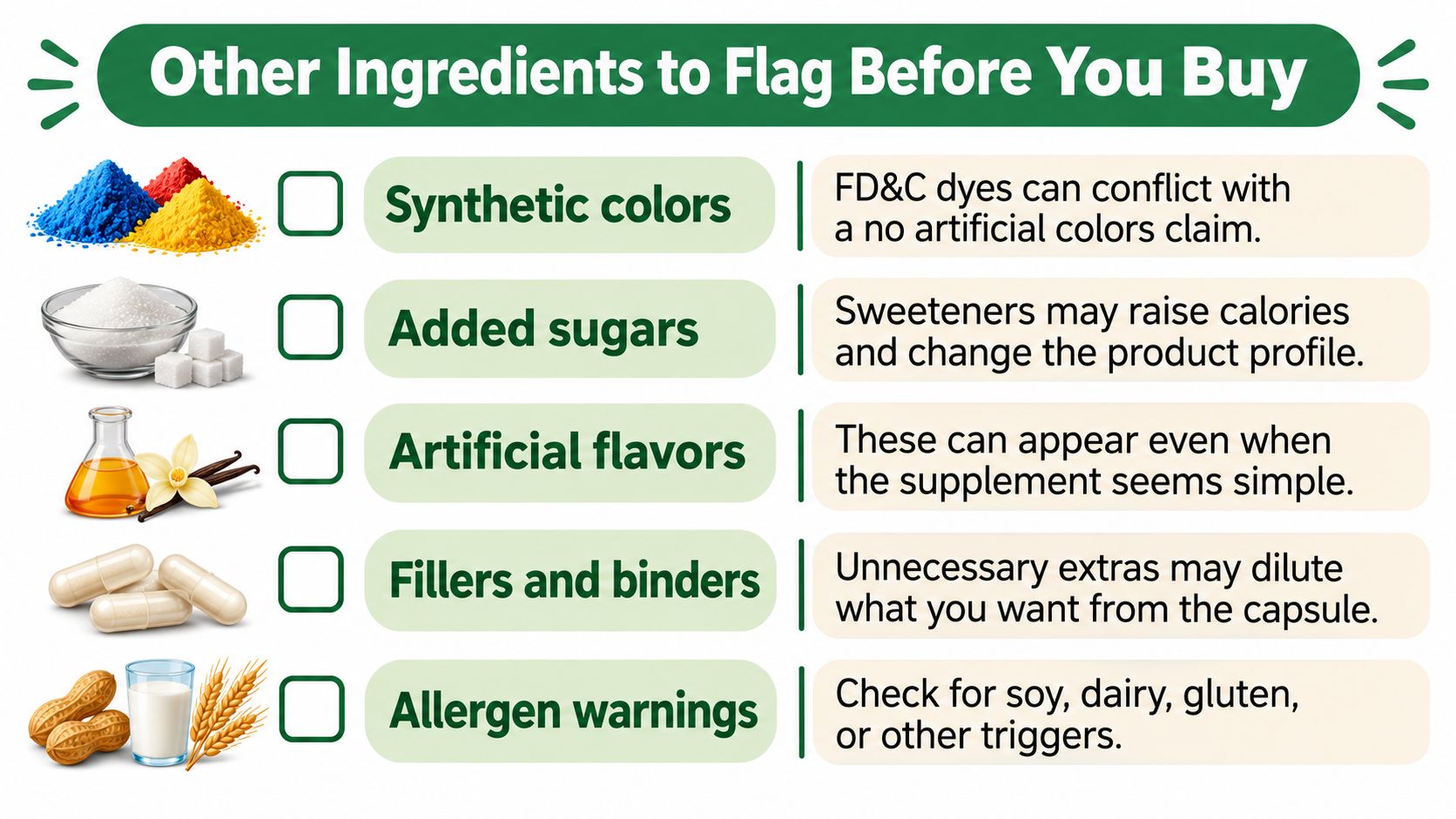
An unfamiliar ingredient is a reason to investigate, not a reason to assume the product is harmful.
Place two labels side by side and compare the same serving basis. A powder, gummy, and capsule may deliver different amounts even when their front labels sound similar.
Flag any ingredient you can't identify, then establish what it does and whether it conflicts with your needs. A shorter list is a preference you can verify, not proof of better nutrition.
A clean-looking label can show what a manufacturer declares. It can't, by itself, prove ingredient identity, manufacturing consistency, or superiority over another product.
The FDA's dietary-supplement manufacturing guide describes requirements for finished-product specifications covering identity, purity, strength, and composition, together with contamination limits. Manufacturers must verify dietary-ingredient identity unless an exemption applies and check finished products using every batch or a statistically sound sampling plan.
These are concrete quality benchmarks. They're more useful than words such as premium when you want to understand what a company checks before releasing a product.
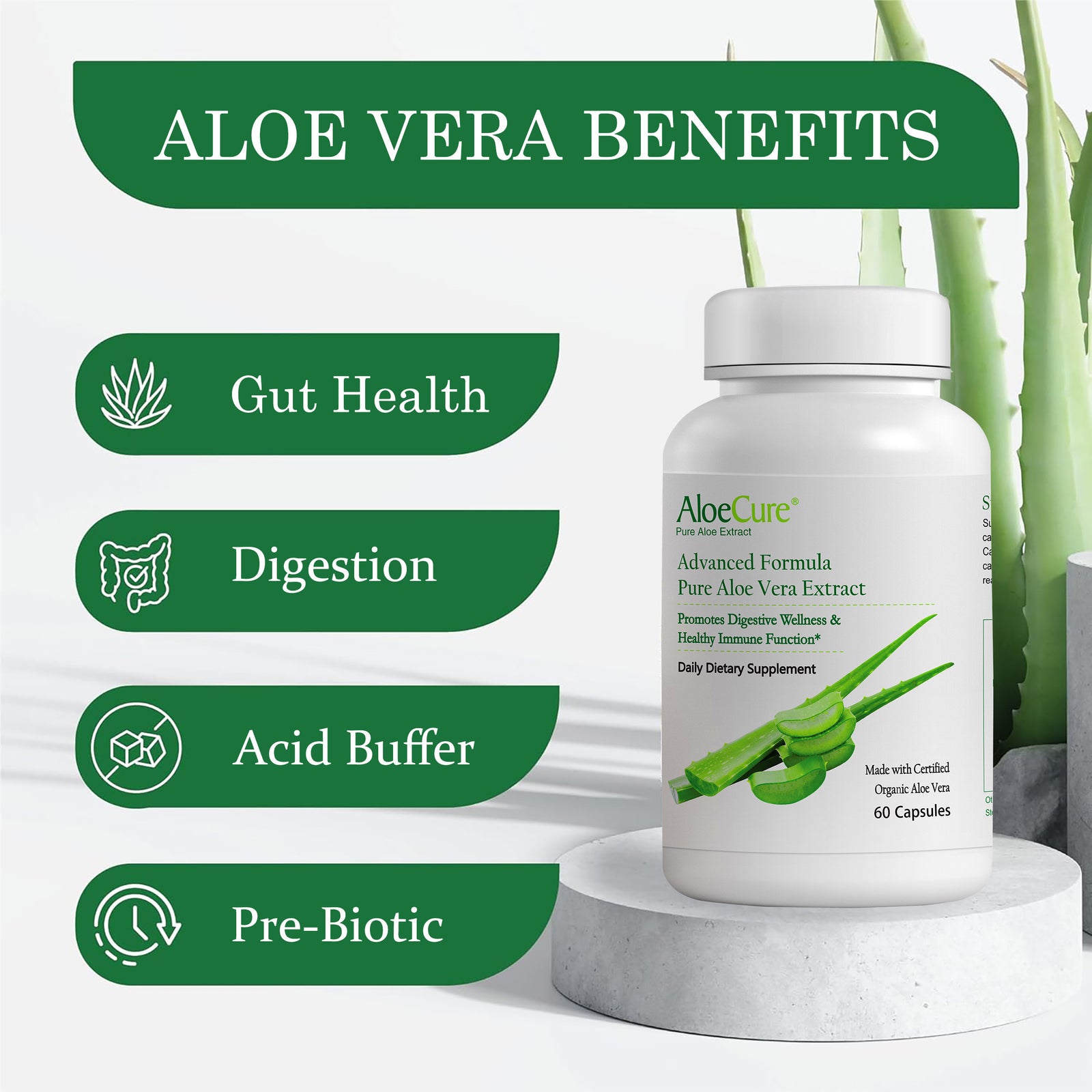
Our capsules are made in an American GMP and NSF certified facility. We also avoid chemicals, enzymes, concentrates, and charcoal filtration in processing our aloe.
Our vertical integration means we farm the aloe, process it, and produce our own products. Our parent company, AGHG, has owned and operated its aloe farms for 25 years, hand-harvesting the plants and processing the aloe on-site within 12 hours of harvest.
Quality perspective: Owning the supply chain makes responsibilities easier to trace. Documented specifications and testing still matter.
The USDA organic standards require certified handlers to prevent mixing organic and non-organic products and protect organic products from prohibited substances. Those controls support an organic handling claim; they don't establish a stronger wellness effect.
Our clean-label supplement guide provides additional context for comparing ingredient simplicity with manufacturing transparency.
When assessing another brand, separate its sourcing story from its finished-product evidence:
Our integrated process gives shoppers specific practices to compare, rather than asking them to accept a blanket claim that one brand is better than every competitor.
Sometimes the best decision isn't another multivitamin. Start with the problem you're trying to solve: overlapping nutrient intake, a specific nutritional gap, or ingredients you'd rather avoid.
Those are different shopping tasks. A product designed for one won't necessarily solve the others.
| Your main concern | Option to consider | What to establish before buying |
|---|---|---|
| Broad nutrient coverage without additional retinol | Multivitamin without preformed vitamin A | Whether its remaining nutrients fit your existing intake |
| One professionally identified nutritional gap | Single-nutrient supplement | Appropriate form, amount, and duration |
| Colors, sweeteners, or processing ingredients | Formula with a shorter ingredient list | Whether the omitted extras matter to you and the product supplies what you need |
A single-nutrient supplement has a narrow job. If a clinician identifies a specific gap, a focused product may make the amount easier to manage. It won't supply the broader range of nutrients someone might expect from a multivitamin.
A simpler ingredient list addresses a different preference. Compare cost per serving rather than assuming that fewer ingredients will always cost less, and allow for the possibility of a higher price without treating that price as evidence of quality.
Say you eat fortified breakfast cereal and already take a prenatal product. Before adding a multivitamin, record the vitamin A amount and form from the cereal, the prenatal, and the proposed supplement, then have a qualified professional assess the combined intake.
Don't add percentages across products without confirming their serving sizes and units. Keep photographs of the labels together so the review reflects what you consume.
Our aloe-based capsules are another clean-formula option to compare, but they aren't a substitute for multivitamin coverage or a verified vitamin-A-free choice. Our whole-food multivitamin guide can help you evaluate a broader nutrient formula without relying on its category name alone.
Before choosing, compare vitamin A form, total nutrient amounts, the full ingredient list, and testing documentation. Choose the format that answers your actual need, not the bottle with the longest list of exclusions.
You're ready to choose when the label answers the practical questions, not just when the front looks reassuring.
For readers comparing men's formulas, Healtsy offers a pharmacist-led guide to men's supplements. Use category guides to narrow your questions, then make the decision from the actual product label.
Our Advanced Formula Aloe Capsules come in a 30-count travel size for $24.95 USD, an option for trying the capsule format rather than replacing a multivitamin. They support healthy digestive system function, but their purpose is different from broad vitamin and mineral coverage.
Subscribe & Save offers 20% off with flexible delivery. We also offer a 90-day money-back guarantee, 1–2 day priority processing, and free shipping on qualifying orders. Review the product details and offer terms before choosing a one-time purchase or subscription.
AloeCure offers aloe-based capsules with transparent manufacturing practices for shoppers comparing focused wellness formulas. Visit AloeCure to review the Advanced Formula label, check how it fits your existing routine, and choose a purchase or subscription option that suits you.
These statements have not been evaluated by the Food and Drug Administration. This product is not intended to diagnose, treat, cure, or prevent any disease.
Los comentarios se aprobarán antes de mostrarse.