Your Cart is Empty

A product labeled 100% organic must contain only organically produced ingredients; one labeled organic must be at least 95% certified organic; made with organic means at least 70%; and a product below 70% may name its organic ingredients only in the ingredient statement. USDA organic is a federally regulated certification and labeling system that verifies how a product was farmed, processed and handled, not whether it's healthier for you.
Two bottles sit on the same shelf wearing the same green and white circle. One is aloe juice. One is a jar of tomato sauce. A shopper reads the seal and concludes that both passed the same government test, so both must be the better choice. The first half of that reasoning is right. The second half is where people get lost.
The seal answers a narrow, checkable question about process. It doesn't answer the question most shoppers are asking, which is whether the product will do anything for them.
USDA organic is a federal certification and labeling system, not a phrase a brand writes about itself. Congress built the framework with the Organic Foods Production Act of 1990, which created uniform national standards for production and handling, established the National Organic Program, and authorized the National Organic Standards Board to advise the department, as USDA's account of the program's history sets out. The regulations became fully operational in October 2002.
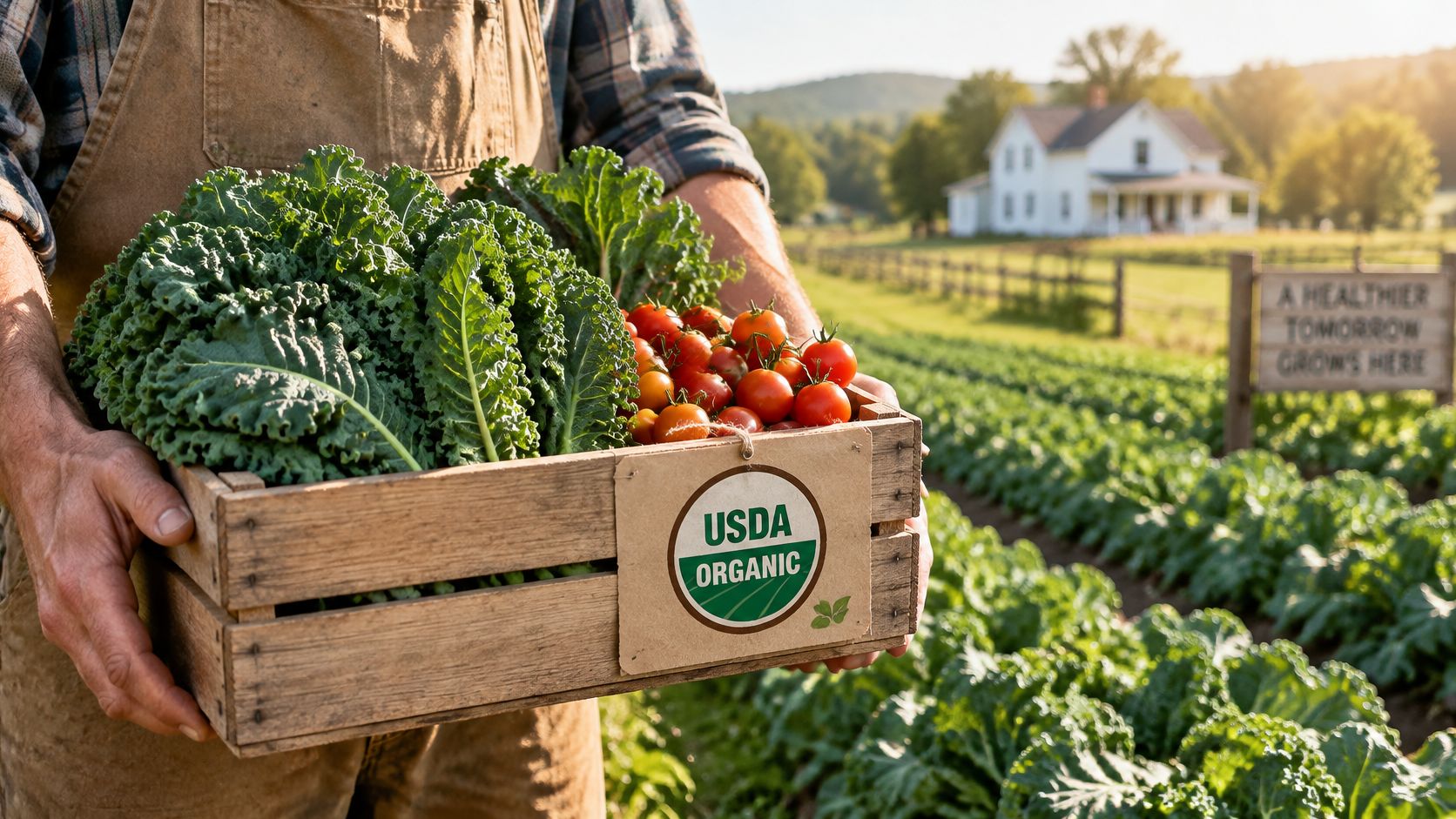
Under that system, USDA-accredited certifying agents check farms, processors and handlers against the requirements before anyone is allowed to use the seal. Certification runs the length of the supply chain: growing, processing, packaging and handling, each with its own records.
Think of the seal as a stamp applied by an immigration officer. The officer reviews the documents and applies the stamp. The traveler doesn't get to print it themselves. A brand can describe its farming however it likes, but only an accredited certifier can authorize the seal, and only after reading records and visiting the operation.
What the stamp confirms is process. It doesn't confirm that the product is healthier, more nutritious or effective for any purpose. Those are separate questions that need separate evidence, and the seal was never designed to settle them.
This isn't a niche signal anymore. Produce accounted for 33% of U.S. organic food sales in 2024, according to USDA Economic Research Service data. When a third of the category's dollars sit in the fresh aisle, the seal stops being a specialty badge and becomes part of ordinary shopping.
Practical rule: Read the seal and the certifier's name before you read the front-of-pack adjectives. The adjectives are written by marketing. The certifier is accountable to USDA.
Start with two checks: the seal itself, and the certifying agent named somewhere on the package. Then look at which category the product claims, because that's where most of the confusion lives.
Four label categories exist, and the percentage of certified organic content decides which one a product may legally use.
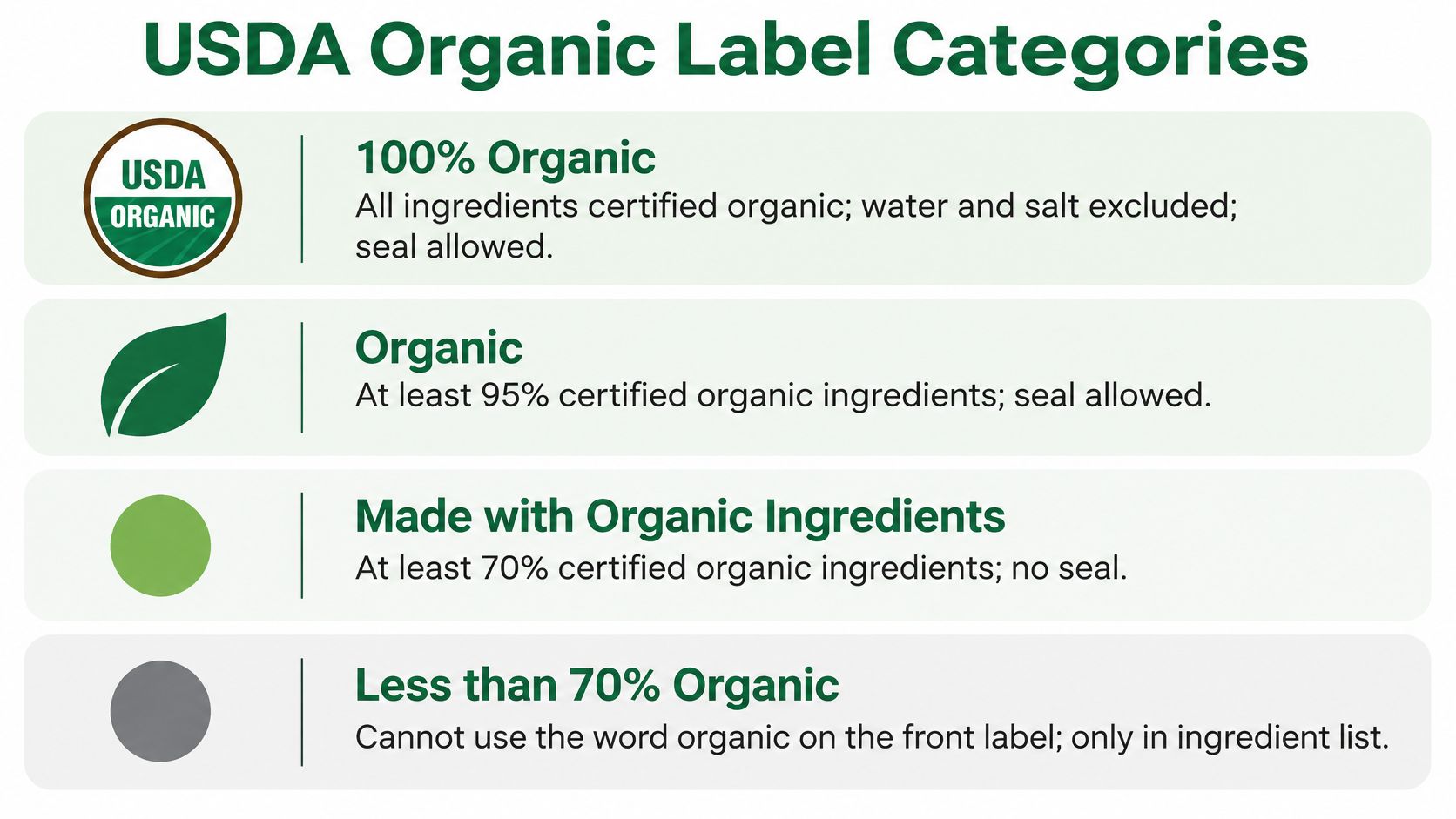
| Label | Organic content required | USDA seal allowed | What it tells the shopper |
|---|---|---|---|
| 100% organic | All ingredients organic, water and salt excluded | Yes | Every ingredient and processing aid is certified organic |
| Organic | At least 95% certified-organic ingredients | Yes | Up to 5% permitted nonorganic ingredients |
| Made with organic | At least 70% organic ingredients | No | Up to 30% nonorganic ingredients; seal not allowed |
| Under 70% organic | Less than 70% organic | No | Organic ingredients may appear only in the ingredient statement |
Those thresholds are legal definitions, not marketing preferences. The USDA labeling requirements for the U.S. organic market state that a product labeled "100 percent organic" must contain only organically produced ingredients, with water and salt excluded from the calculation, and that a product labeled "organic" must contain at least 95% certified-organic ingredients, again excluding water and salt. "Made with organic" requires at least 70%, and the remaining nonorganic share may only consist of permitted ingredients.
The front panel tells you which category the brand is claiming. The ingredient statement tells you what went in. Say a juice is labeled "organic." It cleared 95% and can carry the seal. The same juice labeled "made with organic" cleared 70% and can't display the seal at all. Same bottle size, same shelf, different legal claim.
Scan the ingredient list and note which entries carry the word organic and which don't. A product at 95% has a small permitted remainder. A product at 70% can have a much larger one, and the front panel is allowed to say "made with organic" while the back panel lists several conventional ingredients.
Organic rules don't work by banning everything synthetic and allowing everything natural. They work through a maintained inventory. The USDA National List of Allowed and Prohibited Substances sets the pattern: for crops, natural substances are generally allowed unless specifically prohibited, while synthetic substances are prohibited unless specifically allowed. For processing, both nonagricultural substances and nonorganic agricultural ingredients must appear on the list to be permitted.
The detail that surprises people is the approval step. USDA states that substances used in an organic operation must be approved by that operation's certifying agent before use. A carrier, a flavor, a capsule shell or a processing aid doesn't slip through because it sounds plant-based. Someone has to review it and sign off.
Practical rule: "Plant-based" and "organic-certified" are two different tests. The second one has paperwork behind it.
An aloe juice, gel or capsule is a formula, not a single leaf. It may contain carriers, flavors, capsule materials, excipients and processing aids, and every one of those has to be reviewed against the same standard as the aloe itself. The certifier looks at supplier documentation, sanitation controls, commingling prevention and the facility's handling procedures, not just the crop.
Shoppers who already read labels closely in other aisles tend to recognize this pattern. The same instinct that makes Japanese body-care habits for skincare fans worth studying, where a plain bar of soap is judged by its ingredient list rather than its promises, applies to a supplement bottle with twelve lines of small print.
One last check on any package: if the seal is missing, the product isn't making a full USDA organic claim, whatever the front label suggests.
What has to happen before a product can carry the USDA Organic seal? Certification follows a series of steps, from qualifying farmland to review of the finished product's label.
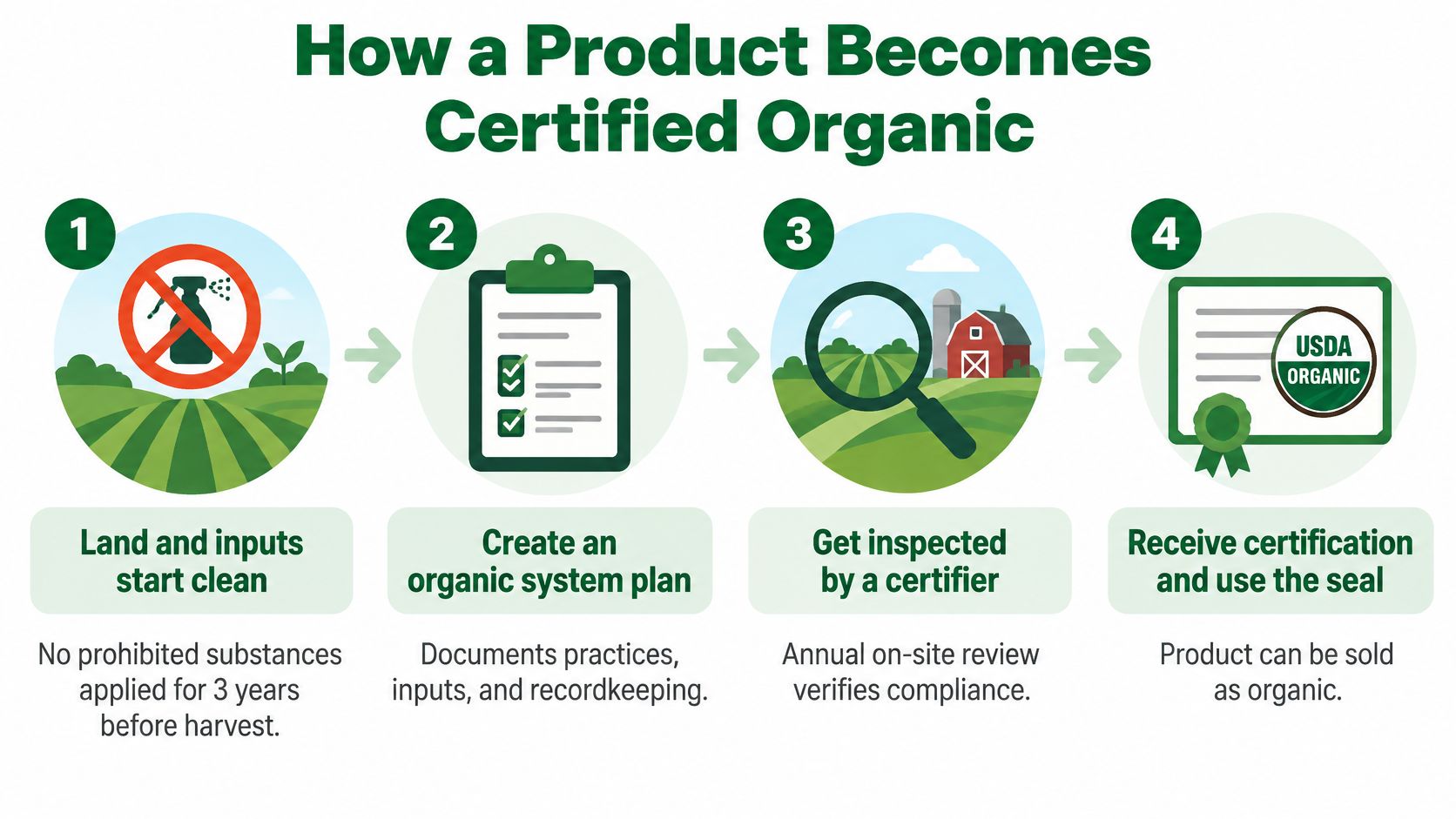
Growing conditions and harvest timing affect what can be documented from field to finished product. This overview of aloe vera plant agriculture describes those agricultural factors.
A supplier should be able to provide a current certificate, the certifier's name, the certification scope and relevant input records. Very small organic operations may qualify for a limited certification exemption, which is why checking for a named certifier on a product label still matters.
Most label confusion comes from four assumptions, and each one collapses under a single question.
| Common belief | What the seal actually covers | What to check instead |
|---|---|---|
| Organic means healthier | Production and handling standards, verified by certification | Evidence for any benefit, reviewed separately |
| Natural, chemical-free or farm grown | Not equivalent to the USDA organic standard | The USDA seal and the named certifier |
| Every ingredient is organic | Only the 100% organic category requires all ingredients to be organic | The label category and the ingredient statement |
| Organic means medically endorsed | Certification makes no claim about effectiveness | Read the seal as a sourcing standard only |
The health assumption is the stubborn one. USDA standards address approved practices, resource cycling, biodiversity, prohibited-substance controls, inspections and certification records. They don't test whether a product improves anything for the person consuming it. A certified organic product and an uncertified one can be identical in nutritional terms; the difference is how each was grown and handled, and whether that was verified.
Front-of-package language is persuasive by design. Words like "natural," "farm grown" and "chemical-free" carry no legal definition in this context, and they sit inches from a seal that does. Shoppers reasonably assume a federal mark implies approval of the whole product, benefits included. It doesn't.
Practical rule: A seal on the front is a claim about origin and process. Any claim about what the product does has to stand on its own, with its own evidence.
Then there's the ingredient assumption. A product labeled "organic" can legally contain up to 5% permitted nonorganic material. Only the 100% category rules out that remainder. Neither fact makes the product bad. It just means "organic" on a label is a threshold, not an absolute.
Results, quality and suitability for a particular person sit outside what certification tests. The way to settle it is mechanical: confirm the category, confirm the certifier, confirm the record exists and is current. A label you can't trace back to a named certifier isn't verified, however good the farming story reads.
Aloe products are a useful stress test, because the category mixes domestic juices, imported concentrates and capsule formulas with long ingredient lists. Run this checklist on any label before you trust it.
Verification rule: A claim you can trust is one you can trace to a named certifier and a current record, in under five minutes.
That's the whole test. Not whether the bottle looks natural, and not whether the copy mentions purity. Whether a specific accreditation body certified a specific operation, and whether that certification is live today.
If you want to understand how independent auditors fit into that picture, this explanation of what an accredited third-party certification body does is a useful companion to the checklist.
Choose aloe products whose label shows the USDA seal, states the category clearly, names the certifier and belongs to a brand that can document its supply chain from plant to bottle. That's the decision, and the rest is verification.
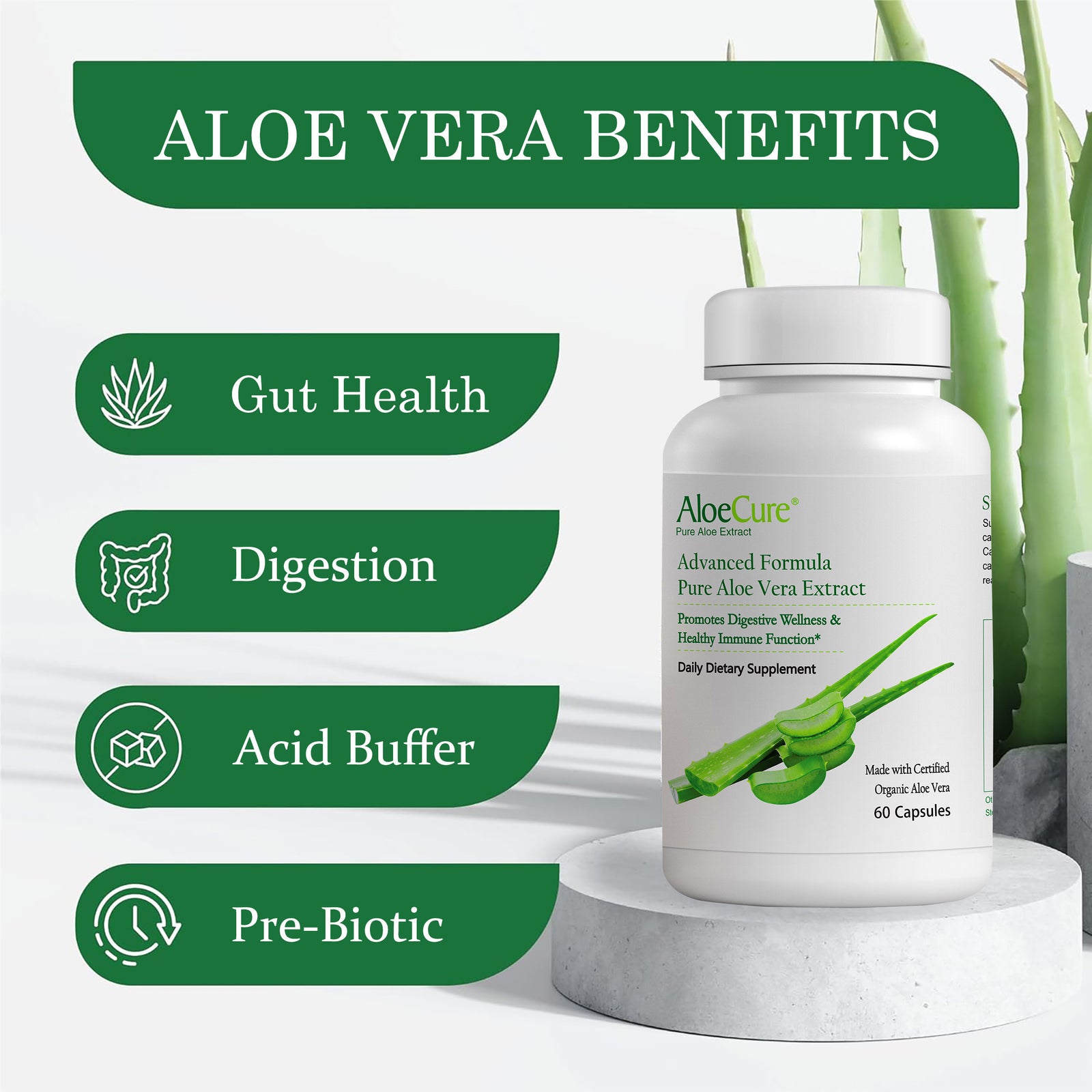
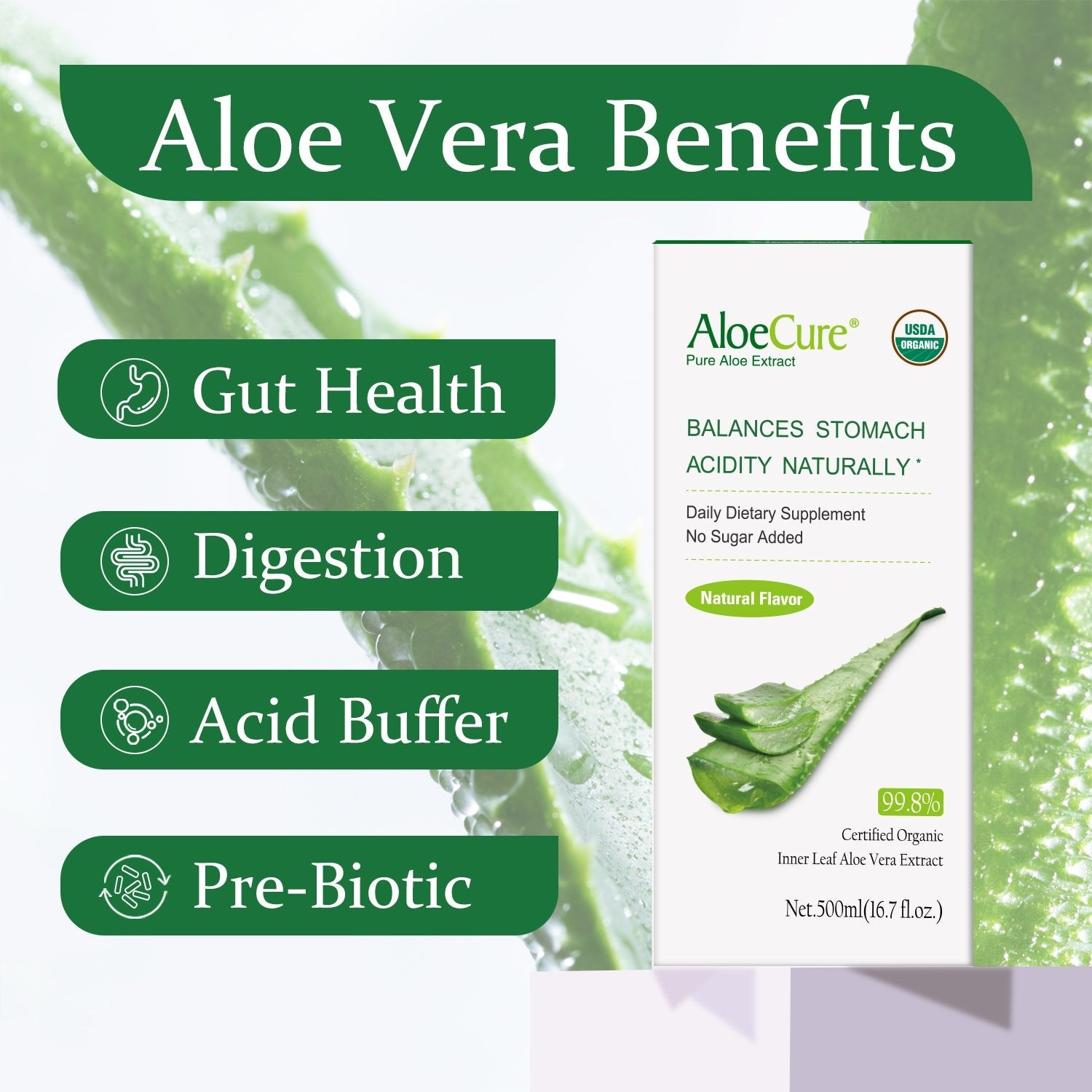
Most aloe products on a shelf fail at least one of those four tests. Some carry a "made with organic" line and no certifier. Some name a farm but not a processor. A few do the full job. AloeCure's Pure USDA Organic Aloe Vera Juice comes in Natural, Grape and Lemon, and each flavor is USDA Certified Organic. The Grape flavor is listed at $19.95 USD on the online store, and harvesting and processing happen within 12 hours of harvest, which keeps the custody chain short enough to document at every step.
Aloe juice fits into a routine rather than a regimen. It provides general support for everyday wellness routines, and the label tells you how it was grown and handled. Subscribe and save takes 20% off with flexible delivery, and a 90-day money-back guarantee makes it easy to try a bottle before committing to a larger order.
These statements have not been evaluated by the Food and Drug Administration. This product is not intended to diagnose, treat, cure, or prevent any disease.
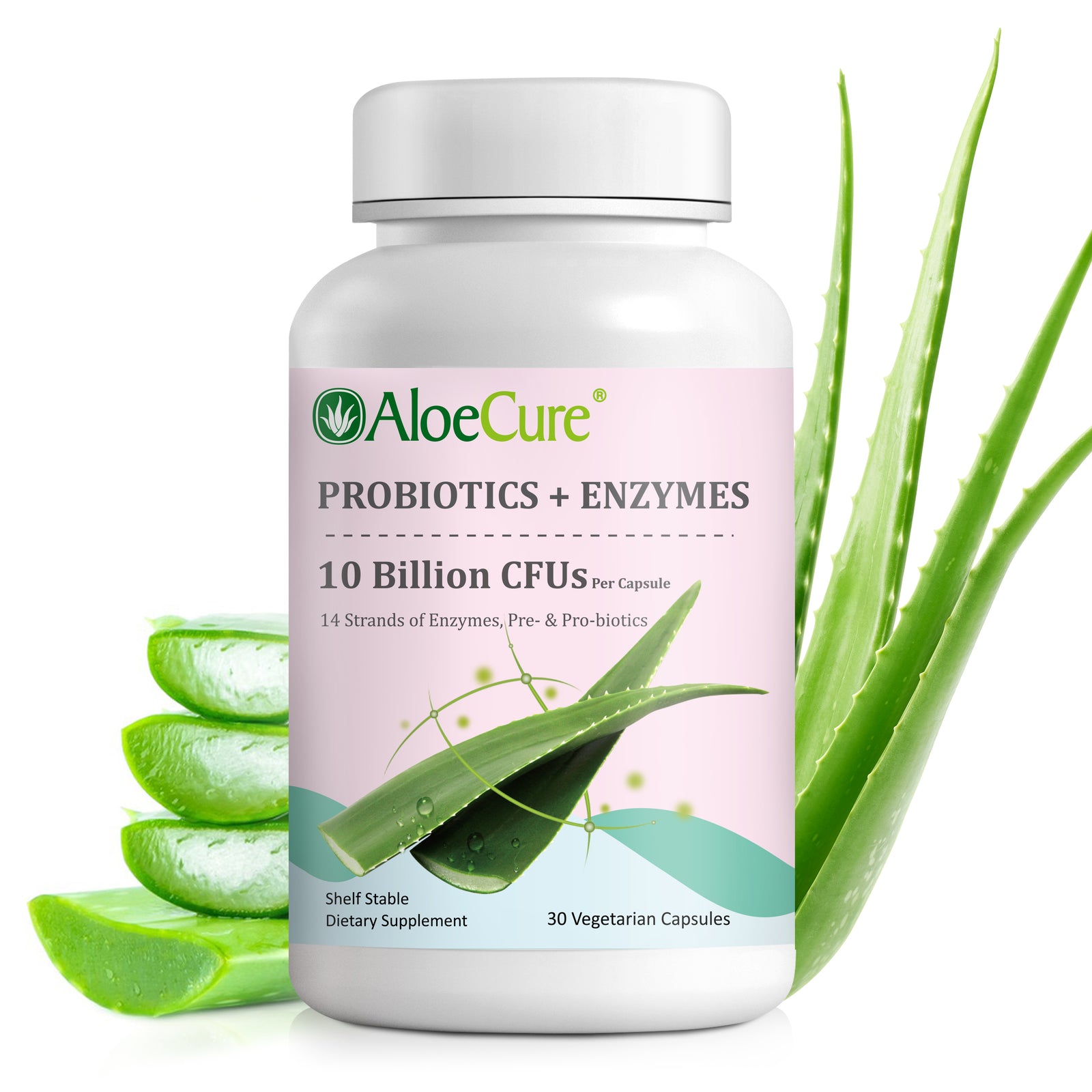
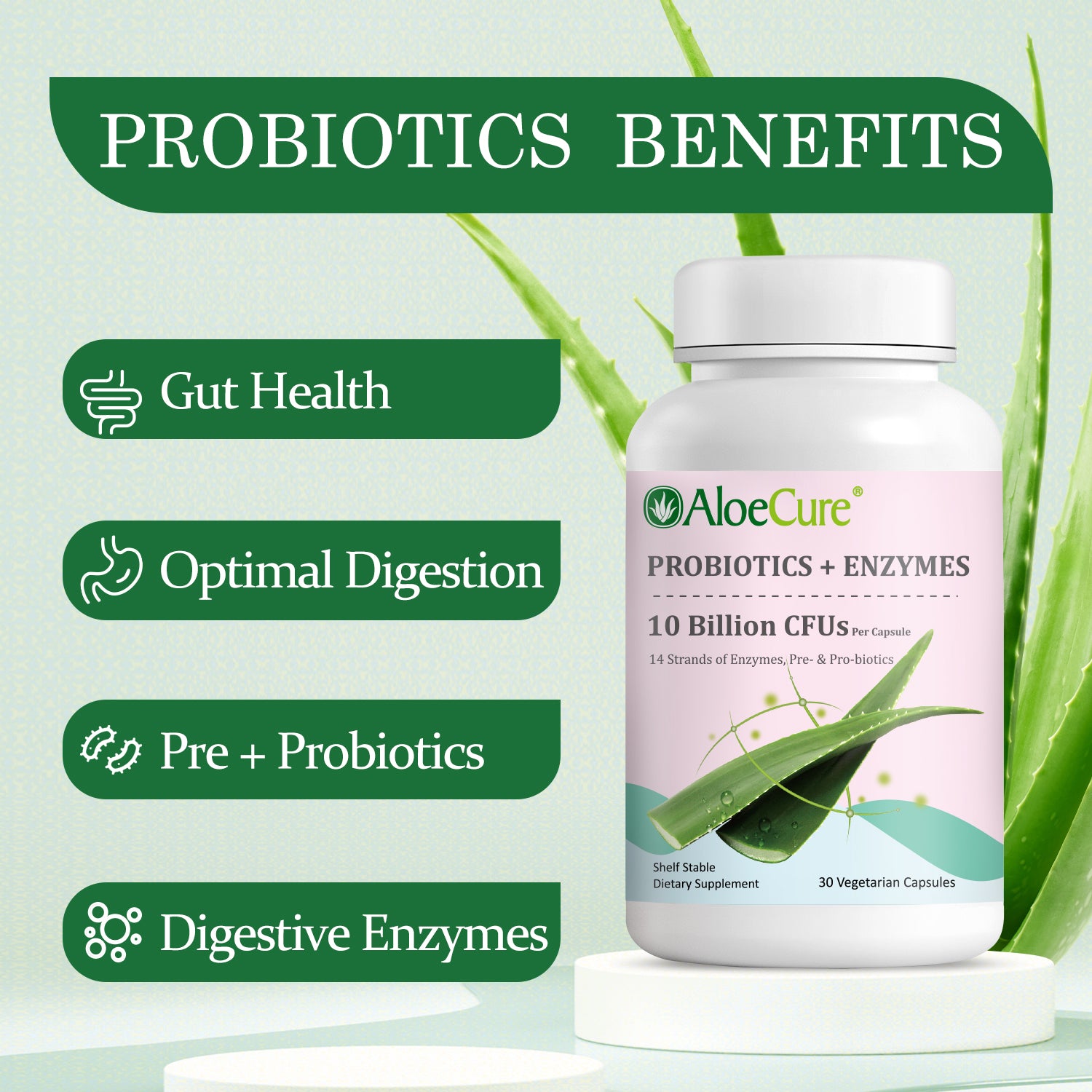
The seal on the bottle is only as strong as the records behind it, and that's the part AloeCure can show you: organically certified aloe grown on farms the company owns, processed on site within hours of harvest, and made into juice and capsules under the same roof. If you want to start with the product customers often try first, the Pure USDA Organic Aloe Vera Juice comes in Natural, Grape and Lemon, each one USDA Certified Organic.
Comments will be approved before showing up.