Your Cart is Empty

In the European Union, roughly 44,000 food-and-drink health claims were submitted for evaluation in 2008, and after the authorized claims list was published in 2012, only 16 changes had been approved by the time of the cited industry report, according to BeverageDaily reporting on functional drink claims. That's the right starting point for functional beverages. The shelf is crowded with promises, but a promise is only useful when you can see the ingredient, the amount, and the evidence behind the wording. A botanical name on the front doesn't answer those questions. The label facts do.
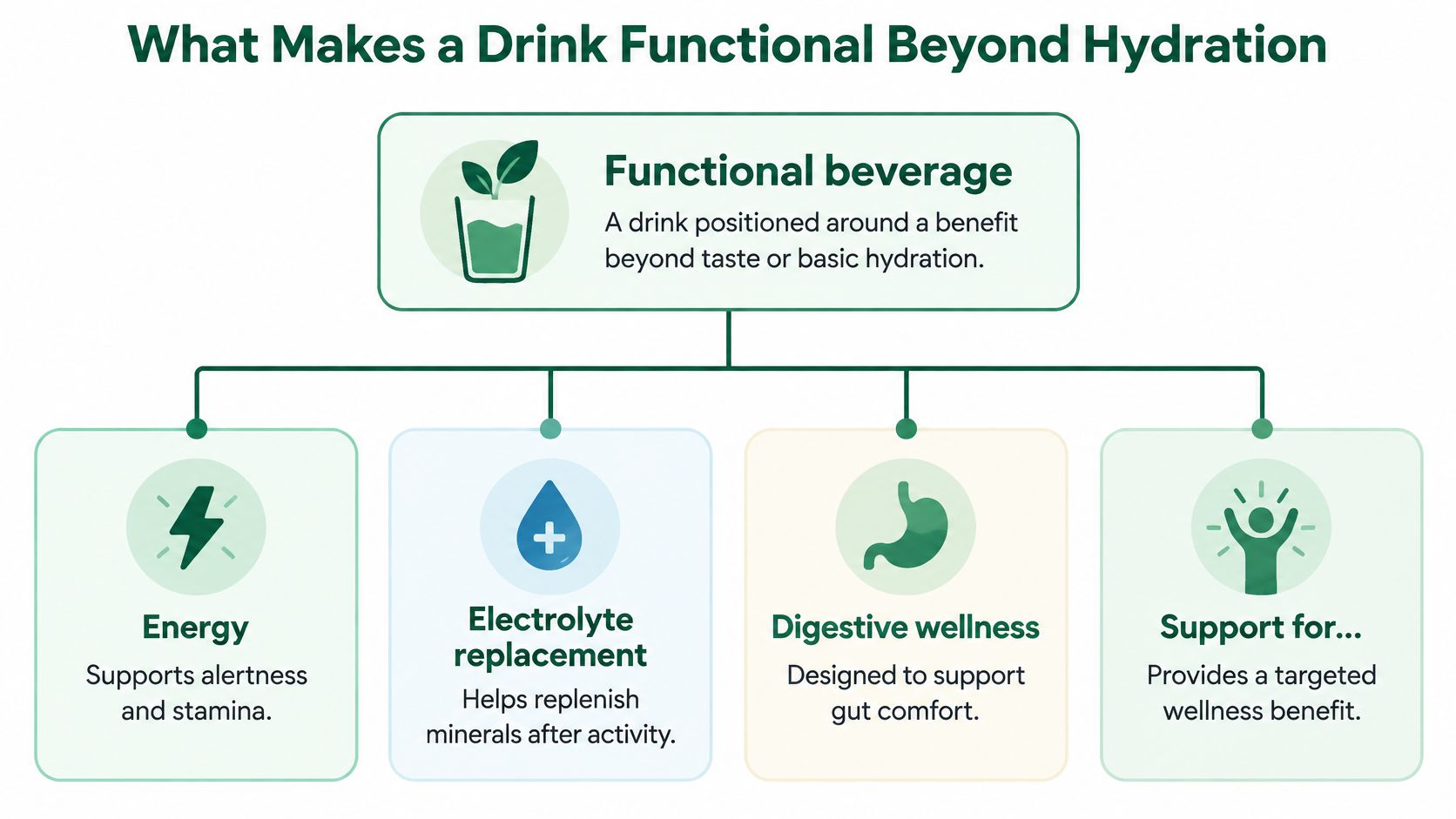
A functional beverage is a drink positioned around a benefit beyond taste or basic hydration. You might see it positioned around energy, electrolyte replacement, digestive wellness, or support for everyday stress. The bottle, can, or shot format doesn't define the category. The label promise does.
That distinction explains why plain water and an enhanced water aren't the same buying decision. Water supports healthy hydration function by doing what water does. A functional drink adds an ingredient or ingredient system and asks you to pay more because that addition is meant to promote a desired state of wellness. Before you judge the flavor, check whether the addition is named, measured, and described in plain language.
Modern functional beverages grew from two different starting points. Fermented drinks brought live cultures and digestive wellness positioning. Stimulant drinks brought caffeine, vitamins, and alertness positioning. Sports drinks added electrolytes and carbohydrates for activity. Once shoppers accepted that a packaged drink could do more than refresh them, brands extended the same idea to teas, enhanced waters, shakes, sodas, powders, and plant juices.
This short visual maps the main benefit areas before you compare individual products.
Use the table by moving left to right. The typical functional ingredients show you the lever the product uses. The label positioning shows you the promise attached to that lever. The example helps you picture the format, but it doesn't prove that every product in that row delivers a meaningful amount.
Functional beverage types and what their labels promise
| Type | Typical functional ingredients | Label positioning | Example |
|---|---|---|---|
| Energy drinks | Caffeine, B vitamins | Alertness and energy | Caffeine-containing drinks from the late 1980s |
| Sports drinks | Electrolytes, carbohydrates | Hydration during exercise | Electrolyte-based sports drinks |
| Enhanced waters | Vitamins, minerals | Hydration plus added nutrients | Vitamin-fortified water |
| Fermented drinks | Live probiotic cultures | Digestive wellness | Fermented milk drink introduced in 1935 |
| Adaptogen drinks | Herbal extracts such as ashwagandha | Helping the body adapt to everyday stress | Herb-infused teas and shots |
| Pure aloe vera juice | Organic inner-leaf aloe gel | Plant-based hydration and everyday wellness | Certified organic aloe juice |
A clean label doesn't prove a benefit. A plant origin doesn't prove it either, and a longer ingredient list isn't automatically better. Five familiar ingredients added at trace levels can tell you less than one well documented ingredient with a clear source, a clear amount per serving, and a production method you can verify.
Shelf rule: If you can't name the active ingredient and find its amount per serving within a minute, you don't have enough information to compare that drink with the one next to it.
Start with these checks before you read any marketing copy on the front panel.
A practical way to test those questions is to compare a plant juice directly with plain water. Our guide to aloe vera juice compared with water uses that simple contrast to separate basic hydration from plant-based hydration and everyday wellness positioning. That same habit, ingredient first and promise second, makes the wording rules in daily shopping much easier to spot.
The modern story starts in Japan. In 1935, Japanese microbiologist Minoru Shirota introduced Yakult, a fermented milk beverage marketed around gut-health benefits, and the product later expanded internationally, according to The Seattle Times history of functional beverages. That launch mattered because the benefit wasn't flavor. It was a specific wellness idea delivered in a small, convenient drink.
The second wave arrived in the late 1980s. Caffeine and vitamin containing energy drinks helped establish the idea that a packaged beverage could provide benefits beyond taste and basic hydration, as described in that same account. A shopper who accepted that idea for alertness could soon accept it for sports performance, digestive wellness, or everyday nutrient support.
The pattern is the important part. Specialized fermented and stimulant drinks became a platform for delivering hydration, energy, digestive, performance, and other wellness positioned benefits. Each new format borrowed trust from the format before it. A tea could carry botanicals, a water could carry vitamins, and a soda could be repositioned around added functional ingredients.
Scale followed. By 2023, NielsenIQ counted approximately 53,000 Universal Product Code symbols in the U.S. functional beverage category, spanning energy drinks, sports drinks, enhanced waters, functional sodas, shakes, and teas. Read that number carefully. It counts individual product codes rather than companies, so it shows product proliferation rather than total brand count. For you as a shopper, proliferation means more flavors and pack sizes competing for attention, not necessarily more proven options.
The global functional beverages market was valued at approximately USD 171.86 billion in 2025, according to SNS Insider, as reported by Yahoo Finance coverage of the SNS Insider estimate. North America accounted for 38.2% of the global functional beverages market in 2025, according to Research and Markets functional beverages report. Those figures confirm commercial importance. They don't tell you whether a specific drink contains a meaningful dose.
Functional beverage market size figures
| Measure | Figure | Source |
|---|---|---|
| Global functional beverages market | USD 171.86 billion in 2025 | SNS Insider via Yahoo Finance |
| North America share of global market | 38.2% in 2025 | Research and Markets |
| U.S. functional beverage market | USD 50 billion, forecast USD 62 billion by 2027 | Glanbia citing Euromonitor |
| U.S. functional beverage sales | USD 9.2 billion, up 54% from March 2020 to March 2024 | NielsenIQ |
In the United States, the functional beverage market was valued at USD 50 billion and was forecast to reach USD 62 billion by 2027, according to Glanbia citing Euromonitor in its U.S. functional beverage market insights. Treat the 2027 value as a forecast, not a result already achieved. NielsenIQ also reported that functional beverages represented about 10% of the total U.S. nonalcoholic beverage market in 2024. That's real shelf presence, but market share still isn't regular use and it isn't evidence for any single ingredient.
Rapid growth raises the stakes for wording and quality. When thousands of products compete with similar wellness language, you need a reliable way to separate compliant structure and function language from language that overpromises.
The rule that decides everything is intended use. A product represented explicitly or implicitly for a specific disease outcome meets the definition of a drug and becomes subject to drug requirements, according to FDA questions and answers on dietary supplements. Regulators don't look only at one neat sentence on the package. They look at the overall impression created by labels, product pages, images, testimonials, and surrounding copy.
That is why positive wellness language is safer and clearer. A compliant statement describes support for normal function or a desired state of wellness. It doesn't promise an outcome tied to a named condition, a symptom pattern, or a medication. If a sentence needs a diagnosis to make sense, it doesn't belong on a supplement beverage label.
Under U.S. FDA rules, a dietary supplement may use a structure/function statement describing how an ingredient affects or helps maintain normal body structure or function, but the statement must not imply diagnosis or prevention of a disease, according to FDA guidance on structure/function claims. Federal regulations also permit statements describing the role of a dietary ingredient in affecting human structure or function, or characterizing a documented mechanism by which the ingredient helps maintain that structure or function, as set out in 21 CFR 101.93 on dietary supplement labeling statements. The wording must stay on the normal function side of the line.
Words such as supports, promotes, helps maintain, and assists work because they point to normal processes. They also keep the claim tied to the ingredient's role, not to a guaranteed personal result. A company still has to hold substantiation showing the claim is truthful and not misleading before using it. Compliant grammar isn't a substitute for evidence.
Evidence comes first. Wording second. A well phrased claim without substantiation is still not ready for a label.
Read each row as a small rewrite exercise. The pattern gives you the sentence frame. The beverage example shows the frame in use. The final column explains why the sentence stays focused on wellness rather than a condition.
Approved structure and function patterns with beverage examples
| Template pattern | Example for a beverage label | Why it stays compliant |
|---|---|---|
| Supports healthy [system or body part] function | Supports healthy digestive function | Describes normal body function, not a disease outcome |
| Promotes [desired state of wellness] | Promotes everyday wellness | Frames a positive state, not a condition |
| Helps maintain [normal body function] | Helps maintain normal body function | Describes maintenance of normal function |
| Assists the body in [normal physiological process] | Assists the body in its natural processes | Uses normal-process language |
| Helps the body adapt to [everyday stress or environmental factors] | Helps the body adapt to everyday stress | Ties to everyday life rather than a named condition |
You can vary those frames without changing their legal direction. Provides targeted support for digestive wellness and supports the body's natural processes follow the same logic. So does supports healthy skin function. Each version names a normal system or process, uses supportive language, and leaves room for individual routines rather than promising a defined medical outcome.
Consider this compliant style line: Supports healthy digestive function. It describes a normal body system and doesn't name a condition. Now consider a line built around a named symptom or condition and an implied change to that condition. The second line creates a disease implication even if it uses soft verbs, friendly design, or a personal testimonial instead of a direct statement.
The surrounding context can shift the meaning too. A product name, a before and after image, or copy that compares a drink with a medication can turn otherwise careful wording into an implied disease claim. That's why compliant brands review the whole page, not just the Supplement Facts panel. They also never name disease conditions or medications when describing supplement benefits.
Before a claim appears, the manufacturer must possess substantiation that it's truthful and not misleading. In practice, that means keeping the ingredient identity, dose, study design, population, and outcome aligned. A study on a capsule extract doesn't automatically substantiate a ready to drink beverage if the dose or matrix is different. A mechanistic rationale doesn't turn into a human outcome claim without human evidence.
When structure and function statements are used for a dietary supplement, the required DSHEA disclaimer must appear exactly as supplied and shouldn't be reworded. You'll find it at the end of this guide in its required form. Treat its presence as a signal to read more carefully, not as fine print to skip.
Ingredient buzzwords make comparison sound easy. It isn't. The useful comparison asks the same three questions every time: what exact ingredient is used, how much reaches you at consumption, and what human evidence supports that dose in that format? Apply those checks in the same order and very different drinks become easier to judge.
Bioavailability is the thread that ties the groups together. Polyphenol absorption has been reported across a wide range of roughly 0.3% to 43%, reflecting differences in chemical structure, food matrix, metabolism, and gut microbiota, according to a PMC review of functional beverage bioavailability and quality attributes. The amount printed on a label is the starting amount, not a guaranteed delivered amount. Processing, storage, the drink matrix, and your own digestion can all change what is available.
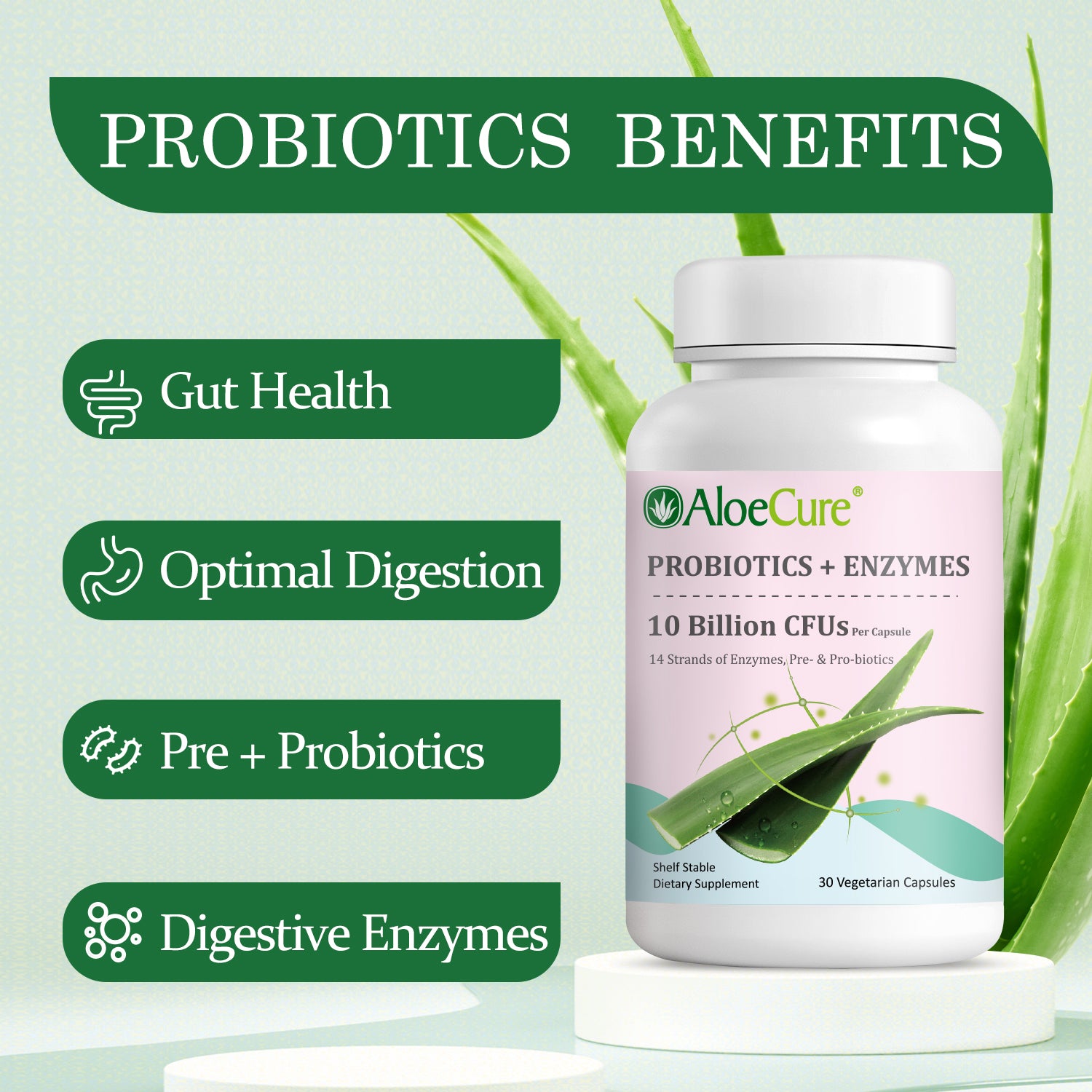
For a probiotic drink, look first for the named strain. A genus and species alone tell you less than a strain designation because evidence is often strain specific. Next, find the viable count at the end of shelf life. A count measured only at manufacture can fall during distribution and storage, so it may not describe the bottle you open weeks later.
Then check storage guidance and the best by date. Heat, oxygen, and time matter for living cultures. Resistance to processing and storage and survival through digestion are critical technical specifications. A probiotic present at manufacture doesn't guarantee delivery of an effective dose at consumption. For a clearer explanation of how cultures, fibers, and enzymes differ, see our guide to prebiotics, probiotics and enzymes in gut health.
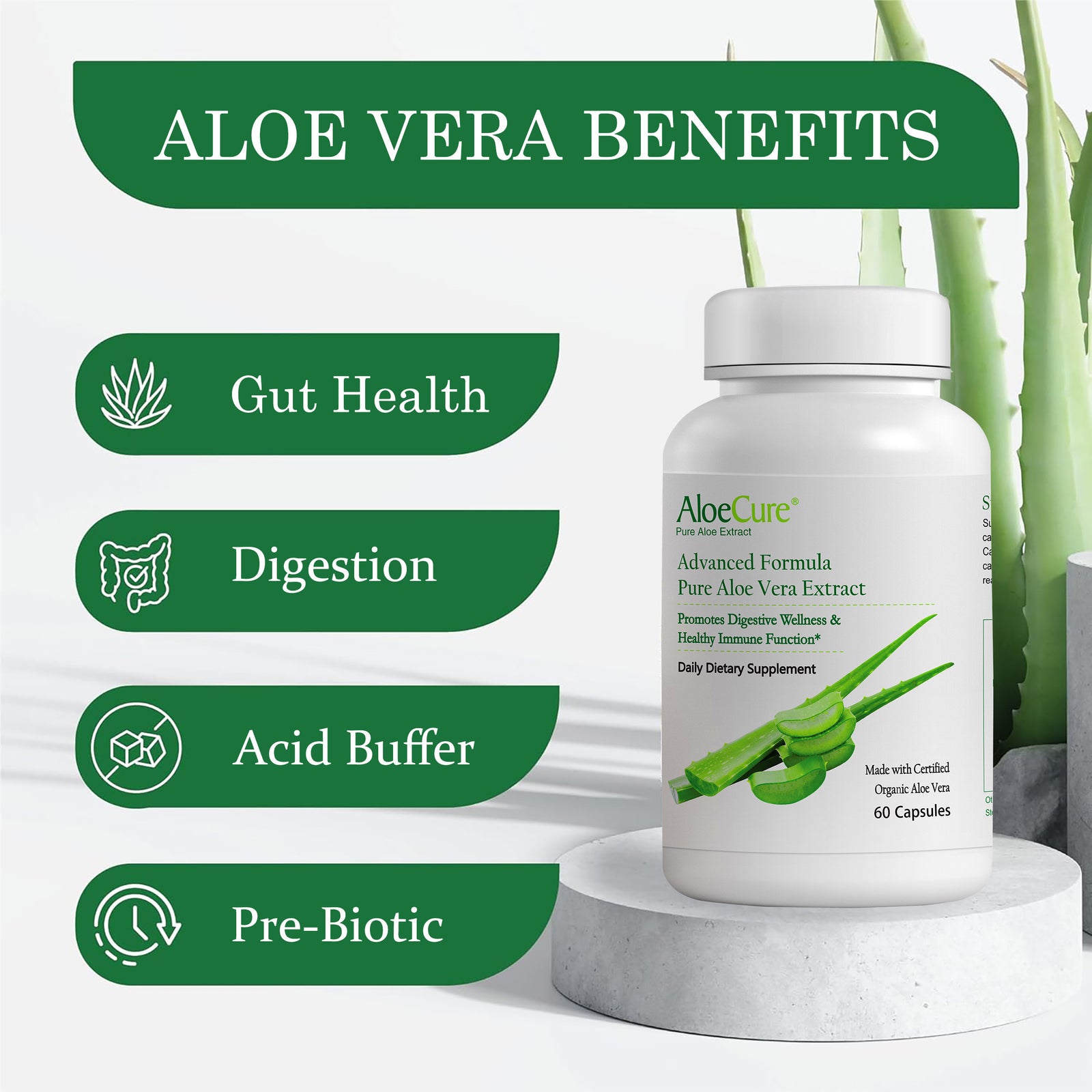
For aloe, start with the plant part. Inner-leaf gel comes from the clear interior of the leaf. Whole leaf products can include material beyond that gel, so the source description matters. Inner-leaf products are made with the latex-associated aloin layer removed, which is why aloin removed is a key label check rather than a decorative detail.
Next, look for the amount of aloe per serving and the processing method. Heat, oxygen, light, humidity, and pH changes can reduce the activity of sensitive plant compounds. A brand that explains harvesting speed, processing steps, and stability testing gives you more to verify than a brand that only prints a leaf image on the front.
Organic Aloe Vera with the aloin removed, along with Scutellaria baicalensis and Senegalia catechu, has a history of safe human consumption for thousands of years. History of food use supports familiarity with the ingredient, but it doesn't replace current product testing. For an aloe beverage, you still want the label to describe general wellness positioning in compliant terms, such as supports healthy digestive function, rather than a named condition.
Dose check: Compare the amount in one serving with the amount used in the evidence the brand cites. If the brand won't show either number, you can't make that comparison.
For adaptogens such as ashwagandha, look for a standardized extract and the amount per serving. Standardization tells you the extract was made to a specified marker level, which helps compare one batch and one brand with another. Human research on ashwagandha and L-theanine is promising but limited, according to Euronews reporting on functional drink promises. Promising isn't the same as settled, so modest wording should match the current limits of the evidence.
Magnesium teaches a different lesson. Find the form and amount per serving, then ask whether your usual intake is low. A nutrient can be essential and still offer limited additional benefit when intake is already adequate. That context check prevents a common mistake, assuming every recognized nutrient produces a noticeable extra effect at any dose in any person.
Many functional claims remain supported primarily by mechanistic, animal, or small human studies, with limited large-scale trials and inconsistent outcomes. Stronger product evaluation defines measurable quality attributes, including strain-specific viable counts, marker compound retention, pH, microbial safety, and end of shelf life potency. You may not see every attribute on a consumer label, but a transparent brand should be able to explain how it verifies the finished product, not just the raw ingredient.
Key functional ingredients and what to check on the label
| Ingredient | What to check on the label | Evidence to expect |
|---|---|---|
| Probiotic cultures | Named strain, viable count at end of shelf life, storage instructions | Strain-specific human studies; mechanistic data alone is not enough |
| Inner-leaf aloe gel | Inner-leaf source, aloin removed, organic certification | Long history of food use for aloin-removed inner gel; benefits described as general wellness |
| Adaptogen extracts such as ashwagandha | Standardized extract and amount per serving | Promising but limited human research |
| Magnesium | Form and amount per serving | Limited benefit unless intake is low |
Match any drink you are considering to its row. If the label gives you the exact ingredient, the serving amount, and a realistic evidence level, you have a basis for comparison. If it gives you only a fashionable ingredient name, you have marketing, not a measurable specification.
A functional beverage doesn't sit alone in your day. It sits alongside coffee, tea, capsules, fortified foods, and sometimes several other wellness drinks. Judge total daily exposure, not just the number printed on one bottle.
Run these steps before a drink becomes a daily habit.
Different product types can also blur together. A conventional beverage, a liquid dietary supplement, and a capsule may follow different labeling rules even when they use similar ingredients. Dosage verification becomes harder when a routine includes several formats that repeat caffeine, botanical extracts, vitamins, or minerals under different names.
Natural, organic, and plant-based describe sourcing or production choices. They don't mean a product is suitable for every person or every routine.
For aloe specifically, review personal tolerance and product suitability before regular use, including the cautions in our guide to aloe vera side considerations before regular use. A beverage can support everyday wellness routines, but it doesn't replace professional medical advice, diagnosis, or care. Persistent changes in digestion, comfort, energy, mood, or sleep deserve professional evaluation rather than a higher dose or another stacked product.
Your own circumstances stay at the center of the decision. Age, medicines, allergies, pregnancy, nursing, kidney or liver considerations, and other supplement use can change whether an ingredient is appropriate for you. When the answer isn't clear from the label, ask a professional before you buy a case.
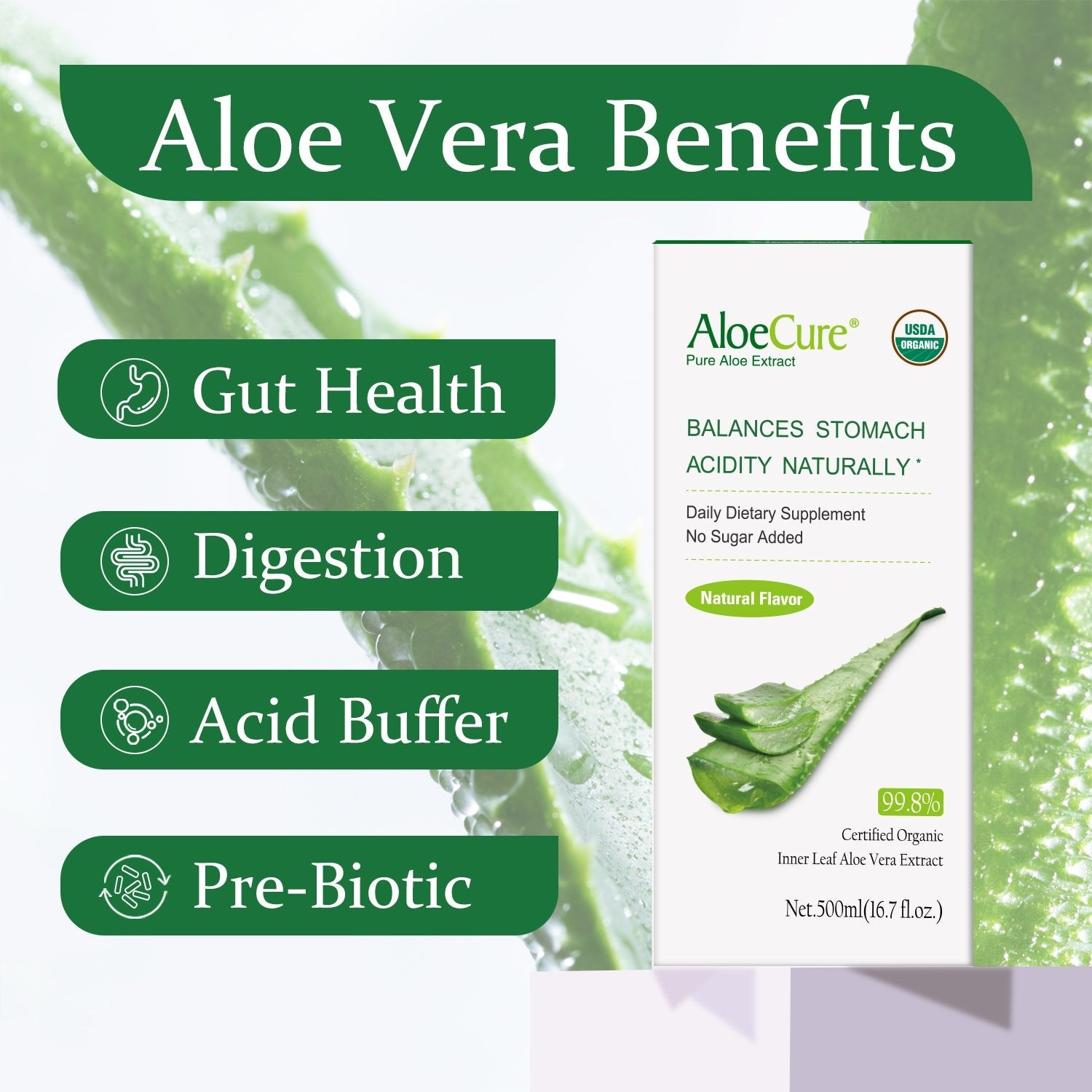
Clean should mean something you can verify on the label itself. For pure aloe vera juice, that definition is concrete: one organic aloe ingredient, inner-leaf sourcing, aloin removed, no added concentrates, and USDA organic certification for each flavor. Our Pure Aloe Vera Juice comes in Natural, Grape, and Lemon, and each flavor is USDA Certified Organic.
Those three flavors give you a simple test case for the checklist that follows.
Compare aloe juice with an energy drink on three checks. First, identify the source of the active ingredient: inner-leaf aloe gel in one case, caffeine and B vitamins in the other. Second, check stimulant content: aloe juice contains no caffeine. Third, check processing transparency. Can the company explain who farms the ingredient, how quickly it moves from harvest to bottle, and how the finished product is tested? A label that answers those questions gives you more to work with than a long ingredient list ever will.
AGHG, the parent company behind AloeCure, describes itself as one of the largest vertically integrated producers of pure aloe vera and certified organic aloe vera products in the world. It has owned and operated its aloe farms for 25 years, hand-harvesting USDA- and EU-certified organic aloe, and a patented, proprietary process converts fresh aloe leaves into finished products within 12 hours of harvest.
That speed matters for a fresh plant ingredient. Aloe processed quickly, without chemicals, concentrates, or charcoal filtration, keeps more of what made the plant worth harvesting. One owner across farming, processing, and bottling also means a single timeline to trace if you ever ask where a batch came from.
The positioning stays bounded. Pure aloe vera juice is built around plant-based hydration and everyday wellness and language such as supports healthy digestive function. It doesn't promise a disease outcome, and that boundary is itself a quality signal, because it sets a realistic expectation before the first serving.
Shop Pure USDA Organic Aloe Vera Juice in Natural, Grape, or Lemon at $19.95 each, or subscribe and save 20% with flexible delivery. Orders include a 90-day money-back guarantee, 1 to 2 day priority processing, and free shipping on qualifying orders. AGHG's mission centers on developing organic and sustainable products that support people's health and wellbeing. The checklist above is how you test that mission at the label level.
These statements have not been evaluated by the Food and Drug Administration. This product is not intended to diagnose, treat, cure, or prevent any disease.
Ready to put the checklist to work with a caffeine-free, plant-based option for everyday hydration? Explore AloeCure's USDA Certified Organic Pure Aloe Vera Juice in Natural, Grape, and Lemon, choose one-time purchase or Subscribe & Save for 20% off flexible delivery, and order at AloeCure with the 90-day money-back guarantee.
Comments will be approved before showing up.