Your Cart is Empty

You're standing at the sink with a new cleanser in one hand and a long ingredient list on the label. Vitamin E sounds like a sensible bonus, but a face wash doesn't stay on your skin like a serum or moisturizer. The useful question isn't whether vitamin E is good for skincare in general. It's what a rinse-off cleanser can reasonably contribute, and whether the rest of the formula suits your skin.
A face wash with vitamin E can combine everyday cleansing with some skin conditioning and antioxidant support. The payoff depends on the formula and how your skin responds, not just the ingredient name on the front of the bottle.
You wet your face, massage in cleanser, then rinse. That brief contact is the working window for a vitamin E face wash. Its main job is still to remove everyday buildup, excess oil, and product residue without leaving your skin feeling stripped.
Vitamin E may add a conditioning element to that cleansing step, but a rinse-off formula shouldn't be judged like a leave-on product. The cleanser goes down the drain, so it can't be assumed to deliver the same exposure as a serum or cream that remains on your skin. A study of a vitamin E body wash did measure increased vitamin E in the outer skin layer, but that result doesn't establish lasting hydration or visible cosmetic improvement from a face wash. The study's format and participants also limit how broadly its findings can be applied to facial cleansers. The cleanser-delivery study
Think of the cleanser as a supporting step, not the whole skincare plan. A good formula should cleanse comfortably, rinse cleanly, and leave your skin feeling balanced rather than tight or coated. Vitamin E can be a useful addition, but the ingredient's presence alone doesn't tell you how well a particular product will perform.
The contact time matters, too. There's no reason to leave a cleanser sitting on your face in hopes of turning it into a treatment. Massage it gently, then rinse according to the directions. If you want a leave-on product, choose a serum or moisturizer designed to stay on skin, and assess it separately from your cleanser.
Practical rule: Choose a face wash for how it cleanses and how your skin feels afterward. Treat vitamin E as a potential bonus, not a promise of dramatic results.
Vitamin E has a long history in dermatology and cosmetic skincare. Reviews describe its use in clinical and experimental dermatology for more than 50 years, including in cleansers, moisturizers, and other formulations. It's a fat-soluble antioxidant, and two common topical forms are alpha-tocopherol and alpha-tocopherol acetate. A dermatology review of vitamin E
In plain language, antioxidant ingredients help limit oxidative changes that can affect skin lipids. Laboratory and experimental evidence indicates that topical vitamin E can help limit lipid peroxidation and other oxidative changes associated with ultraviolet exposure. That supports its role as a protective or conditioning ingredient, but it doesn't make a vitamin E cleanser a sunscreen. Sunscreen remains its own step.
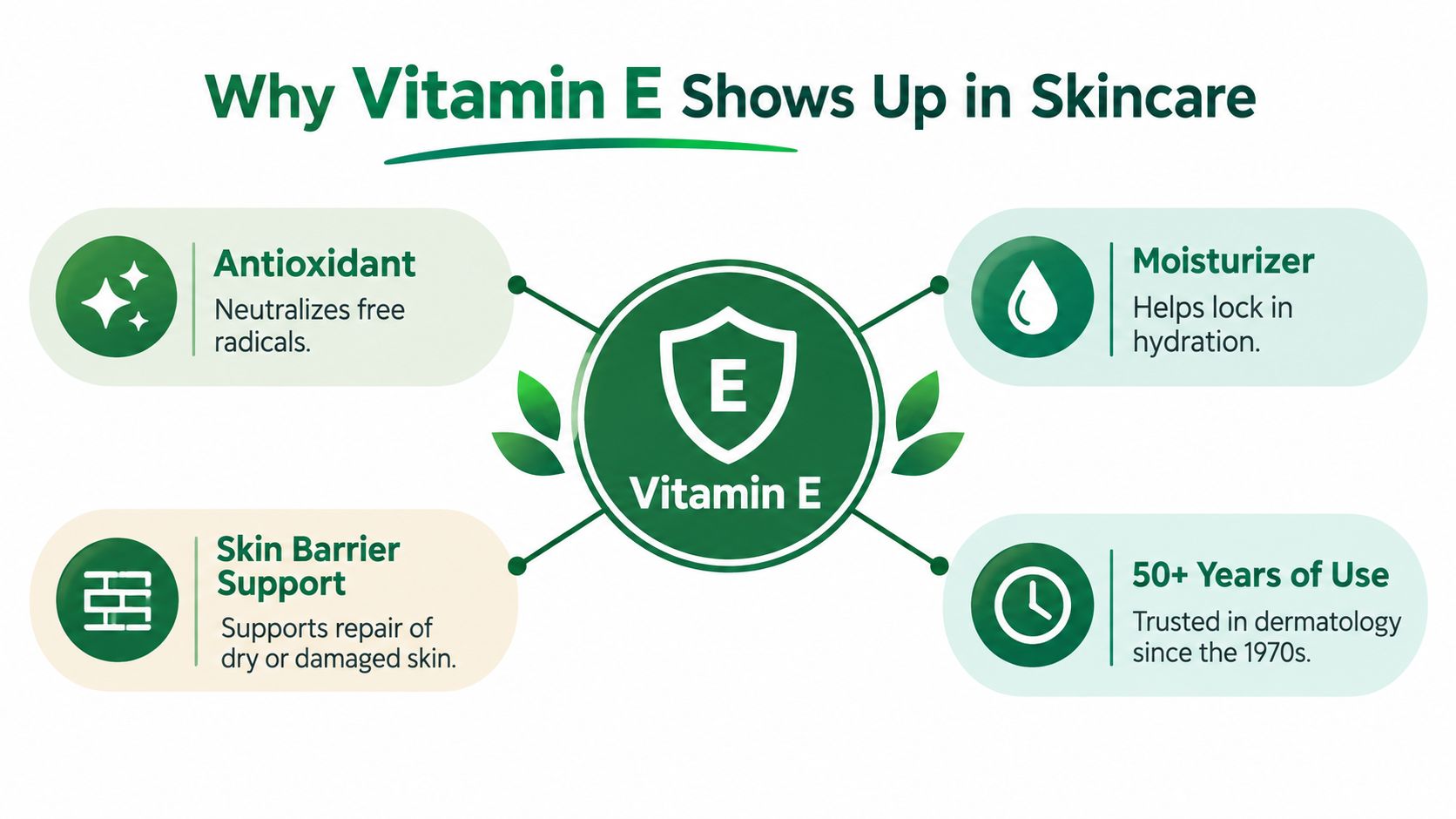
The evidence is not equally strong for every benefit promoted on skincare packaging. Reviews note a shortage of well-controlled human trials establishing precise topical doses, specific indications, or clear superiority over other skincare ingredients. So it's sensible to look for an ingredient-focused promise, such as antioxidant support or skin conditioning, rather than a claim that a cleanser will resolve a particular cosmetic concern.
The rinse-off format makes that distinction especially important. A face wash may provide cleansing and some conditioning during brief contact, but that doesn't make it equivalent to a leave-on vitamin E product. If you're comparing formats, this overview of vitamin E skincare cream can help you think about the difference between a cleanser and a product that stays on your skin.
Ingredient lists can look intimidating, but you don't need to decode every line to make a sensible comparison. Start by checking whether the label names a familiar vitamin E form, such as tocopherol or tocopheryl acetate. Then look at the cleansing base and the overall formula. A cleanser's surfactants do most of the washing, so a vitamin E callout can't compensate for a formula that leaves your face feeling uncomfortable.
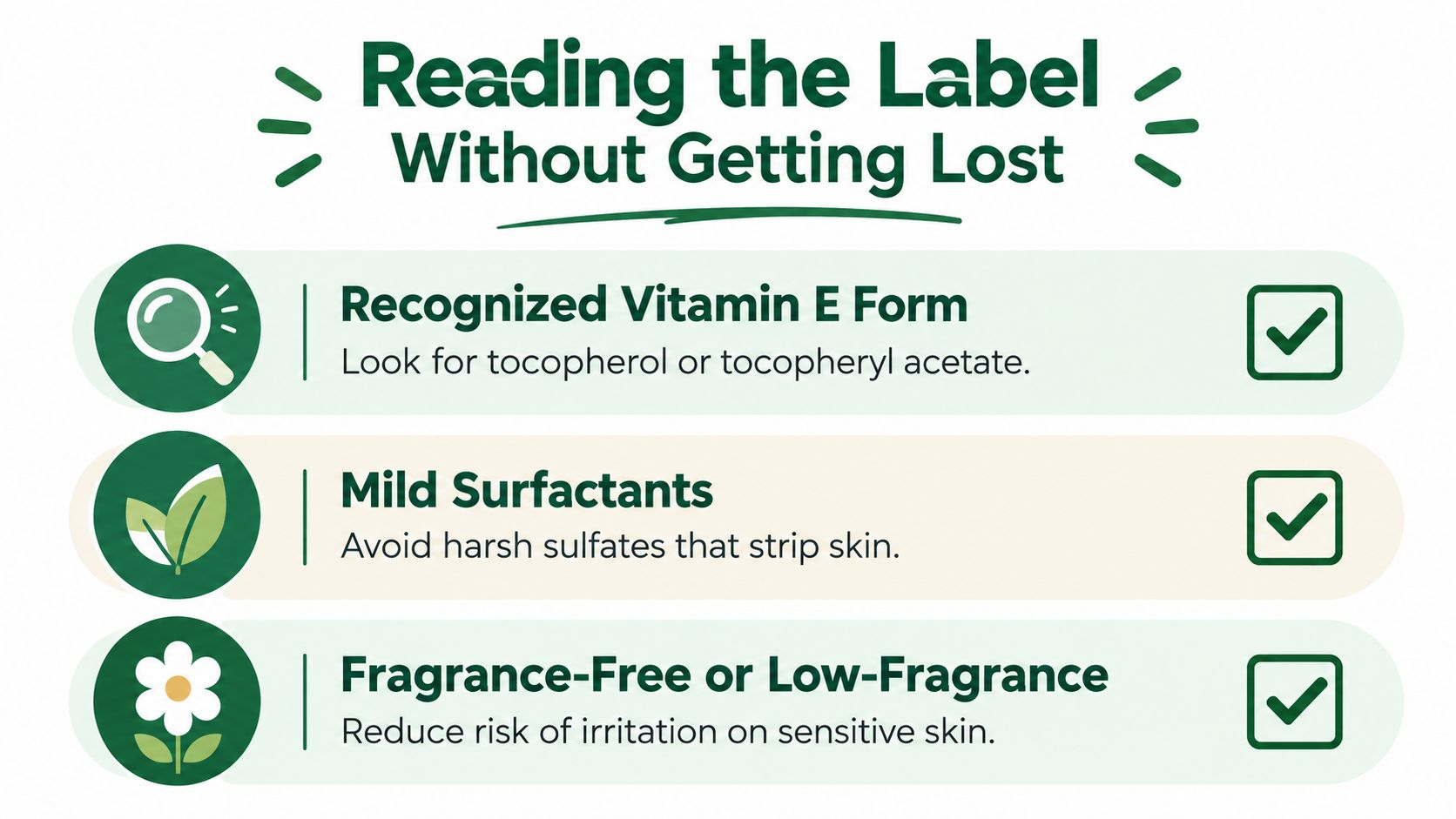
Look for a cleanser that pairs its cleansing agents with ingredients suited to your preferences. Glycerin is a familiar humectant, while aloe may appear in formulas aimed at a comfortable, conditioned feel. Cream or milk textures often feel different from foaming gels, but the texture itself doesn't guarantee that a cleanser will suit you. Use the label alongside how your skin responds after washing.
Fragrance is worth noticing if you're prone to product reactions. The same goes for harsher cleansing agents if you've found that some washes leave your skin tight or uncomfortable. The presence of a botanical or antioxidant doesn't automatically make the formula gentle. For a broader overview of plant-based skincare choices, see AloeCure's natural skincare guide.
Ingredient order offers context, but it doesn't reveal the exact concentration of every component or prove a product's performance. If vitamin E appears near the end of a long list, don't assume it's present at a meaningful level, and don't infer efficacy from the label alone. For more context on how professional skincare options are discussed, Luxe Aesthetic Surgery & Medical Spa's page on medical grade skin care treatments is a useful resource to consult alongside advice from a qualified skincare professional.
A cleanser should match your skin's everyday feel and needs, not just a category printed on the bottle. Dry or easily tight-feeling skin may prefer a cream or milk cleanser. Oily-feeling skin may find a lighter gel more comfortable. Combination skin can do well with a straightforward formula that cleanses without leaving drier areas uncomfortable.
Sensitive skin calls for a particularly careful read of the full ingredient list. A fragrance-free option with a mild cleansing base may be a more sensible starting point than a heavily scented formula, even if the latter highlights vitamin E. Mature skin can also benefit from choosing a cleanser that doesn't leave the face feeling stripped, then relying on a suitable moisturizer for the leave-on care a cleanser can't provide.
| Skin type | Preferred texture | Helpful supporting ingredients | Avoid |
|---|---|---|---|
| Dry-feeling | Cream or milk | Glycerin, aloe, or other conditioning ingredients | A wash that leaves skin tight |
| Oily-feeling | Light gel | A simple, comfortable formula | Scrubbing or a harsh after-wash feel |
| Combination | Gel or light cream | Humectants such as glycerin | A formula that feels too heavy or too stripping |
| Sensitive | Fragrance-free cream or gentle gel | A short, familiar ingredient list | Fragrance and a cleanser that stings |
| Mature | Cream or milk | Conditioning ingredients that suit your routine | Expecting a rinse-off wash to replace moisturizer |
The table is a starting point, not a diagnosis. If you're choosing products for a shared space, the practical considerations behind choosing guest bathroom amenities offer another useful lens: a simple, broadly comfortable formula is often easier for different people to use than one built around a strong fragrance or a narrow preference.
A practical routine doesn't need to turn cleansing into a long procedure. In the morning, wet your face with lukewarm water, work a small amount of cleanser over damp skin with gentle fingertips, and rinse thoroughly. About 30 seconds is a reasonable contact-time example for a quick cleanse; longer isn't automatically better, especially if your skin starts to feel tight.
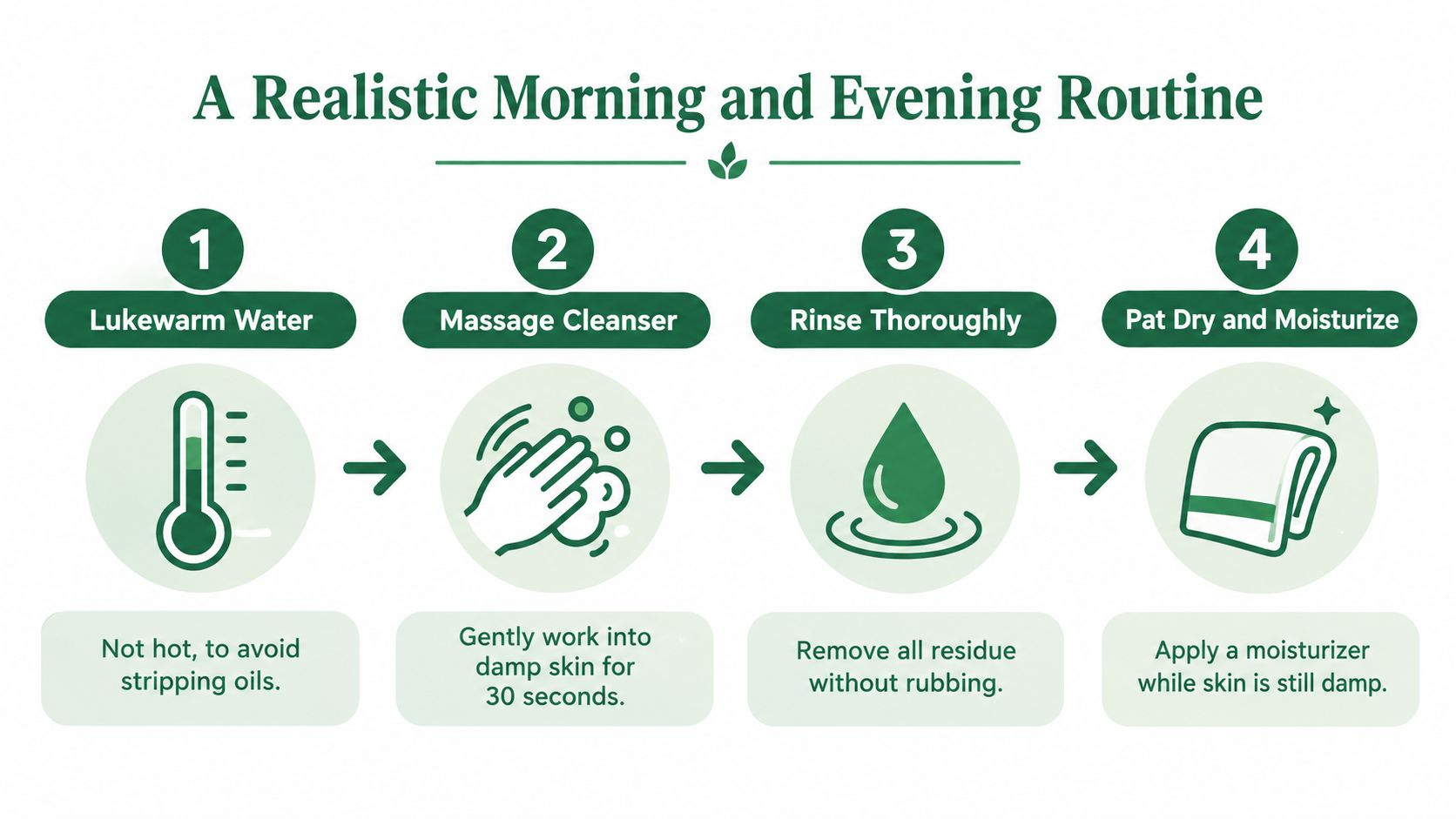
Pat your face dry rather than rubbing it briskly. Follow with a hydrating serum if you use one, then apply moisturizer according to what your skin needs. The cleanser's rinse-off vitamin E isn't a replacement for those leave-on steps.
At night, one wash may be enough if it removes the day's residue comfortably. If you've applied substantial sunscreen or makeup and your water-based cleanser doesn't remove it well, you can start with a separate cleansing balm or oil, then follow with your face wash. Avoid repeating washes just to chase a squeaky-clean feeling.
Aloe-based products are another option within a wider skincare routine. AloeCure's sister brand, Aloderma, offers an aloe vera face wash with shea butter and vitamin E, described for normal and dry skin. Treat it like any other cleanser: check the complete label and judge it by how your skin responds, rather than assuming that the ingredient combination guarantees a particular result.
Keep the water lukewarm, use a gentle touch, and moisturize after rinsing. Those habits matter more to a comfortable routine than extending cleanser contact.
If you're reviewing how your needs change over time, Ideal Face & Body's skincare guide for mature skin can offer further reading on adapting a routine.
“Antioxidant” and “natural” sound reassuring, but neither guarantees that a product will suit every face. Over-cleansing can damage the skin barrier and worsen breakouts, while fragrance and harsher surfactants can contribute to irritant contact dermatitis. Case reports have also linked some topical vitamin E preparations with contact dermatitis and other eruptions. These reports don't mean every person will react, or that every vitamin E form causes a problem, but they're a good reason to take your own history seriously. An NIH-indexed review of skincare-related reactions
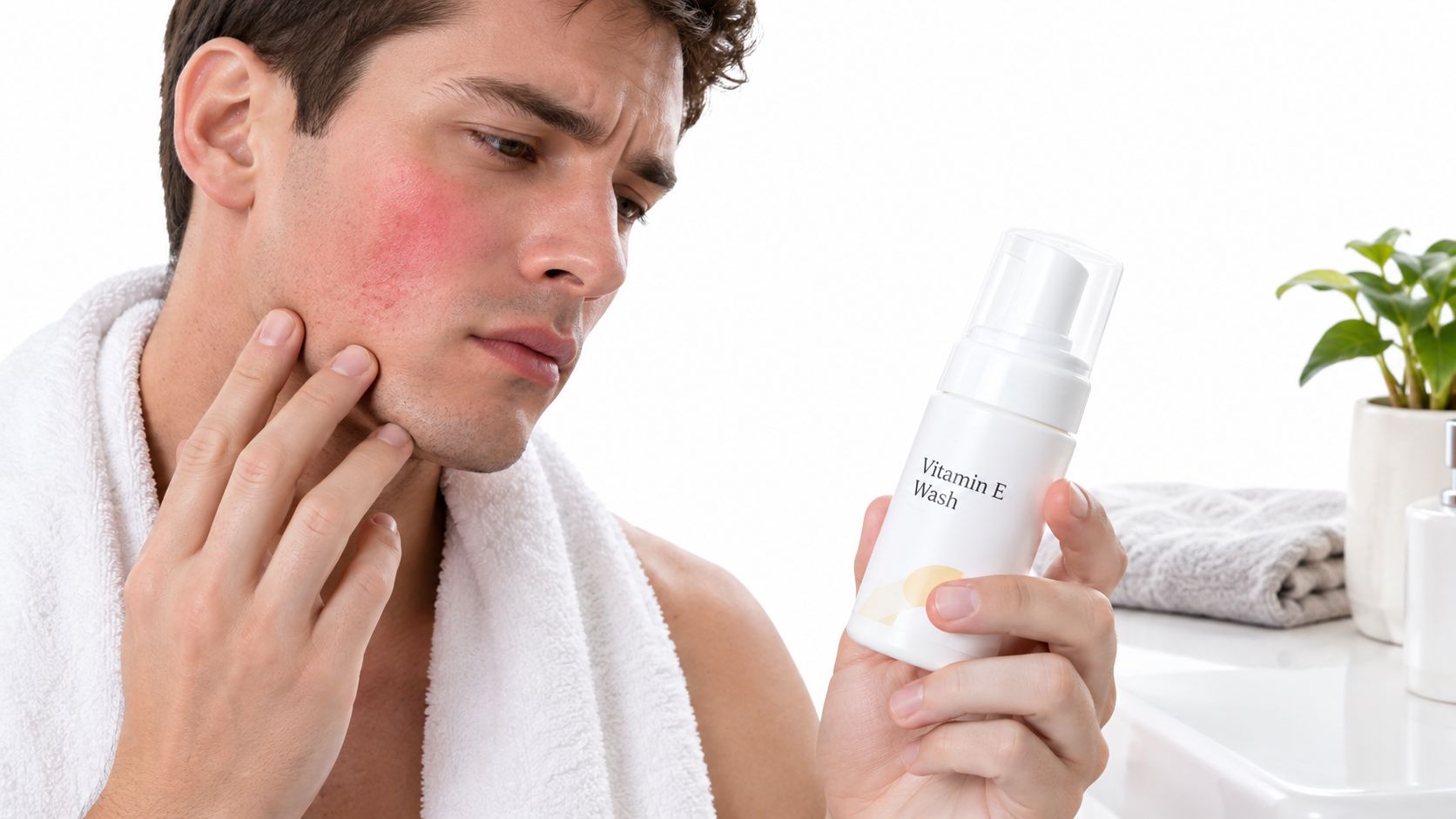
If your skin is freshly shaved, feels unusually sensitive, or has reacted to cosmetic products before, don't assume a vitamin E face wash is automatically the gentlest choice. A fragrance-free formula with a mild cleansing base is a more cautious option. Try a small amount on a limited area first, and stop using the product if burning, persistent stinging, a rash, or new bumps appear.
Irritant reactions can occur when a product or cleansing routine disrupts the skin's surface. Allergic contact dermatitis is a different response and can emerge after exposure to an ingredient the person is sensitized to. You don't need to determine which one you're experiencing on your own. If symptoms persist or are concerning, ask a qualified healthcare professional for advice.
Avoid scrubbing and repeated washing when your skin feels uncomfortable. A face wash is meant to cleanse, not to prove its strength through a tight, squeaky finish. For a closer look at how vitamin E is discussed in leave-on formats, AloeCure's overview of pure vitamin E oil provides additional context, but a leave-on oil and a rinse-off cleanser aren't interchangeable.
Before buying, check the whole product rather than relying on a vitamin E callout:
Use lukewarm water, massage gently, and follow the rinse with moisturizer. Those habits make the cleanser easier to assess than promises on the front label. A comfortable after-wash feel and a routine your skin tolerates are more useful signs than expecting a rinse-off product to do the work of a leave-on formula.
For aloe-based wellness and skincare options, browse AloeCure and explore the products and routine additions that fit your needs. If you're considering a subscription, check the current Subscribe & Save offer on the product page before you order.
Comments will be approved before showing up.