Votre panier est vide

What does a USDA Organic seal tell you about the finished supplement, and what does it leave unanswered? The answer starts with an important distinction: organic certification governs approved agricultural methods, permitted ingredients, certified handling, and traceability. It doesn't automatically describe every purification step or every safety test performed on the final bottle.
That distinction matters for anyone comparing USDA organic supplements. A thoughtful purchase considers the label category, the certifying agent, the manufacturing controls, the testing program, and the brand's ability to explain where the plant material came from and how it was processed. Organic certification provides a meaningful regulatory foundation, but informed shoppers look beyond a green seal.
The modern federal organic system began with the Organic Foods Production Act, enacted in the 1990 farm bill. That law authorized the USDA to establish the National Organic Program for agricultural products produced using approved organic methods. USDA finalized the organic regulations in 2000, and the National Organic Program became fully operational in October 2002, as summarized by the Congressional Research Service.
Dietary supplements can fall within this framework when their agricultural ingredients, handling, processing, and labeling meet applicable requirements. A USDA-accredited certifying agent verifies compliance. That gives the phrase USDA organic supplements a defined regulatory meaning, rather than leaving “organic” as an unsupported marketing description.
The market context also shows why this category deserves careful attention. The broader U.S. organic market reached $76.6 billion in sales in 2025, up 6.8% year over year, while organic supplement sales grew 8.7% to $2.4 billion, according to the Organic Trade Association. Organic textiles, dietary supplements, personal care, and pet food together contributed $6.5 billion that year, and those categories represented under 1% of total comparable market sales, showing that non-food organic categories still have substantial room to develop.
A certification addresses how approved agricultural ingredients are produced and handled. It doesn't promise that every finished product contains only one type of material, nor does it replace a separate quality program for contaminants.
Practical rule: Treat organic certification as a verified production standard, then ask how the brand manages finished-product quality.
For everyday wellness decisions, that means checking more than the front panel. Read the organic claim, inspect the ingredient list, look for product-specific certification information, and ask whether the company can explain its processing and testing practices. A transparent brand should make those answers understandable without requiring shoppers to interpret vague phrases.
The wording on an organic supplement label tells you how much of the formula qualifies as organic and what the brand can legally display. The most important distinction is between 100% organic, organic, and made with organic. These categories aren't interchangeable.
The USDA organic rules in 7 CFR Part 205 define the main thresholds for processed products. Water and salt are excluded when calculating organic content.
| Label Claim | Organic Content Requirement | Seal Usage |
|---|---|---|
| 100% organic | All ingredients must be certified organic, excluding water and salt | USDA Organic seal permitted |
| Organic | At least 95% organic ingredients by weight or fluid volume, excluding water and salt | USDA Organic seal permitted |
| Made with organic specified ingredients or food groups | At least 70% organic ingredients | USDA Organic seal not permitted |
| Below 70% organic | Organic ingredients may be identified in the ingredient list or information panel | No broad front-label organic claim or USDA seal |
A product in the 95% or higher category can use the word “organic” on its principal display panel and may use the USDA Organic seal when the product and operation meet the applicable requirements. A product in the 70% to below 95% range can use a limited “made with organic” claim, but it can't display the USDA Organic seal. The USDA labeling guidance also allows that claim to identify up to three specified ingredients or food groups.
Start with the largest promise on the front. “Organic” doesn't mean the same thing as “100% organic,” and an image of an organic plant doesn't establish certification.
Then review the information panel and ingredient list:
For a practical companion on examining serving information, ingredient order, and claim language, use this guide to read supplement labels. The goal isn't to reject every formula containing a non-organic ingredient. The goal is to understand exactly what you're buying.
An organic crop can be grown under certified methods and still require careful handling after harvest. Once leaves, roots, seeds, or other plant materials leave the field, transport, extraction, filtration, storage, and bottling all become part of the quality story.
That's especially important for liquid botanicals. Processing choices can affect freshness, the preservation of naturally occurring plant compounds, and the possibility of introducing unwanted processing materials. A label can tell you the organic category, but it often won't explain whether a brand uses gentle extraction, concentrates the material, relies on charcoal filtration, or adds processing aids.
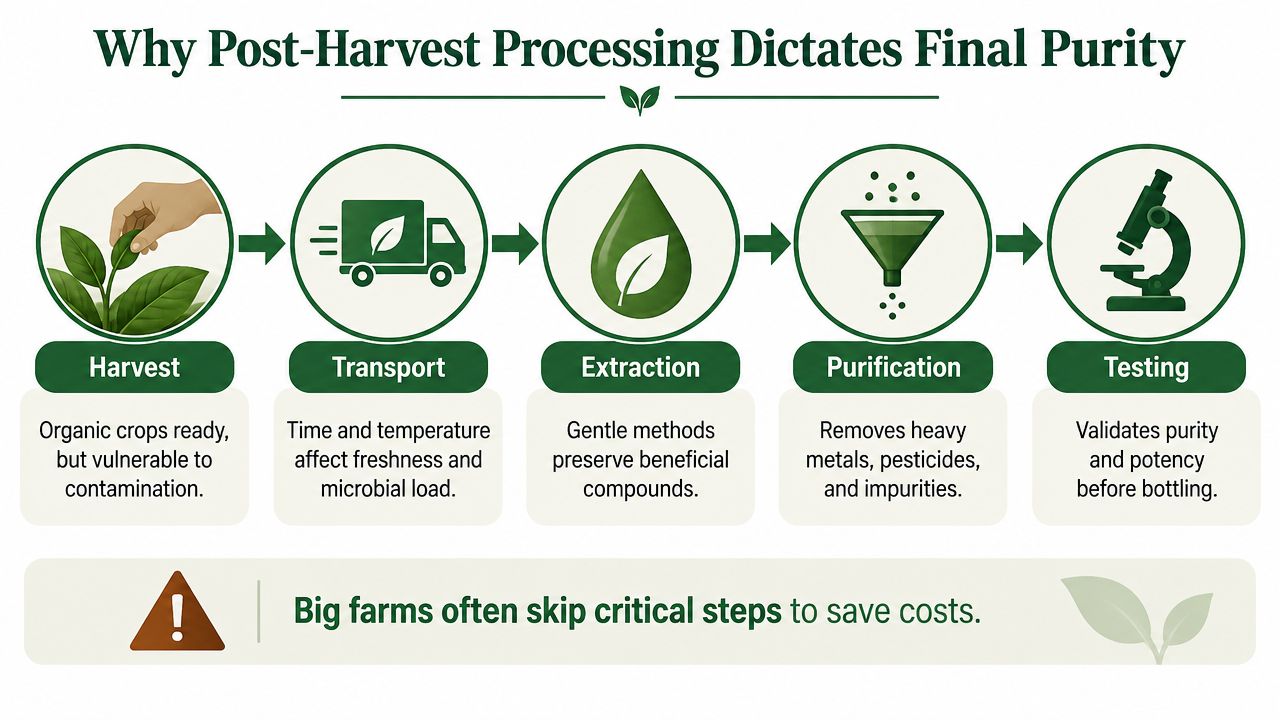
A useful evaluation follows the plant through five practical checkpoints:
Organic certification addresses approved production methods and certified handling. It doesn't establish that the finished product has passed every possible contaminant screen. The ConsumerLab explanation of USDA organic seals and heavy-metal testing notes that organic labeling alone doesn't require finished-product testing for lead, cadmium, mercury, or arsenic.
Elemental contaminants require a separate control strategy. Supplier qualification, identity checks, specifications, and lot-level analytical testing can work alongside organic certification. ICP-MS is commonly used as a high-sensitivity benchmark for trace-metal screening, but shoppers should ask whether a company performs independent testing and whether reports relate to the specific product or lot.
Vertical integration can make those answers easier to verify because one organization controls more of the path from farm to finished product. It can reduce handoffs, strengthen traceability, and give the manufacturer direct visibility into processing decisions. That doesn't make a claim automatically valid, but it creates a clearer basis for accountability.
A trustworthy organic claim should be specific enough for a shopper to check. Start with the product itself, then move backward through the supply chain. The strongest answers connect the finished bottle to a certifying agent, a documented facility, identifiable ingredients, and test results.
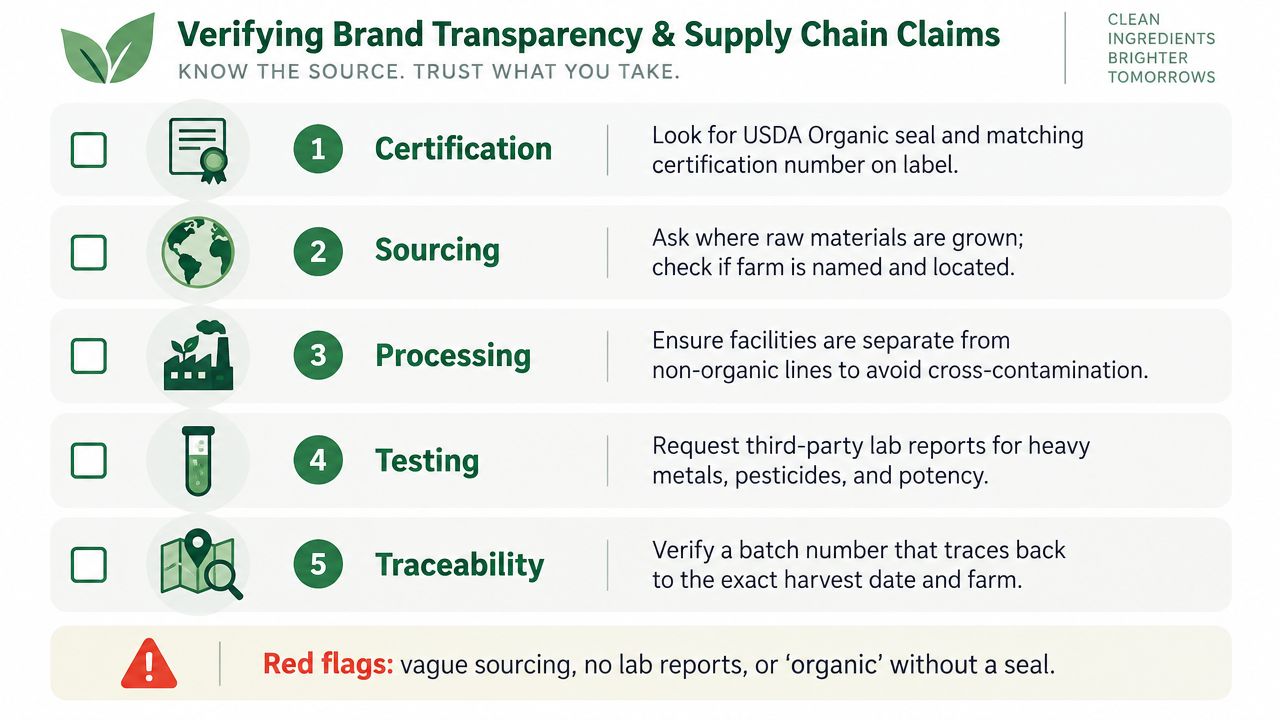
USDA traceability rules require certified operations to maintain records from acquisition through production and sale or transport. Records must trace back to the last certified operation in the chain and identify agricultural products as organic, according to the federal audit-trail requirements.
A certificate supports an organic claim. A traceable record and relevant laboratory evidence help explain the quality of the finished product.
Public verification deserves special attention. One inventory study discussed by SupplySide Journal found that 35 of 48 USDA Organic certification claims in its sample were confirmed through public registries. That finding doesn't establish the status of every brand, but it does show why a product-specific certificate and public verification matter.
For more help understanding laboratory documentation, review this resource on third-party testing. You can also watch the embedded overview below for another explanation of how testing fits into supplement quality decisions.
Vertical integration gives consumers a useful way to evaluate plant-based supplement quality. Instead of purchasing an agricultural ingredient through several unrelated intermediaries, a vertically integrated company controls key stages, such as cultivation, harvesting, processing, and finished-product manufacturing.
AloeCure's model centers on company-operated aloe farms, on-site processing, and production under the same business structure. That arrangement lets the company manage the material from field selection through bottling, rather than relying entirely on outside suppliers for each handoff.

A farm-to-product model can make several quality questions easier to answer:
AloeCure states that its parent company, AGHG, has owned and operated aloe farms for 25 years, with farms certified to USDA and EU organic standards. The company also states that it processes aloe on-site within 12 hours of harvest and uses a proprietary, patented process without chemicals, enzymes, concentrates, or charcoal filtration. Those details are relevant because organic certification and post-harvest handling answer different consumer questions.
The company's farms are described as sustainable agro-tourismos that welcome visitors who want to learn about aloe cultivation and sustainable agriculture. That public-facing model can give shoppers a clearer view of the agricultural setting, although visitors should still evaluate product-specific certification and testing information.
Vertical integration isn't a substitute for verification. Ask whether the brand can provide a certification record, explain its lot controls, and identify the testing performed on finished products. Also distinguish between a claim about farming and a claim about the finished supplement.
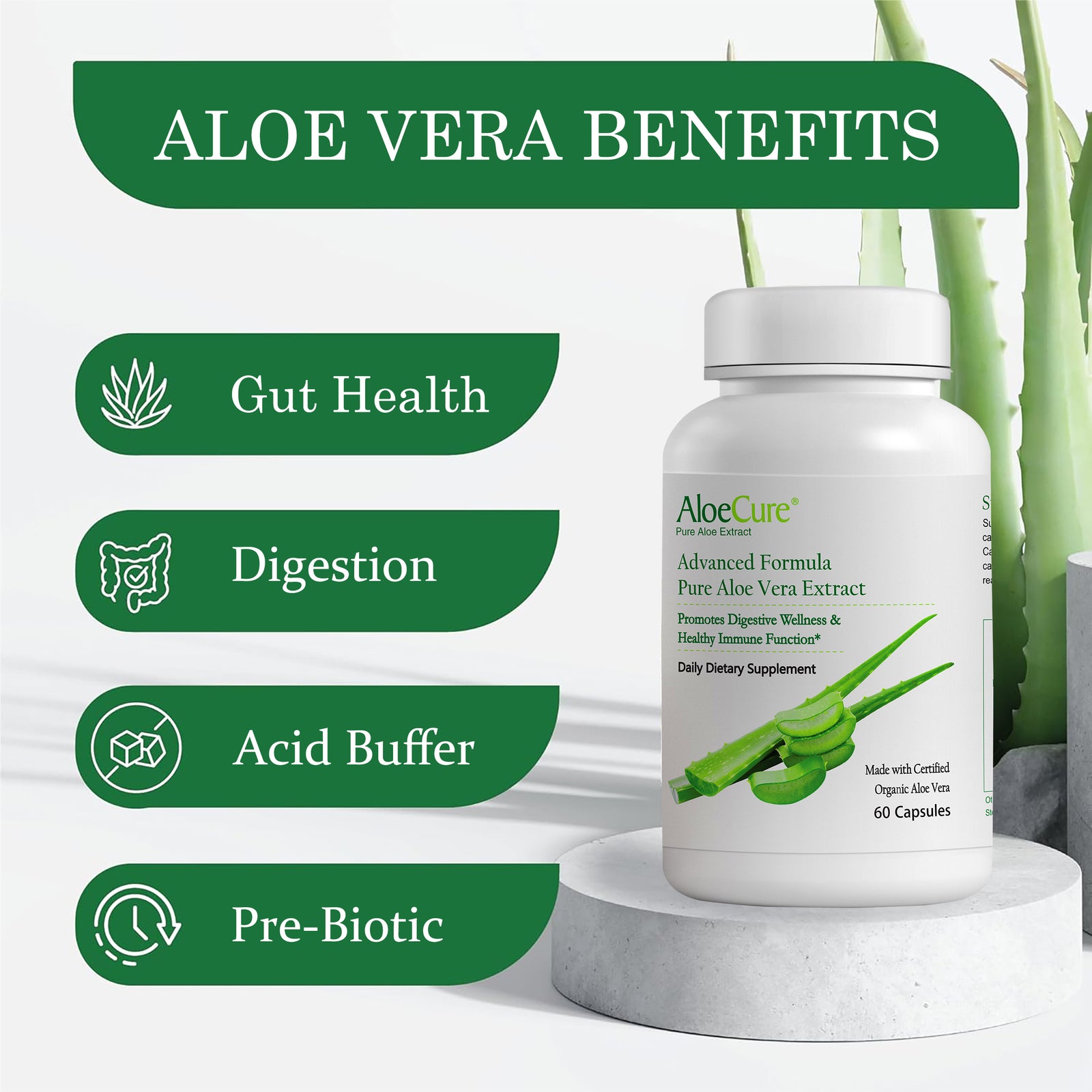
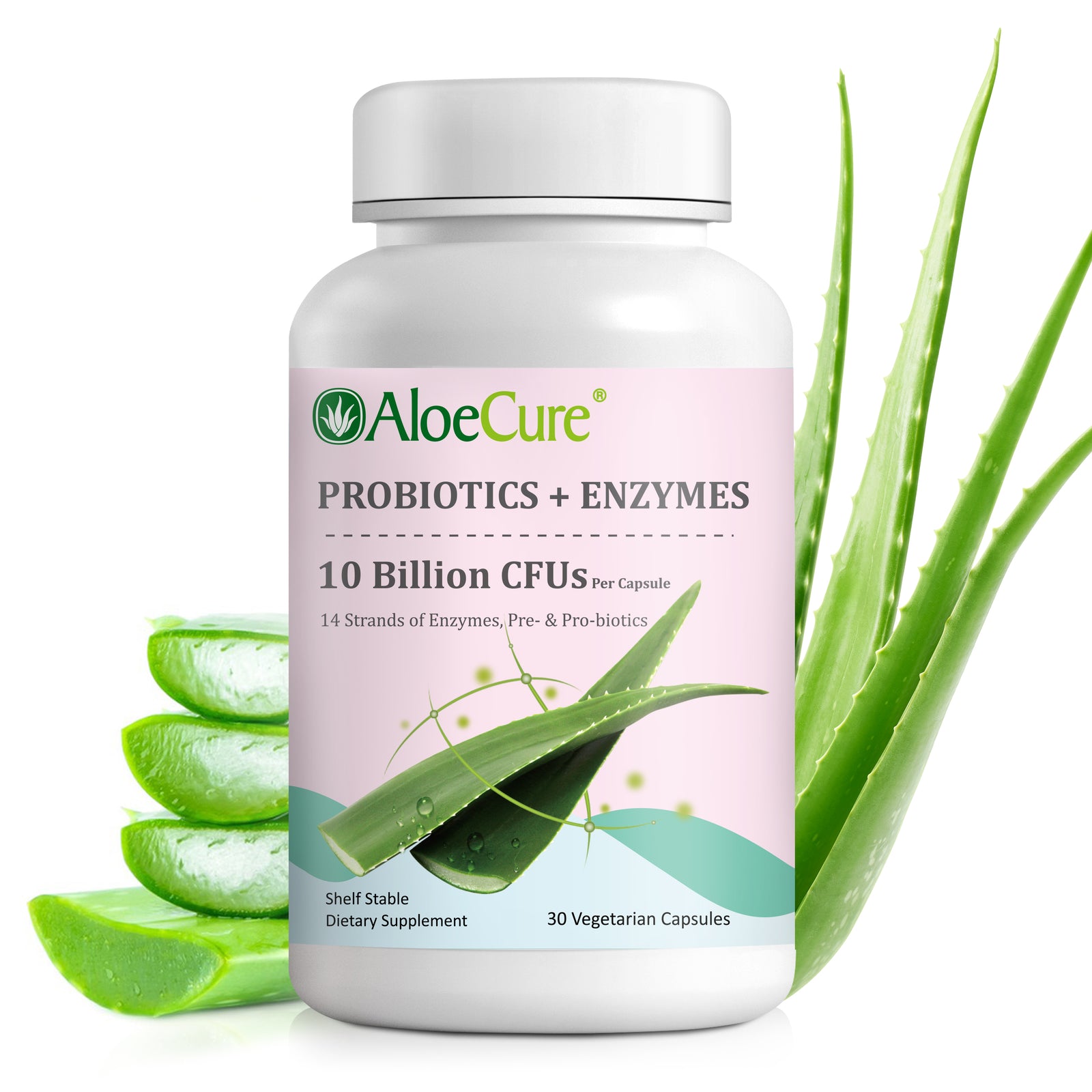
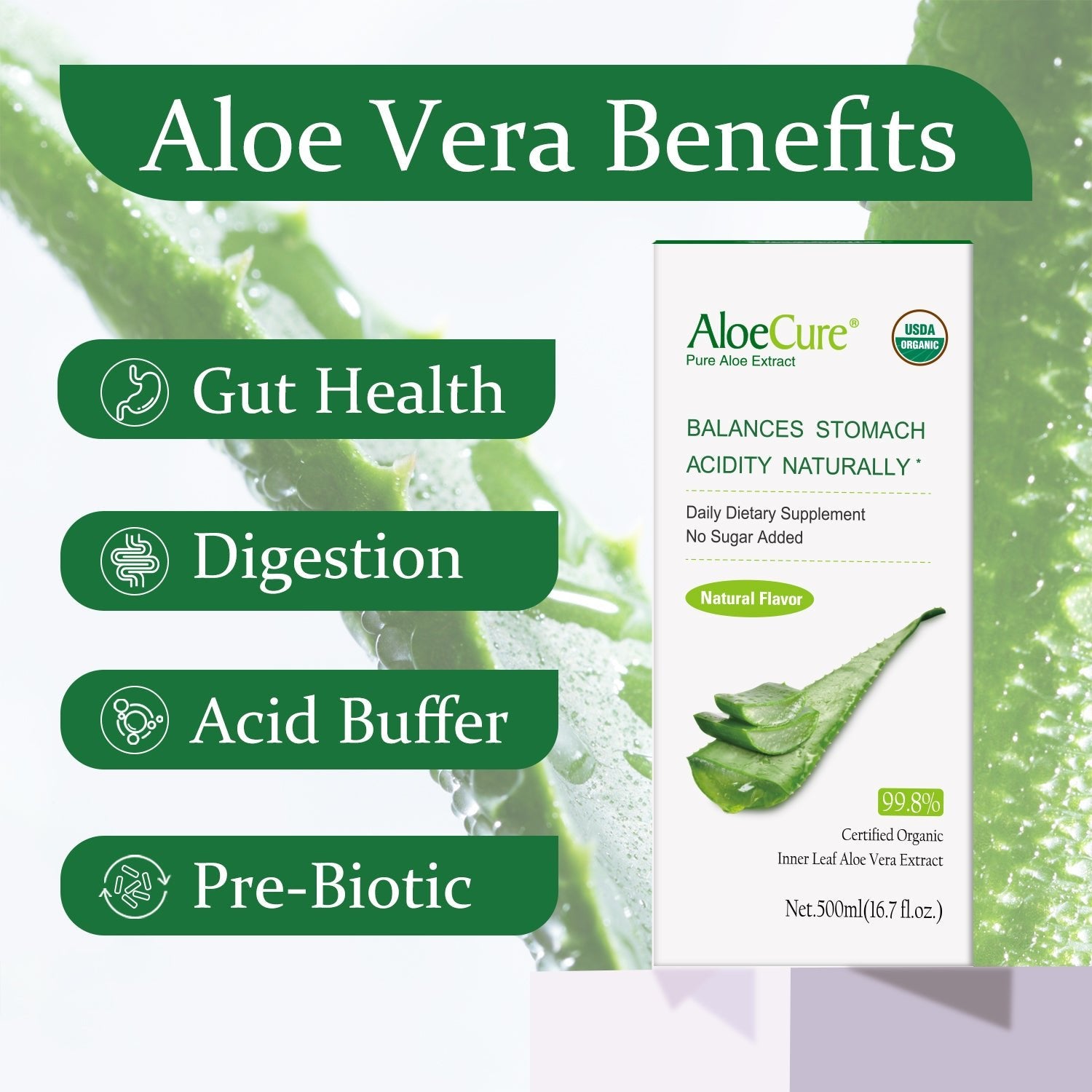
AloeCure offers USDA-certified organic aloe vera juice and aloe capsules, and its fresh aloe approach describes the relationship between harvest timing, processing, and product formulation. That makes it a concrete example of how a company can connect agricultural oversight with manufacturing control.
A practical routine starts with consistency and clarity. Choose a supplement whose organic category you understand, read the serving directions, and keep the product alongside an established daily habit. Use the label's structure/function language as a guide to the intended wellness role, not as a promise of a medical outcome.
FDA recognizes regulated supplement claim categories that include health claims, nutrient content claims, and structure/function claims. Structure/function claims describe support for the body's normal structure or function, so compliant language may include statements such as:
These statements have not been evaluated by the Food and Drug Administration. This product is not intended to diagnose, treat, cure, or prevent any disease.
If your routine also includes protein, compare the format, ingredient profile, and dietary preferences before choosing a product. This guide to compare whey and plant protein can help you evaluate those options without treating one format as universally appropriate.
A subscription can simplify consistent purchasing when the product fits your routine. AloeCure offers a Subscribe & Save option with 20% off subscriptions, alongside USDA-certified organic aloe vera juice and capsule products. Review the label, certification details, testing information, and delivery terms before enrolling.
Visit AloeCure to explore its USDA-certified organic aloe vera juices and capsules, produced through a vertically integrated farm-to-bottle model. Choose the formula that fits your routine, and consider Subscribe & Save for 20% off and more consistent delivery.
Les commentaires sont approuvés avant leur publication.