Votre panier est vide

You've just washed your face, applied a moisturizer, and felt that familiar tightness return before the day is over. Adding a thicker cream may make your skin feel softer for a while, but natural skin hydration depends on more than the amount of product sitting on the surface. It depends on whether the outer layer can attract water, hold it, and slow its escape.
That makes hydration a practical skin-function question, not just a cosmetic one. The routine below focuses on the skin barrier, natural moisturizing factor, transepidermal water loss, ingredient quality, and realistic daily habits. It also explains where aloe vera fits, what processing can change, and how to choose products without relying on vague “natural” promises.
You wash your face, apply moisturizer, and feel tightness return before the day ends. A thicker cream may soften the surface temporarily, yet natural skin hydration depends on whether the outer layer can attract, hold, and slow the escape of water.
A moisturizer can form a short-lived film without restoring the structures that keep water in place. If the barrier is uneven or depleted, water continues to leave, so the skin feels dry again. This is the difference between surface moisture and lasting hydration.
The outermost layer, the stratum corneum, contains much less water than the living epidermal cells beneath it. Healthy stratum corneum water content is typically about 10% to 20%, compared with roughly 75% to 85% in deeper epidermal cells. Below 10%, the barrier becomes impaired and skin is more likely to flake and crack, according to research published in Skin Research and Technology (skin hydration and transepidermal water loss research).

The barrier works like a wall. Corneocytes are the bricks, and intercellular lipids are the mortar between them. Natural moisturizing factor, or NMF, sits inside those cells and works like a water-binding sponge. A cream can smooth the wall, while NMF and lipids help it retain water.
Water also leaves the skin continuously through transepidermal water loss, or TEWL. Research estimates TEWL at about 0.5 to 1.0 mg/cm²/hour, potentially representing roughly 500 mL of water per day across the body. The same study links water balance with the condition of the outer layer (skin hydration and transepidermal water loss research). Environment, cleansing habits, and formula choices therefore matter alongside the water you drink.
Practical rule: If tightness returns quickly, assess barrier support before automatically choosing a heavier cream.
Apply hydrating ingredients to slightly damp skin, then use a formula that supports the barrier. Water-binding ingredients need available water, while lipids or occlusives can help slow evaporation. The goal is a better-functioning outer layer, rather than a thicker coating.
Skin hydration depends on two connected systems working together. Natural moisturizing factor, or NMF, consists of water-attracting substances inside corneocytes. The intercellular lipid matrix surrounds the spaces between those cells and slows water from escaping.
NMF includes amino acids, urea, lactate, and other small molecules. Glycerol also contributes to the skin's water-handling system. By attracting and binding water within the stratum corneum, these substances help skin stay flexible instead of brittle. The lipid matrix contains ceramides and other lipids arranged to limit water movement outward. A review in Dermato-Endocrinology identifies endogenous humectants and intercellular lipids as central to water balance and barrier function (skin barrier lipids and natural moisturizing factor).
NMF and lipids support hydration in different ways:
Neither system fully replaces the other. A humectant can attract water, yet a weakened lipid matrix may let that water evaporate quickly. An occlusive can slow evaporation, but it does not automatically restore depleted NMF. A routine that supports both water binding and barrier lipids therefore addresses more than a single fashionable ingredient.
Healthy skin continues to lose water through transepidermal water loss, or TEWL. In healthy skin, TEWL has been described as about 100 to 150 mL per day per square meter of skin surface (review of moisturization mechanisms). Hydration is a moving balance between water entering the outer layer, water being held there, and water leaving it.
For readers comparing humectants, layering methods, and product textures, this guide to skincare savings with Finding Favourites explains how hyaluronic acid can fit into a broader routine. Pairing a water-binding ingredient with barrier-supporting ingredients is the practical takeaway.

A short visual explanation can clarify how aloe processing relates to ingredient quality:
A well-formulated serum can struggle against habits that repeatedly remove surface lipids or increase evaporation. The most useful changes are often simple swaps rather than a complete routine overhaul.
Long, hot showers can soften and remove some of the lipids that help the stratum corneum hold water. Try warm rather than very hot water, keep bathing reasonably brief, and apply a moisturizer soon after patting the skin dry.
Cleansers deserve the same attention. A strong foaming cleanser may remove more oil than your skin needs, especially when used repeatedly on areas that aren't visibly dirty. Choose a low-foaming or cream cleanser for the face, and avoid washing the body with an aggressive formula every time you shower.
Over-exfoliation creates a similar problem. Scrubs, exfoliating acids, and strong cleansing routines can become excessive when layered together. If skin feels persistently tight after cleansing, reduce the number of exfoliating steps before adding another moisturizer.
Indoor heating and cooling can make the surrounding air feel dry, while cold wind can increase the sensation of tightness. A humidifier may help in a dry room, but it needs regular cleaning and should be used according to the manufacturer's instructions. Applying a barrier-supporting cream to hands, elbows, knees, and shins is also practical because body skin often receives less attention than facial skin.
Hard water can leave mineral deposits on the skin and may make cleansing feel harsher. If you notice a residue, rinse thoroughly and consider a gentle cleanser rather than repeatedly scrubbing the surface.
Small change, repeated daily: Reduce the strongest source of water loss before adding another active ingredient.
Drinking enough fluid supports normal body function, but it isn't a substitute for a functioning skin barrier. Food quality, regular meals, sleep, and stress management can support general wellness, while topical care addresses the skin's outer environment. The most reliable approach combines both rather than treating water intake as a single solution.
Aloe vera has a plausible role in hydration because its plant compounds can contribute to a water-holding, film-forming formula. The evidence is more useful when it's read carefully, because the result depends on the extract, its concentration, the finished product, and the processing method.
In a randomized cosmetic study, 20 female subjects used formulations containing 0.10%, 0.25%, or 0.50% freeze-dried Aloe vera extract on the forearm. After one application, only the 0.25% and 0.50% formulas increased stratum corneum water content. After 2 weeks, all three Aloe-containing formulas showed the same hydration effect compared with the vehicle (freeze-dried Aloe vera extract study). This suggests that concentration and continued use can both influence the outcome.
Another controlled human study found that a 1% Aloe vera extract cream produced no significant difference in stratum corneum hydration compared with a 10% urea cream at each measurement point in people with non-dermatotic dry skin (controlled Aloe vera and urea comparison). That doesn't mean every aloe product performs the same way. It shows that a properly formulated aloe cream can compare favorably with a familiar moisturizing benchmark in a specific study setting.
A 2024 shower-gel study containing Aloe barbadensis leaf extract and trimethylglycine reported an immediate hydration increase 5 minutes after use, including a 236% epidermal hydration increase at 5 minutes versus baseline. Its highest long-term hydration increase was 25.4% with a 1:10 mass ratio of Aloe extract to trimethylglycine (Aloe barbadensis and trimethylglycine shower-gel study). These findings apply to that tested formulation, not automatically to every aloe gel or juice.
Aloe's polysaccharides, including acemannan, are sensitive to processing conditions. Heat, chemical handling, enzymes, concentrates, and charcoal filtration can alter or remove parts of the plant's original matrix. That's why a product listing that says “aloe” tells you less than a transparent explanation of harvest, processing, filtration, and testing.
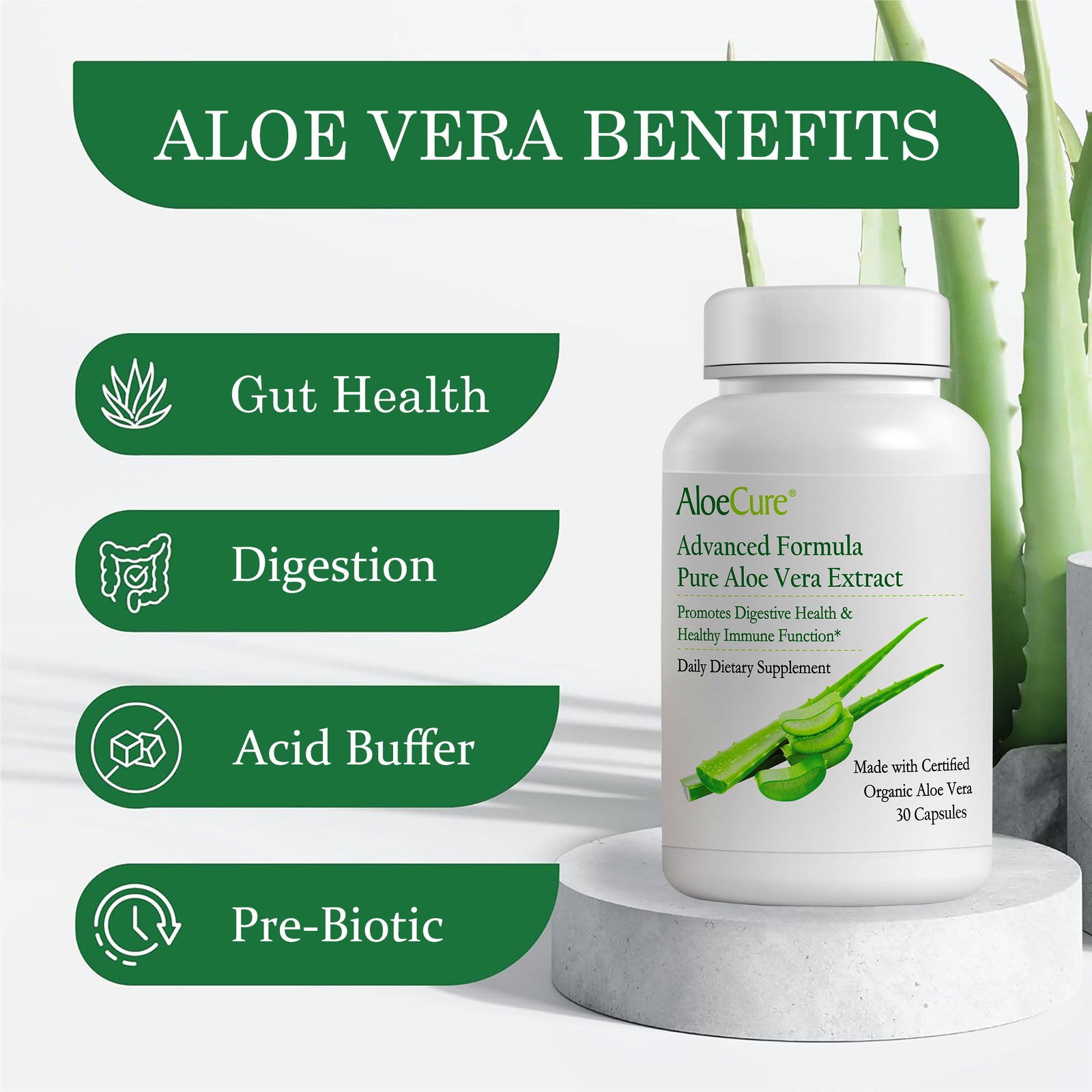
AloeCure describes a vertically integrated model in which its parent company farms and processes its own aloe, with on-site processing within 12 hours of harvest. Its stated process avoids chemicals, enzymes, concentrates, and charcoal filtration, with the aim of preserving the plant's polysaccharide matrix. Those are manufacturing details, not proof that every person will experience the same cosmetic result, but they give shoppers concrete criteria to evaluate.

For a broader look at aloe juice formats and ingredient considerations, readers can consult Skin Perfection's guide to aloe juice. For the skin-specific question of how aloe may fit into a dry-skin routine, see AloeCure's aloe vera guide.
A practical routine doesn't need a crowded shelf. Build it around two goals: add water-binding support and reduce water loss. Morning and evening can use the same basic logic, with daytime protection added in the morning.
Aloe gel can be used as a lightweight hydrating layer, but texture and formulation matter. This guide to aloe vera gel as makeup primer may help if you want to understand where a gel can fit beneath cosmetics.
Remove makeup and sunscreen with a gentle cleanser, then apply a hydrating serum or mist. Follow with a barrier-supporting cream, paying extra attention to the cheeks, around the mouth, hands, elbows, and shins. Body skin benefits from the same order, especially after bathing.
Avoid combining several potentially drying steps in one night. Heavy fragrance, denatured alcohol, and undiluted essential oils can be poor choices for sensitive skin, particularly when the barrier already feels uncomfortable.
Layer by function: attract water first, soften and support the barrier second, then reduce evaporation with the right finish.
Skin may feel more comfortable quickly when a formula adds water or softens the surface, but sustained barrier changes require consistency. Ceramide research has shown measurable differences within hours and continued effects over weeks in controlled testing, including reduced TEWL and improved hydration (ceramide barrier-repair study). For readers exploring professional cosmetic options, Youthful Revival skin boosters provides additional context, but topical basics remain the foundation.
DIY can be useful when the ingredients are simple, fresh, and handled carefully. It shouldn't replace a tested preservative system, especially for products you plan to store or use around the eyes.
Combine one part plain aloe gel, two parts distilled water, and a small amount of cooled rose-petal infusion. Strain the infusion thoroughly, mix only what you'll use promptly, and keep it refrigerated. Use it as a refreshing mist, then apply moisturizer afterward so the added water doesn't evaporate without support.
Skip this option if you react to botanical ingredients or if you can't keep the mixture clean and cool. A homemade water-based product has a limited storage life because it lacks a validated preservative system.
Mix one part honey with two parts plain aloe gel and apply a thin layer for a short period before rinsing. Honey acts as a humectant, while aloe contributes a light, plant-based layer. Follow with your usual moisturizer.
Don't use honey on skin that reacts to bee products, and don't leave the mixture stored for repeated use. Make a fresh batch each time.
Combine one part glycerin with ten parts distilled water. Spray a small amount over moisturizer rather than using it as a standalone product. Glycerin attracts water, while the moisturizer underneath helps keep the finish comfortable.
Avoid using a concentrated glycerin mixture, which can feel sticky and unpleasant. Skip all three DIY options if you're testing several new products at once, because it becomes difficult to identify the source of a reaction.
Do not mix citrus ingredients with sun exposure, use undiluted essential oils, or add powdered materials whose purity and particle size you can't verify. Certified products are safer for sustained use because their ingredients, preservation, and stability undergo controlled development.
Aloe's front-label presence says little about how the plant was grown, processed, or tested. Evaluate the product using a short quality checklist:
Processing details matter because aloe's plant compounds can change between harvest and bottling. AloeCure describes a vertically integrated, farm-to-bottle operation, with 25 years of parent-company experience, on-site processing within 12 hours of harvest, 8-step traceability, third-party certifications, and a 90-day guarantee. The brand's publisher information also says it offers subscription delivery with 20% off. These are quality and purchasing signals worth evaluating, though individual results will vary.
For a closer look at gel texture, ingredient use, and application, read this guide to pure aloe gel for skin. A useful product page should explain the ingredient, processing method, testing, and directions clearly. That transparency helps you judge whether the formula fits your skin and hydration routine.
Drinking more water can support normal hydration, but it can't rebuild a disrupted lipid barrier by itself. Natural oils soften and reduce water loss, yet they don't necessarily supply NMF. One ingredient rarely replaces cleansing, humectants, barrier lipids, and daytime protection, while a thicker texture isn't automatically more hydrating.
How long does improvement take? Comfort can change quickly, while measurable barrier improvement may require consistent use over weeks.
Can sensitive skin use aloe daily? It may, if the formula is simple and tolerated. Patch-test first and stop if discomfort develops.
Can aloe be layered with vitamin C or retinoids? Usually, apply products in a sensible order and introduce one change at a time. Follow each product's label directions.
What confirms inner-leaf processing? Look for explicit inner-leaf language, the botanical name, processing details, certification, and testing information rather than relying on “pure” alone.
AloeCure offers farm-to-bottle aloe products and skin-focused formulas designed to support everyday hydration and skin vitality through transparent processing choices. Visit AloeCure to review the available products, explore flexible subscription savings, and choose an aloe option that fits your routine.
Les commentaires sont approuvés avant leur publication.