Tu carrito está vacío
Envío y manipulación gratuitos con todos los pedidos superiores a $25
Envío y manipulación gratuitos con todos los pedidos superiores a $25

What are aloe vera gel capsules good for, and does the answer depend less on the word “aloe” than on what's inside the capsule? That question exposes the main issue with comparing products. A capsule is only a delivery format. The plant part used, the processing method, and the testing standard can change what your body encounters.
For general wellness, purified inner-gel aloe is most often discussed for digestive comfort, everyday skin support, and the body's normal response to environmental stress. Human evidence is limited and inconsistent, and much of the research uses aloe syrup or controlled extracts rather than generic gel capsules. That distinction matters if you're choosing a product for your routine.
The practical answer to “what is aloe vera gel capsules good for” starts with three questions:
Aloe vera gel capsules aren't a single active substance. When the capsule shell dissolves, the body encounters aloe polysaccharides, trace sugars, minor plant compounds, and potentially residual anthraquinones if outer-leaf material remains. Two products can both say “aloe vera” on the front while supplying different plant fractions and different levels of quality control.
The inner gel is the clear material found inside the leaf. The latex is the bitter yellow substance beneath the outer rind. Whole-leaf preparations can include both fractions unless processing separates and purifies them. The role of acemannan in aloe vera helps explain why manufacturers focus on inner-gel polysaccharides, but acemannan alone doesn't tell you everything about a finished capsule.
Plant part determines which compounds enter the formula. An inner-gel product is designed around the clear gel, while whole-leaf material may contain compounds from the rind and latex.
Processing affects the structure and purity of the ingredient. Heat, time, filtration, drying, and decolorization can all change the final powder.
Testing shows whether the manufacturer checks identity, polysaccharide content, microbiological quality, heavy metals, and residual aloin or other anthraquinones. A strong label should make those checks understandable rather than hiding them inside a proprietary blend.
Practical rule: Treat “aloe vera” as the beginning of your evaluation, not the conclusion.
The most useful expectation is modest. A properly specified inner-gel capsule may support healthy digestive function and promote general wellness, but it shouldn't be treated as a guaranteed solution for a particular condition. The evidence is stronger for some short-term digestive comfort outcomes than for broad claims about every body system.
An aloe leaf is easier to understand if you compare it with an onion. Both have distinct layers, and the layer you use changes the properties of the final preparation.
The outer rind protects the leaf. Just beneath it sits the yellow latex, a bitter sap that contains anthraquinones, including aloin. The clear inner gel fills the center and contains water, polysaccharides, and acemannan, the long-chain sugar most closely associated with aloe's wellness reputation.
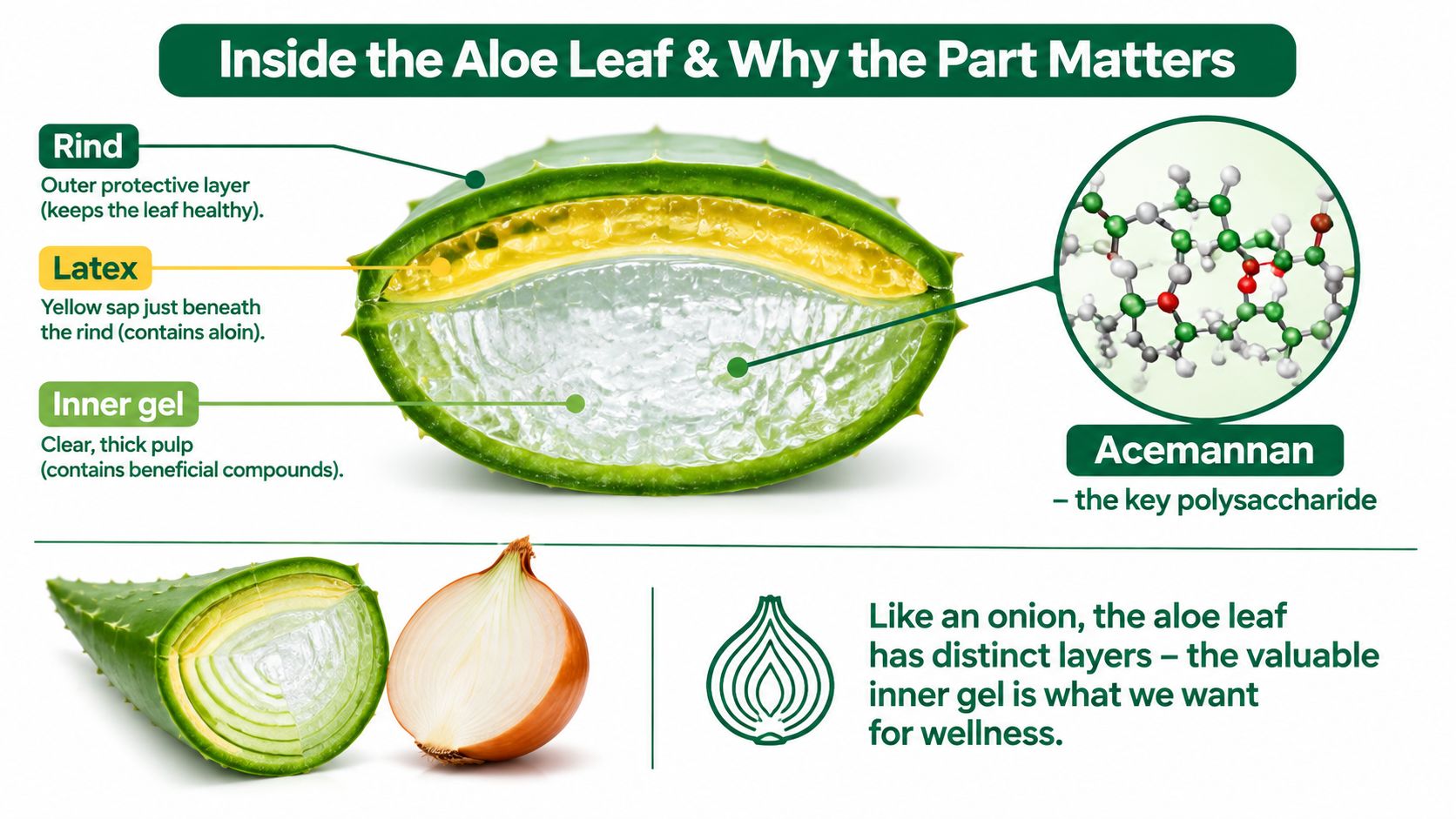
Inner-leaf gel and whole-leaf material aren't interchangeable. A whole-leaf process starts with more of the plant, so it needs effective separation and purification if the finished product is meant to emphasize gel polysaccharides and limit latex-associated compounds. A product that doesn't clearly identify its leaf fraction leaves you guessing.
Acemannan is sensitive to processing conditions. Excessive heat or prolonged processing can alter the long-chain structure, while gentler extraction and drying methods are intended to preserve more of the original gel profile. The finished capsule therefore reflects not only the leaf but also what happened between harvest and encapsulation.
The difference between whole-leaf aloe and inner aloe gel is particularly important for shoppers comparing labels. “Whole leaf” isn't automatically a sign of a stronger product, and “gel” isn't meaningful unless the label explains how the gel was separated, purified, and tested.
The International Aloe Science Council quality standard describes charcoal-filtered aloe liquids as decolorized, purified, and filtered, with an appearance typically ranging from clear to light yellow or beige. Its description of charcoal-filtered powders places them in a whitish to off-white or beige range. Those details don't prove effectiveness, but they show why visual appearance, processing language, and independent specifications can help distinguish ingredients.
Consider aloe capsules for digestive comfort, everyday skin support, or broader support for the body's normal response to environmental stress. The evidence doesn't support treating these as interchangeable benefits. Each area has a different research base, and the form of aloe used in a study matters.
Digestive support has the clearest human signal in the available evidence, particularly for short-term reflux-related symptoms. A pilot randomized controlled trial in 79 adults used standardized aloe vera syrup containing 5.0 mg of polysaccharide per mL, taken at 10 mL per day for four weeks, and reported reduced frequency across all eight assessed symptoms, including heartburn, regurgitation, belching, swallowing discomfort, nausea, and vomiting. The study reported no adverse events requiring withdrawal, as described in the PubMed trial record.
That finding is useful, but it doesn't establish that every aloe gel capsule works the same way. The study used syrup, not a generic capsule, and the product's standardization and dose were defined. A separate review also describes a three-month randomized controlled trial in 58 patients that found no clear benefit for digestive symptoms associated with IBS, while the U.S. National Center for Complementary and Integrative Health says reliable information remains insufficient for aloe in IBS or ulcerative colitis. Those mixed findings are summarized in the NCCIH aloe evidence review.
Aloe has a long history in skin-focused products. A clinical-trial review discussed applications involving burns, postoperative wounds, cracked nipples, genital herpes, psoriasis, chronic wounds, and pressure ulcers. However, much of that evidence concerns topical aloe or specific clinical applications, not ordinary oral gel capsules.
That distinction keeps the claim appropriately narrow. An oral capsule may support skin wellness from within, but it shouldn't be presented as equivalent to applying aloe gel directly to the skin.
Laboratory research has examined aloe compounds and signaling pathways connected with the body's normal response to stress. One review reported purified aloe protein activity against lipoxygenase and cyclooxygenase-2, while a 2023 cell study found reduced inflammatory mediators without marked toxicity across a tested concentration range of 0 to 3.00 mg/mL. These findings come from laboratory models, not proof that a capsule produces the same result in people. The clinical and mechanistic aloe review provides that context.
| Wellness Area | Strength of Human Evidence | Form Most Studied | Notes |
|---|---|---|---|
| Digestive comfort | Limited and mixed | Syrup or controlled extract | Some short-term symptom findings are encouraging, but capsule equivalence isn't established |
| Skin vitality | More established for topical use | Topical gel and selected clinical preparations | Oral-only capsule evidence is thinner |
| General cellular support | Early and indirect | Laboratory extracts and purified compounds | Laboratory activity doesn't establish a human capsule benefit |
The answer depends on inner-gel content, aloin control, processing, and standardization, not the number of milligrams printed on the bottle.
A clean inner-gel capsule and a generic whole-leaf capsule can look identical from the outside. Their ingredients may be very different.
A quality-focused inner-gel product typically identifies the clear gel fraction, explains whether it was decolorized or otherwise purified, and provides testing for residual aloin. A whole-leaf product may contain material from the rind and latex, with less clarity about the final polysaccharide profile. The label language should allow you to tell those products apart.
| Feature | Inner-Gel Capsule | Whole-Leaf Capsule |
|---|---|---|
| Plant fraction | Clear inner gel | Leaf material that may include rind and latex |
| Main quality question | How well were gel polysaccharides preserved? | How effectively were latex-associated compounds removed? |
| Processing disclosure | May identify inner-gel sourcing, purification, and standardization | May provide little detail beyond “whole leaf” |
| Aloin concern | Should be controlled and independently tested | Requires especially clear anthraquinone and aloin testing |
| Polysaccharide profile | More focused on gel polysaccharides such as acemannan | Can be less predictable without standardized testing |
| Shopper's priority | Confirm the certificate and specification | Don't assume a larger plant fraction means a better product |
The word decolorized deserves careful interpretation. It generally signals that processing was used to reduce compounds associated with the latex fraction, but the label should still provide meaningful testing rather than relying on a single marketing term. The IASC seal, a published Certificate of Analysis, and third-party testing can offer useful verification points.
Avoid labels that use vague proprietary blends, omit the plant fraction, or provide no batch-level information. A capsule containing more raw material isn't automatically more useful. The result depends on what survives processing and what the finished ingredient contains.
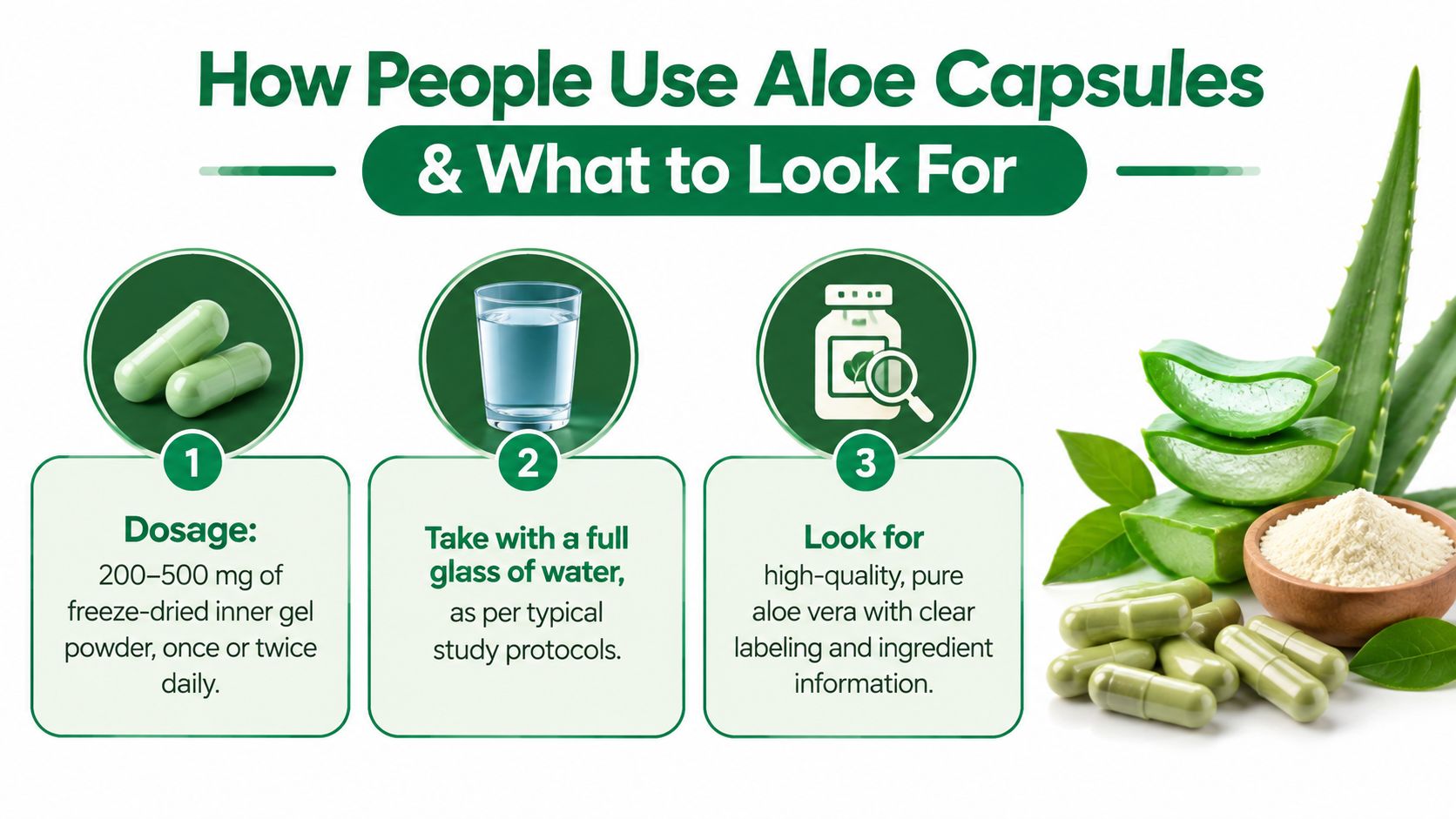
Published study preparations and quality product labels use different forms, so dosing shouldn't be copied mechanically from a syrup study to a capsule. Common capsule labels may suggest 200 to 500 mg of freeze-dried inner-gel powder once or twice daily, while fresh-gel equivalents may be described as approximately 1 to 2 ounces per day. Those ranges come from the usage framework supplied for this topic, but they aren't a universal recommendation for every product.
The capsule's weight is only one part of the label. A smaller amount of standardized inner gel may provide a clearer ingredient profile than a larger amount of poorly specified whole-leaf powder. Look for the polysaccharide or acemannan amount, the serving size, and the manufacturer's explanation of how the powder was produced.
A manufacturer with a documented farm-to-finished-product supply chain can answer questions about harvest, processing, testing, and batch consistency more directly. That doesn't replace independent verification, but it makes the ingredient's path easier to evaluate.
Aloe shoppers often inherit strong assumptions from product labels and wellness conversations. Three deserve a closer look.
The yellow latex under the rind is sometimes treated as the “strong” part of aloe because it contains anthraquinones. Those compounds are also where major safety concerns arise. NCCIH reports that aloe latex can cause abdominal pain, cramps, and diarrhea, while oral leaf extracts have been linked to acute hepatitis in case reports. The practical takeaway is simple: latex isn't a quality shortcut.
The National Toxicology Program reported clear carcinogenic activity in rats after two-year exposure to non-decolorized whole-leaf aloe extract. That finding doesn't show that a purified inner-gel capsule has the same profile, but it supports choosing products that control the latex fraction and avoiding unsupervised long-term use of whole-leaf preparations. The NCCIH safety guidance explains these concerns.
A larger milligram number doesn't automatically mean more useful aloe. Total powder can include carriers, less concentrated plant material, or whole-leaf components, while a smaller capsule may provide a clearly standardized inner-gel ingredient.
Compare the identity and specification before comparing capsule weight. Ask whether the label states acemannan or total polysaccharides, names the leaf fraction, and provides meaningful testing.
Short-term oral use of aloe gel for up to 42 days is described as safe by NCCIH, but that doesn't create a blanket endorsement for daily, indefinite use of every aloe preparation. Latex and whole-leaf extracts require more caution, and pregnancy or breastfeeding use should be avoided without medical oversight. People using digoxin also need professional guidance because aloe may create safety concerns in combination with that drug.
Better question: “What was removed, what was preserved, and how was it verified?”
Use this checklist while viewing a product page or standing in a store. The aim isn't to find the loudest claim. It's to find the clearest ingredient.
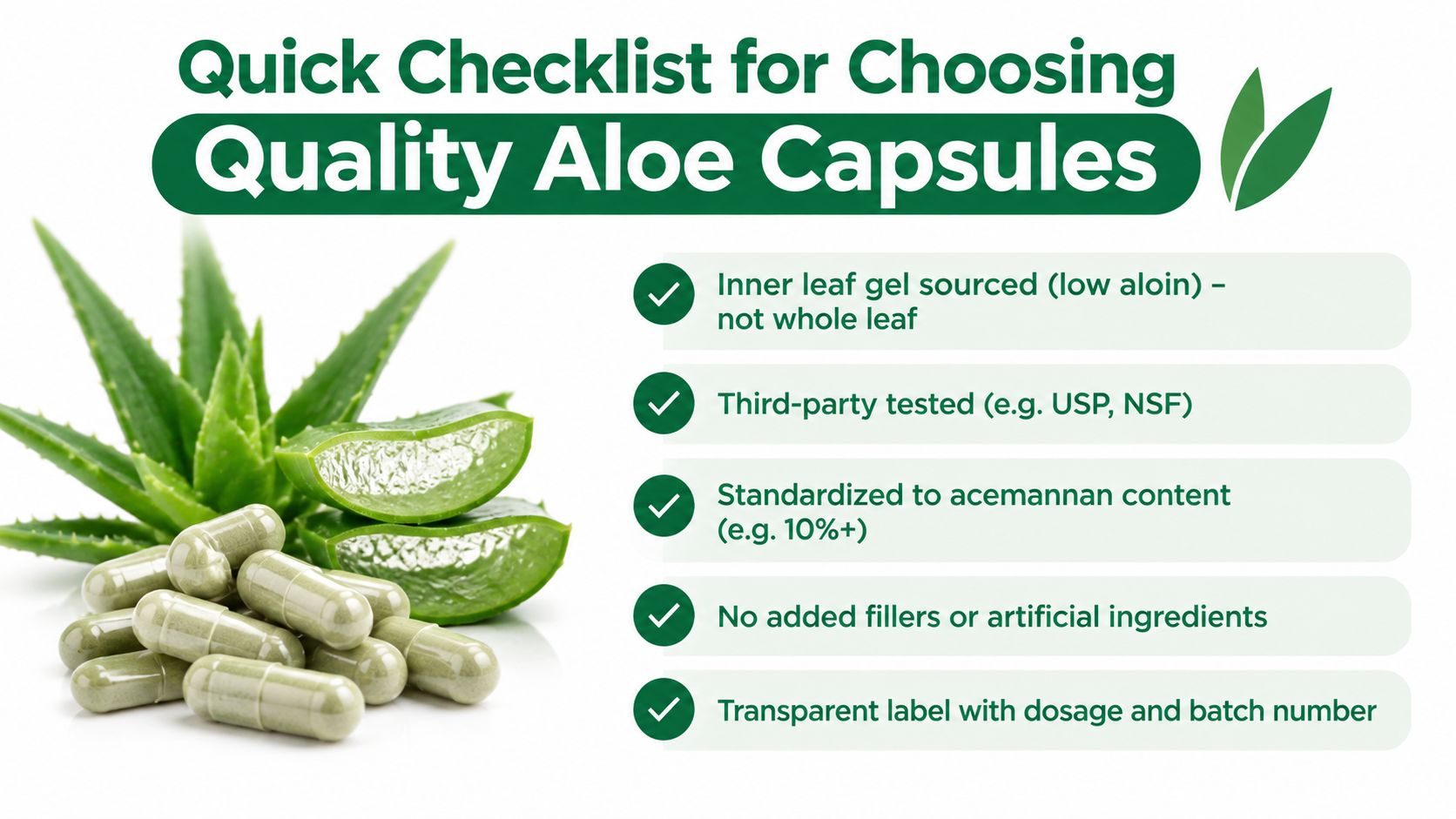
The FDA requires dietary supplements to use a distinct, boxed Supplement Facts panel, and structure/function claims must be truthful, not misleading, and supported by substantiation. The FDA supplement label guide explains the panel requirements, while the FDA structure/function claim guidance outlines how companies can describe normal body functions without making disease claims. For broader label notification requirements, see the FDA guidance on structure/function notifications.
For a practical guide to evaluating panels, serving sizes, and ingredient disclosures, use this guide to reading supplement labels.
These statements have not been evaluated by the Food and Drug Administration. This product is not intended to diagnose, treat, cure, or prevent any disease.
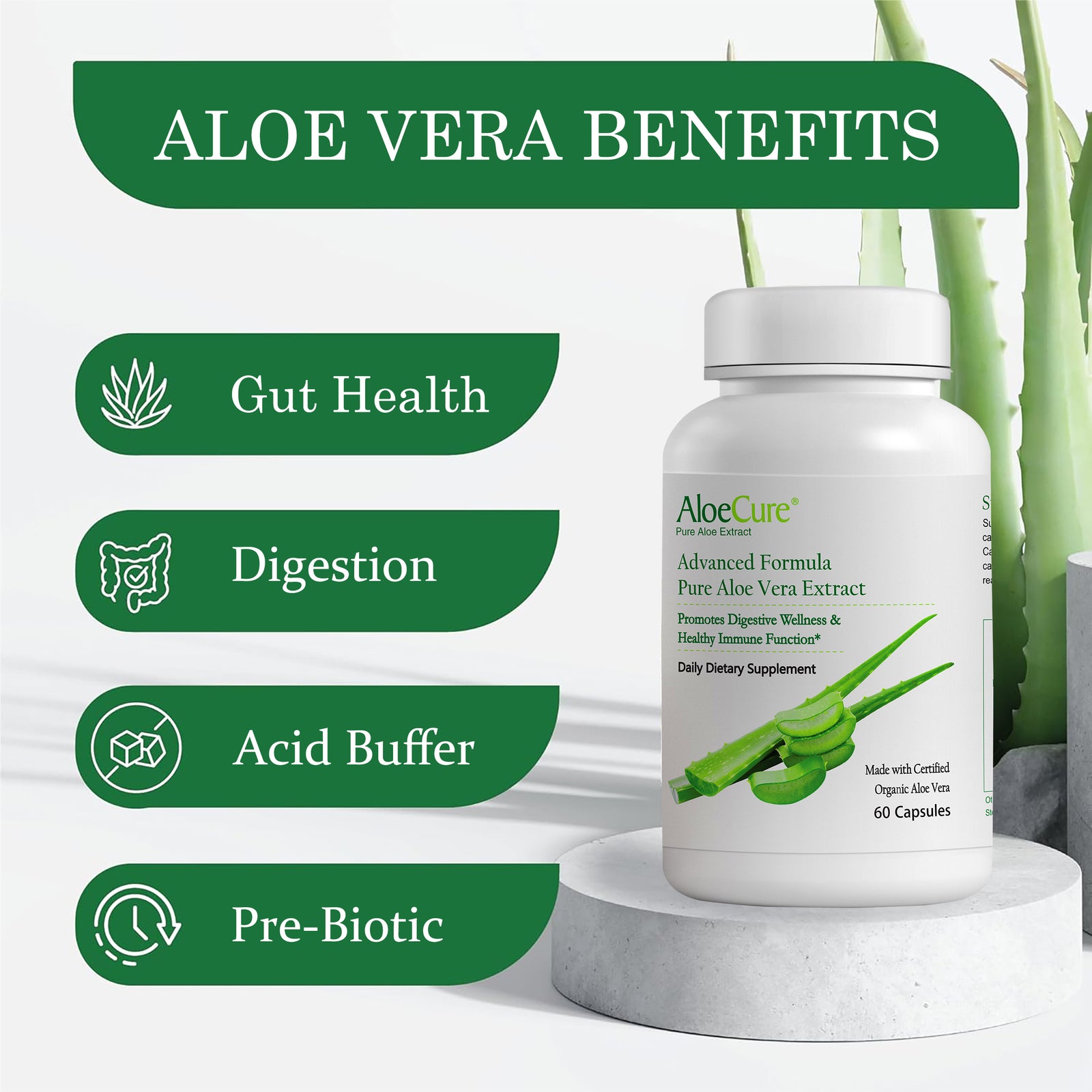
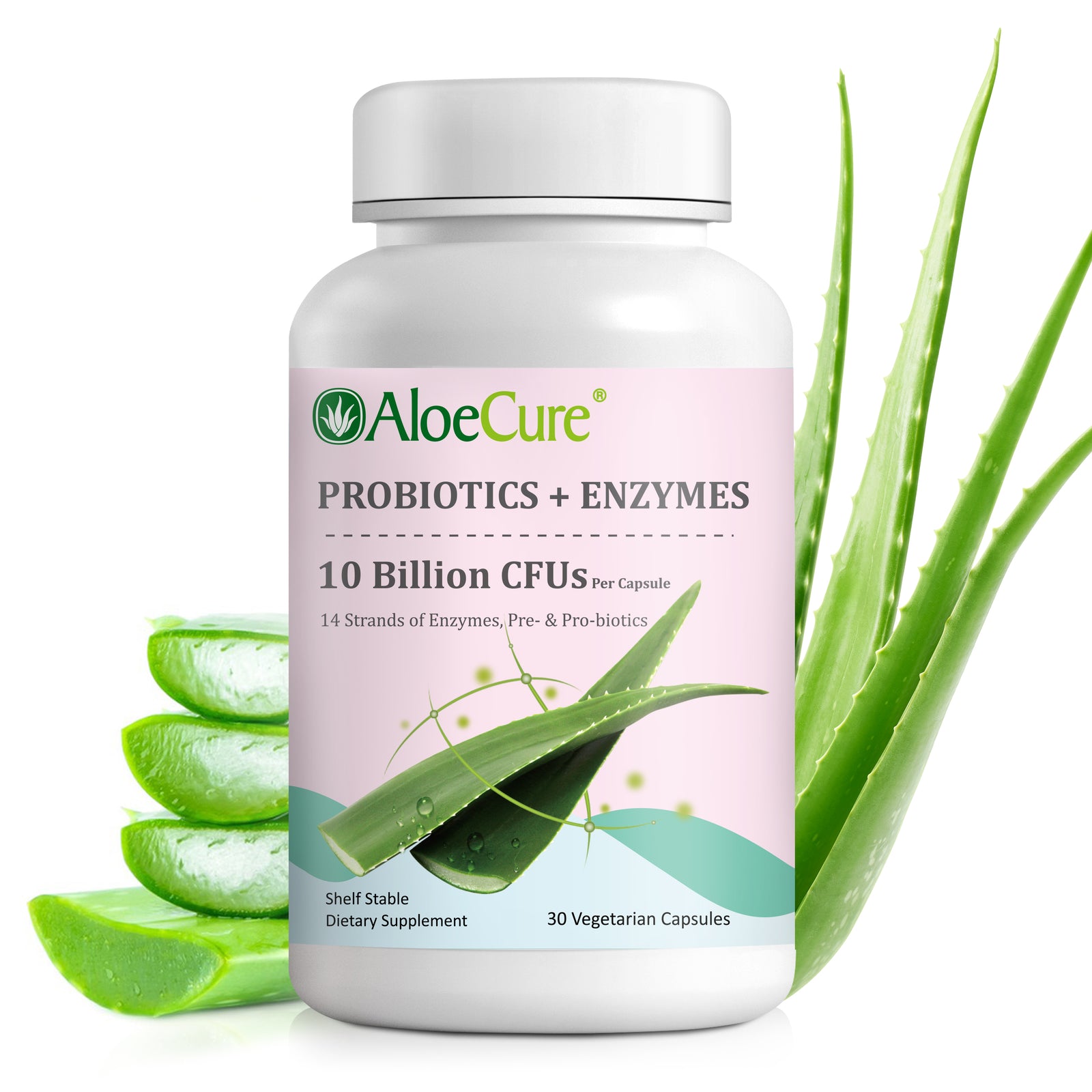
AloeCure offers aloe capsules made within a vertically integrated supply chain, from company-operated aloe farms through processing and finished-product production, with third-party certifications and testing supporting ingredient traceability. Visit AloeCure to review the Advanced Formula Aloe Capsules and explore Subscribe & Save for 20% off recurring orders.
Los comentarios se aprobarán antes de mostrarse.