Tu carrito está vacío
Envío y manipulación gratuitos con todos los pedidos superiores a $25
Envío y manipulación gratuitos con todos los pedidos superiores a $25

You've applied a rich cream to tight, dry-feeling skin, only to notice that it sits on the surface and leaves your hands greasy. A few hours later, the same areas feel thirsty again. This familiar cycle often happens when a routine focuses on a single type of moisturizing action instead of supporting both the skin's water balance and its protective lipid layer.
Shea butter and aloe vera offer a complementary approach. Aloe vera brings a water-based, humectant-focused component, while shea butter supplies a lipid-rich emollient layer. Used in a well-designed formula, the pairing can help maintain comfortable, supple skin without forcing you to choose between a lightweight gel and a rich balm.
Maya's winter routine had become predictable. She cleansed her hands, applied a light aloe gel, and felt an immediate cooling, hydrated sensation. By the afternoon, however, her skin felt tight again, so she added a thick butter. That product softened the surface, but it felt heavy when she applied enough to keep the sensation from returning.
The problem wasn't necessarily that either product was unsuitable. Aloe vera and shea butter were performing different jobs, and using them separately made it harder to create a balanced routine. Aloe contributed water and humectant support, while shea butter helped soften the outer layer and reduce the feeling of moisture loss.
Aloe vera is naturally associated with a fresh, water-rich texture. It works well in gels, toners, lotions, and lightweight creams because it can help skin feel replenished without a dense finish. Shea butter has a more substantial texture and contributes fatty components that make rough-feeling skin feel smoother and more flexible.
That distinction matters. A water-based product can feel refreshing but may not provide enough lasting softness on its own. A butter can create a comfortable protective layer, yet it doesn't add the same water-based experience as an aloe gel or lotion. Combining the two creates a more complete moisturizing strategy.
Practical rule: Start with the ingredient that adds water-based hydration, then follow with the ingredient that helps keep the skin feeling soft.
Botanical pairings also give formulators more control over texture. A gel lotion can combine aloe and a modest amount of shea butter for a lighter daily product, while a hand cream or body balm can use a richer lipid phase for areas that need more cushioning. The finished texture depends on the ratio, emulsifier, supporting oils, and the product's intended use.
For readers comparing plant-based formulas, a helpful reference is this guide to cocoa butter cream for the face, which illustrates how botanical butters can contribute to a richer skin-care texture. The key lesson is broader than any single butter: a thoughtful formula matches the ingredient roles to the skin experience you want.
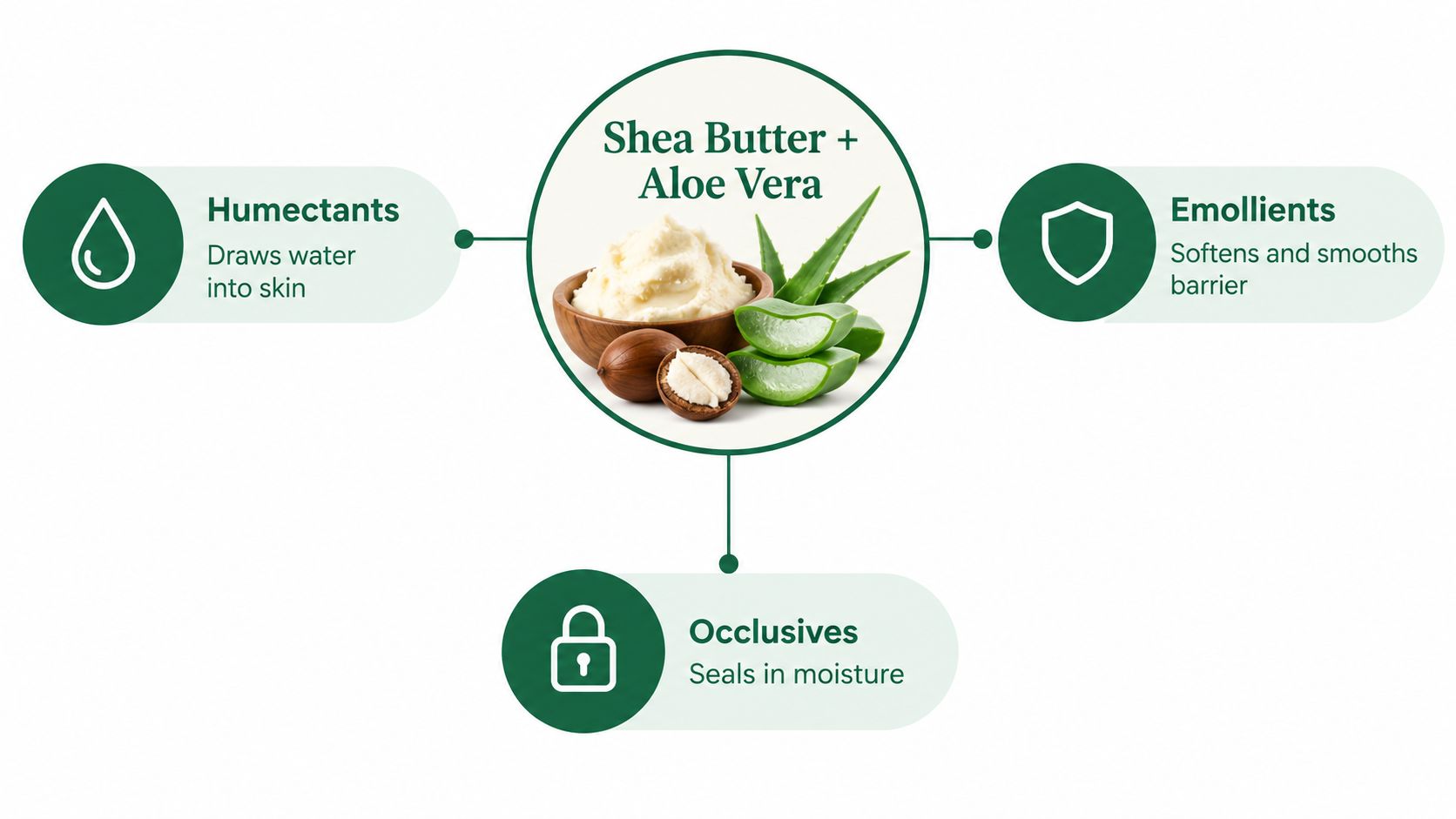
The phrase “moisturized skin” describes several actions rather than one. A product may add water, soften the outer surface, reduce the sensation of dryness, or help limit water loss. Humectants and emollients are central to understanding why aloe vera and shea butter work well together.
Humectants are water-attracting ingredients. In a skin-care formula, they help create a hydrated feel by holding water within the product and at the skin's surface. Aloe vera is commonly used in water-based products for this reason. Its gel-like character suits lotions and gels designed to deliver a fresh, fluid application.
A humectant alone isn't always enough for a rich, lasting feel. If a routine adds water but doesn't also soften the outer surface, the skin may still feel rough or tight. An emollient becomes useful here.
Shea butter is an emollient. It contains a dense blend of plant lipids that can fill some of the microscopic spaces between surface cells, leaving the skin feeling smoother and more flexible. In a well-balanced product, shea butter also contributes body and cushion, which explains why it appears in hand creams, body butters, and facial moisturizers.
Aloe vera and shea butter don't perform identical functions. Aloe is more closely associated with water-based hydration, while shea butter is more closely associated with softness and lipid support. The combination can therefore offer a broader moisturizing profile than a single-ingredient product.
An academic study of an aloe vera and shea butter gel lotion measured hydration gains of 23.25% at 1 minute, 34.96% at 3 minutes, and 34.69% at 5 minutes after application, with the formulation tested on 27 participants. The same report found that 96.3% of participants experienced no irritation, according to the published market report summarizing the study (study details on aloe vera and shea butter gel lotion).
These results don't mean every aloe and shea product will perform identically. Formula design, ingredient quality, concentration, application amount, and testing conditions all influence the result. They do show why the pairing deserves more thoughtful attention than a simple “which ingredient is better?” comparison.
For gardeners interested in the source plant itself, a practical guide on how to propagate aloe vera at home can make the botanical side of the ingredient more familiar. Home propagation is different from manufacturing, but it helps explain why aloe leaves contain a water-rich inner gel that requires careful handling in a finished product.
A professionally designed lotion also needs an emulsion system that keeps water and oils evenly distributed. Preservatives protect water-based products from unwanted microbial growth, while pH control helps maintain product quality and skin compatibility. This is why a stable, tested formula generally offers more dependable use than merely mixing raw ingredients without understanding preservation or shelf stability. For more on the broader topic, see this guide to natural skin hydration.
The simplest way to use aloe vera and shea butter is to apply them in sequence. You don't need to layer several products or create a complicated ritual. The aim is to place the water-based step first, then use the richer step to support a soft, comfortable finish.
A pre-emulsified lotion or cream is usually the easiest option. In that format, aloe vera and shea butter are blended with supporting ingredients so the product spreads evenly and feels consistent from the first application to the last. A lotion may suit hands, arms, and daytime use, while a richer cream can work well on areas that regularly feel dry.
A separate gel and butter can also work:
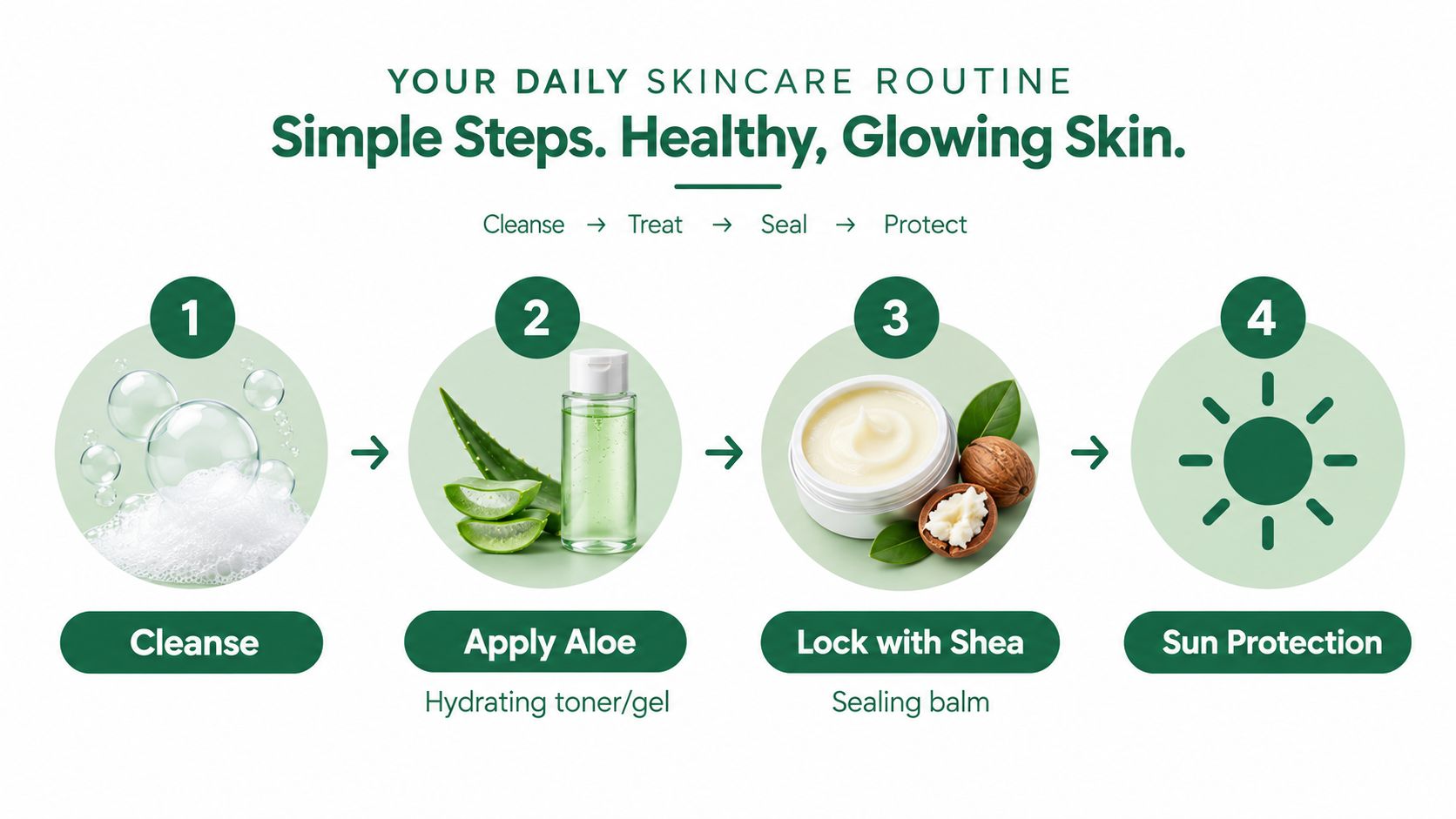
Layering gives you the most control. You can use more aloe when you want a lighter feel and more shea butter when you want additional softness. Mixing raw aloe gel and shea butter in your hand may seem convenient, but the ingredients won't automatically form a stable emulsion. The mixture can separate, change texture, or lack the preservation needed for safe storage.
That distinction is important for DIY routines. Use homemade combinations immediately rather than storing an untested water-and-oil mixture. Water-based aloe products need a suitable preservation system, and raw shea butter should be kept clean and protected from excess heat and moisture.
Seasonal changes may also affect the best ratio. In warmer or humid weather, a thin aloe layer followed by a small amount of shea may feel sufficient. In colder conditions, a cream with a more substantial shea phase may provide a more comfortable finish. The right amount is the smallest layer that leaves the skin flexible and comfortable rather than coated.
For ingredient ideas and simple routine inspiration, explore these aloe vera skin-care recipes. Always check the finished product's directions, especially when it contains additional botanical extracts, fragrance, or active ingredients.
“Natural” doesn't mean universally suitable, and “botanical” doesn't automatically mean unsuitable. Both assumptions oversimplify the way skin responds to a finished formula. A person may tolerate pure shea butter but react to a fragranced cream containing shea, or enjoy an aloe gel while finding a particular preservative system uncomfortable.
The complete ingredient list matters more than the marketing category. Fragrance, essential oils, preservatives, pH, texture, and the condition of the skin can all influence how a product feels. Aloe vera and shea butter should be evaluated as ingredients within a formula, not judged in isolation.
A large 2026 patch-test study of 356 fragrance-allergic patients found no clinically meaningful cross-reactivity greater than 10% between fragrance allergens and common botanicals such as aloe vera, coconut oil, and shea butter (patch-test study). This finding doesn't guarantee that every person will tolerate every product. It does challenge the idea that aloe vera or shea butter is automatically unsuitable for anyone who prefers fragrance-aware skin care.
The finished formula still deserves scrutiny. Look for a clear ingredient list, sensible packaging, a product designed for its intended area, and directions that explain how to use it. A fragrance-free product can be a practical choice for people who want to reduce unnecessary variables, but fragrance-free doesn't mean risk-free for every individual.
When comparing products, ask practical questions:
Those who are researching gentle exfoliating options may also find this discussion of mandelic acid for sensitive skin useful for understanding why ingredient choice and product design matter together. It should complement, not replace, careful evaluation of an aloe and shea formula.
Before using a new product broadly, apply a small amount to a limited area and observe how the skin responds over time. Stop using it if the product causes an unwanted reaction, and seek professional guidance for persistent concerns. A botanical routine should feel supportive, predictable, and easy to modify.
Aloe vera's identity on a label tells only part of the story. Growing conditions, harvest timing, transport, processing, filtration, concentration, packaging, and testing can all influence the character of the final ingredient. Two products may list aloe vera yet offer different textures, aromas, and experiences because their manufacturing paths differ.
Vertical integration gives a company more visibility across that path. A producer that farms its aloe, processes the leaves, and manufactures finished products can monitor more stages than a brand that purchases anonymous bulk material. That traceability doesn't prove that every vertically integrated product is superior, but it creates a clearer basis for quality control.
A thoughtful sourcing review should include:
The manufacturer behind the ALODERMA line describes a vertically integrated model in which it farms aloe, hand-harvests USDA- and EU-certified organic crops, processes aloe on-site within 12 hours of harvest, and makes its own products. It also describes processing without chemicals, enzymes, concentrates, or charcoal filtration. These are specific manufacturing details, so shoppers can compare them with the information provided by other brands rather than relying only on words such as “pure” or “natural.”
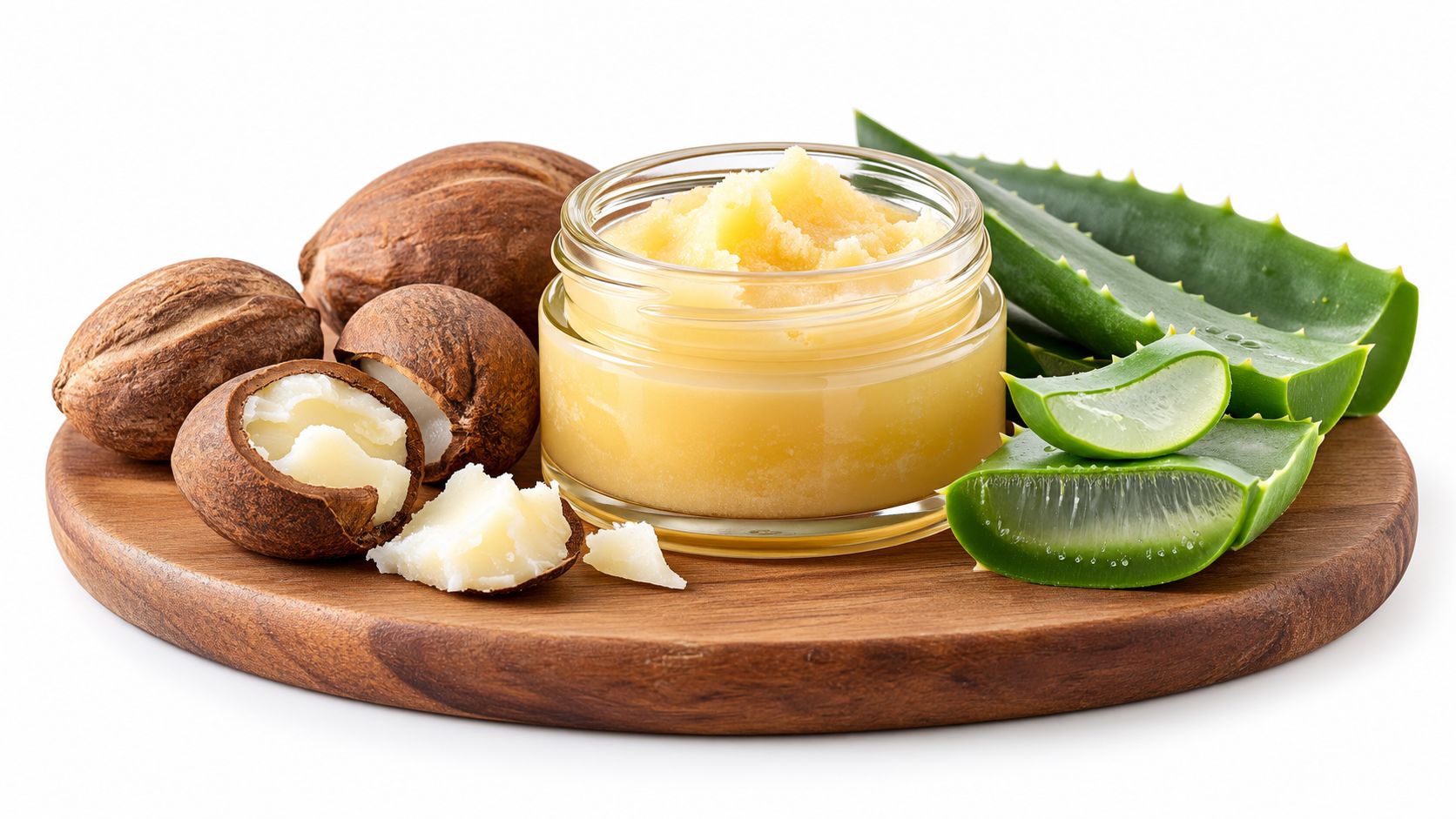
Shea butter also deserves sourcing attention. The butter's color, aroma, firmness, and spread can vary according to refining and handling. A product that combines it with aloe needs a stable emulsion and packaging that protects the formula during ordinary use.
The most effective routine is usually the one you can repeat. Aloe vera and shea butter offer complementary support, but their value depends on consistent use, an appropriate texture, and a formula that fits your daily habits. A lightweight aloe lotion may be easier to use after washing your hands, while a richer shea-based cream may make more sense at night or on areas that feel persistently dry.
Choose products according to the experience you want. Look for water-based aloe support when you prefer a fresh, quick-spreading application. Choose a shea-rich formula when you want more cushion and surface softness. A combined lotion or cream can simplify the process by delivering both roles in one product.
Subscription delivery can also support consistency when a product fits your routine. AloeCure offers aloe-based wellness products and ALODERMA skin care, including formulas that pair organic aloe vera with shea butter. Its Subscribe and Save option provides 20% off with flexible delivery, so customers can schedule replenishment instead of waiting until a product runs out.
For dietary supplements, structure/function language must stay within the boundaries set by the FDA. A supplement may describe support for normal body function or general wellness, but it can't claim to diagnose, mitigate, treat, cure, or prevent a disease. Manufacturers must substantiate such claims, notify the FDA within 30 days after first marketing, and include the required disclaimer, as explained in FDA guidance on structure/function claims.
The same boundary applies when describing the role of a dietary ingredient's documented mechanism. Wellness language should remain accurate, measured, and focused on maintaining normal function, as outlined in the FDA small entity compliance guide. For supplement labeling, a structure/function statement can't imply a specific disease-related purpose (FDA labeling notifications).
These statements have not been evaluated by the Food and Drug Administration. This product is not intended to diagnose, treat, cure, or prevent any disease.
If you want to build a simple aloe and shea routine around traceable, plant-based formulas, visit AloeCure to explore its aloe wellness products and ALODERMA skin care options. Choose the texture that fits your day, and consider Subscribe and Save for 20% off with flexible delivery.
Los comentarios se aprobarán antes de mostrarse.