Tu carrito está vacío
Envío y manipulación gratuitos con todos los pedidos superiores a $25
Envío y manipulación gratuitos con todos los pedidos superiores a $25

Finding digestive harmony really starts on your plate. By making thoughtful food choices, you can work with your body’s natural processes and feel your best from the inside out.
For most of us, this means leaning into foods that are low-acid, high-fiber, and lean, while simply being mindful of others.
The foundation of comfortable digestion truly begins with what you eat. Understanding this connection is the first real step toward lasting wellness.
Instead of seeing it as a long list of restrictions, think of this as a guide. It's about making mindful choices that help you build a sustainable, enjoyable eating plan that works for you.
The goal is to favor foods that are naturally low in acid and fat. These are just gentler on your system and less likely to throw your digestive balance out of whack. Simple swaps can make a huge difference—like choosing grilled chicken over fried, or reaching for a banana instead of an orange after a meal.
Building a diet that promotes digestive wellness is probably easier than you think. Plenty of delicious, versatile foods are naturally supportive. By working more of these into your meals, you can create a solid foundation for comfort.
Some excellent choices to start with include:
Oatmeal: A fantastic high-fiber option that also helps digestion.
Low-Acid Fruits: Think bananas and melons, like cantaloupe and honeydew. They're great choices that are less likely to cause digestive upset.
Green Vegetables: Options like broccoli, asparagus, and leafy greens are naturally low in fat and sugar, which helps keep acid production balanced.
Lean Proteins: Stick with grilled, baked, or broiled chicken, turkey, and fish. They're much easier for your body to process than fattier cuts of meat.
For a deeper dive into even more supportive food options, check out our guide on 5 foods that help maintain digestive balance.
While some foods are generally supportive, others are known to be a bit more challenging for the digestive system. This doesn't mean you have to cut them out completely! It just means being aware so you can make informed decisions, especially when your system feels a little sensitive.
Common foods that many people find helpful to moderate include:
Spicy dishes
Tomatoes and tomato-based sauces
Citrus fruits like oranges and lemons
Chocolate and mint
Garlic and onions
Fatty or fried foods
A simple food journal can be a game-changer here. By jotting down what you eat and how you feel afterward, you can start to see your own personal patterns and make adjustments that are right for you.
To make things easier, here's a quick comparison of foods that tend to help versus those you might want to limit.
Use this table to easily compare foods that promote digestive harmony with those you might want to enjoy in moderation.
| Food Category | Foods to Emphasize | Foods to Moderate |
|---|---|---|
| Fruits | Bananas, melons (cantaloupe, honeydew), apples, pears | Citrus fruits (oranges, lemons, grapefruit), pineapple |
| Vegetables | Leafy greens, broccoli, asparagus, cucumbers, celery, potatoes | Tomatoes, onions, garlic, peppers |
| Proteins | Lean chicken (baked/grilled), fish (baked/broiled), turkey, egg whites | Fatty meats (bacon, sausage), fried chicken, marbled steak |
| Grains | Oatmeal, whole-grain bread, brown rice, quinoa | Refined carbs, pastries, sugary cereals |
| Dairy | Low-fat yogurt, skim milk, small amounts of low-fat cheese | Full-fat milk, high-fat cheese, sour cream |
| Beverages | Water, herbal tea (chamomile, ginger), plant-based milks | Coffee, alcohol, carbonated drinks, citrus juices |
| Fats & Sweets | Avocado, olive oil, nuts (in small amounts) | Fried foods, chocolate, mint, high-fat desserts |
Remember, this is a general guide. Your own tolerance for certain foods is unique, so listening to your body is always the best approach.
Key Takeaway: A balanced diet isn't about perfection; it's about consistency. By consistently choosing more foods that support digestive harmony and moderating those that don't, you create a powerful framework for long-term comfort and well-being.
By making these mindful shifts, you're actively taking part in your own wellness journey. Every meal becomes an opportunity to support your body.
It’s not just about what you eat. How you eat plays a huge part in your digestive health, too. When you start practicing mindful eating, you can turn mealtimes into a much more comfortable and supportive experience. The whole idea is to work with your body’s natural rhythm, not against it.
This just means paying a bit more attention to your body's signals and the simple mechanics of eating. It’s all about slowing down, actually tasting your food, and giving your digestive system the time it needs to do its job right. A few small tweaks to your routine can make a world of difference.
Ever eaten a huge meal and felt uncomfortably stuffed afterward? That’s your digestive system telling you it’s under a lot of pressure. Big meals literally stretch the stomach, which can push everything upwards and challenge the valve that’s supposed to keep stomach acid down.
Instead of the usual three large meals, try switching to four or five smaller ones spread throughout the day. This keeps your energy levels stable and, more importantly, prevents your stomach from getting too full. It's a simple change that really helps foster digestive comfort. Consistency over volume is the key.
Digestion doesn't start in the stomach—it starts the moment you take a bite. Chewing your food well is one of the most effective things you can do for your digestion, but it's something we all tend to rush.
When you chew properly, you’re breaking down food into smaller, easier-to-digest pieces, which takes a huge load off your stomach. It also gets your saliva flowing, which contains enzymes that kick-start the whole process. The goal is to chew each bite until it’s almost liquid before you swallow.
A Practical Tip: Try putting your fork down between bites. This little pause forces you to slow down, giving you more time to chew and actually notice when you're starting to feel full.
What you do after you eat is just as important as the meal itself. If you lie down with a full stomach, gravity is no longer on your side, making it much easier for stomach acid to travel in the wrong direction and cause that familiar nighttime discomfort.
A simple but powerful habit is to finish your last meal at least two to three hours before you go to bed. This window gives your body plenty of time to get digestion underway while you’re still upright. It can make a huge difference in how well you sleep and how you feel the next morning.
This infographic breaks down a simple, three-part approach to making food choices that support digestive harmony.
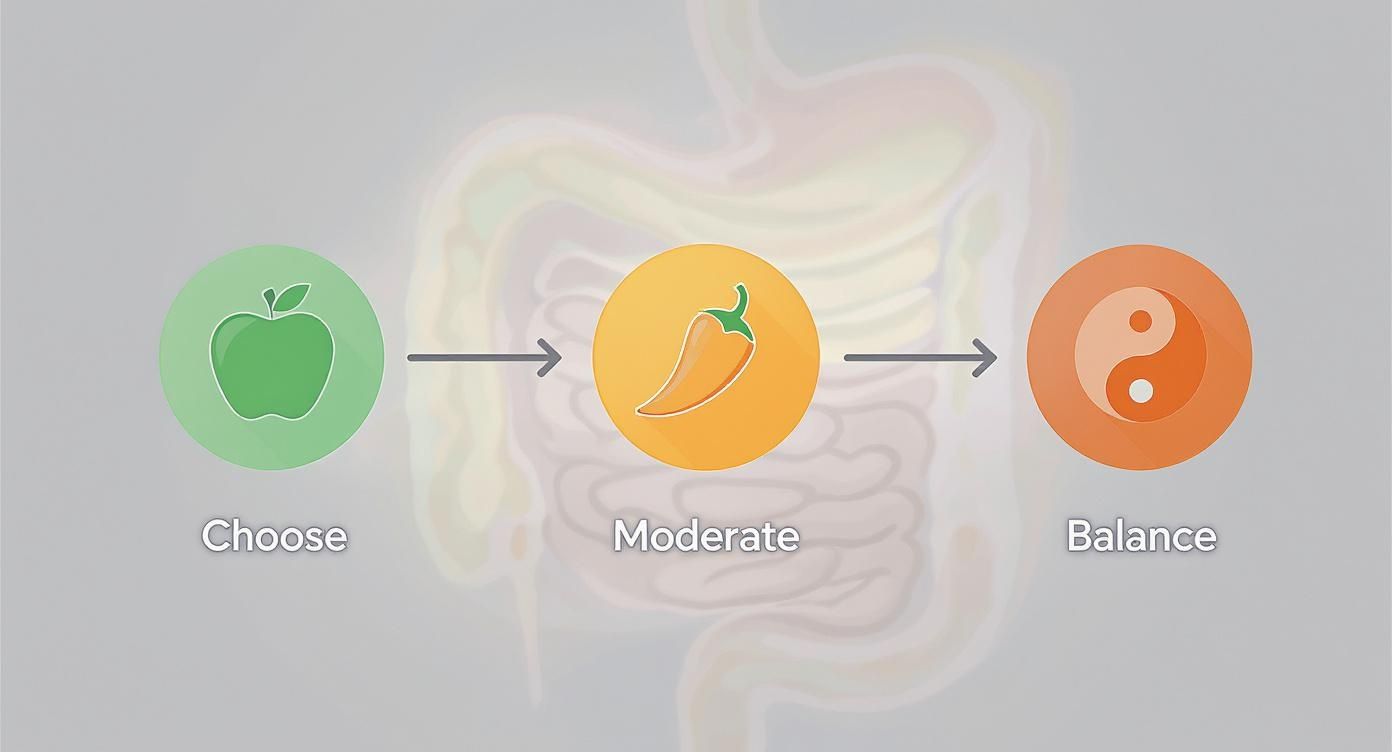
It’s a great visual reminder that wellness is all about choosing helpful foods, being mindful of potential triggers, and ultimately finding a balance that works for you.

While what you eat and how you eat are crucial, the small adjustments you make in your daily routine can be just as powerful. These simple lifestyle tweaks work hand-in-hand with your food choices, creating an environment where your digestive system can finally relax and function as it should.
Think of these tips not as chores, but as proactive steps toward supporting your body’s natural balance. They’re straightforward, easy to implement, and can collectively make a huge difference in how you feel every single day.
Managing your weight is one of the most effective things you can do for your entire body, and your digestive system is no exception. Excess weight, especially around your midsection, puts direct physical pressure on the stomach.
By working toward a weight that's healthy for you through balanced meals and regular activity, you’re taking a lot of that pressure off. This isn't about crash diets, but about sustainable, long-term wellness that helps restore digestive harmony.
Gravity can be your best friend when it comes to digestive comfort. How you hold your body, particularly right after a meal, plays a surprisingly direct role in keeping stomach contents where they belong. Slouching or lying down too soon can practically invite trouble.
A simple but game-changing habit is to stay upright for at least an hour after eating. Whether you're at your desk, washing dishes, or taking a gentle walk, good posture helps your digestive system do its job without fighting gravity.
A good night's rest is foundational to health, and that absolutely includes your gut. For anyone who deals with discomfort at night, a tiny adjustment to your sleeping position can be a lifesaver.
Slightly elevating the head of your bed by 6 to 8 inches can make a remarkable difference. You can do this with bed risers or a specialized wedge pillow. This gentle incline uses gravity to keep things settled while you sleep, leading to more restful nights and more comfortable mornings.
Expert Tip: Don't just pile up regular pillows. This often bends your body at the waist, which can actually increase pressure on your stomach. A gradual, consistent incline from the waist up is what you’re aiming for.
Believe it or not, your outfit can affect your digestion. Tight-fitting clothes—think high-waisted pants, snug belts, or shapewear—squeeze your abdomen. This external pressure can easily interfere with the natural digestive process.
Opting for looser clothing, especially around your waist, is an easy switch that can bring a lot of comfort, particularly after meals. It allows your digestive system to function without being constricted, supporting its natural rhythm. Embracing these small but meaningful adjustments is a key part of learning how to support digestive comfort naturally and finding lasting ease.
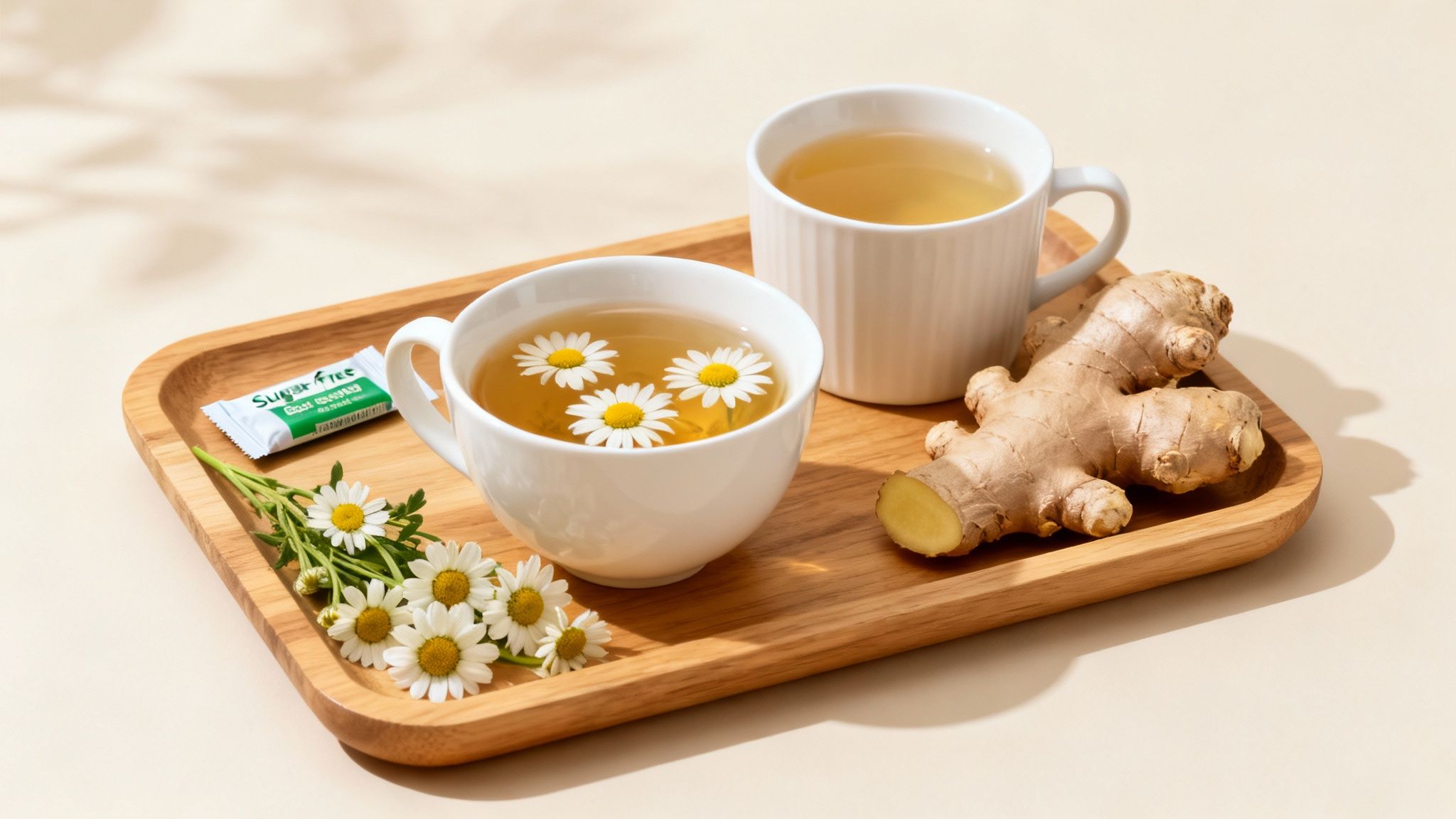
Beyond diet and lifestyle tweaks, certain plants and simple habits can offer another layer of support for your digestive system. These natural approaches have been trusted for centuries and are now being recognized for their gentle but effective properties.
Think of these as complementary tools in your digestive wellness kit. They’re accessible, easy to adopt, and can be a soothing part of your daily routine.
This might sound a little odd, but chewing a piece of sugar-free gum after a meal can be surprisingly helpful. Chewing stimulates your salivary glands, and saliva is your body's own natural acid buffer.
An increased flow of saliva helps gently wash down and neutralize acids in the esophagus, making for a more comfortable post-meal experience. It’s a dead-simple habit that encourages your body's own balancing act.
There’s nothing quite like a warm cup of herbal tea. It's a wonderfully soothing ritual that also happens to be great for your digestive system.
Many herbs are known for their calming properties, making them an excellent choice after eating or before winding down for the night. Ginger tea, in particular, is fantastic for its digestive benefits. Other great options include:
Chamomile
Licorice
Green tea
Fennel
One thing to note: while mint is often associated with digestion, it can sometimes relax the lower esophageal sphincter, which may not be ideal. For a rewarding project, try cultivating your own fresh mint to have on hand for other uses.
Key Insight: The simple act of sipping a warm, non-caffeinated beverage is calming in itself. It forces you to slow down and be mindful, which contributes to a state of digestive ease.
When talking about botanicals for digestive health, Aloe Vera is in a class of its own. It's been used for ages for its soothing properties and can be a valuable part of a routine focused on digestive comfort. Aloe helps support the body's natural processes and helps maintain the integrity of the digestive tract lining.
But here’s the thing: not all Aloe Vera products are created equal. The quality, purity, and processing method are critical. For anyone interested in natural alternatives for digestive balance, understanding where your Aloe Vera comes from is key.
This is where our approach makes all the difference. We are fully vertically integrated—we control every single step. We farm our own USDA-certified organic aloe, process it within 12 hours of harvest, and produce our own final products. This farm-to-bottle promise ensures you get a pure, potent product without the harsh chemicals or charcoal filtration so many competitors use.
By choosing high-quality botanicals and weaving these simple habits into your life, you can effectively learn how to support digestive comfort naturally and build a solid foundation for lasting digestive wellness.
When you're looking for natural ways to support your digestive system, it's easy to assume all supplements are more or less the same. But that's just not the case, especially with something like Aloe Vera. The final quality—what’s in the bottle—depends entirely on how it was grown, harvested, and handled along the way.
There's a real, tangible difference between a generic, mass-market aloe and a premium one. A lot of companies just buy their aloe from third-party suppliers. That means they have very little say in the farming, timing of the harvest, or how it's processed. The result is often a less pure and less potent product.
We knew that to create the best possible product, we had to be in control of every single step. That’s why we are fully vertically integrated. It’s a fancy term that just means we don't just put a label on a bottle; we grow it, harvest it, process it, and bottle it all ourselves.
This complete oversight is how we guarantee uncompromising quality:
We Own Our Farms: We grow our own USDA-certified organic aloe plants. This ensures they're raised in rich soil without any harmful pesticides or chemicals.
Harvested for Potency: Our aloe leaves are harvested by hand right at their peak. Then, they’re processed within 12 hours to lock in the maximum amount of active nutrients.
Pure and Gentle Processing: We use a proprietary, all-natural process that skips the harsh chemicals, charcoal filtering, or added enzymes many competitors rely on. This keeps the delicate, beneficial compounds intact.
This careful farm-to-bottle system is our promise that every bottle of our Aloe Vera is as pure and powerful as nature made it. Frankly, it’s a standard of quality that’s tough to match if you’re outsourcing your production.
Bringing a high-quality Aloe Vera into your daily routine can be a fantastic way to support digestive wellness. The natural compounds in aloe help maintain the integrity of the digestive tract and support the body's own balancing act.
For anyone wondering how to support digestive comfort naturally, finding a pure, trusted botanical can be a game-changer in a holistic wellness plan.
Our unique Aloe Vera offers a gentle, effective way to promote ongoing digestive harmony. It’s a simple addition that works with a balanced diet and mindful lifestyle choices, helping you feel your best from the inside out.
Research has pointed to several plant-based options, including Aloe Vera, that have properties to support digestive health. In fact, studies comparing Aloe Vera to conventional options for digestive discomfort found it was comparably effective, but without notable side effects. You can discover more about how natural botanicals can support gastric wellness.
Choosing the right Aloe Vera is key to getting the results you want. For more help, check out our detailed article on finding the best Aloe Vera juice for your needs.
Ready to feel the difference real quality makes? We invite you to explore our products and experience our farm-to-bottle promise for yourself. Sign up for our subscription service today to get 20% off and start your journey toward supported digestive balance.
These statements have not been evaluated by the Food and Drug Administration. This product is not intended to diagnose, treat, cure, or prevent any disease.
When you start making changes to support your digestion, it’s only natural to have a few questions pop up. You might wonder how long it will take to feel better, how stress plays a role, or even about the specifics of a product like Aloe Vera. Let's clear up some of the most common questions.
Everyone’s body is different, so there’s no single answer here. Some people start to feel a positive change within just a few days of cleaning up their diet. For others, it might take a couple of weeks to really notice the benefits stacking up.
The key is consistency. Sticking with supportive foods, eating mindfully, and adopting healthier habits creates the right environment for your body to find its balance. It can be really helpful to keep a simple food journal to track how you feel and pinpoint what's working best for you.
Absolutely. There's a very real, scientifically-backed connection between your brain and your gut. When you're going through a stressful period, it’s incredibly common for digestive issues to flare up. That's your body's stress response directly affecting your digestive processes.
Folding some simple stress-management techniques into your day can make a world of difference for your digestive health. You don't need anything complicated:
Deep Breathing: Just a few minutes of slow, deep breaths can calm your entire nervous system.
Mindful Movement: A quick walk or some gentle stretching helps release physical tension.
Quiet Time: Even five minutes of listening to calming music can help reset your mind.
Think of managing stress as just another piece of the puzzle, working right alongside your diet to keep your system happy.
These natural approaches are fantastic for managing everyday digestive wellness and comfort. However, if you’re dealing with discomfort that's severe, persistent, or just not getting better with these changes, it’s important to check in with a healthcare professional.
If your symptoms are regularly disrupting your daily life, waking you up at night, or if you're experiencing other issues like trouble swallowing or unexplained weight loss, it's time to get a professional evaluation. A doctor can give you personalized guidance to make sure you're getting the right care. For a deeper dive into overall gut wellness, we also explore tips on how to improve digestive health naturally.
This is a great question, and the answer is a definite no. You should never, ever drink an Aloe Vera gel that's meant for your skin. They are formulated completely differently.
Our drinkable Aloe Vera is made specifically for internal use. We use only the valuable inner leaf fillet of the plant. We handle every single step ourselves, from growing the organic aloe to bottling the final product, which ensures it’s pure, safe, and ready to support your digestive health.
Our Promise: Because we are vertically integrated—farming, processing, and bottling our own aloe—we guarantee a level of purity and quality that is difficult to find elsewhere. Always choose supplements designed for ingestion and follow the label's directions.
At AloeCure, we are committed to providing premium, farm-to-bottle wellness solutions. Our USDA-certified organic Aloe Vera juice is crafted to support your digestive comfort and overall health.
Experience the AloeCure difference and save 20% with our Subscribe & Save option.
These statements have not been evaluated by the Food and Drug Administration. This product is not intended to diagnose, treat, cure, or prevent any disease.
Los comentarios se aprobarán antes de mostrarse.