Tu carrito está vacío
Envío y manipulación gratuitos con todos los pedidos superiores a $25
Envío y manipulación gratuitos con todos los pedidos superiores a $25

You've probably seen both labels on the same shelf and assumed they mean roughly the same thing. They don't.
That gap matters. If you're comparing colloidal silver vs ionic silver, the core question isn't just what the label says. It's what is present in the bottle, how that form behaves, and whether the product is being marketed with enough transparency for you to make a careful wellness decision.
A lot of confusion starts with language. “Silver” sounds like one ingredient. In practice, it can show up in very different forms. One form involves tiny suspended particles. Another involves dissolved silver ions. Those differences affect stability, reactivity, and how the product should be evaluated.
To make things easier, here's a quick side-by-side view before we dig deeper.
| Characteristic | True Colloidal Silver | Ionic Silver |
|---|---|---|
| Basic form | Tiny silver particles suspended in liquid | Silver ions dissolved in liquid |
| Think of it like | Very fine dust floating in water | Salt dissolved in water |
| Physical state | Particles remain dispersed | No particles are suspended |
| Reactivity | Generally less immediately reactive than free ions | Highly reactive because the silver is present as ions |
| Visual clues | May show a slight tint and light scattering | Often appears fully clear |
| Main consumer challenge | Hard to confirm without testing | Often sold under “colloidal” language despite being ionic |
| Why it matters | Form affects stability and product identity | Form affects reactivity and safety considerations |
Are colloidal and ionic silver the same thing in different words? That's the assumption many shoppers make. It's also where most of the confusion begins.
When people scan a supplement label, they usually focus on the ingredient name and maybe the concentration. But with silver products, the form is just as important as the ingredient itself. A bottle can say “colloidal silver” and still leave out the key detail a careful buyer needs, whether it contains suspended silver particles or mostly dissolved silver ions.
That's why product evaluation has to go beyond front-label wording. A useful starting point is learning how quality brands document composition, which is why it helps to understand what third-party testing actually verifies before trusting a product category that's often marketed with broad claims.
Practical rule: If two products use the same silver wording but disclose different testing standards, they're not equally transparent.
The most helpful way to approach this topic is to separate three questions:
People also get tripped up by appearance. A clear liquid can seem “cleaner” or more refined. A slightly tinted liquid can seem stronger or more natural. Those impressions don't tell you enough on their own.
The smarter approach is simple. Learn the chemistry in plain language, then judge the brand by evidence, not packaging.
True colloidal silver is a liquid that contains extremely small, solid silver particles suspended in water. The key word is suspended. The silver isn't fully dissolved.
A simple analogy helps. Think about very fine mineral dust floating in a glass of water. If the particles are tiny enough and evenly distributed, they can stay dispersed rather than dropping quickly to the bottom. That's the basic idea behind a colloid.

This is the defining feature. In a true colloid, silver exists as tiny metallic particles rather than primarily as free silver ions in solution.
That distinction sounds technical, but it affects how the product behaves. Suspended particles and dissolved ions interact with their environment differently. They aren't interchangeable, even if the front label uses the same broad silver terminology.
A true colloid depends on very small particle size and stable dispersion. If the particles are poorly controlled, they can clump together or settle more easily. When manufacturers talk about quality, this is one of the areas that should receive close attention.
A stable colloid also has a recognizable physical logic. The particles are small enough to stay distributed through the liquid instead of acting like visible sediment. That doesn't mean you can judge quality by eye alone, but it does mean a true colloid has different physical behavior than an ionic solution.
A colloid is defined more by particle behavior than by marketing language.
Some true colloidal silver products may show a subtle tint rather than looking completely water-clear. They may also scatter light in a way associated with suspended particles. That light-scattering behavior is one reason researchers can distinguish a genuine nanoparticle colloid from a product that only contains dissolved silver species.
For shoppers, the takeaway is straightforward:
If you don't know whether a product contains actual nanoparticles, you don't yet know whether it's colloidal.
Ionic silver is different from a true colloid. Instead of tiny metallic particles floating in liquid, ionic silver contains silver in dissolved ionic form. A useful comparison is salt water. Once salt dissolves, you no longer see particles suspended in the liquid. The material is present, but in a different state.

That difference matters because ions are chemically more reactive. They don't behave like stable metallic particles. They're ready to interact with other compounds more quickly, which changes both product behavior and safety considerations.
Many people hear “colloidal silver” and assume it's a general name for any silver liquid. That's not scientifically precise.
A peer-reviewed comparative study found that 10 of 14 commercial products, about 70%, contained only ionic silver rather than dispersed silver nanoparticles, and eight of those mislabeled products were still promoted as “colloidal silver”. The same paper noted that when the plasmon band characteristic of silver nanoparticles is absent, that's strong evidence the product is ionic rather than colloidal silver, as reported in the 2020 comparative analysis of commercial colloidal silver products.
That's a major point of confusion for buyers. A label can use familiar wording while describing a product that isn't a true colloid at all.
When silver is present as ions, it's more likely to bind or transform quickly when it encounters other substances. In plain terms, ionic silver is less like tiny floating metal particles and more like a chemically active dissolved ingredient.
This short explainer helps visualize the distinction:
Consumer challenge isn't only learning the science. It's recognizing that the label may not tell the full truth.
If a brand doesn't provide analytical detail, you may have no reliable way to know whether you're buying:
That's why “colloidal silver vs ionic silver” isn't a minor wording debate. It's a product identity issue.
The easiest way to understand colloidal silver vs ionic silver is to compare how each form behaves in practice. One is particle-based. The other is ion-based. That single difference shapes nearly everything else.
| Characteristic | True Colloidal Silver | Ionic Silver |
|---|---|---|
| Composition | Tiny metallic silver particles suspended in liquid | Dissolved silver ions in liquid |
| Physical form | A colloid | A solution |
| Stability concept | Depends on maintaining a stable particle dispersion | Depends on dissolved ionic chemistry |
| Reactivity | Particle-based silver behaves differently from free ions | Free ions are more immediately reactive |
| Appearance | May show light scattering or a slight tint | Often looks clear |
| Verification need | Requires particle characterization | Requires speciation and ion analysis |
| Label risk | Can be used loosely in marketing | Can be sold under “colloidal” wording even when it's ionic |
With true colloidal silver, the silver exists as tiny particles. With ionic silver, the silver exists as dissolved ions. That sounds simple, but it's the central dividing line.
If you've ever spent time understanding spirulina chlorella, you've seen a similar consumer challenge. Two products may sit in the same wellness category, yet their composition and behavior can be very different. Silver products demand the same kind of careful reading.
A colloidal product is built around particle suspension. An ionic product is built around dissolved silver chemistry. So when people ask which one is “stronger,” they're often asking the wrong question.
A better set of questions looks like this:
These are bioavailability-style questions too. If you want a broader wellness framework for why form matters, this guide on how bioavailability shapes supplement value is a useful parallel.
Buyer mindset: Don't compare silver products only by ingredient name. Compare them by form, documentation, and test transparency.
A trustworthy product description should help you answer practical questions, not force you to guess. For silver, that means looking for information on nanoparticle content, ion-to-particle ratio, and independent testing.
Marketing language tends to blur categories. Analytical data separates them.
That's the point many shoppers miss. The debate isn't really about which term sounds better. It's about whether the product's identity can be verified.
Silver products are often marketed in broad wellness language. You may see wording around supporting cleanliness, promoting balance, or helping maintain a healthy environment. That kind of language can sound reassuring, but it doesn't automatically tell you what evidence exists for oral use.
Public-health guidance takes a more cautious position. The Michigan State University overview of colloidal and ionic silver notes that public-health guidance warns against consuming either colloidal or ionic silver orally, citing lack of conclusive evidence for oral benefits along with the risk of argyria and systemic deposition. The same summary also notes research suggesting silver nanoparticles may show activity at nanomolar concentrations versus micromolar levels for silver ions, which points to a substantial potency difference but does not make either form a simple consumer wellness solution.
Many readers often get stuck on this point. They see a product framed as “natural,” “advanced,” or “high quality,” then assume those terms settle the science. They don't.
A product can have polished branding and still leave big unanswered questions:
That gap between branding and evidence is exactly why silver remains such a controversial category.
Some readers hear that one form may act at lower concentrations and assume that means it must be the better choice. That leap isn't justified.
Lower concentration activity in a research context doesn't automatically answer the consumer questions that matter most:
A more active form in a lab setting doesn't automatically become a better wellness product on a supplement shelf.
For wellness-minded readers, the safest interpretation is restraint. If the evidence is limited and public-health guidance is cautious, marketing claims should be weighed very carefully.
When people compare colloidal silver vs ionic silver, they often focus on effectiveness first. Safety should come first.
One of the best-known concerns is argyria, a permanent blue-gray discoloration linked to silver accumulation in the body. That risk is one reason silver products raise caution in public-health discussions, especially when used orally over time.

Ionic silver is more chemically reactive, and that matters once it enters a biological environment. A 2019 review reported that ingested ionic silver solutions can form silver compounds within about 7 seconds because silver ions combine with chloride ions in the human body, according to the summary discussing differences between colloidal silver and ionic silver solutions.
That helps explain why “more reactive” doesn't necessarily mean “better.” A fast-reacting substance may also change form quickly, bind to other compounds, or create a less predictable exposure profile.
The same source summarizes a 2025 experimental toxicology study that found dose-dependent cytotoxicity in human liver and intestinal cell models. It reported IC50 values as low as 0.69 µg/mL, and concluded that the ion-enriched fraction was the primary driver of toxicity.
For non-scientists, the practical takeaway is plain. In these tested commercial formulations, the ion-heavy portion appeared to drive much of the harmful effect in the cell models.
Safety is already complicated. Mislabeling makes it harder.
If a bottle is sold as colloidal silver but is predominantly ionic, the consumer may think they're evaluating one type of product while using a different one. That creates a serious information problem.
Consider what a careful buyer needs in order to judge risk:
Without those basics, a person can't make a fully informed choice. That's why the chemistry issue and the safety issue are tied together so closely.
If you can't verify what form of silver is in the bottle, you can't properly judge how cautious you need to be.
A careful reader doesn't need hype. You need a reliable filter.
Here's the filter. Colloidal silver and ionic silver are not the same thing. Labels don't always reflect the chemistry. Safety concerns are real, especially when products are marketed for oral use without clear evidence and transparent documentation.
A peer-reviewed analysis reported that 70% of evaluated “colloidal silver” products contained only ionic silver, which is why buyers should verify claims such as “colloidal silver” with analytical methods and prioritize documented nanoparticle content, ion-to-particle ratios, and independent testing, as noted in this peer-reviewed comparative analysis.
When evaluating any supplement category with technical claims, focus on proof rather than promise.
If you're building a long-term wellness routine, consistency and transparency matter more than novelty. This broader guide on how long supplements typically take to work is a useful reminder that responsible wellness usually looks steady and evidence-aware, not dramatic.
The smartest move is to favor supplement categories and brands that disclose testing, sourcing, and manufacturing with unusual clarity. Vertical integration can be a meaningful quality signal because it gives a company more control over raw materials, processing, and consistency.
That doesn't replace independent verification. It supports it.
These statements have not been evaluated by the Food and Drug Administration. This product is not intended to diagnose, treat, cure, or prevent any disease.
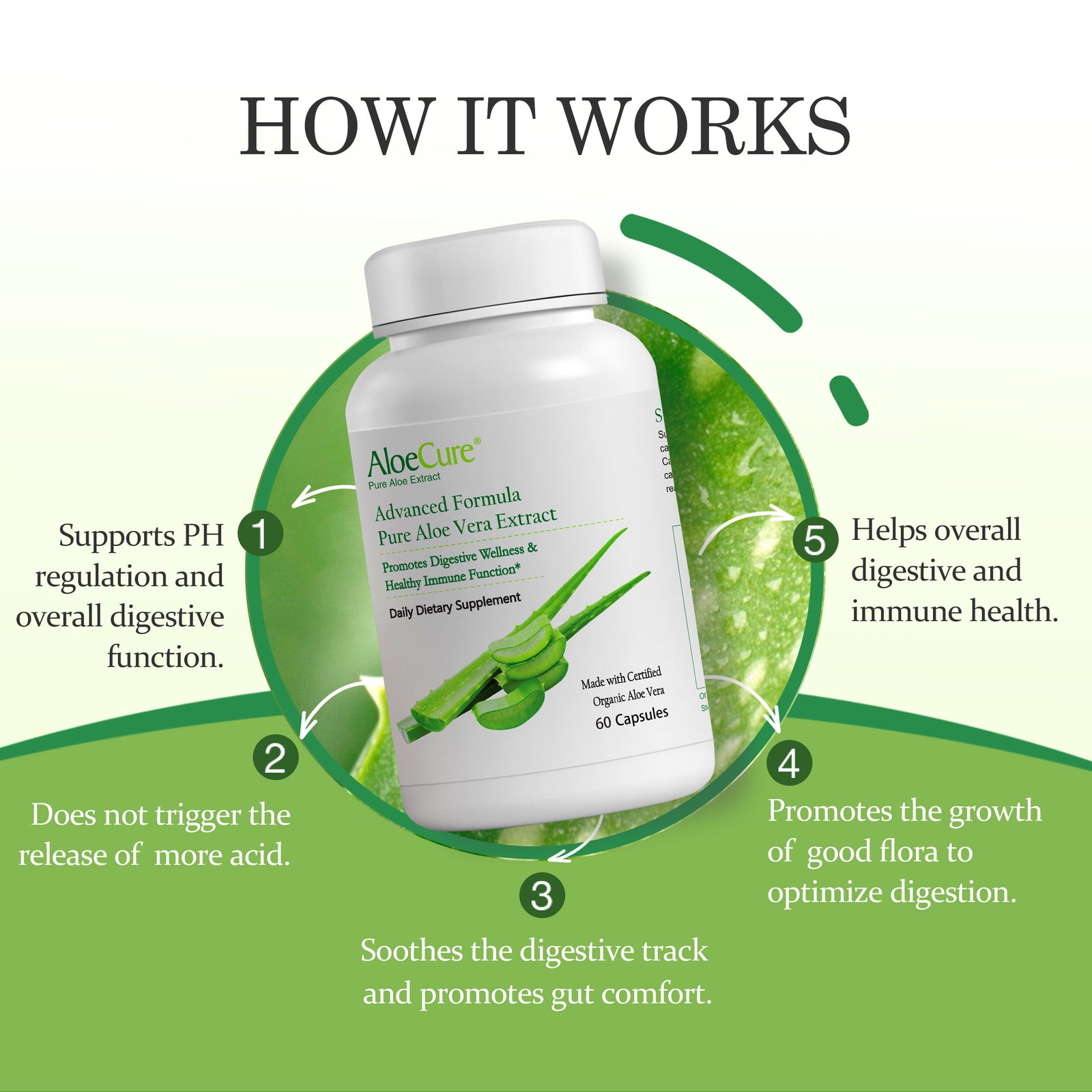
If you value clean sourcing, transparent manufacturing, and wellness products made with real process control, explore AloeCure. AloeCure produces its own aloe from farm to finished product, offers third-party tested formulas, and makes it easy to save with a 20% Subscribe & Save option for customers who want a consistent routine.
Los comentarios se aprobarán antes de mostrarse.