Your Cart is Empty


A good night's sleep is fundamental to overall wellness, influencing everything from daily energy levels to mental clarity and physical vitality. Yet, achieving consistent, high-quality rest can feel like a complex puzzle, especially when daily pressures and modern lifestyles disrupt our natural cycles. Many people are searching for natural ways to support better sleep, seeking gentle, effective, and non-habit-forming options that work in harmony with the body. This comprehensive guide is designed to provide you with practical, evidence-backed strategies to build a personalized evening routine that promotes calm and prepares your body for a restorative night.
We will explore ten distinct approaches, diving deep into actionable steps you can take starting tonight. Our focus is on providing a roundup of supportive botanicals, key nutrients, and foundational lifestyle adjustments. You will learn about specific supplements that support the body’s natural processes, calming herbal infusions, and the power of aromatherapy. We'll also cover crucial sleep hygiene optimizations that create an ideal environment for rest. While these natural approaches are a powerful tool for more restful nights, it's also important to explore comprehensive strategies a better sleep to understand the full spectrum of available support.
This list moves beyond generic advice to give you specific, actionable insights, from suggested dosages for supplements to the best methods for incorporating calming botanicals into your routine. Whether you're looking to refine an existing regimen or start from scratch, these ten natural ways for better sleep offer a roadmap to fostering deeper, more consistent rest and laying the groundwork for brighter, more energized days ahead.
Melatonin is a hormone your body produces naturally to manage its sleep-wake cycle, also known as your circadian rhythm. As evening approaches and light exposure decreases, melatonin levels rise, signaling to your body that it’s time to wind down for sleep. Supplementing with melatonin can support this natural process, helping to maintain a consistent sleep schedule, especially for those with occasional sleeplessness or who need to adjust their internal clocks.
Melatonin works by synchronizing your body’s internal clock. It doesn't force you to sleep but rather provides a gentle nudge, letting your body know that it is nighttime. This makes it a popular choice for those seeking to promote restful sleep without harsh effects. It’s particularly useful for travelers adjusting to new time zones or shift workers managing unconventional schedules.
For a multi-faceted approach to nighttime wellness, some formulations combine melatonin with other supportive ingredients. For example, AloeCure’s Melatonin + Collagen Sleep Support Capsules integrate melatonin for circadian support with premium collagen peptides. This dual-action formula supports your body’s natural sleep cycle while also providing the building blocks for skin and joint health, allowing your body to optimize its restorative processes overnight.
To effectively use melatonin, timing and dosage are key.
Start Low and Go Slow: Begin with a low dose, such as 0.5 mg to 3 mg, taken 30 to 60 minutes before your desired bedtime. This is often sufficient to support the body’s natural processes.
Be Consistent: Use it at the same time each night for a few weeks to help your body establish a predictable sleep-wake pattern.
Optimize Your Environment: For best results, dim the lights and avoid bright screens from phones or TVs for an hour or two before taking melatonin. This helps prevent artificial light from counteracting the hormone's signal.
Consider Combined Benefits: With a product like AloeCure’s Melatonin + Collagen, you get the sleep-cycle support of melatonin alongside the structural support of collagen. Learn more about the potential of combining melatonin and collagen for better sleep and health to see if this approach aligns with your wellness goals.
Magnesium is a vital mineral that participates in hundreds of processes within the body, playing a crucial role in supporting a healthy nervous system and the body’s natural stress response. This essential nutrient helps regulate neurotransmitters that promote calmness and relaxation. Supplementing with magnesium can be a key component of your evening routine, especially if your dietary intake is low, as it helps prepare the body for a restful night.
Magnesium supports sleep by helping to maintain healthy levels of GABA, a neurotransmitter that promotes a feeling of tranquility. It also assists in regulating the body's stress-response system, which can help quiet a racing mind before bed. By fostering a state of relaxation and easing occasional muscle tension, magnesium helps set the stage for a peaceful and uninterrupted night of rest, making it one of the most effective natural options for better sleep.
This mineral is particularly beneficial for those who experience nighttime muscle cramps or tightness, such as athletes looking to support their recovery. It’s also a popular choice for high-stress professionals who need assistance winding down. Since different forms of magnesium offer unique benefits, it is important to choose one that aligns with your wellness goals.
To use magnesium effectively for sleep support, consider the form, dosage, and timing.
Choose the Right Form: Magnesium glycinate is highly recommended for sleep support due to its high bioavailability and gentle effect on the digestive system.
Start with a Moderate Dose: Begin with 200–400 mg taken one to two hours before bedtime. You can start on the lower end of this range and gradually increase to find what works best for you.
Enhance Absorption: Avoid taking your magnesium supplement with high-fiber meals, which can interfere with its absorption. For optimal mineral balance, ensure your diet includes calcium-rich foods.
Be Patient and Consistent: Incorporate magnesium into your nightly routine consistently to allow your body to adapt and experience the full benefits for your sleep cycle.
L-theanine is an amino acid found almost exclusively in green tea leaves. It is highly regarded for its ability to promote a state of calm and relaxation without causing drowsiness. This unique characteristic makes it a valuable component in a nighttime routine, as it helps quiet the mind and prepare the body for restful sleep, especially for those who experience racing thoughts before bed.
L-theanine works by supporting several key processes in the brain that are conducive to sleep. It helps increase the production of calming neurotransmitters like GABA, serotonin, and dopamine, while also promoting alpha brain wave activity, which is associated with a state of "wakeful relaxation." This allows your mind to settle down from the day's stressors, making it easier to transition into sleep naturally. It supports a peaceful mental state without acting as a direct sedative.
For those seeking comprehensive nighttime support, L-theanine is often included in advanced sleep support formulas. Its ability to foster mental calmness complements other ingredients that support different aspects of the sleep cycle. Wellness-focused individuals and knowledge workers often use it to manage pre-sleep cognitive activity without the grogginess that can come from other options.
To use L-theanine effectively, consider the following best practices for your evening wind-down.
Mindful Dosing: A typical dose is 100–200 mg, taken 30 to 60 minutes before you plan to go to sleep. This amount is generally effective for promoting relaxation.
Create a Routine: Incorporate L-theanine into a consistent bedtime ritual. Combining it with activities like reading or gentle stretching can amplify its calming effects and signal to your body that it’s time to rest.
Consider Synergistic Pairings: L-theanine can be combined with other supportive nutrients like magnesium or melatonin. This approach provides multi-faceted support for both the nervous system and the body's natural sleep-wake cycle.
Incorporate Green Tea: Drinking high-quality green tea, such as matcha, a few hours before bed can be a natural way to consume L-theanine. Just be mindful of the caffeine content and choose decaffeinated options if you are sensitive.
Chamomile is a classic herbal infusion that has been cherished for centuries as a way to promote a sense of calm and relaxation before bedtime. This daisy-like flower contains a compound called apigenin, which interacts with certain receptors in the brain to help quiet the mind and prepare the body for rest. Incorporating chamomile tea into your nightly routine can be one of the simplest yet most effective natural approaches for better sleep.
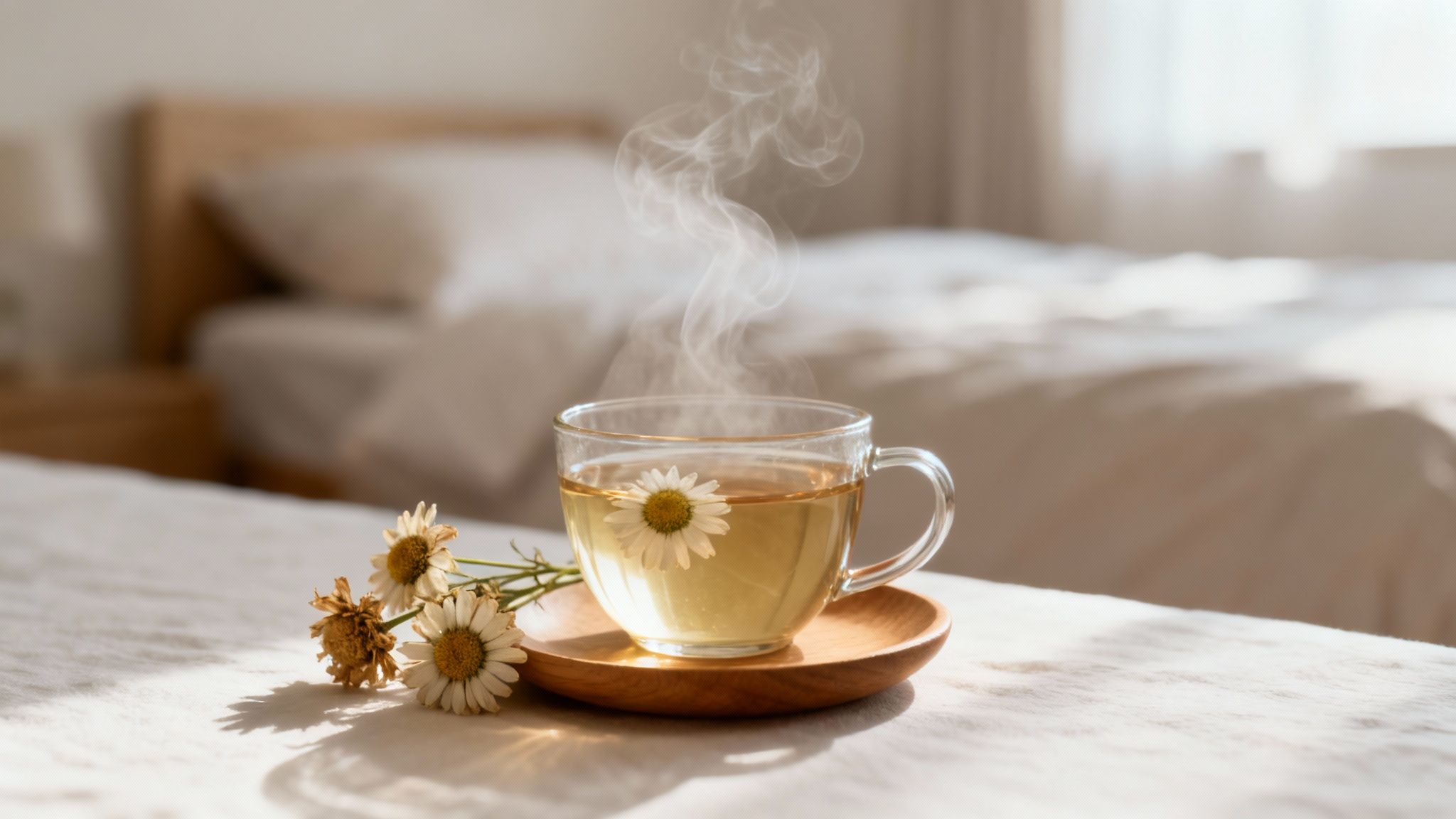
Chamomile works by gently encouraging a state of tranquility. Its mild effects make it a popular choice for individuals seeking to unwind after a long day without feeling groggy the next morning. It supports the body’s transition into a restful state, making it easier to fall asleep naturally. This is why it’s frequently used in wellness traditions, from European spas to care facilities, to help soothe occasional restlessness and support overall well-being.
For those who enjoy a warm, comforting beverage before bed, chamomile can be a cornerstone of a healthy sleep hygiene practice. Its soothing properties can also be paired with digestive support. For instance, combining a chamomile ritual with a supplement like AloeCure’s Aloe Vera Capsules can provide comprehensive nighttime wellness. This approach supports your body’s natural relaxation processes while also helping to maintain digestive function.
To get the most out of your chamomile experience, focus on quality and consistency.
Brew with Care: Steep high-quality, organic chamomile flowers or tea bags in hot, but not boiling, water (around 160–180°F) for 5 to 10 minutes. This helps extract the beneficial compounds without releasing a bitter taste.
Time It Right: Drink your tea about 30 to 60 minutes before your intended bedtime. This gives your body ample time to absorb the compounds and begin the winding-down process.
Create a Ritual: Make the act of preparing and drinking your tea a mindful part of your sleep routine. The consistent ritual itself can signal to your brain that it's time for rest.
Enhance for Enjoyment: Add a small amount of honey or a squeeze of lemon to enhance the flavor and add to the comforting experience. These additions can make your nightly cup something you truly look forward to.
Valerian root is a perennial herb that has been used in traditional wellness practices for centuries, particularly in European herbalism. It is highly regarded for its ability to promote a sense of calm and relaxation, making it a staple for those looking to unwind before bedtime. Its actions are thought to be linked to its interaction with gamma-aminobutyric acid (GABA), a neurotransmitter that helps quiet the central nervous system.
Valerian root helps prepare the body for restful sleep by supporting a calm and relaxed state. It is believed to work by increasing the availability of GABA in the brain, which in turn helps to reduce nervous system activity. This gentle calming effect can make it easier to fall asleep and achieve deeper, more restorative rest, especially for individuals whose sleep is affected by daily stress and tension.
The benefits of valerian root are often cumulative, meaning its effectiveness tends to improve with consistent use over several weeks. Users frequently report a noticeable improvement in sleep quality after taking it regularly. It is particularly popular among those seeking natural, non-habit-forming support for occasional sleeplessness and a more peaceful night.
To get the most out of valerian root, consider the following best practices for this natural way to get better sleep.
Mind Your Dosage: A typical dose ranges from 300–900 mg of a standardized root extract. It’s best to take it 30 to 60 minutes before you plan to go to sleep.
Start with a Lower Dose: Begin with a smaller dose to see how your body responds and gradually increase if needed. This helps you find the optimal amount for your personal needs.
Be Patient and Consistent: Valerian often works best when used consistently. Allow 2 to 4 weeks of regular use before evaluating its full effects on your sleep quality.
Consider Synergistic Blends: For enhanced support, some people combine valerian with other calming herbs like chamomile or passionflower to create a more comprehensive evening wellness routine.
Passionflower is a climbing vine known for its intricate flowers and its traditional use as a nervine, an herb that helps support a calm and relaxed nervous system. For individuals whose sleep is interrupted by a busy mind or everyday tension, passionflower offers a gentle way to encourage tranquility. It is often a key ingredient in herbal blends designed to quiet the mind, making it easier to unwind before bed.
Passionflower works by supporting the body’s natural relaxation responses. It is thought to assist the activity of gamma-aminobutyric acid (GABA), a neurotransmitter that helps promote a sense of calm in the brain. By helping to ease nervous tension and quiet racing thoughts, passionflower doesn’t force sleep but instead creates a more serene internal environment conducive to falling asleep naturally. This makes it a valued component in many nighttime herbal preparations.
Many find that passionflower is even more effective when combined with other calming herbs. For instance, a blend featuring passionflower, valerian root, and chamomile can offer comprehensive support. Passionflower helps quiet the mind, valerian encourages relaxation, and chamomile provides a soothing effect. This synergistic approach is why many popular nighttime teas and supplements use these herbs together to promote a peaceful night.
To incorporate passionflower into your evening routine, consider these actionable steps.
Choose Your Form: Passionflower is available as a tea, tincture, or standardized extract capsule. A common suggestion for extracts is a dose between 300–400 mg. For tea, steep one teaspoon of dried herb in hot water for 5–10 minutes.
Time It Right: Consume your passionflower tea or supplement about 30 to 60 minutes before your desired bedtime. This allows the botanical compounds time to support your body's relaxation process.
Create a Synergistic Blend: Look for formulas that combine passionflower with other well-regarded herbs like valerian and chamomile. This “herbal team” approach can provide more balanced and comprehensive support for restful sleep.
Pair with Calming Activities: Enhance the effects of passionflower by pairing it with a relaxing activity. Sip your tea while reading a book, doing gentle stretches, or listening to quiet music to fully prepare your mind and body for a restorative night.
Lavender is a fragrant herb long celebrated for its calming and soothing properties. Its gentle scent is widely used in aromatherapy to promote a sense of tranquility and relaxation, making it a popular component of bedtime rituals. Whether used as an essential oil or a dried herb, lavender helps create a serene environment conducive to winding down after a long day.
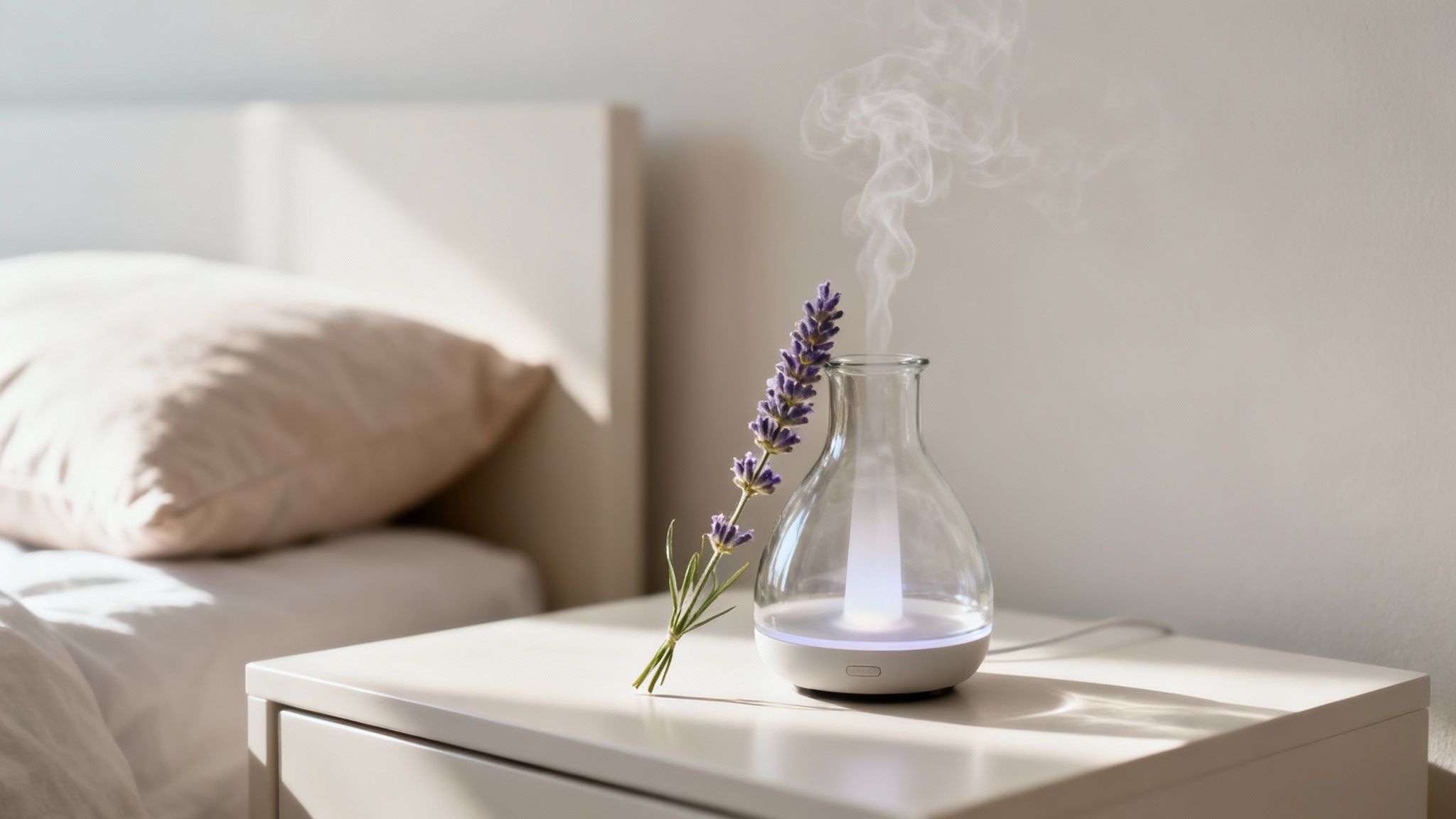
The scent of lavender interacts with the brain to help calm the nervous system, lower feelings of restlessness, and prepare the mind for sleep. This olfactory support is why lavender is a staple in wellness centers and spas to create peaceful atmospheres. When inhaled, its aromatic compounds are believed to encourage a state of relaxation, making it easier to transition into a restful night.
Some herbal sleep formulations incorporate lavender to enhance their calming effects. The herb can be consumed as a tea or included in capsules, often paired with other botanicals like chamomile or valerian root. This multi-faceted approach provides holistic support for your nighttime routine, helping your body recognize that it's time to rest and recharge.
Integrating lavender into your evening can be simple and enjoyable. Consistency is key to associating its scent with sleep.
Diffuse for Atmosphere: Use a high-quality, pure lavender essential oil in an ultrasonic or nebulizing diffuser. Start diffusing 20 to 30 minutes before you get into bed to fill your room with a calming aroma.
Brew a Calming Tea: Steep one to two teaspoons of dried, food-grade lavender flowers in hot water for 5-10 minutes. Enjoy this soothing beverage 30 to 60 minutes before bedtime to help you unwind.
Use Dried Sachets: Place small sachets filled with dried lavender flowers under your pillow or on your nightstand. The subtle, continuous scent can promote a peaceful environment throughout the night.
Apply Sparingly: Add just one or two drops of essential oil to the edge of your bedding or a cotton ball placed nearby, ensuring it does not come into direct contact with your skin.
Glycine is an amino acid that plays a vital role in numerous bodily functions, including supporting the central nervous system. As a neurotransmitter, it helps calm the brain and promotes a state of relaxation conducive to sleep. It is one of the more powerful yet gentle natural options for better sleep because it works with your body's own systems to prepare for rest without causing morning grogginess.
Glycine supports the body’s natural ability to fall asleep by helping to lower core body temperature, a key physiological signal that initiates sleep. A slight drop in body temperature is a natural part of the process of winding down for the night. Glycine facilitates this thermoregulation, making it easier to drift off and stay asleep. It also supports the production of GABA, a neurotransmitter that encourages relaxation, and activates the parasympathetic nervous system, which is your body's "rest and digest" mode.
This multi-action support makes glycine a preferred choice for athletes looking to enhance post-workout recovery overnight or for individuals who tend to feel warm at night and struggle with sleep onset. Additionally, since glycine is a primary component of collagen, supplementing with it can offer dual benefits, supporting both restful sleep and the maintenance of healthy joints and skin.
To use glycine effectively to support your nightly routine, consider the following:
Optimal Dosage: A common starting point is 3 grams of pure glycine powder, taken 30 to 60 minutes before bed. This can be increased to 5 grams if needed to achieve the desired effect.
Easy to Mix: Glycine has a naturally sweet taste, making it easy to mix into a glass of warm water, decaffeinated tea, or another evening beverage without altering the flavor negatively.
Combine for Synergy: For enhanced nervous system support, consider taking glycine alongside magnesium, as both work to promote a state of calm and relaxation in the body.
Start Gradually: While generally well-tolerated, it's best to start with a lower dose and assess your body's response before increasing. This helps minimize the potential for any gastrointestinal discomfort.
Nighttime digestive discomfort can be a significant barrier to achieving deep, restorative sleep. Pure, organic aloe vera juice supports a healthy digestive system, which in turn can promote a more peaceful night. By assisting the body in maintaining a balanced internal environment and supporting gut lining integrity, aloe vera helps address common digestive occurrences that can interrupt your rest. This makes it a foundational component of a holistic approach to better sleep.
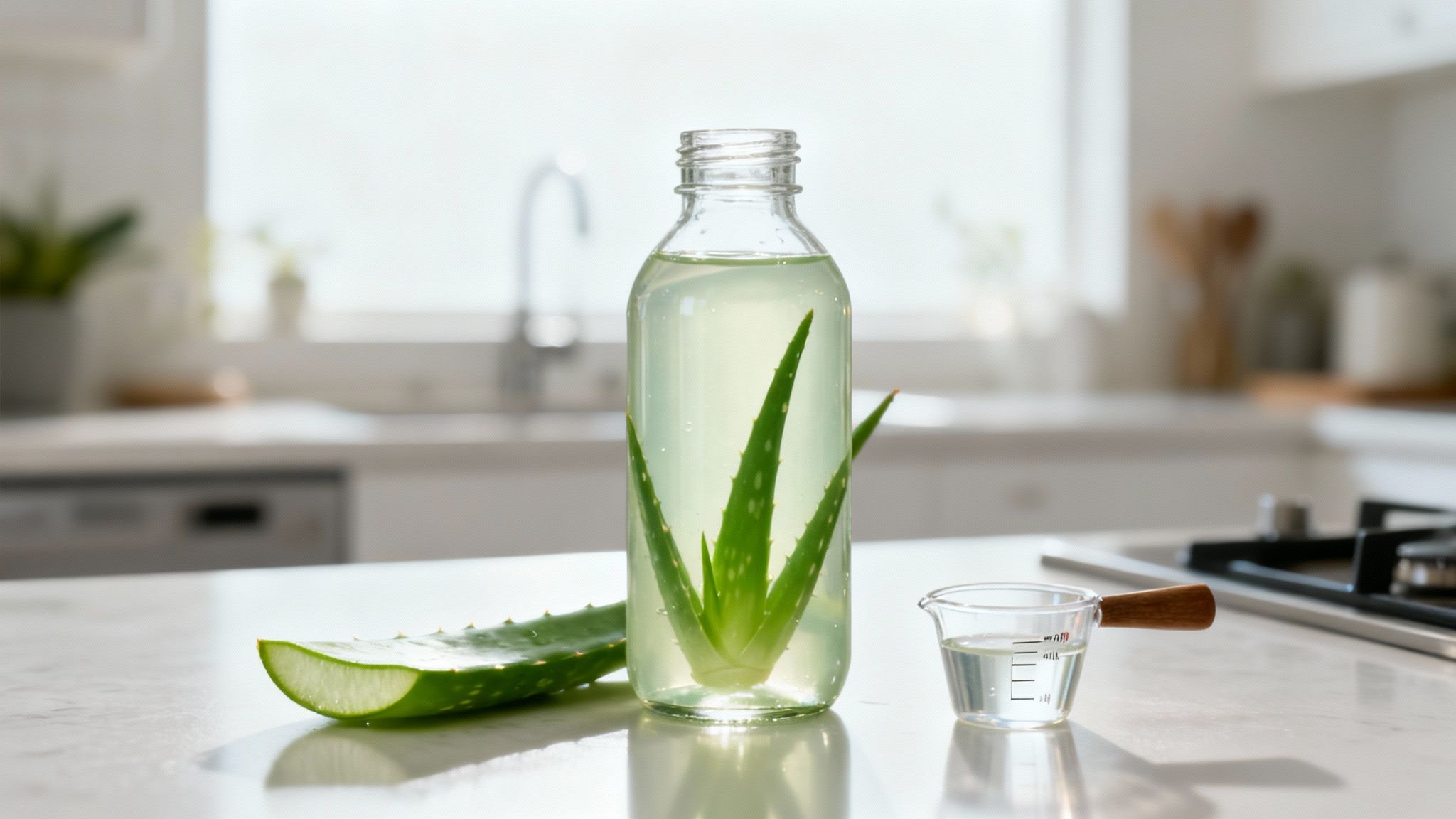
Organic aloe vera juice works by promoting overall digestive wellness. Its bioactive compounds, preserved through careful processing, help to maintain a healthy stomach lining and support normal digestive function. When your digestive system is calm and functioning optimally, you are less likely to experience nighttime disruptions from occasional stomach upset, allowing for more consistent and uninterrupted sleep.
AloeCure stands apart as we are fully vertically integrated, which means we farm our aloe, process it, and produce our own higher quality products. By controlling every step from field to bottle without harsh chemicals or heat, AloeCure preserves the vital nutrients that support your body’s digestive health. This commitment to purity ensures you receive a high-quality product designed to effectively support your wellness goals, including a comfortable night's sleep.
Incorporating aloe vera juice into your daily routine is simple and can be tailored to your needs.
Start with a Small Serving: Begin with 1 to 2 ounces of aloe vera juice daily to allow your system to acclimate. You can gradually increase to 2 to 4 ounces per day as your body adjusts.
Mix It Up: If the natural taste is strong, feel free to mix your serving with water, juice, or a smoothie to make it more palatable without diminishing its benefits.
Stay Consistent: For best results in supporting digestive wellness, use aloe vera juice consistently for at least 4 to 8 weeks. This allows your body to fully benefit from its gut-supportive properties.
Timing is Flexible: Consider taking one serving in the morning and another in the evening to maintain digestive balance throughout the day and night. This can be especially helpful for promoting nighttime comfort.
Enhance Your Routine: You can learn more about how aloe vera supports gut health to understand its foundational role in your overall wellness and sleep quality.
Sleep hygiene refers to the collection of habits and environmental factors that are critical for consistent, quality sleep. It’s a foundational concept among natural approaches for better sleep because it addresses the core conditions your body needs to rest effectively. Optimizing your sleep environment and daily routines sends powerful signals to your brain that it’s time to wind down, making it easier to fall asleep and stay asleep.
Effective sleep hygiene works by reinforcing your body's natural circadian rhythm. Consistent behaviors and a well-designed sleep space help regulate your internal clock, promoting alertness during the day and sleepiness at night. Factors like temperature, light, and noise directly impact sleep quality. For instance, a cool, dark, and quiet room supports the body's natural drop in temperature and rise in melatonin needed for deep, restorative sleep.
Establishing a pre-sleep routine, such as reading a book or drinking a warm, soothing beverage like aloe vera juice, can also create a powerful psychological cue for sleep. This ritual signals that the day is over, allowing your mind and body to transition smoothly into a state of rest.
Creating an ideal sleep environment and routine is a highly effective, non-supplemental strategy.
Keep It Cool, Dark, and Quiet: Set your thermostat between 60-67°F (15-19°C). A crucial element of sleep hygiene is controlling light. To truly transform your sleep with blackout curtains, explore how they enhance your rest by creating an ideal dark environment. Use a white noise machine or earplugs to block disruptive sounds.
Establish a Consistent Schedule: Go to bed and wake up around the same time every day, even on weekends. This consistency is one of the most powerful ways to stabilize your internal clock.
Create a "Wind-Down" Routine: Dedicate the last 30-60 minutes before bed to relaxing activities. Disconnect from bright screens, practice gentle stretching, or enjoy a calming cup of herbal tea.
Reserve Your Bed for Sleep: Avoid working, eating, or watching TV in bed. This helps your brain strengthen the association between your bed and rest. You can learn more about these and other techniques for how to improve sleep quality naturally.
| Item | Implementation Complexity 🔄 | Resource Requirements & Time 💡 | Expected Outcomes 📊⭐ | Ideal Use Cases | Key Advantages ⚡⭐ |
|---|---|---|---|---|---|
| Melatonin (± Collagen) | 🔄 Low — simple dosing; timing-sensitive | 💡 Low cost; immediate sleep signaling; collagen needs 30–90 days | 📊 Supports sleep onset & circadian alignment; collagen supports skin/joint health | Jet lag, shift work, age-related sleep changes, combined sleep+recovery goals | ⚡ Supports sleep onset; ⭐ Non-habit-forming; dual-action (sleep + recovery) |
| Magnesium Supplementation | 🔄 Low–Moderate — choose form for tolerability | 💡 Low cost; 2–4 weeks for full benefits; forms affect absorption | 📊 Eases muscle tension, supports a calm nervous system, helps sleep maintenance | Night cramps, high-stress individuals, those with low magnesium intake | ⚡ Broad nervous-system support; ⭐ Multiple bioavailable forms (glycinate, threonate) |
| L-Theanine | 🔄 Low — single-dose supplement; timing matters | 💡 Low cost; fast onset (30–40 min); best combined with other options | 📊 Promotes calm focus, helps with racing thoughts without sedation | Racing thoughts before bed, daytime stress management, combo protocols | ⚡ Promotes calm quickly; ⭐ Non-sedating and synergistic with other supplements |
| Chamomile Tea & Infusions | 🔄 Low — simple ritual; brew timing matters | 💡 Minimal cost; nightly use; effects in ~20–30 min | 📊 Supports digestive comfort; promotes gentle sleep induction | Those seeking a gentle option, bedtime ritual seekers | ⚡ Accessible and safe; ⭐ Ritual enhances sleep preparation |
| Valerian Root Supplement | 🔄 Low–Moderate — consistent dosing required | 💡 Moderate cost; 2–4 weeks for optimal effect; variable preparations | 📊 Supports sleep onset and continuity for occasional sleeplessness | Chronic stress-related sleep issues, those needing stronger herbal support | ⚡ Stronger herbal option; ⭐ Non-habit-forming alternative |
| Passionflower & Nervine Blends | 🔄 Low — best used in blends; consistent use | 💡 Low–Moderate cost; 2–3 weeks for best results | 📊 Quiets mental chatter and sleep disruption from tension | Tension-driven sleep issues, blended formulas | ⚡ Gentle approach to calm; ⭐ Complements valerian and chamomile |
| Lavender Aromatherapy & Herb | 🔄 Low — multiple application methods | 💡 Low cost; quality oil matters; immediate calming effects | 📊 Supports calm; promotes subjective sleep quality | Environmental/ritual interventions, creating a peaceful atmosphere | ⚡ Non-invasive and pleasant; ⭐ Multi-method use (diffuse, topical, tea) |
| Glycine Supplementation | 🔄 Low — powder dosing; palatability consideration | 💡 Low cost; fast-acting (days); typical dose 3–5 g nightly | 📊 Helps lower core temperature, shortens sleep latency, supports sleep quality | Warm sleepers, athletes, those seeking a non-sedating option | ⚡ Supports a key physiological process; ⭐ Also supports collagen/joint health |
| Organic Aloe Vera Juice | 🔄 Moderate — daily digestive protocol | 💡 Moderate cost; consistent use 4–8 weeks for digestive health | 📊 Promotes digestive comfort to avoid nighttime awakenings; supports nutrient absorption | Those with digestive-related sleep fragmentation | ⚡ Addresses digestive causes; ⭐ Enhances absorption of other nutrients |
| Sleep Hygiene & Environmental Design | 🔄 Moderate–High — behavioral change & environment tweaks | 💡 Low cost but time/effort; 2–4 weeks adaptation; ongoing maintenance | 📊 Foundational improvement across sleep metrics; amplifies all interventions | Universal use; essential before/with supplements and other approaches | ⚡ Sustainable, no side effects; ⭐ Most cost-effective foundation for sleep health |
Navigating the world of natural approaches for better sleep can feel like assembling a complex puzzle. Throughout this guide, we've explored a comprehensive toolkit of strategies, from the foundational principles of sleep hygiene to the targeted support offered by botanicals and dietary supplements. We've seen how creating a dark, cool, and quiet sleep sanctuary lays the groundwork for rest, while practices like aromatherapy with lavender or sipping a warm cup of chamomile tea can signal to your body that it's time to wind down.
The journey to consistently restful nights is not about finding a single magic bullet. Instead, it’s about thoughtful experimentation and integration. The most profound and lasting results often come from combining several of these natural methods into a personalized, holistic routine that addresses your unique needs. This is where you become the architect of your own well-being, layering behavioral changes with nutritional support to build a resilient foundation for sleep.
The key takeaway is that you are in control. The power to improve your sleep lies in the small, consistent choices you make each day and night. Think of the strategies we've discussed as individual building blocks. Your task is to select and stack them in a way that creates a strong, stable structure for your nightly rest.
Let's recap the core pillars of a successful sleep plan:
Behavioral Foundations: Mastering sleep hygiene is non-negotiable. This includes maintaining a consistent sleep-wake cycle, even on weekends, and developing a relaxing pre-sleep ritual. This consistency helps regulate your body’s internal clock, which is the cornerstone of healthy sleep patterns.
Nutritional and Herbal Support: Incorporating elements like magnesium-rich foods, calming passionflower infusions, or L-theanine can provide gentle support for your body’s natural processes. These substances work with your physiology, not against it, to promote a sense of calm and readiness for sleep.
Targeted Supplementation: For those needing more direct support, supplements like melatonin, glycine, or valerian root can be powerful allies. When considering these options, the emphasis must be on quality, purity, and proper use. A supplement is only as good as its source and formulation.
Key Insight: True progress in achieving better sleep comes from synergy. A relaxing bedtime routine is more effective when paired with a supportive diet. A quality supplement works best when your sleep environment is optimized. Each positive change amplifies the effects of the others, creating a powerful upward spiral toward more restorative nights.
As you begin to build your personal plan, remember that patience and consistency are your greatest assets. It can take time for your body to adjust to new routines and for the benefits of natural supplements to become fully apparent. Stick with your chosen strategies for several weeks to accurately assess their impact.
Furthermore, the quality of what you put into your body matters immensely. When selecting supplements, it's crucial to choose a brand that demonstrates an unwavering commitment to purity and transparency. This is where AloeCure sets the standard. As a fully vertically integrated company, we produce higher quality products than our competitors. We oversee every step of our production process, from farming our own USDA organic aloe vera to bottling the final product. This farm-to-bottle control ensures that our wellness solutions, including our unique Melatonin + Collagen formula, meet the highest standards of quality. By managing the entire lifecycle of our products, we can guarantee the potency and purity you deserve, providing you with a trustworthy partner on your wellness journey. Embracing these natural ways for better sleep is an investment in your overall vitality, and choosing high-quality support is a critical part of that investment.
Ready to enhance your nightly routine with premium, trusted support? Explore how the farm-to-bottle purity of AloeCure can complement your journey to more restful nights. Visit AloeCure to discover our range of wellness products and sign up for our Subscribe & Save program to receive 20% off every order.
These statements have not been evaluated by the Food and Drug Administration. This product is not intended to diagnose, treat, cure, or prevent any disease.
Comments will be approved before showing up.