Your Cart is Empty


You’ve probably looked at your aloe plant and thought, “It’s healthy, it’s full, and it’s time to use it.” That instinct isn’t wrong. But harvest aloe vera the right way, and you get clean, usable gel from a plant that keeps producing. Cut the wrong leaf, use the wrong tool, or wait too long to process it, and quality drops fast.
That’s the part most home guides skip. Aloe harvesting isn’t merely cutting a leaf and scooping out the center. It’s timing, plant maturity, cut placement, sap management, and post-harvest handling. The difference between casual harvesting and professional harvesting comes down to bioactivity, purity, and plant health.
That matters more now because aloe isn’t a niche ingredient anymore. The global aloe vera extract market was valued at $3.09 billion in 2025 and is projected to reach $8.86 billion by 2034, with a 13.01% CAGR, according to Fortune Business Insights. People want plant-based wellness products, but they also want consistency. Aloe only delivers that when it’s harvested with care.
Aloe looks simple from the outside. Thick leaf, clear gel, done. In practice, good harvesting is a discipline.
A mature aloe plant stores value in its outer leaves. Those leaves contain the gel people want, but they also contain yellow latex near the rind. If you rush the process, those two parts mix. That changes the taste, lowers quality, and makes the result less pleasant to use.
When growers talk about aloe quality, they aren’t talking only about appearance. They’re talking about what the leaf still holds after cutting.
Aloe starts changing the moment it’s harvested. Bruising, oxidation, dirty tools, and slow handling all work against the plant. The best harvesting routine protects the gel from those losses before processing even begins.
Practical rule: A clean harvest preserves options. A sloppy harvest forces you to fix mistakes later.
That’s why professional growers don’t approach aloe like a kitchen herb. They treat it like a living crop with a narrow quality window. The cut has to be deliberate. The leaf has to be mature. The handling has to be gentle.
Home growers usually focus on getting gel out of the leaf. Professionals focus on four things at once:
That’s also where shortcuts show up. Scissors pinch tissue. Dull blades tear the base. Cutting too many leaves weakens the plant. Letting leaves sit too long lowers freshness.
A disciplined harvest avoids all of that.
The goal is to take a leaf without damaging the plant or the gel. That sounds basic, but it changes every decision you make.
If you harvest for one-time use, you might accept waste. If you harvest like the pros, you think in cycles. You protect the plant so it keeps producing. You choose mature outer leaves. You remove only what the plant can spare. You handle the leaf as if quality can still be lost after the cut, because it can.
Good aloe harvesting is part farming, part handling, and part restraint.
That last part matters most. Many people damage aloe by taking too much, too soon, from a plant that isn’t ready.
You can’t fix bad timing with good technique. If the plant isn’t mature, the harvest won’t be worth much, no matter how carefully you cut.
Aloe reaches its strongest production window later than most home growers expect. A mature aloe plant reaches peak productivity between its second and eighth year and can yield 40 to 60 tons of fresh leaves per hectare annually. For a successful harvest, only 3 to 4 outer leaves should be removed from a plant at a time, according to Wikifarmer’s aloe yield and harvest guide.
A large-looking plant isn’t always ready. What you want is a plant with enough established outer growth to give up a few leaves without losing balance.
Use this checklist:

Young center leaves should stay on the plant. They drive future growth. The oldest outer leaves are the ones you evaluate first.
A harvest-ready leaf has weight to it. It shouldn’t feel papery, bent, or dehydrated.
I’d pass on any leaf that shows these warning signs:
| Sign | What it usually means |
|---|---|
| Thin or limp texture | The leaf hasn’t filled properly or has lost moisture |
| Heavy blemishing | The tissue may be stressed or damaged |
| Very small outer leaf | The plant may not be mature enough |
| Soft spots near the base | The leaf may not store well after cutting |
Color helps, but texture tells you more. A deep green, well-filled leaf usually gives you a better result than a pale, undersized one.
Professionals don’t harvest whenever it’s convenient. They harvest when the plant handles it best.
Morning is ideal. It reduces stress on the plant and lines up with peak gel concentration in standard commercial harvest practice. Evening can also work better than the hottest part of the day.
Harvesting in midday heat is one of the easiest ways to make a healthy plant work harder than it needs to.
If you’re growing at home and want a stronger plant over time, timing matters almost as much as the cut itself.
Don’t force it. Let it grow.
If you’re still building a healthy home plant, this ultimate guide to growing a thriving aloe vera plant is a useful outside reference, and this guide on how to grow aloe vera at home covers the basics that lead to stronger harvests later.
Aloe rewards patience. The best harvests come from mature plants that have been allowed to build real strength before the first cut.
Once the plant is ready, the job becomes mechanical. Most avoidable damage occurs at this stage.
Professionals don’t tug, snap, twist, or hack. They make one clean cut with the right tool and remove only what the plant can recover from comfortably.

Tool choice isn’t a small detail. It changes the quality of the cut.
Professional harvesting protocols specify cutting only 1 to 3 of the lowest outer leaves per plant to support a 90 to 95% plant recovery rate and continuous yield. The same guidance notes that improper tools can cause 15 to 20% yield loss from bruised tissue alone, as described in this commercial aloe harvesting reference.
Use a sterilized, sharp knife or shears. Don’t use household scissors. They tend to squeeze the leaf instead of slicing through it cleanly.
A good harvest setup is simple:
Take the lowest outer leaves first. Those are the oldest and most mature.
Cut close to the base, but don’t gouge the crown. That central growing point is the future of the plant. Damage there can slow recovery and affect the shape of the next growth cycle.
A lot of home growers make one of these mistakes:
Each one creates unnecessary stress.
The plant should still look full after harvest. If it looks stripped, you took too much.
For home growers, that means staying conservative even when the plant seems large. A professional mindset is built around repeat harvests, not one oversized pull.
A healthy aloe plant should look harvested, not wounded.
That’s the difference between using aloe once and building a plant that keeps giving.
Use one steady motion. Support the leaf near the base if needed, but don’t squeeze it hard.
Then move the leaf carefully. Don’t toss it in a bowl or stack it under heavy leaves. Fresh aloe bruises more easily than people think.
This quick visual helps if you want to see careful leaf removal in action.
A comparison makes this clearer.
| Method | What happens |
|---|---|
| Clean cut with a sharp sterile blade | Better leaf integrity and cleaner handling |
| Pulling or twisting a leaf free | Tears tissue at the base and stresses the plant |
| Taking outer leaves only | Protects the center for future growth |
| Cutting central leaves | Slows future development |
| Harvesting a few leaves | Supports continued production |
| Taking too much foliage | Leaves the plant weak and uneven |
One more point gets overlooked often. If you’re using aloe orally or topically, you need to understand the difference between clear gel and yellow latex. This guide on what is aloin is worth reading before you process your first leaf.
Aloe grows from the inside out. That tells you everything you need to know about harvesting order.
The center is tomorrow. The outer ring is today.
When you harvest aloe vera with that in mind, the plant stays productive, the cut is cleaner, and the gel starts its journey in much better condition.
Cutting the leaf is only half the job. The harder part starts right after that.
Fresh aloe is perishable in a practical sense. Not because it instantly spoils, but because the qualities people want from the gel begin to decline once the leaf is off the plant. That’s why professional operations process quickly and on-site whenever possible.
After cutting, the leaf should be held upright so the yellow latex can drain away from the clear inner gel. If you skip that or rush it, the latex can spread where you don’t want it.
That’s one of the biggest weak points in home harvesting. Improper home filleting methods often fail to fully drain aloin and can lead to 10 to 50% gel loss from oxidation. Some commercial processors remove aloin with charcoal filtration, but that can degrade 30 to 70% of the bioactive polysaccharides in the plant, according to this background on post-harvest aloe handling.

The best aloe handlers work within a narrow post-harvest window because fresh gel is vulnerable to air, heat, handling, and delay.
A professional workflow usually follows this order:
Every delay makes the next step harder.
Fresh aloe rewards speed, but only if the speed is controlled.
That’s why on-site processing matters so much. If leaves sit too long in transport, or if gel is exposed too long before stabilization, you lose some of what made the fresh leaf valuable in the first place.
What home harvesters usually underestimate. Many assume the challenge is cutting the leaf. It isn’t. The actual challenge lies in what happens next.
Home setups usually struggle with three things:
| Common issue | Why it lowers quality |
|---|---|
| Incomplete draining | Yellow latex can contaminate the usable gel |
| Slow filleting | More exposure to air means more oxidation |
| Rough scooping | More contact with rind raises bitterness and waste |
That doesn’t mean home harvesting is pointless. It means expectations should be realistic. Freshly cut aloe from your own plant can be satisfying to use, but producing consistently clean, stable aloe at scale takes a different system.
Commercial aloe processors that care about quality don’t separate farming from processing. They design the farm around the processing line.
That’s the only practical way to protect freshness consistently. You can harvest at the right time, drain the leaf properly, rinse it, fillet it cleanly, and move the gel into stabilization while it still reflects the quality of the field.
That’s also why “close enough” handling doesn’t hold up well in aloe. Delay forces compromise. Heavy filtration forces compromise. Rough handling forces compromise.
If your goal is peak quality, the cut and the clock belong together.
Once you’ve extracted clean gel, the next question is simple. How do you keep it usable?
Fresh aloe doesn’t stay at its best forever. If you’re handling it at home, small batches make more sense than large ones. Harvest only what you’re likely to use soon, and store it carefully.
For fresh gel, refrigeration is the practical first step. Use a clean, sealed container and keep the gel away from excess air exposure.
If you’ve made more than you can use quickly, freezing works better than letting it sit too long in the refrigerator. Small portions are easier to thaw and reduce waste.
A few good habits matter here:
If you want a more detailed breakdown of shelf life, this guide on does aloe vera expire is a useful reference.
If your filleting was clean and your handling was careful, fresh aloe gel is flexible.
People commonly use it in routines that support everyday wellness:
The key is moderation and cleanliness. Fresh plant gel isn’t a manufactured finished product. It’s less standardized, more variable, and more sensitive to storage conditions.
Here, convenience and consistency part ways.
Home-harvested aloe gives you immediacy. You cut it, prep it, and use it. But every batch depends on the age of the plant, the quality of the harvest, how well the latex drained, how cleanly the gel was separated, and how fast you stored it.
Finished aloe products remove much of that uncertainty. That matters if you want a routine that’s easy to repeat.
If you want the experience of harvesting, use your plant. If you want consistency, choose a professionally prepared aloe product.
That isn’t about romance versus reality. It’s about control. At home, each leaf is its own project. Professionally prepared aloe is built for repeat use.
Walk a commercial aloe field after sunrise and the quality gap becomes obvious fast. One operation cuts leaves because the truck is ready. A better operation cuts because the plant is ready, the crew is ready, and the processing line is ready. That difference shows up in the finished aloe.
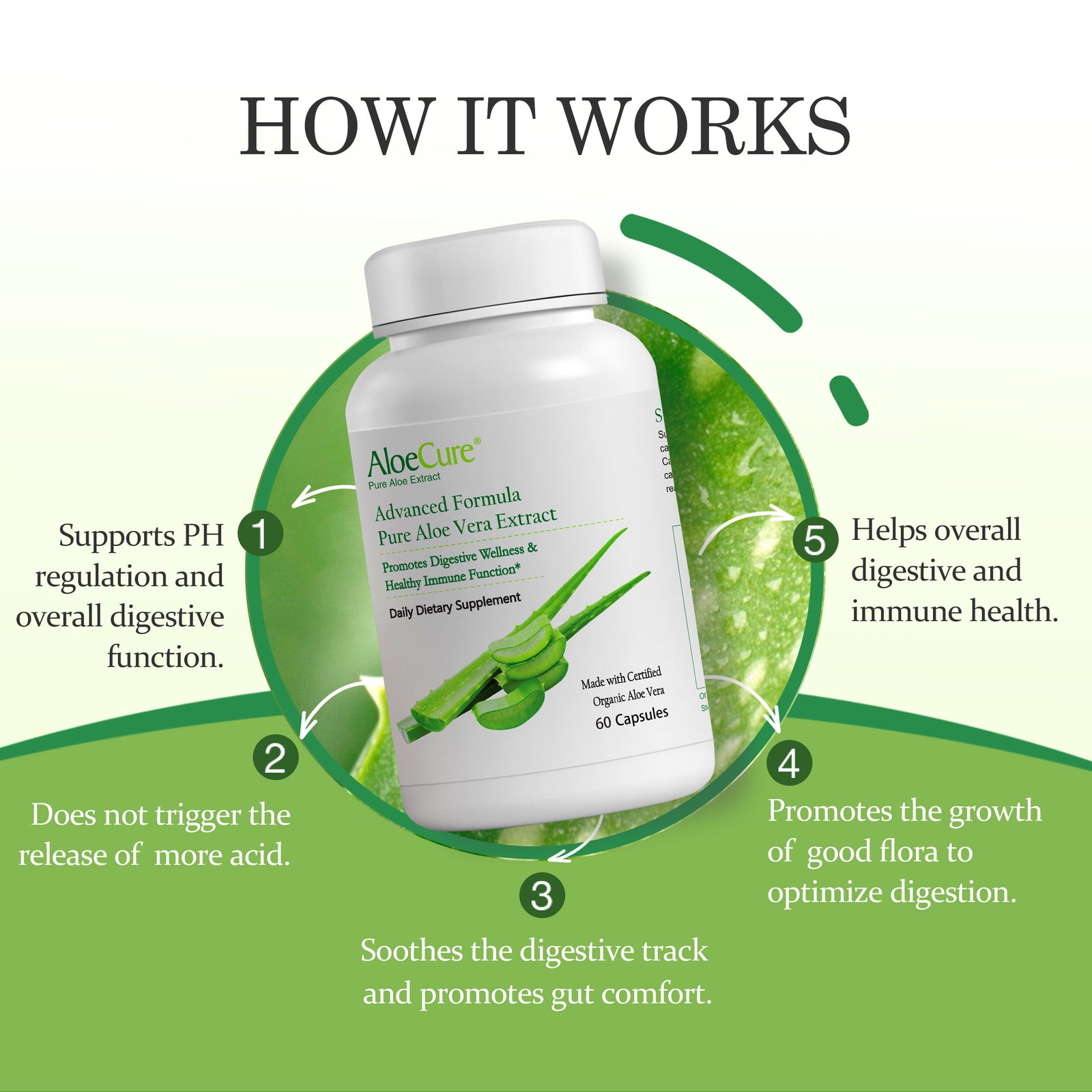
At AloeCure, quality starts with control. Growing, hand-harvesting, processing, and finishing the product inside one system reduces the weak points that often show up when brands buy raw aloe from outside growers. Fewer transfers mean fewer delays, less rough handling, and tighter standards from field to bottle.
Aloe is sensitive to time, handling, and cleanliness. If leaves sit too long in bins, travel too far, or pass through too many hands, consistency suffers. Producers who do not control the farm usually have to accept someone else’s harvest timing, field practices, and storage conditions.
A fully integrated operation gives the farm and processing team one shared standard.
That is the professional approach. It is slower to build, harder to manage, and better for the aloe.
Certifications matter because they force discipline in the field. USDA and EU organic standards are not decoration on a label. They require growers to follow defined practices and maintain records that can stand up to review.
AloeCure’s parent company has owned and operated sustainable aloe farms for decades, hand-harvests USDA and EU certified organic aloe, and processes it on-site within 12 hours according to company standards. The farms also welcome visitors through agro-tourism, which reflects a level of openness many aloe buyers never get to see firsthand.

Open farms tend to run cleaner operations. People can see the rows, the harvest methods, and how seriously the company treats the crop.
Home growers usually judge aloe by appearance alone. Professional growers look at the whole chain, because a good-looking leaf can still turn into a poor ingredient if the handling is sloppy.
| Better practice | Why it matters |
|---|---|
| Hand-harvesting | Mature leaves can be selected carefully, with less damage to the plant |
| On-site processing | Less delay after cutting helps protect freshness and reduce handling risk |
| Certified organic farming | Field inputs and growing practices are held to a stricter standard |
| Farm-to-finished-product control | Fewer outside handoffs reduce inconsistency in the final product |
The best aloe products come from producers who control more than the label. Ask who grew the plant, who cut the leaf, where it was processed, and whether the same company stood behind each step. That is usually where a significant quality difference becomes apparent.
Harvesting your own aloe can be rewarding. You learn how the plant grows, which leaves are ready, and how much care it takes to get clean gel from a single cut. You also see quickly that high-quality aloe isn’t just about owning a plant. It’s about timing, technique, restraint, and careful handling after harvest.
For people who want aloe without the guesswork, professionally prepared aloe makes the process simpler and more consistent.
These statements have not been evaluated by the Food and Drug Administration. This product is not intended to diagnose, treat, cure, or prevent any disease.
If you want clean, professionally prepared aloe from a company that grows, harvests, processes, and bottles its own organic aloe, explore AloeCure. You can shop juices, capsules, and skin care, or sign up for Subscribe & Save to get 20% off with flexible delivery.
Comments will be approved before showing up.