Votre panier est vide

The most popular advice for buying aloe tablets is also the least reliable. Shoppers are told to pick the highest milligrams, read the star average, and trust the most enthusiastic testimonial. That shortcut fails because two products can look identical on a product page while using different parts of the plant, different controls for naturally occurring compounds, and different levels of testing. Useful aloe vera tablets reviews start with composition, transparency, and suitability, not with a rating.
Two bottles can both list a similar aloe amount per serving and still deliver materially different products. One may use inner-leaf gel, another may use decolorized whole-leaf material, and another may not clearly identify the botanical part at all. A five-star average can't tell you which one you're holding.
Star ratings reward a shopper's short-term impression. They don't verify the plant fraction, the amount of latex-related compounds, the assay method, or whether the serving directions match how the product was used. A reviewer who felt a strong effect may be describing a laxative-type action, while another reviewer who wanted gentle daily support may rate the same product poorly for the opposite reason.
The U.S. National Center for Complementary and Integrative Health makes the distinction concrete. Its review notes that oral aloe latex can cause abdominal pain, cramping, and loose stools, while short-term oral aloe gel use for up to 42 days appears safe in research settings, a contrast detailed in the National Center for Complementary and Integrative Health aloe vera overview. Those are different preparations with different profiles, yet marketplace ratings often merge them into one score.
A strong personal experience is evidence that something happened for that person. It isn't evidence of purity, consistency, or suitability for you.
An analyst approach borrows discipline from other areas of health evaluation. Readers who want a broader example of how claims, context, and individual risk are weighed together can consult evidence-led protocols for integrative oncology from Sunridge Medical. The principle transfers directly. Start with what's in the product, how it's verified, and who should check with a professional first. Then read customer experiences for practical details such as taste, convenience, shipping, and routine fit.
That order matters. If the label doesn't identify the botanical part and testing, a higher rating doesn't repair the missing information. It gives you more opinions about an undefined product.
The aloe leaf isn't one uniform ingredient. Learning three terms will improve almost every buying decision you make.
Inner-leaf gel is the clear material from inside the leaf. Decolorized whole-leaf extract starts with more of the leaf and undergoes processing intended to remove color-associated components. Aloe latex is the bitter yellow material found just under the leaf skin. These forms shouldn't be treated as interchangeable in reviews, labels, or personal expectations.
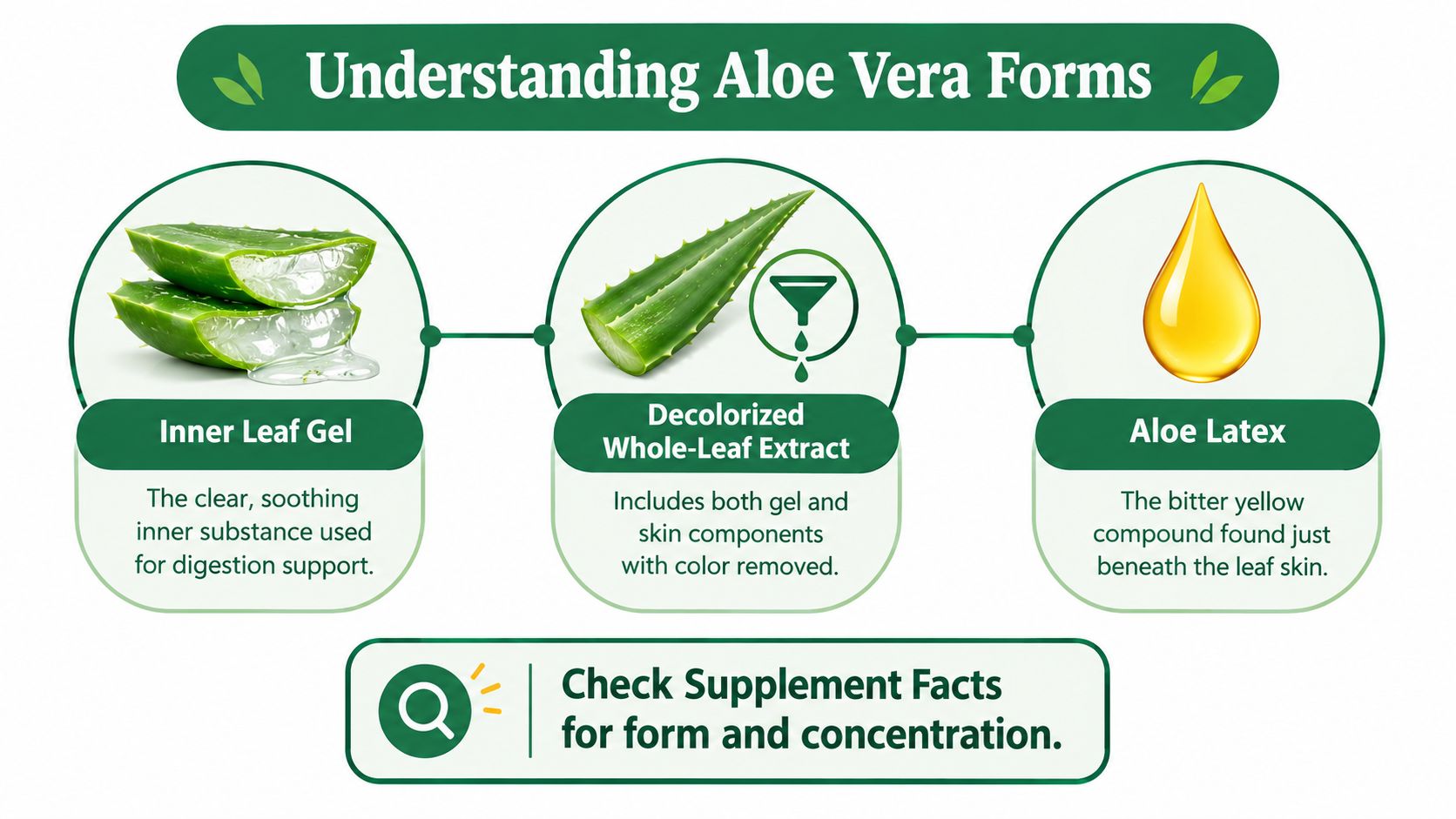
Latex and non-decolorized whole-leaf material can contain hydroxyanthracene derivatives such as aloin and related compounds. The European Food Safety Authority concluded that certain hydroxyanthracenes raise genotoxicity concerns and that a safe daily intake couldn't be established, as summarized in the European Food Safety Authority statement on hydroxyanthracene derivatives. That finding doesn't mean every aloe tablet carries the same exposure. It means compound control is a core quality question.
A practical benchmark is a certificate of analysis for the specific lot. Look for batch-specific testing for aloin or total hydroxyanthracenes, the test method, and the limit used by the company. A generic statement that a product is pure or premium doesn't answer the same question.
A label that says only aloe vera 500 mg leaves too much undefined. You still don't know the plant part, extraction ratio, starting material, or compound limits. For a clear explanation of how sourcing choices appear on labels, see the guide to whole leaf aloe compared with inner aloe gel.
Check these items before you compare price:
Language matters too. A compliant structure and function statement uses normal wellness wording, such as supports healthy digestive function or helps maintain normal body function. It shouldn't promise an outcome tied to a medical condition. When that type of statement appears, the label must also carry this required wording prominently: "This statement has not been evaluated by the Food and Drug Administration. This product is not intended to diagnose, treat, cure or prevent any disease."
If a review repeats sweeping promises but never identifies the form of aloe, it's marketing commentary, not product analysis. The form, testing, and serving define the product you're evaluating.
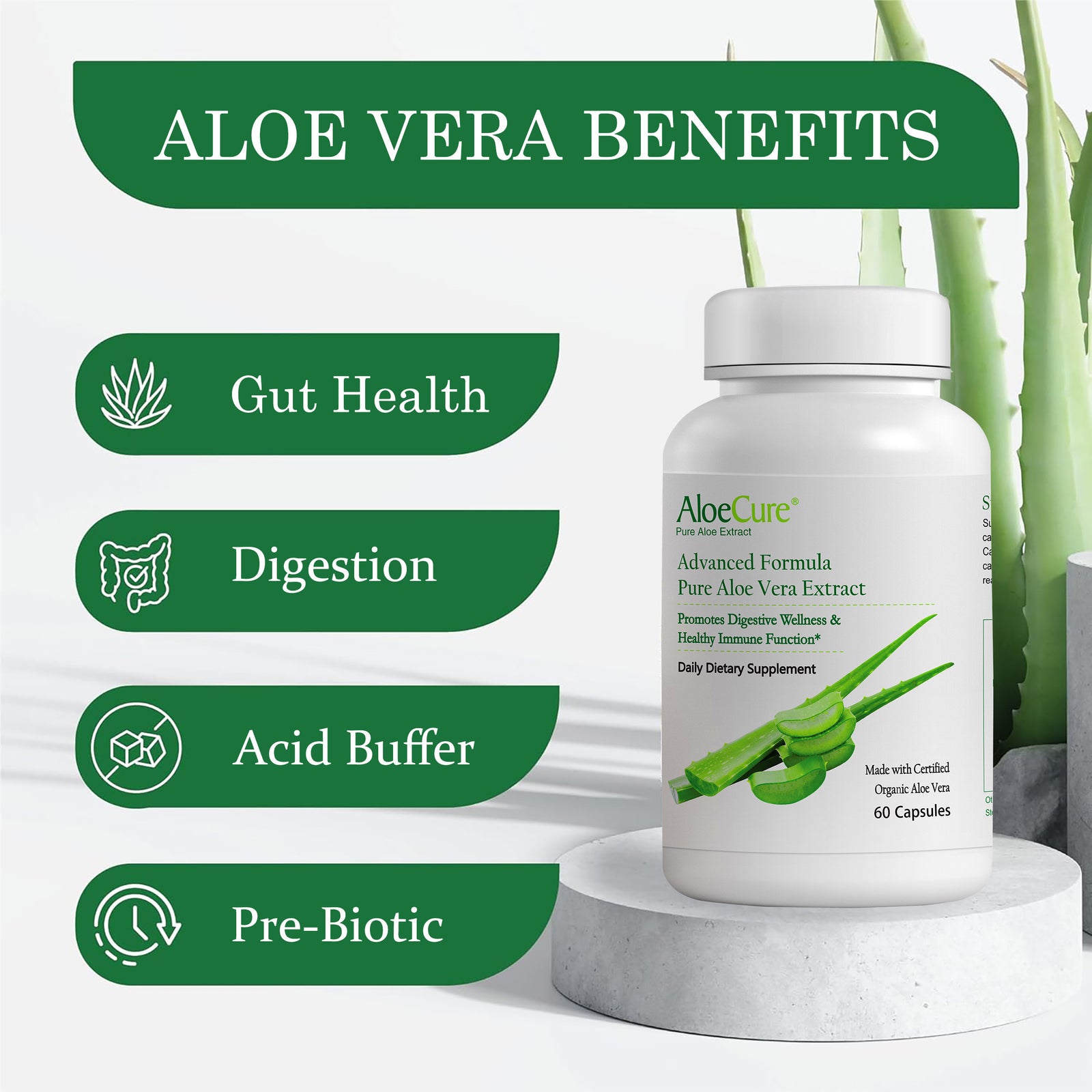
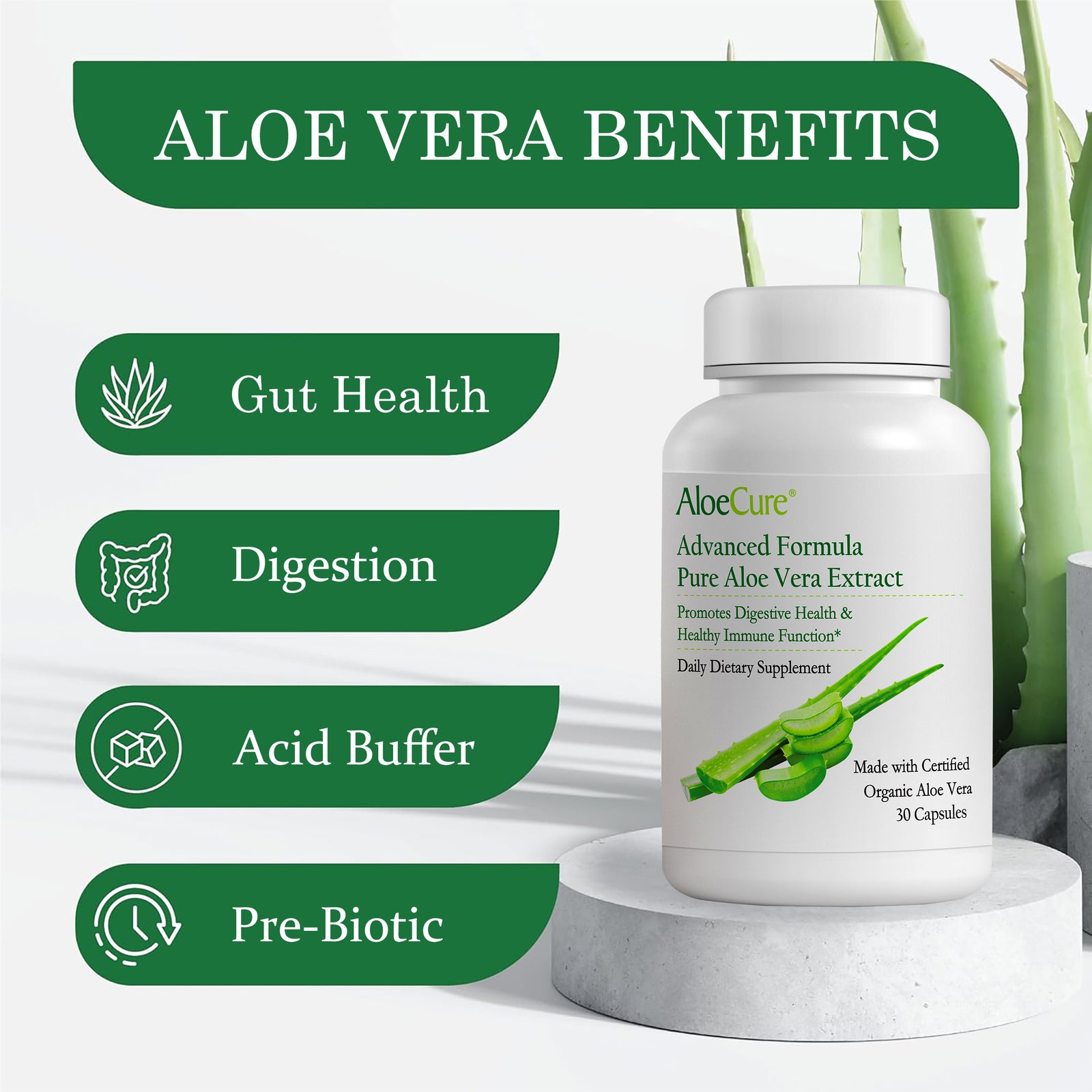
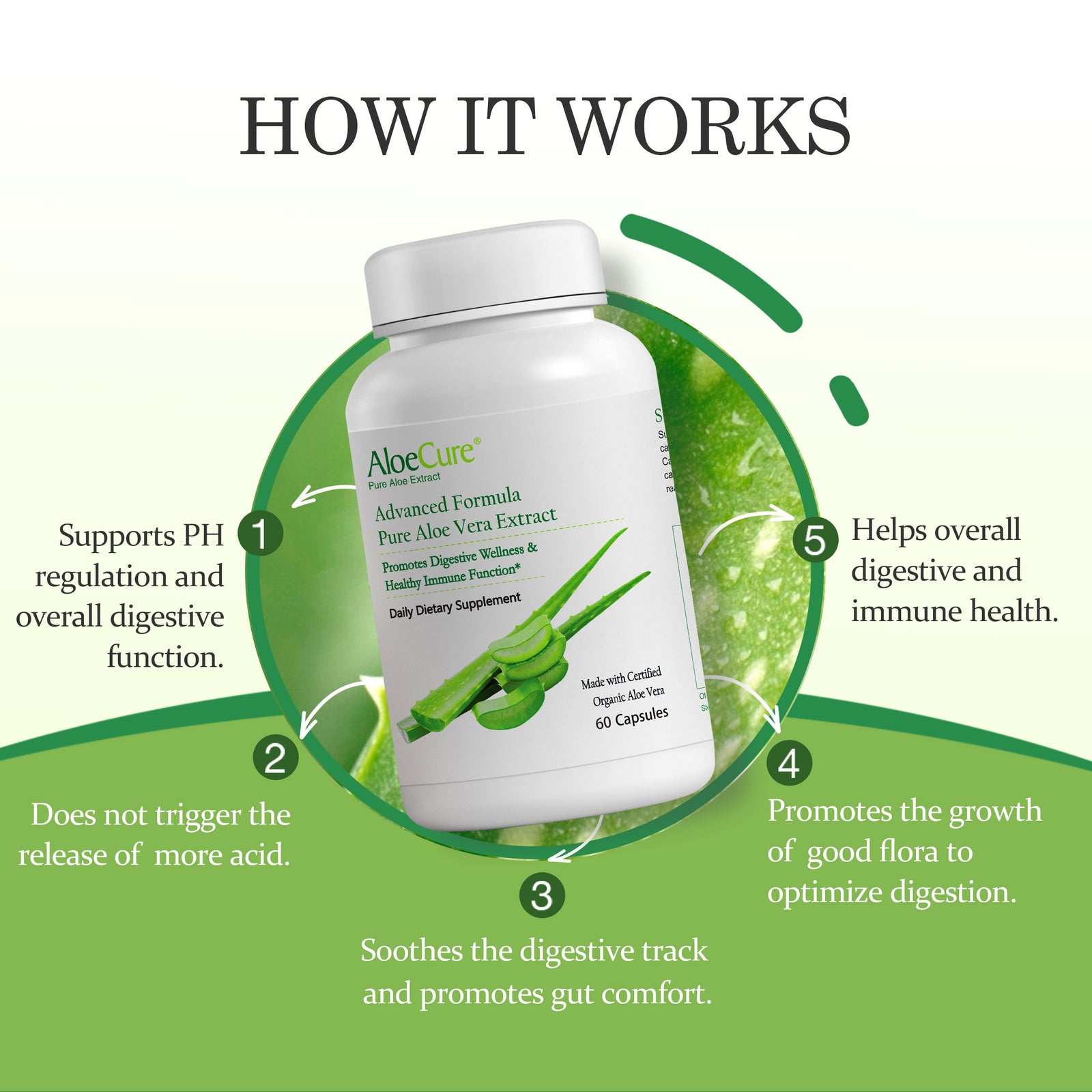
The featured product in these aloe vera tablets reviews is AloeCure Advanced Formula Aloe Capsules. It's a capsule rather than a compressed tablet, but shoppers commonly compare the formats together because both offer a measured, portable serving. The relevant question isn't whether the brand sounds confident. It's whether its sourcing and control claims can be documented.
The product format and presentation are shown below.
AloeCure states that its parent company has owned and operated aloe farms for 25 years and that it farms, processes, and produces its own products. That fully vertically integrated model is the central differentiator. The company reports hand-harvesting certified organic aloe and processing it on site within 12 hours of harvest.
That timeline matters analytically because fewer transfers between separate growers, brokers, processors, and manufacturers can make records easier to connect. AloeCure also describes a proprietary, patented, entirely natural process that avoids chemicals, enzymes, concentrates, and charcoal filtration during processing. Buyers should still ask how each finished lot is tested, because a processing philosophy and a batch result are different forms of evidence.
The video below gives additional product context before you assess the purchase terms.
For organic claims, documentation is more useful than adjectives. USDA organic handling rules require a certified operation handling unpackaged organic products to maintain an audit trail and traceability, a standard explained in the USDA organic handling guidance on audit trail requirements. Against that benchmark, a strong review asks whether the farm, processor, and handling operation can be identified and linked to the finished product.
AloeCure points to USDA and EU certified organic farms, certified sustainable operations, third-party certifications, rigorous testing, and an eight-step traceability promise. Readers who want to understand what independent verification should cover can review an overview of third-party testing for supplements. The strongest file for any lot would connect the farm record, processing record, test result, and finished bottle without gaps.
The commercial terms are comparatively clear. AloeCure offers a 90-day money-back guarantee, fast 1 to 2 day priority processing, free shipping on qualifying orders, and a Subscribe & Save option with 20% off and flexible delivery. Those terms reduce purchase risk, but they don't replace label review.
Analyst note: Vertical integration is valuable when it produces verifiable records. Ask for the lot-level documents, not just the farm story.
Before buying, confirm the current Supplement Facts panel, serving directions, warnings, and available lot testing. Consider whether you want the convenience of a capsule and an ongoing subscription, or whether a one-time order is the better first step. AloeCure's documented farm-to-finished-product control makes it easier to evaluate than a product identified only by a generic aloe amount, and that transparency is its strongest review point.
A useful comparison doesn't award points for the longest feature list. It asks which claims are specific enough to verify and which trade-offs affect your routine or budget. Use the table below as a worksheet when you compare AloeCure with other tablet or capsule approaches.
| Review Criterion | AloeCure Advanced Formula Aloe Capsules | Other Aloe Vera Tablet Approaches | What the Buyer Should Verify |
|---|---|---|---|
| Formula clarity | Branded capsule formula from a vertically integrated producer | Ranges from single-ingredient products to multi-ingredient blends | Every active ingredient and amount per serving |
| Botanical source | Company-farmed, certified organic aloe processed on site | Sourcing may be fully documented or limited to a generic aloe claim | Plant part, farm or supplier identity, extraction details |
| Compound control | Ask for lot-level results for the current product | Disclosure varies widely, and some labels omit it | Aloin or total hydroxyanthracene testing and limits |
| Certification evidence | USDA and EU organic farm claims, third-party certifications | May include organic, manufacturing, or no independent certification | Certificate holder, scope, and current status |
| Traceability | Eight-step traceability promise across production | May stop at the finished-product manufacturer | Records connecting ingredient lot to finished lot |
| Value and flexibility | Subscription savings with flexible delivery | One-time pricing, bundles, or subscriptions vary | Cost per serving, pause and cancellation terms |
| Guarantee and processing | 90-day guarantee and priority processing | Return windows and handling times vary | Conditions, return shipping, and processing time |
The table reveals a pattern. AloeCure's advantage is most specific in supply-chain control, because farming, processing, and production sit within one organization. A competing product could still be a reasonable choice if it identifies its botanical part, publishes meaningful lot testing, and better matches your preferred formula or price.
Don't let milligrams settle the decision. A multi-ingredient product may show a large total serving while providing less aloe than a simpler formula. Conversely, a focused product may look plain but be easier to evaluate because there are fewer variables.
For a one-time trial, prioritize a clear label, a workable return policy, and enough servings to follow the directions consistently. For an ongoing routine, subscription flexibility, delivery cadence, and cost per serving become more important. For a tight budget, compare the full delivered cost rather than the bottle price alone.
The best value is the product you can identify, verify, use as directed, and reorder without guesswork. A low price attached to an undefined botanical source isn't a bargain. It's an unknown.
Start with the job you want the product to do in your day. A minimal, single-purpose formula is easier to assess because aloe is the main variable. A combination formula adds other botanical or nutritional ingredients, which may suit a broader wellness routine but requires you to evaluate every active component.
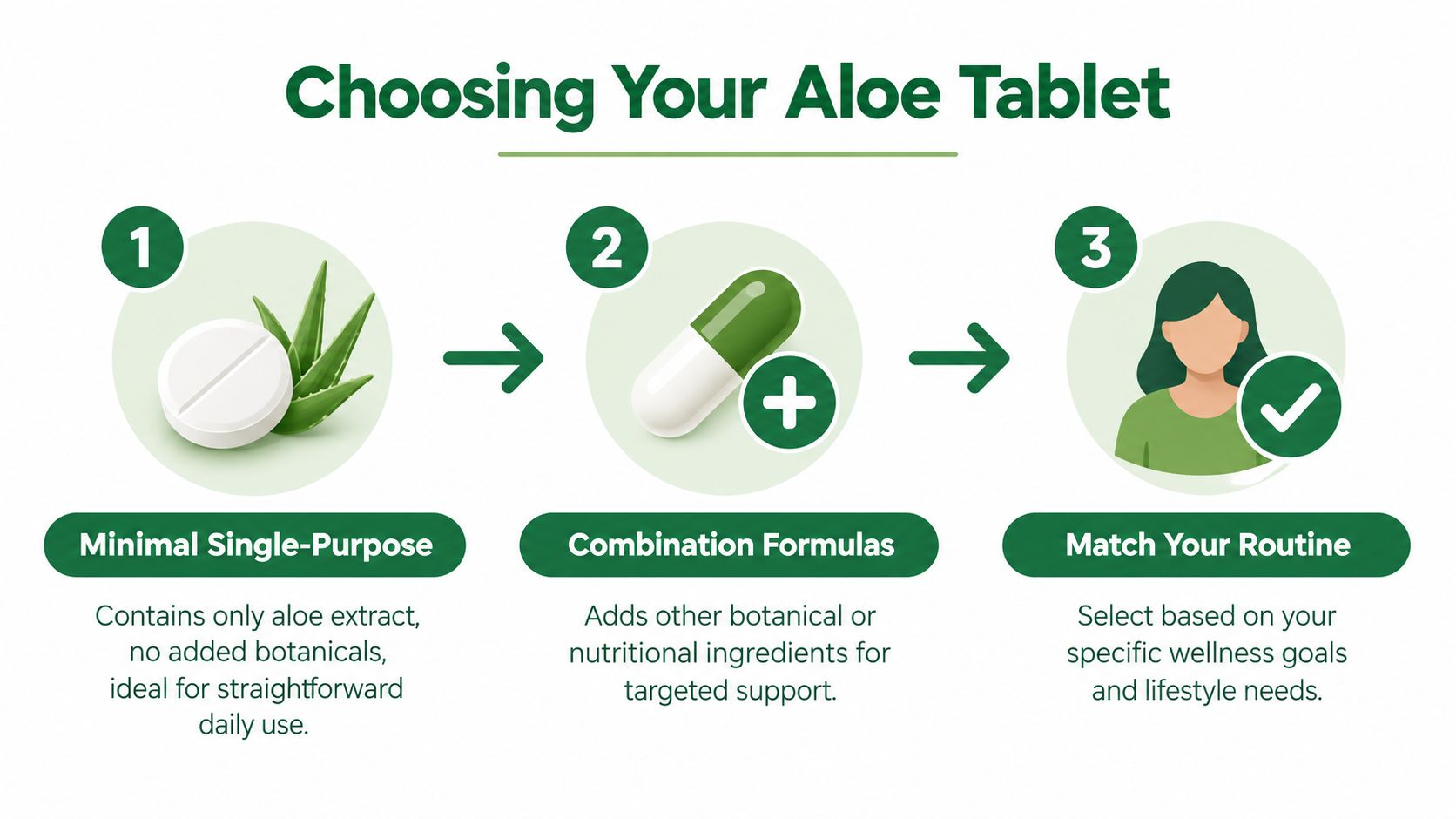
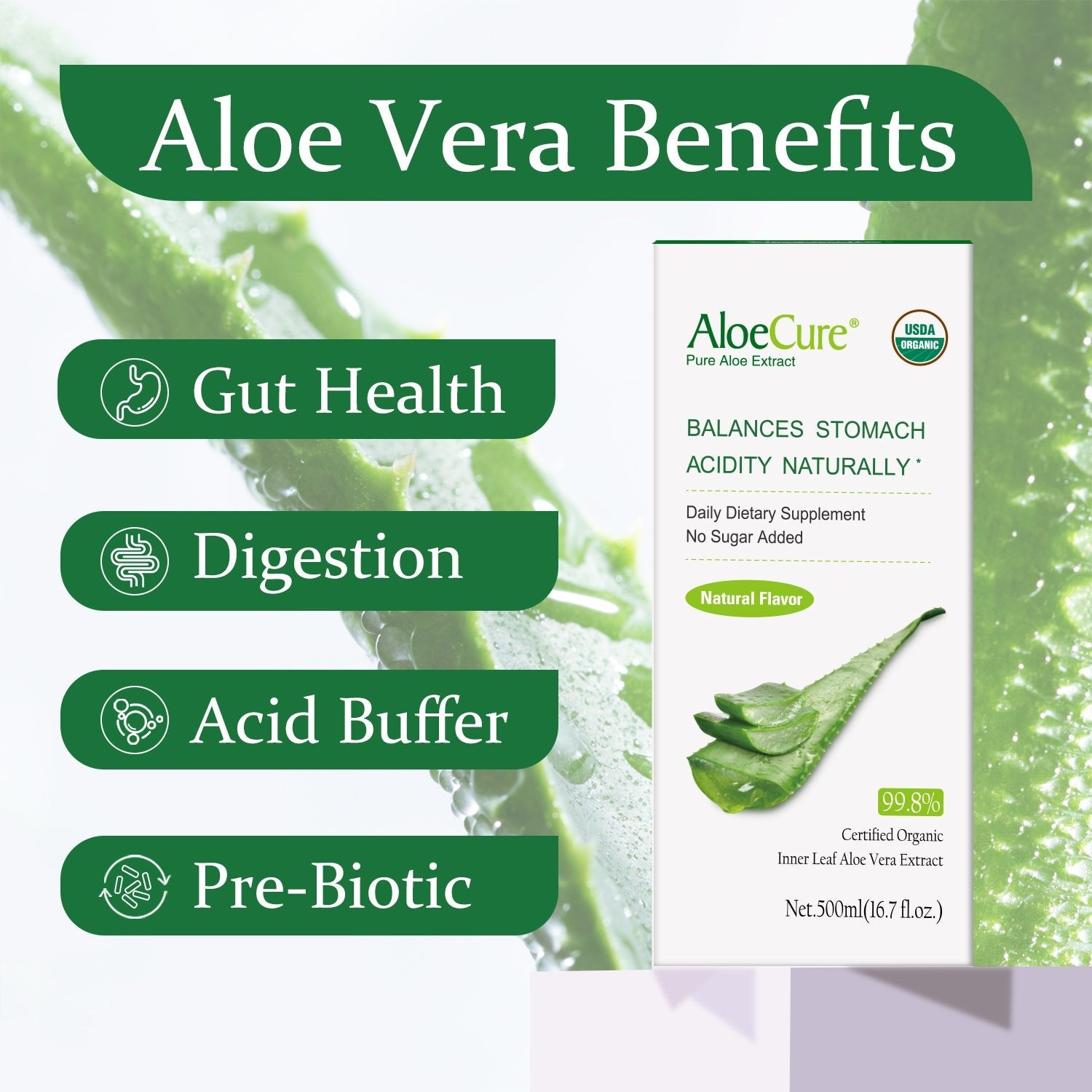
Choose a single-ingredient direction if you prefer a simple label and want to change one part of your routine at a time. Choose a combination only when each added ingredient has a clear purpose, a disclosed amount, and no conflict with other products you already use. If you dislike swallowing capsules or prefer adding aloe to a drink, a juice format may fit better than any tablet.
Then count the practical variables:
Don't create your own serving schedule to make a bottle last longer or to chase a stronger effect. The label directions govern use. If the directions don't fit your routine, that's a product mismatch, not a reason to improvise.
Combination products deserve one extra check. Add up overlapping ingredients across your full supplement routine so you don't duplicate the same botanical or nutrient in several products. A concise label with transparent amounts makes that audit possible. A proprietary total without individual amounts makes it harder.
A subscription can be sensible after you've confirmed routine fit, delivery timing, and the current label. It's less sensible as a way to force consistency with a product you haven't evaluated. Start with clarity, then decide whether automatic delivery adds real convenience.
Reviews become misleading when three kinds of information are blended into one conclusion. Separate them, and the decision gets clearer.
Controlled human research is the most structured layer, but it's modest for oral aloe. A review hosted by the National Center for Biotechnology Information identified only 10 controlled clinical trials across the various uses of aloe vera, a finding presented in the clinical evidence summary for aloe vera. That limited base doesn't support identical claims for every preparation, dose, or duration.
Formulation-specific safety observations form the second layer. Long-term animal research on non-decolorized whole-leaf extract produced results that varied by species and preparation, which is why product form can't be ignored. The detailed findings are available in the National Toxicology Program technical report on aloe vera whole leaf extract. Animal findings don't define the risk of every modern inner-leaf product, but they do justify careful compound control and transparent sourcing.
User experience is the third layer. It's useful for convenience, taste, capsule size, service, and whether people found the routine manageable. It can't reveal anthraquinone content, batch variation, or an interaction with something else a person uses. A large number of satisfied reviewers doesn't convert a personal impression into controlled evidence.
Pregnancy, breastfeeding, prolonged use, daily medication use, and an upcoming procedure call for individualized professional guidance. Safety literature also supports caution where a product could affect fluid balance, blood mineral levels, normal blood sugar management, or the way another product works. You can read a consumer-focused summary in the guide to possible aloe vera side effects.
Tell the professional the exact product name, serving, frequency, and start date. Saying only that you take aloe doesn't provide enough information.
A structured personal review helps. The in-home medication review guide from Life Primary Care offers a practical model for listing what you use and preparing questions before a consultation. Apply the same habit to supplements. Bring the bottle or a clear photo of the Supplement Facts panel and warnings.
This approach leads to risk stratification by formulation, dose, duration, and personal profile, a framework also reflected in the review of aloe preparations and safety considerations. That's more useful than asking whether aloe tablets are universally good or bad. The better question is whether a specific product, used for a specific period by a specific person, has enough transparency to justify the choice.
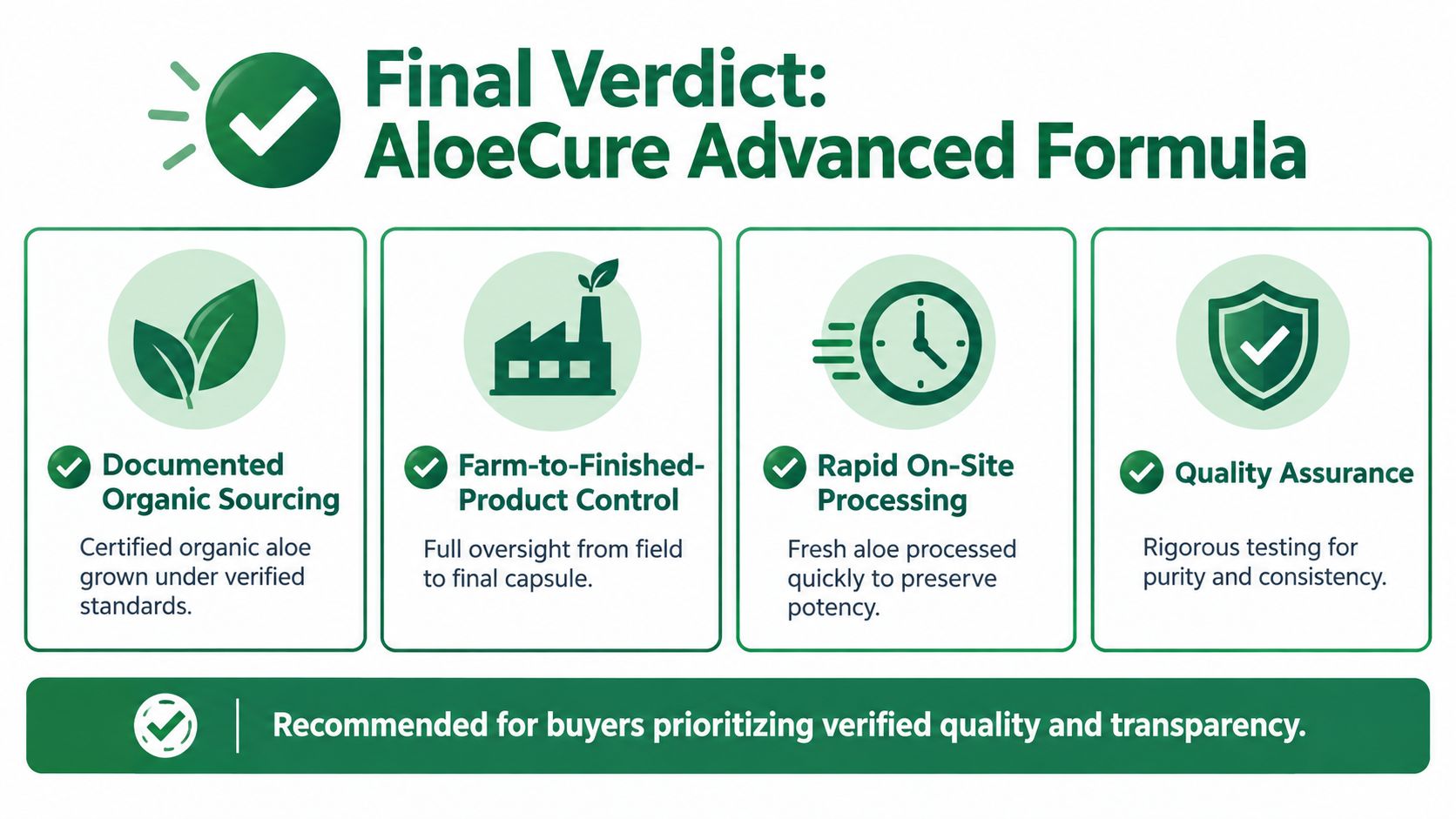
Aloe vera tablets are concentrated products, so small differences in plant fraction, aloin control, and lot documentation carry more weight than a large capsule count or a louder testimonial. Choose AloeCure Advanced Formula Aloe Capsules if your priorities are documented organic sourcing, farm-to-finished-product control, rapid on-site processing, traceability, quality testing, a clear guarantee, and flexible purchase terms. Its vertically integrated model gives buyers specific points they can verify, which is more useful than a label that lists only a generic aloe amount.
Choose another formulation if you want a particular added ingredient, a different format, or a supplier whose current lot paperwork answers your questions more directly. A higher milligram figure does not establish botanical identity, and a higher review count does not prove compound control.
Claim language deserves the same discipline. FDA permits dietary-supplement structure/function statements only when the marketer has substantiation showing that each statement is truthful and not misleading; these claims are not pre-approved by FDA, according to the FDA guidance on structure and function claim notifications. Compliant wording stays with normal wellness language, such as provides targeted support for digestive wellness or supports the body's natural daily processes.
These statements have not been evaluated by the Food and Drug Administration. This product is not intended to diagnose, treat, cure, or prevent any disease.
The practical verdict from these aloe vera tablets reviews is to rank transparency above intensity. For shoppers who value vertical integration and traceable production, AloeCure is the most coherent option in this comparison; for everyone else, the right choice is the product whose current documents survive the checklist.
Visit the AloeCure product page to review the current Advanced Formula Aloe Capsules label, confirm the guarantee and delivery terms, and decide whether a one-time order or a subscription fits your routine. Start at AloeCure, check the Supplement Facts and warnings for yourself, and choose only when the sourcing, testing, and serving details meet your standard.
Les commentaires sont approuvés avant leur publication.