Votre panier est vide

The most repeated advice about aloe vera juice is that it hydrates better than water because it contains plant compounds and minerals. That claim isn't established. Water remains the straightforward benchmark for replacing fluid; aloe vera juice is an optional, flavored drink whose value depends on what's in the bottle and whether it suits your routine.
The useful comparison isn't “Which drink has the bigger wellness promise?” It's “What do I need from this glass?” For everyday hydration, water is the simple choice. If you're considering aloe, look beyond the front label to the leaf fraction, aloin disclosure, sugar, and processing.
Aloe vera juice does not out-hydrate plain water. Water provides fluid without calories, sugars, or plant solids, so it remains the practical baseline when your goal is to replace fluid. Aloe drinks also contribute fluid, but available evidence doesn't establish that they hydrate better, replace electrolytes more effectively, or improve athletic performance compared with water. The Acibadem International overview of aloe vera juice describes the inner gel as approximately 99% water, while cautioning that this doesn't demonstrate a hydration advantage over plain water.
That 99% figure describes raw inner-leaf gel, not every finished bottle. A commercial drink's final composition depends on its leaf fraction, processing, serving size, and added ingredients. A bottle can contain aloe gel and still differ substantially from another product labeled aloe juice.
Some aloe beverages contain minerals such as magnesium, calcium, and potassium. Those minerals can contribute to dietary intake, but their presence doesn't by itself make a drink an electrolyte solution or establish better hydration. To understand what a specific product adds, check its Nutrition or Supplement Facts panel rather than assuming that every aloe drink has the same mineral profile.
Water's advantage is straightforward: it supplies fluid without the plant-derived components or formulation choices found in some aloe beverages. Aloe's possible role is different. You might choose it for taste or because you prefer a plant-based drink, not because the evidence shows it's a superior way to hydrate.
If you're curious about how minerals fit into everyday hydration, Peak Performance's guide to water minerals offers additional context. The key is to distinguish general mineral information from proof that a particular aloe drink performs better than water.
Practical rule: Choose water for basic hydration. Consider aloe as an optional beverage, and judge the bottle by its contents rather than its wellness claims.
The Nutrition or Supplement Facts panel can help you evaluate those contents, including listed minerals and added ingredients. The sections below show how water and aloe fit different situations, and which label details matter if you decide to try aloe.
Water is the hydration benchmark. Aloe vera juice is an optional flavored fluid, and its value depends on the finished drink's ingredients and processing, not claims that it hydrates better.
| Criterion | Plain water | Aloe vera juice |
|---|---|---|
| Fluid base | Entirely water | Mostly water; raw inner gel is about 99% water before formulation |
| Primary job | Baseline daily hydration | Fluid with flavor and, depending on processing, plant gel compounds |
| Calories per plain serving | 0 | Check Nutrition Facts; fruit flavor or sweetener may add calories |
| Sugars | None | None to moderate, depending on flavor and added juice |
| Electrolytes | Negligible unless it's mineral water | May include magnesium, calcium, and potassium; not a sports drink and not proven to hydrate better |
| Gel compounds | None | Polysaccharides such as acemannan may remain when inner-leaf gel is preserved |
| Aloin quality marker | Not applicable | Prefer a product that discloses its aloin result, ideally at or below 10 ppm |
| Everyday role | Main fluid through the day | A measured serving when you prefer its taste or want a drink with aloe |
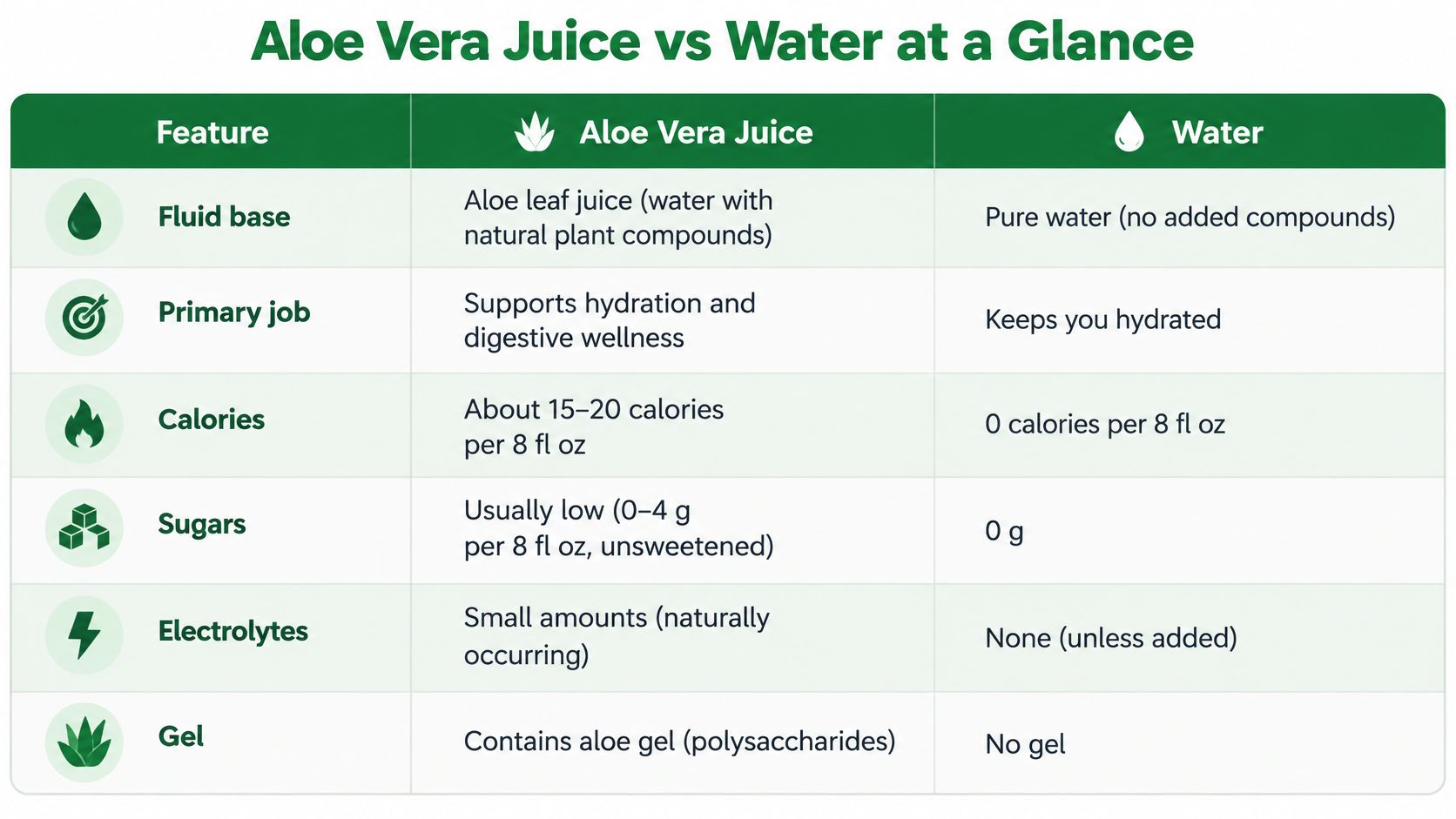
The 99% water figure describes raw inner gel, not every finished aloe drink. Formulation can change what ends up in the bottle, so read the product label rather than treating all aloe juice as the same.
Aloe drinks may contain magnesium, calcium, and potassium, but their presence doesn't make a drink a sports beverage or prove a hydration advantage. Inner-leaf gel may retain polysaccharides such as acemannan, depending on processing.
Check the ingredient list and any product-specific quality information. For aloin, look for a disclosed result at or below 10 ppm. That benchmark is useful for comparing products; it doesn't establish the result for a bottle that provides no test information.
Use the table to match the drink to the situation. Water fits routine hydration. Aloe can fit when you want its flavor, provided the ingredients and processing suit your preferences.
Start with an equal pour. Plain water contributes zero calories and zero sugar, so it doesn't change the nutrition of a meal or snack. For a fair comparison, set an eight-ounce serving of water beside an eight-ounce serving of unsweetened inner-leaf aloe juice, then check the aloe bottle's Nutrition Facts panel.
Unsweetened aloe may be a closer match to water on sugar than a flavored product, but don't infer its calorie or sugar content from the words “pure” or “natural.” Grape, lemon, other fruit juices, and sweeteners can change the numbers. Compare the calories and sugar grams per eight-ounce serving, and check whether the bottle contains more than one serving.
Acemannan is a polysaccharide associated with inner-leaf aloe gel. A structure/function statement might say that a product “supports healthy digestive function” as part of a normal daily routine. These statements have not been evaluated by the Food and Drug Administration. This product is not intended to diagnose, treat, cure, or prevent any disease.
Two bottles can share similar front-label language but differ in how their aloe was processed. Filtration methods and other processing steps can affect the gel compounds that remain, so look for a clear ingredient description and a product-specific certificate of analysis. The AloeCure guide to what aloe vera juice is made of can help clarify the terms used to describe aloe drinks.
Choose unsweetened aloe if you want the closest match to water on sugar. Choose a flavored bottle only if its taste makes a small, measured serving easier to enjoy and the nutrition label fits your day.
Aloin disclosure is a useful label check. The yellow latex beneath the leaf rind contains anthraquinones, including aloin, which can speed bowel motility and lead to cramps or loose stools. If loose stools follow a serving, that fluid loss works against your hydration goal. A harsh or poorly characterized aloe product isn't a substitute for water.
Published testing found aloin levels in most liquid aloe products below 1 ppm, while solid or semisolid products may contain 10 to 100 times more. The National Institute of Environmental Health Sciences overview of aloe notes that product levels aren't always consistently available on labels. A commonly cited oral-product quality benchmark is below 10 ppm. Look for a disclosed result or certificate of analysis rather than relying on a claim such as “pure.”
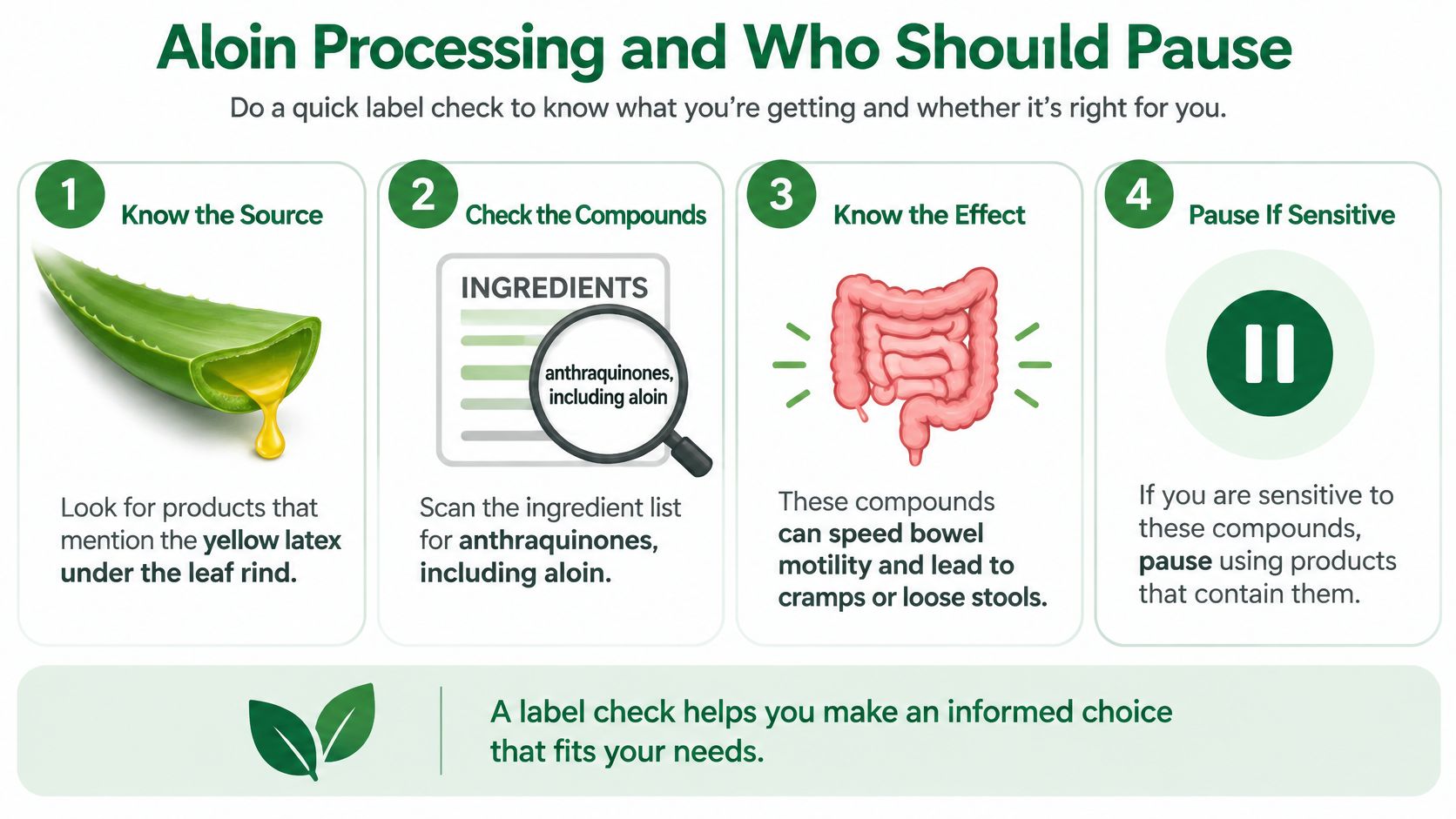
| Check | Why it matters | Prefer |
|---|---|---|
| Leaf fraction | Latex under the rind is the harsher portion | Inner leaf or decolorized leaf, not raw latex |
| Aloin test | Anthraquinones can speed bowel motility | Disclosed result at or below 10 ppm; published testing found most liquid products below 1 ppm |
| Processing | Processing can change the gel and remove anthraquinone components | A clear description and product-specific testing |
| Sugar per 8 fl oz | Added sweetness moves the drink away from water | The lowest sugar level that still tastes good to you |
| Serving and duration | Dose and tolerance matter | Follow the product label; short-term oral gel use has been studied up to 42 days |
| Ask a clinician first | Bowel changes can affect fluid balance and absorption | Pregnancy, breastfeeding, frequent loose stools, or daily medicines |
The National Center for Complementary and Integrative Health's aloe guidance says research suggests short-term oral use of aloe gel for up to 42 days is safe. It also describes cramping and loose stools with oral latex, and notes that a 2023 review found commercially available drinkable products containing no more than 10 ppm aloin were not genotoxic in the reviewed evidence. These findings don't make every aloe product interchangeable; leaf fraction and processing still matter.
Choose inner-leaf or decolorized products, and follow their labels. Ask a clinician before use if you're pregnant or breastfeeding, already experience frequent loose stools, or rely on daily medicines being absorbed reliably. “Supports the body's natural digestive rhythm” is structure/function wording, not a medical promise, and any such product statement requires appropriate substantiation and qualification.
Pause if you're sensitive to a product or notice new cramps or loose stools. Water has no latex-related label questions, so it remains the default fluid.
For a plain-language explanation of the ingredient, AloeCure's guide to aloin can help you understand why manufacturers distinguish leaf fractions and processing.
A desk morning doesn't require a complicated hydration plan. Start with a full glass of water; if you enjoy a plant-based ritual alongside breakfast, a small aloe serving can be an optional addition, not the day's main fluid. Pour water first.
After a workout lasting under an hour in mild weather, water before and after is a straightforward choice. Aloe can be an optional flavor afterward, but it isn't a sports drink or a replacement for water. Choose water for hydration.
On a hot afternoon or a long walk when you're sweating heavily, keep water as your fluid plan. Don't count a sweet aloe drink as the rehydration step; it adds a different mix of ingredients and doesn't have a proven hydration edge. Reach for water.
If plain water feels boring in the evening and a familiar drink helps you keep a routine, a chilled, lightly flavored aloe juice may fit, provided its sugar content works for you. Keep it to the labeled serving rather than replacing every glass of water. For serving guidance, consult AloeCure's aloe vera juice dosage guide. Choose a measured serving if it suits your routine.
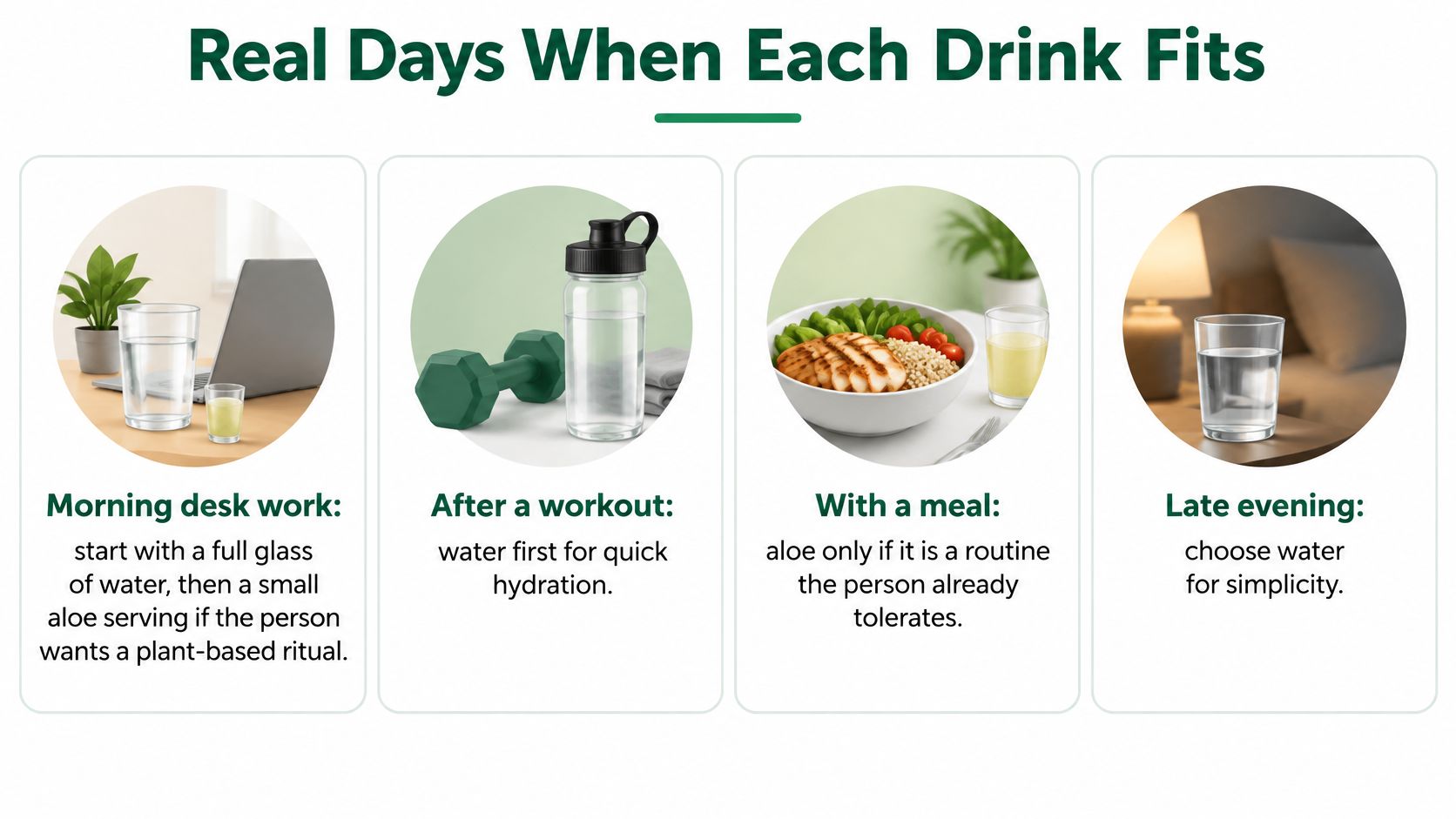
Water covers thirst. Aloe is a chosen serving when taste or digestive wellness support is the point.
If a new aloe serving brings cramps or loose stools, stop taking it and return to water rather than drinking more aloe to replace fluid. Both drinks can fit into the same day; the mistake is replacing every glass of water with juice.
Choose water alone when your goal is basic hydration, calorie control, or simplicity. Add a low-aloin, inner-leaf aloe drink only if you specifically want its flavor and plant compounds. A structure/function statement such as “supports healthy digestive function and helps maintain normal hydration as one mostly-water serving” requires substantiation and the required qualification. The FDA says supplement claims must be truthful and not misleading, carry the required disclaimer, and be reported to the agency within the required timeframe; its structure/function claim notification guidance explains these requirements. These statements have not been evaluated by the Food and Drug Administration. This product is not intended to diagnose, treat, cure, or prevent any disease.
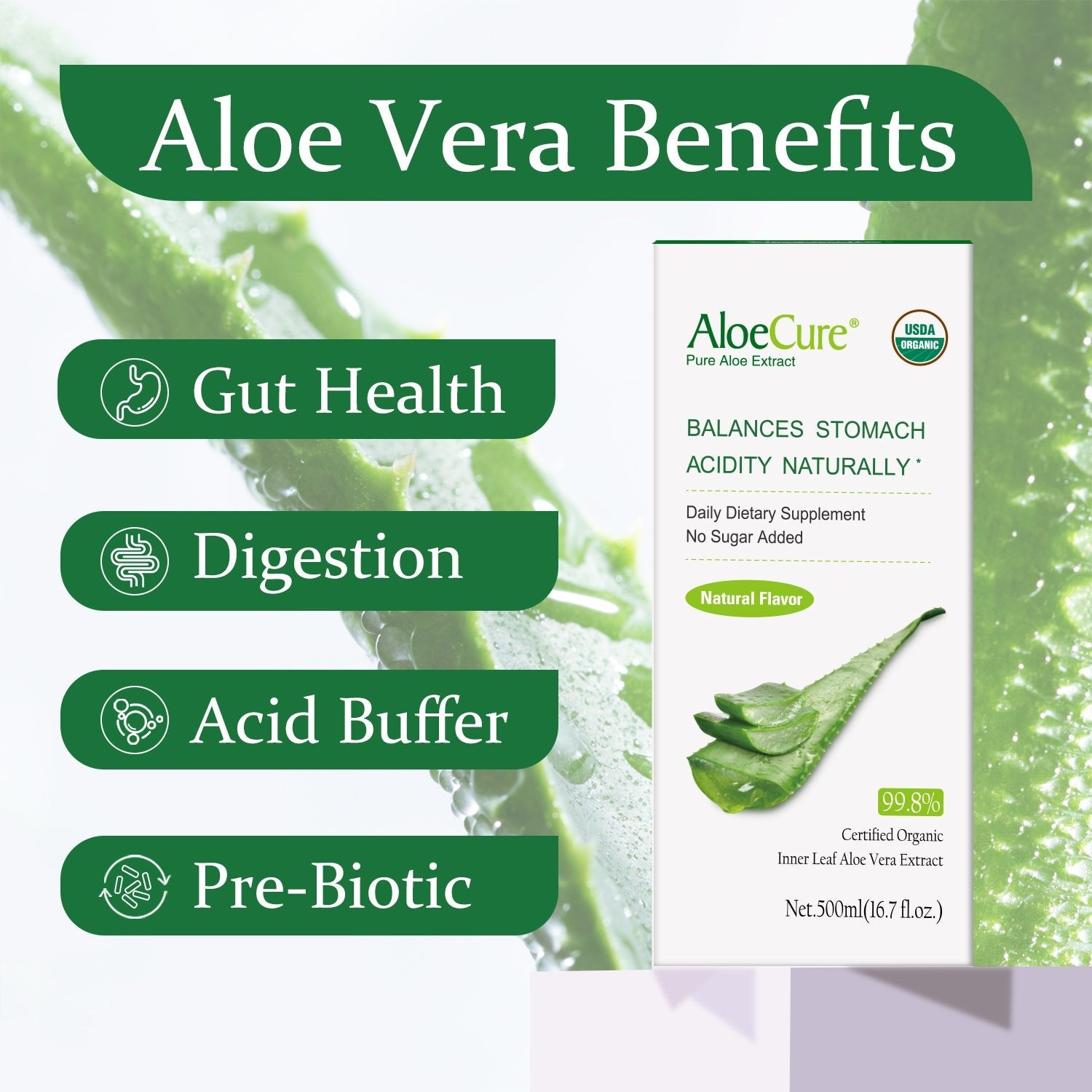
If aloe fits your preference, compare products using the same checks: leaf fraction, processing, aloin disclosure, serving size, and sugar. AloeCure offers inner-leaf juice options, including Pure USDA Organic Aloe Vera Juice in Natural, Grape, and Lemon. The company says it farms its own aloe, hand-harvests it, and processes it on site within 12 hours of harvest. Those details describe sourcing and production, not evidence that the juice hydrates better than water.
For the closest match to water on flavor, choose a natural, unsweetened option if its label supports that choice. If taste helps you keep a small serving in your routine, compare the Grape and Lemon labels for sugar and calories before choosing. Keep water as your main bottle, and follow the serving directions on whichever aloe product you select.
A practical start is one labeled serving a day with a meal for two weeks. Keep water as your main fluid, and stop the aloe if your comfort changes. Aloe is optional; water remains the uncomplicated choice for everyday hydration.
AloeCure offers inner-leaf aloe juice in Natural, Grape, Lemon, and Chlorophyll with product details to help you compare processing and serving information. If that matches what you're looking for, visit AloeCure to review the juice options and explore flexible Subscribe and Save delivery with 20% off.
Les commentaires sont approuvés avant leur publication.