Tu carrito está vacío
Envío y manipulación gratuitos con todos los pedidos superiores a $25
Envío y manipulación gratuitos con todos los pedidos superiores a $25

What does a third party GMP certification seal tell you about the bottle in your daily wellness routine? It confirms that an independent organization has assessed defined manufacturing practices, but it doesn't automatically confirm every detail about the finished product. That distinction matters when you're comparing supplements and looking beyond a reassuring logo.
A useful way to think about quality is as a series of protective layers. Facility controls help prevent mistakes, product testing checks what is in a finished batch, and supply-chain traceability helps connect ingredients to their source. Strong brands make those layers visible instead of asking customers to rely on a general promise.
Third party GMP certification means an independent organization assesses a facility, process, or management system against specified requirements. The certification body should maintain oversight that protects impartiality, so the result is not just a manufacturer's own declaration of quality. In practice, a compliant supplier receives documentation such as a certificate and audit report that customers can review.
The audit focuses on the environment and systems used to make a product. That usually includes manufacturing, packaging, labeling, and holding operations, along with the records and controls that support them. Auditors may examine sanitation, equipment, staff training, written procedures, material handling, supplier controls, and the way a company records and investigates problems.
A certified facility should be able to show that its work follows documented procedures rather than depending on memory or informal habits. A written process gives employees a consistent method, while a completed record gives quality personnel evidence that the method was followed.
Those controls matter because a final laboratory result can't reveal every weakness in the production environment. A batch might meet a specification while a poorly controlled process remains vulnerable to mix-ups, labeling errors, inadequate cleaning, or incomplete records. GMP systems address those risks before a product reaches the shelf.
Practical rule: Treat a GMP certificate as evidence about how a facility operates, not as a complete verdict on every bottle it produces.
For shoppers who want to understand how independent checks fit into a broader quality program, this guide to third-party testing offers useful context. The central question is always scope. Ask which site was audited, which standard was used, what activities were included, and whether the certificate remains current.
Internal quality teams play an important role, but an outside assessor adds a separate layer of accountability. The auditor can challenge records, observe operations, compare written procedures with actual practice, and identify gaps the facility may have overlooked.
That doesn't mean certification eliminates risk. It means the manufacturer has submitted its operating system to an external review and must maintain evidence of conformity. For consumers, this creates a more meaningful starting point than an unverified phrase such as “premium quality” printed on a label.
Modern GMP standards grew from an international effort to create shared expectations for manufacturing quality. The U.S. FDA issued its first formal drug GMP regulations in 1963, the WHO adopted its first GMP draft text in 1968, and the World Health Assembly recommended the WHO Certification Scheme for pharmaceutical products moving in international trade in 1969. The FDA later published its cGMP Guide in the Federal Register in 1978, establishing legally anchored regulations that helped shape inspection-based compliance systems. These milestones are documented by the World Health Organization's GMP history.
This history explains why GMP isn't merely a modern marketing label. It developed through cooperation among regulators and international health authorities that wanted manufacturers to work from recognizable, auditable principles across borders.
The compliance-services industry surrounding GxP and GMP reflects how much infrastructure manufacturers now use to demonstrate control. One industry estimate projects the global GxP GMP regulation testing market at USD 17,555.73 million in 2026, rising to USD 39,971.38 million by 2035, with a projected 9.57% CAGR. The figures are projections from the GxP GMP regulation testing market estimate, not a guarantee of future market performance.
The same estimate places audits and certification services at USD 1,759.27 million in 2025 and USD 3,625.23 million by 2034, implying a 9.53% CAGR and an 11% share of the broader GxP testing market. Those projections suggest that independent verification has become a substantial commercial and regulatory function, especially for manufacturers serving export markets.
A global framework gives buyers a common vocabulary. Terms such as documented procedures, traceability, supplier qualification, corrective action, and surveillance audits describe practical controls rather than vague claims.
The framework also explains why a certificate has value only when its scope is clear. A facility may be certified for particular operations, products, or sites. A careful buyer therefore asks what the auditor reviewed and then looks for product-specific evidence that complements the facility assessment.
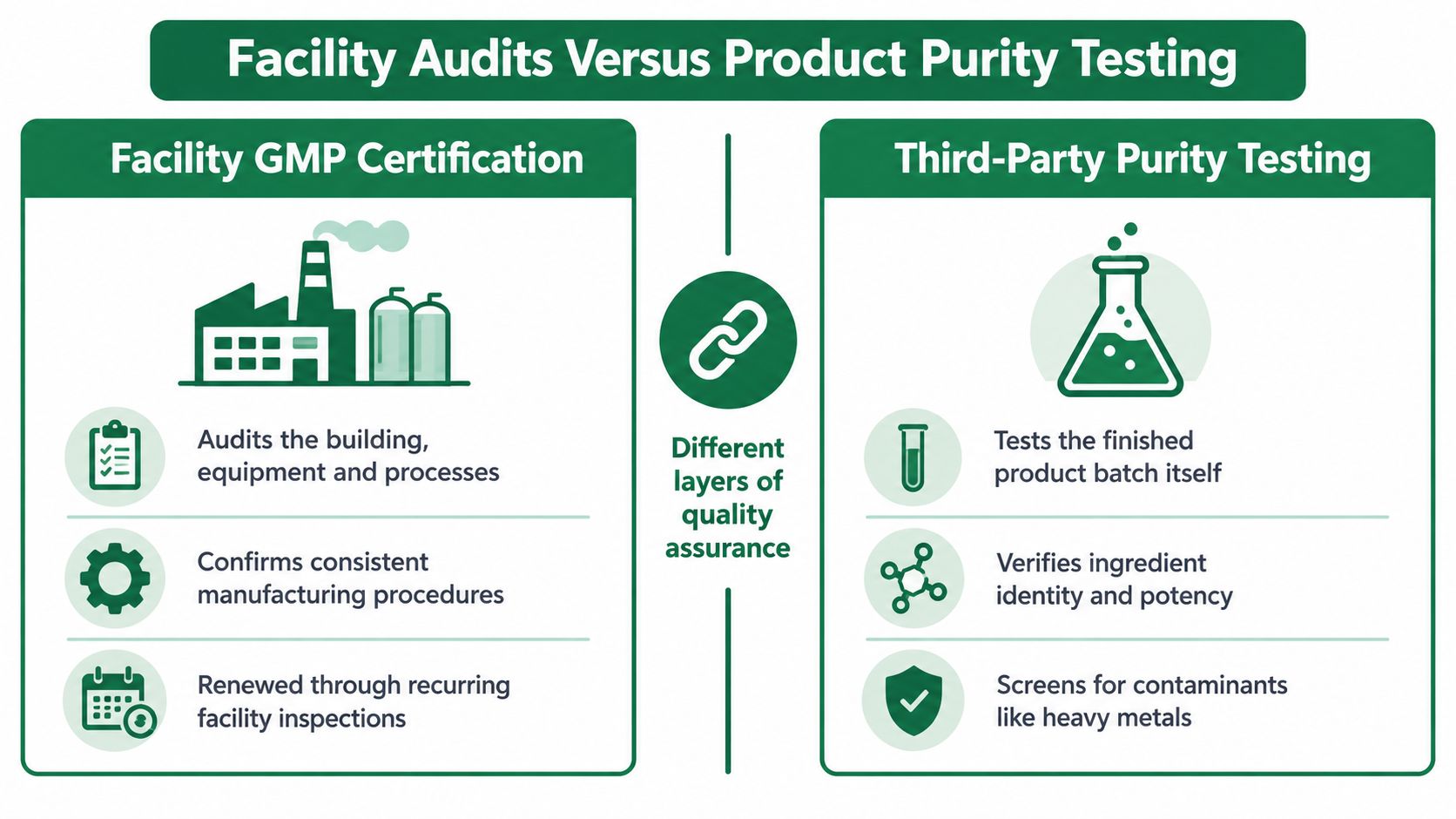
A facility audit and a finished-product test answer different questions. The audit asks, “Does this operation use controlled, documented processes?” Product testing asks, “Does this batch match its specifications?” Confusing those questions is one of the most common misunderstandings around GMP certification.
A facility-level certificate can cover manufacturing, packaging, labeling, and holding operations. It can show that a company maintains systems for sanitation, training, sourcing, traceability, quality control, and recall procedures. It doesn't, by itself, prove the exact contents of every finished product or establish that a product meets a particular ingredient or banned-substance requirement.
Product-specific testing may examine identity, potency, composition, and contaminants, depending on the program and product. Risk assessments help determine which tests make sense, while change control helps evaluate what happens when a supplier, ingredient, label, formula, or manufacturing site changes.
That combination is more informative than either layer alone. A clean process can still produce a product that requires additional analytical confirmation, and a passing sample can't replace documented controls across the facility.
The certificate evaluates the system. The laboratory result evaluates the batch. Responsible quality programs use both where appropriate.
For manufacturers and buyers assessing independent oversight, MedQAIR audit services provide an example of how audit support can help organizations examine quality systems and operational controls. The value of any audit depends on its scope, assessor independence, evidence reviewed, and follow-up process.
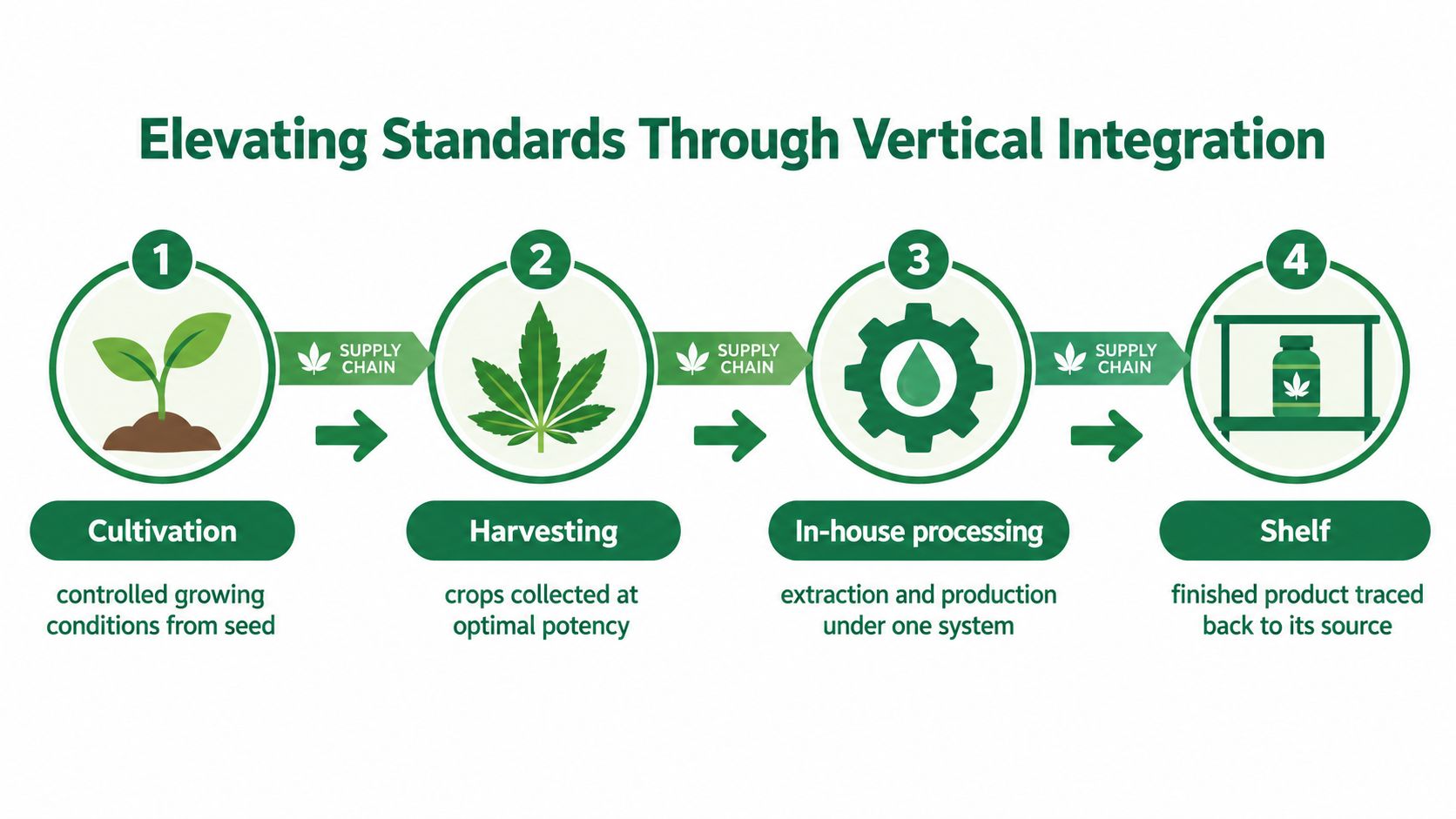
A manufacturer that buys raw materials from multiple outside parties may rely heavily on supplier qualification, certificates of analysis, incoming checks, and ongoing monitoring. Those controls are valuable, but they also create more handoffs where records, materials, or specifications can become disconnected.
Vertical integration reduces some of those handoffs. When one company controls cultivation, processing, and production, it can connect the source material to the finished product through one traceability system. That doesn't replace independent testing or certification. It adds a clearer chain of custody for the buyer to examine.
Certification isn't a one-day badge. In the EXCiPACT model for pharmaceutical excipient suppliers, the supplier contracts with an approved independent certification body, agrees on the audit scope and standard, receives a certificate if compliant, and then undergoes annual surveillance audits over a three-year validity period. This structure is described by EXCiPACT's certification model.
The lifecycle begins with preparation. A facility gathers procedures, training records, supplier files, production records, cleaning documentation, quality-control evidence, complaint records, and corrective-action materials. Auditors then compare the written system with employee practice.
Surveillance audits create a recurring opportunity to detect operational drift. A process that worked well during the initial assessment still needs records, review, and maintenance as staff, suppliers, equipment, formulas, and production conditions change.
Independent audit trend reporting identifies recurring pressure points. Documentation and change control appeared in about 70% of audits, supplier or vendor oversight in 45%, investigation and CAPA timeliness in 40%, facility or equipment gaps in 35%, and data-integrity vulnerabilities in 25%, according to The FDA Group's H2 2025 audit trend report. These figures describe that report's audit observations and shouldn't be treated as a prediction for every facility.
| Audit focus | What reviewers want to see |
|---|---|
| Documentation | Current procedures and complete, legible records |
| Change control | Evidence that changes were assessed before implementation |
| Supplier oversight | Qualification, monitoring, and material documentation |
| CAPA | Timely investigations and effective corrective actions |
| Data integrity | Records that are reliable, attributable, and protected from improper alteration |
A manufacturer that finds a gap must document the problem, identify its cause, define corrective action, and show that the response worked. That evidence is what turns an audit finding into a controlled improvement rather than a temporary promise.
For a practical look at supplier-focused assessment, GMP compliance audit resources from Herbilabs Labware can help readers understand the questions an auditor may ask before accepting a manufacturing partner.
Third-party certification verifies that a facility follows defined controls. Vertical integration adds another advantage by reducing the distance between the original plant material and the finished product. A vertically integrated aloe company farms its own crop, processes that aloe itself, and manufactures its own products instead of passing every stage to separate organizations.
That model creates a more direct traceability loop. The company can connect growing conditions, harvest records, processing decisions, production documentation, and finished-batch information within one operating system. It still needs independent audits and product testing, but fewer external handoffs can make questions easier to answer.
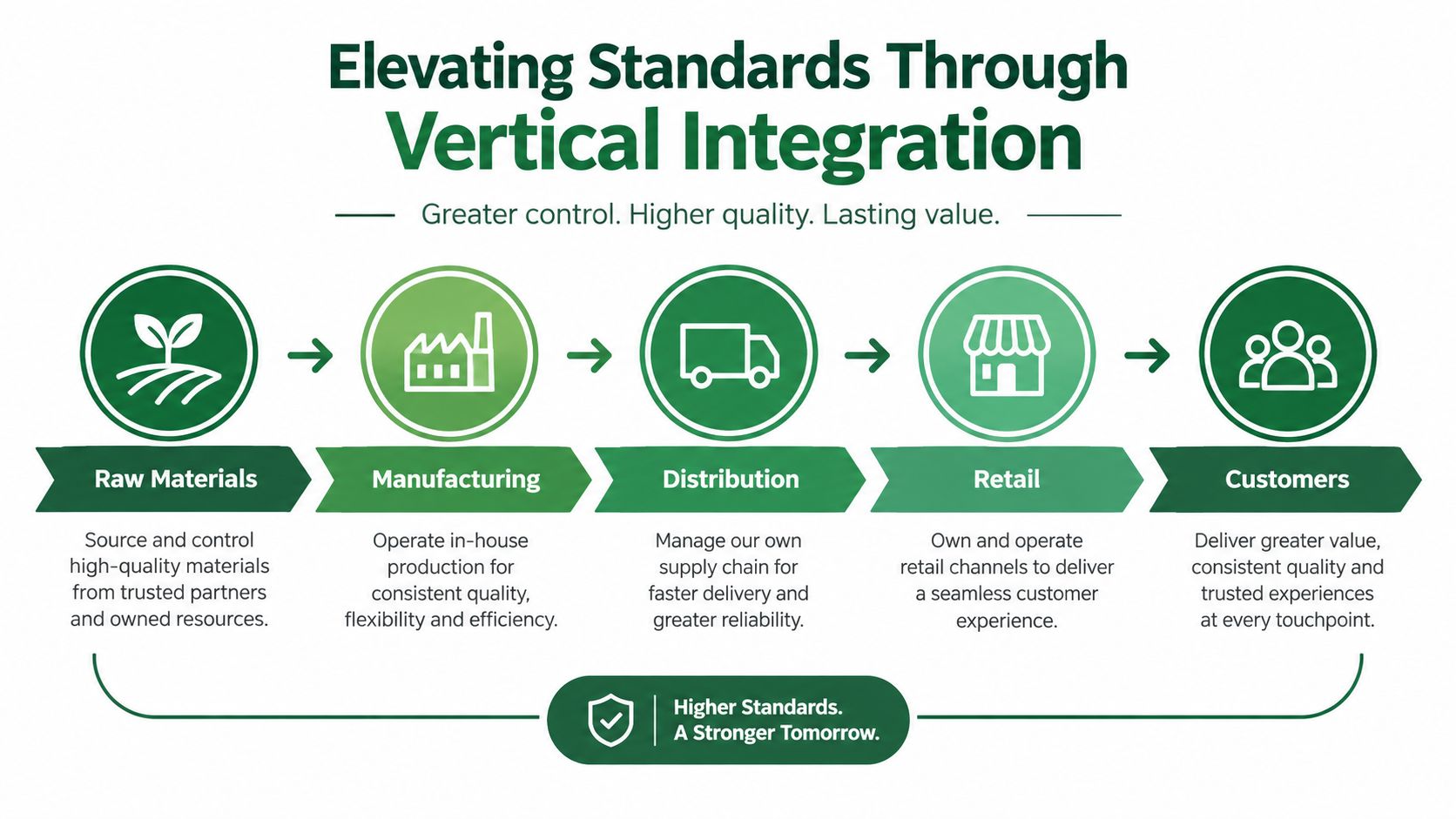
AloeCure states that its parent company has owned and operated its aloe farms for 25 years, hand-harvesting USDA- and EU-certified organic aloe and processing it on-site within 12 hours of harvest. It also describes a proprietary, patented, entirely natural process that avoids chemicals, enzymes, concentrates, and charcoal filtration. Those are company statements about its sourcing and processing approach, so shoppers should evaluate them alongside available certifications, testing information, and product documentation.
The practical benefit of this model is visibility. A brand that farms and processes its own aloe can monitor more of the journey directly, rather than relying only on documents supplied by unrelated upstream vendors. The result is a stronger basis for discussing source, handling, and batch traceability.
Consumers interested in organic sourcing can also review this overview of USDA organic supplements. Organic status and GMP status answer different questions, however. Organic certification addresses defined agricultural and handling requirements, while GMP certification addresses controlled manufacturing practices.
A brand may believe its integrated system produces higher quality than a conventional outsourced model, but that position should be supported with specifics. Look for named certifications, clear processing information, traceability practices, product testing, and an explanation of how changes are reviewed.
Vertical integration isn't a substitute for independent scrutiny. Its value is that the auditor can review a system with a shorter, more visible chain of custody, while the consumer can ask more precise questions about how the raw material became the final product.
A logo on a package is a starting point, not the final check. Certification marks can have different scopes, and some programs assess facilities while others add product review, sampling, testing, or ongoing market surveillance. The first task is to identify who issued the certificate and what exactly it covers.
NSF, for example, offers third-party GMP auditing and certification for dietary supplements under NSF/ANSI 455-2, with related certification options for cosmetics, wellness products, and over-the-counter products. Its dietary supplement GMP materials describe reviews of production facilities, quality-control testing, cleaning and sanitation, sourcing and traceability, staff training, internal SOPs, and recall procedures. Details are available through NSF GMP certification and its certification process information.
Use these checks before treating a certification claim as meaningful:
USP's verification model illustrates why scope matters. It includes pre-audit review, an on-site facility audit, product documentation review, product sampling and testing, followed by continuing annual market surveillance, documentation review, and facility audits. That sequence is described in USP verification services.
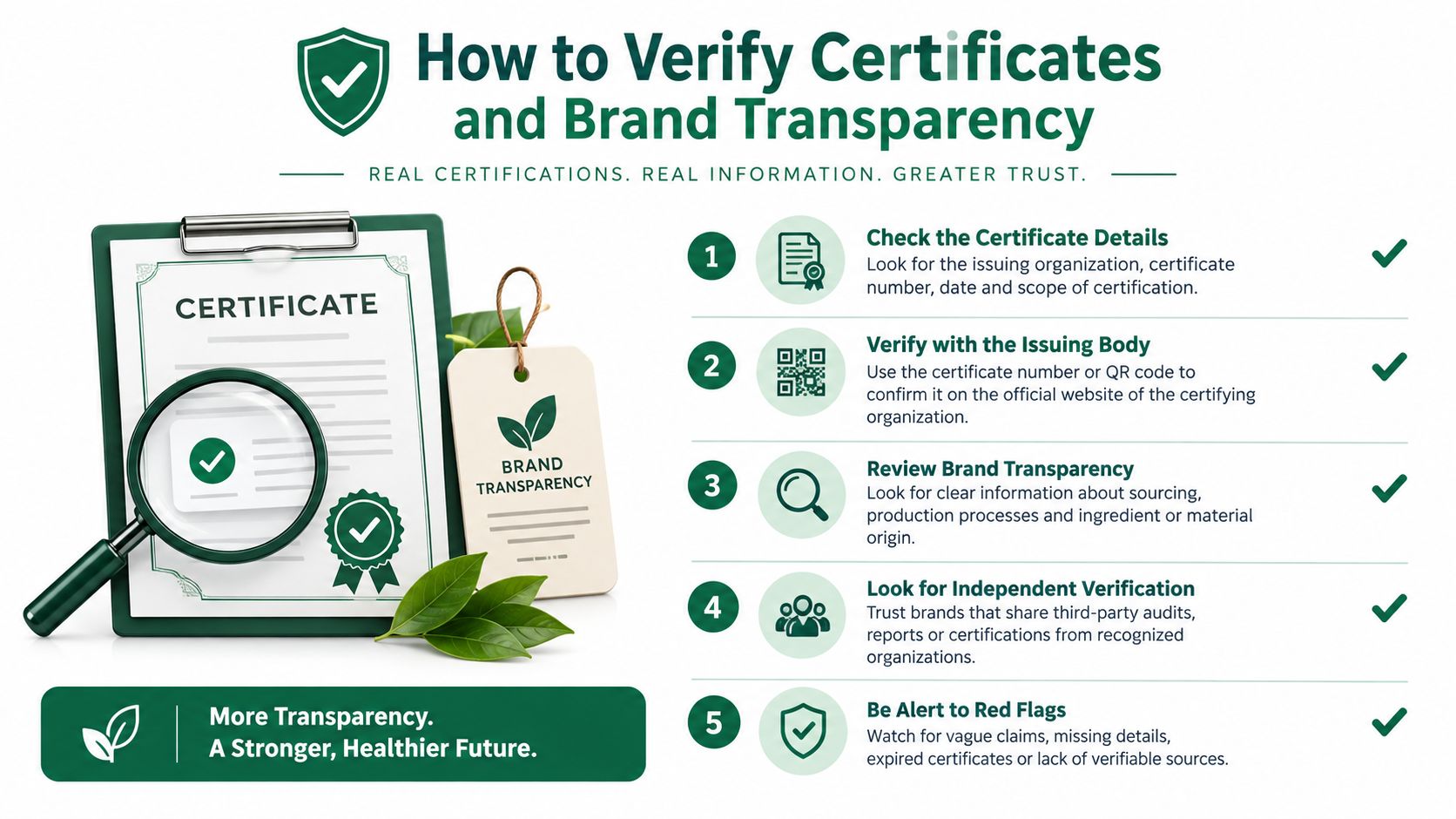
The label should identify the serving information, ingredients, manufacturer or distributor details, and any applicable certification marks without implying more than the program proves. FDA guidance for dietary supplements describes supplier qualification through confirmation of supplier certificates of analysis, which shows why incoming-material documentation is part of a serious quality system. The FDA small entity compliance guide explains this supplier-control expectation.
For a plain-language approach to label details, use this guide on how to read supplement labels. A transparent brand should be able to explain what its certification covers, how it handles changes, and what evidence supports the finished product.
Independent GMP certification gives consumers an important baseline. It shows that an outside organization has examined a facility's documented controls, but it shouldn't be mistaken for a complete product-purity guarantee. The most useful evaluation combines facility oversight, product-specific testing, supplier controls, and traceability.
The strongest questions are practical:
A daily wellness product deserves a quality system that supports consistency from one purchase to the next. Vertical integration can make the chain easier to trace, while third-party auditing supplies independent scrutiny. Product testing adds another check on the finished batch, and transparent labeling helps you understand what you're choosing.
A company may also offer practical purchasing policies that make routine use easier, such as flexible delivery, a satisfaction guarantee, or accessible customer support. Those features don't replace manufacturing controls, but they can make it simpler to choose a product deliberately and ask questions when information is unclear.
For readers comparing testing approaches, this explanation of third party testing for conscious buyers offers another perspective on why independent verification deserves attention. The goal isn't to collect logos. It's to understand which quality question each layer answers.
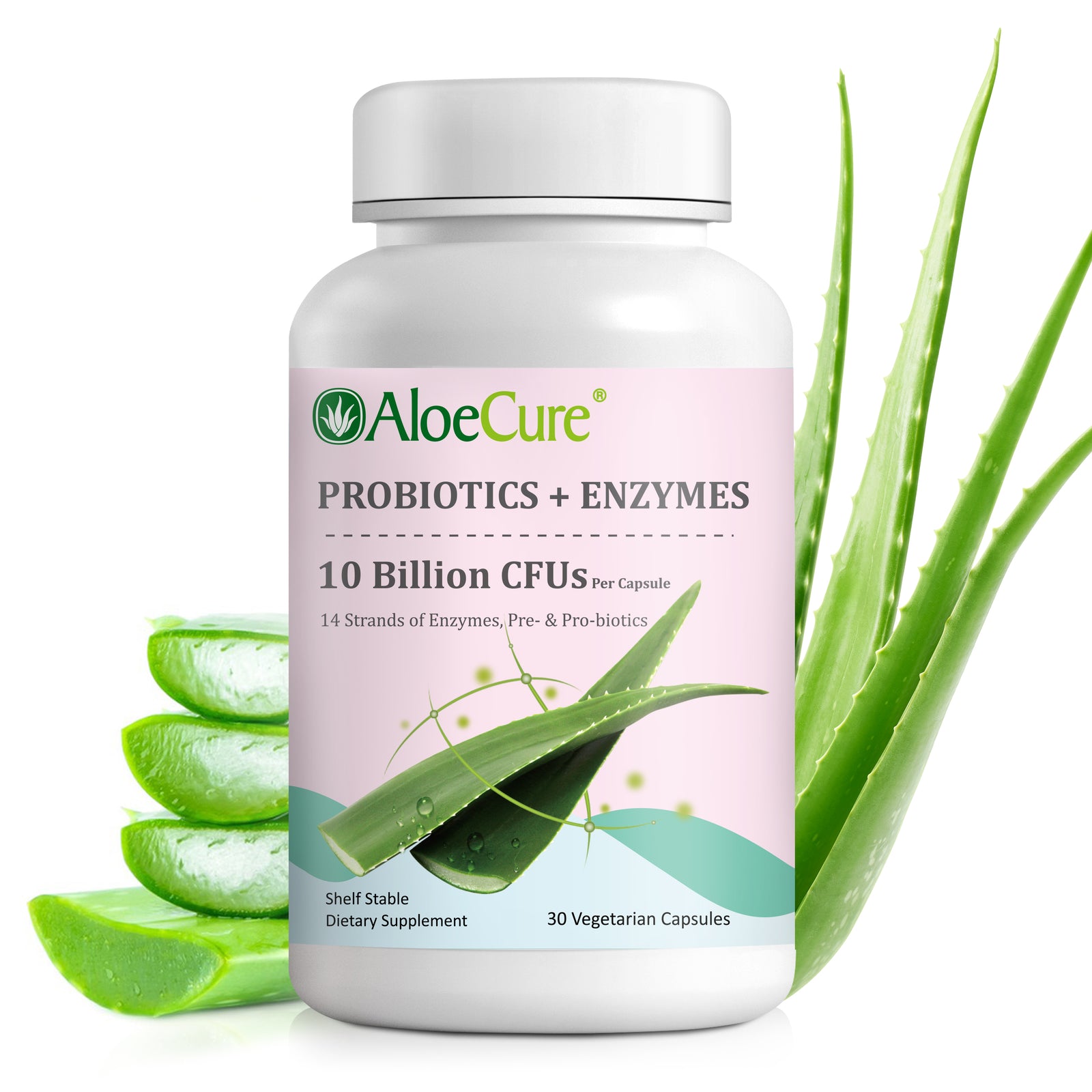
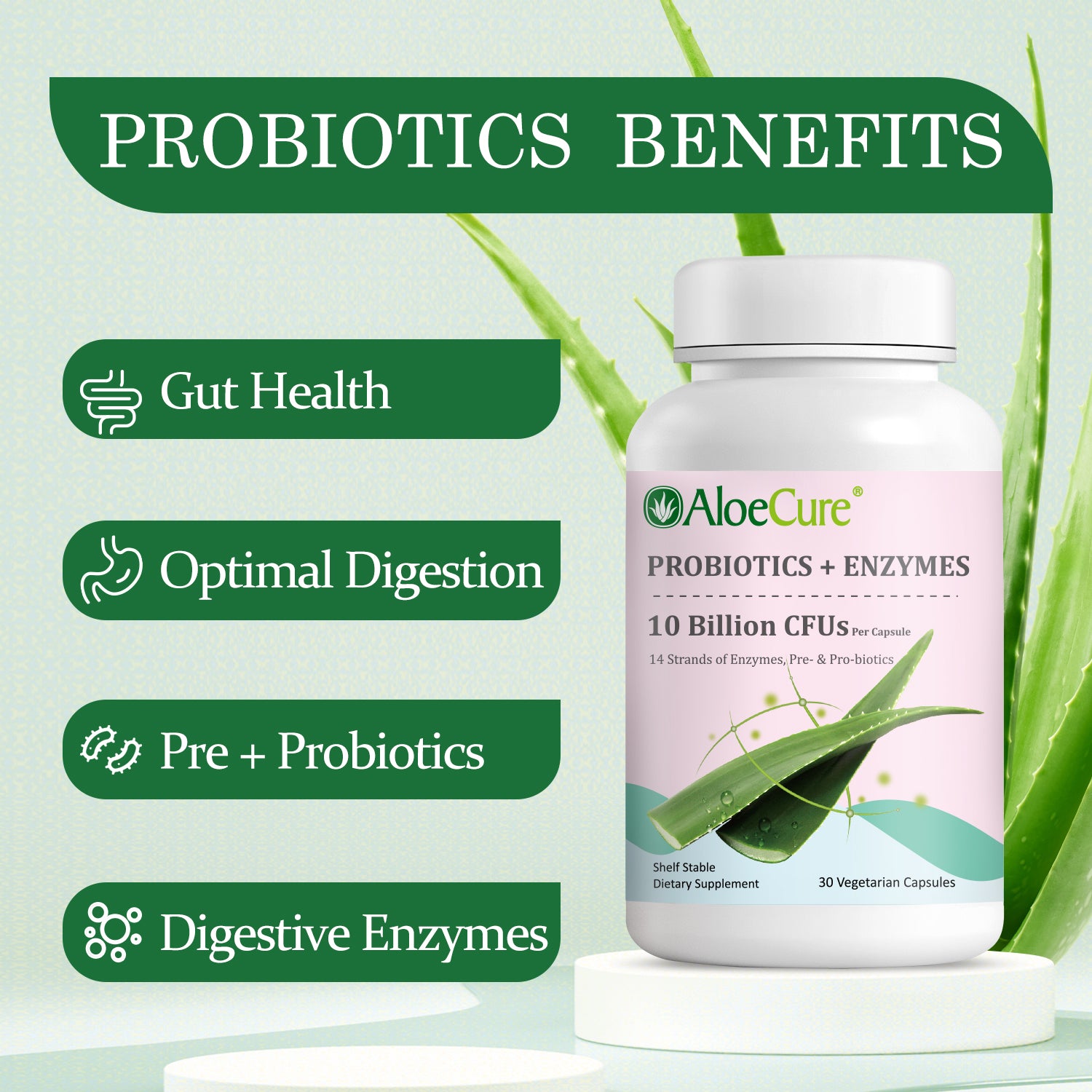
AloeCure offers organic aloe vera juice and supplement products supported by its stated farm-to-processing model, third-party certifications, testing practices, and traceability promise. Its published product range includes Pure USDA Organic Aloe Vera Juice and capsule formulas designed to support everyday wellness, with structure/function language used in place of disease claims.
These statements have not been evaluated by the Food and Drug Administration. This product is not intended to diagnose, treat, cure, or prevent any disease.
Visit AloeCure to review its organic aloe vera juices and capsules, read the available product information, and choose a formula that fits your daily wellness routine. If recurring delivery suits you, explore Subscribe & Save for 20% off and flexible delivery options.
Los comentarios se aprobarán antes de mostrarse.