Tu carrito está vacío
Envío y manipulación gratuitos con todos los pedidos superiores a $25
Envío y manipulación gratuitos con todos los pedidos superiores a $25

You're standing at the kitchen counter with a warm plate of food in front of you and a brand-new bottle of digestive enzymes in your hand. The directions say "take with meals," which sounds simple until you try to follow it. Should you have swallowed a capsule half an hour ago, do you take it with your very first forkful, or is it fine to wait until you clear the dishes?
That exact pause is where many get tripped up when learning how to take digestive enzymes. Timing your capsule relative to your first bite matters right alongside how many capsules you take, because enzymes only support normal food breakdown when they physically mix with what you eat. Just as important, the high-unit dosing charts you might come across online come from clinically prescribed formulas and can't be copied onto a store-bought dietary supplement.
A reliable enzyme routine supports healthy digestive function and assists the body's natural nutrient-breakdown process without guesswork. Walking through meal timing, label reading, step-by-step habits, and basic safety checks turns a vague bottle instruction into a routine you can follow at every table.
Take your labeled dose at the start of the meal, right with your first bite of food. Enzymes need to arrive in the stomach alongside the proteins, fats, and carbohydrates they help break down, not hours beforehand or long after the plate is empty.
For store-bought blends, Today's Dietitian guidance on digestive enzyme supplements identifies taking the labeled dose immediately with the first bite of a meal as the most defensible approach, while advising people to include snacks only when the product label or a clinician specifically calls for it. When a meal stretches out longer, a PubMed-indexed clinical review describes taking the initial portion with the first bite for a typical meal lasting 15 to 30 minutes and splitting remaining capsules midway through the meal when multiple capsules are part of the plan.
| Eating situation | When to take the dose | Notes |
|---|---|---|
| Standard meal, finished in under 30 minutes | With the first bite | Swallow with water unless the label allows chewing |
| Large or slow meal, 30 minutes or more | First portion with the first bite, remainder midway | Split only if the label describes a split dose |
| Snack | Only if the label lists snacks | Many blends give no snack directions, so skip |
| Calorie-containing drink, such as juice or a shake | With the first sip, alongside food | Count the drink as part of the meal |
| Meal skipped or fasting | Do not take | Enzymes need food to act on |
| Dose taken before or after eating | Move to the start of the next meal | Timing gaps reduce overlap with food |
Most weekdays fit the first row of the table. You sit down to lunch, take your capsule with a full glass of water right as you start eating, and finish within half an hour. Keeping the bottle near your napkin or water glass makes that first-bite habit automatic.
Slower dinners, holiday spreads, and long restaurant meals work differently because food keeps entering your stomach over an extended window. If your supplement label describes a split dose across multiple capsules, taking part at the start and the rest halfway through keeps enzyme activity steady as courses arrive. If your bottle specifies a single capsule per meal, stick to the first bite and don't add extra capsules on your own.
First-bite rule: Treat a smoothie, protein shake, or glass of fruit juice as food, not plain water, and skip the capsule altogether during fasting windows.
Snacks trip people up more than full meals do. Because commercial blends rarely publish tested snack instructions, leaving the bottle closed for an afternoon handful of almonds or an apple is the sensible default unless your label explicitly lists snacks. Look back over the six rows above and pick the two or three situations that happen on your usual Tuesday, so this table becomes your personal mealtime checklist.
Suppose you finish dinner at 7:00 p.m., clean up the kitchen, and sit down on the sofa at 9:00 p.m. before spotting your supplement bottle on the counter. You swallow a capsule with a glass of water and hope it still helps. Two hours later, you wonder why the supplement didn't seem to do much of anything.
By 9:00 p.m., much of your dinner has already moved out of the stomach and further along into the small intestine. Swallowing a capsule that late puts you squarely in the after-eating timing gap, where the enzymes enter an almost empty stomach instead of mingling with your meal. Digestive enzymes work by making direct physical contact with food molecules as digestion unfolds, so the opening minutes of a meal offer the widest overlap between the capsule and your plate.
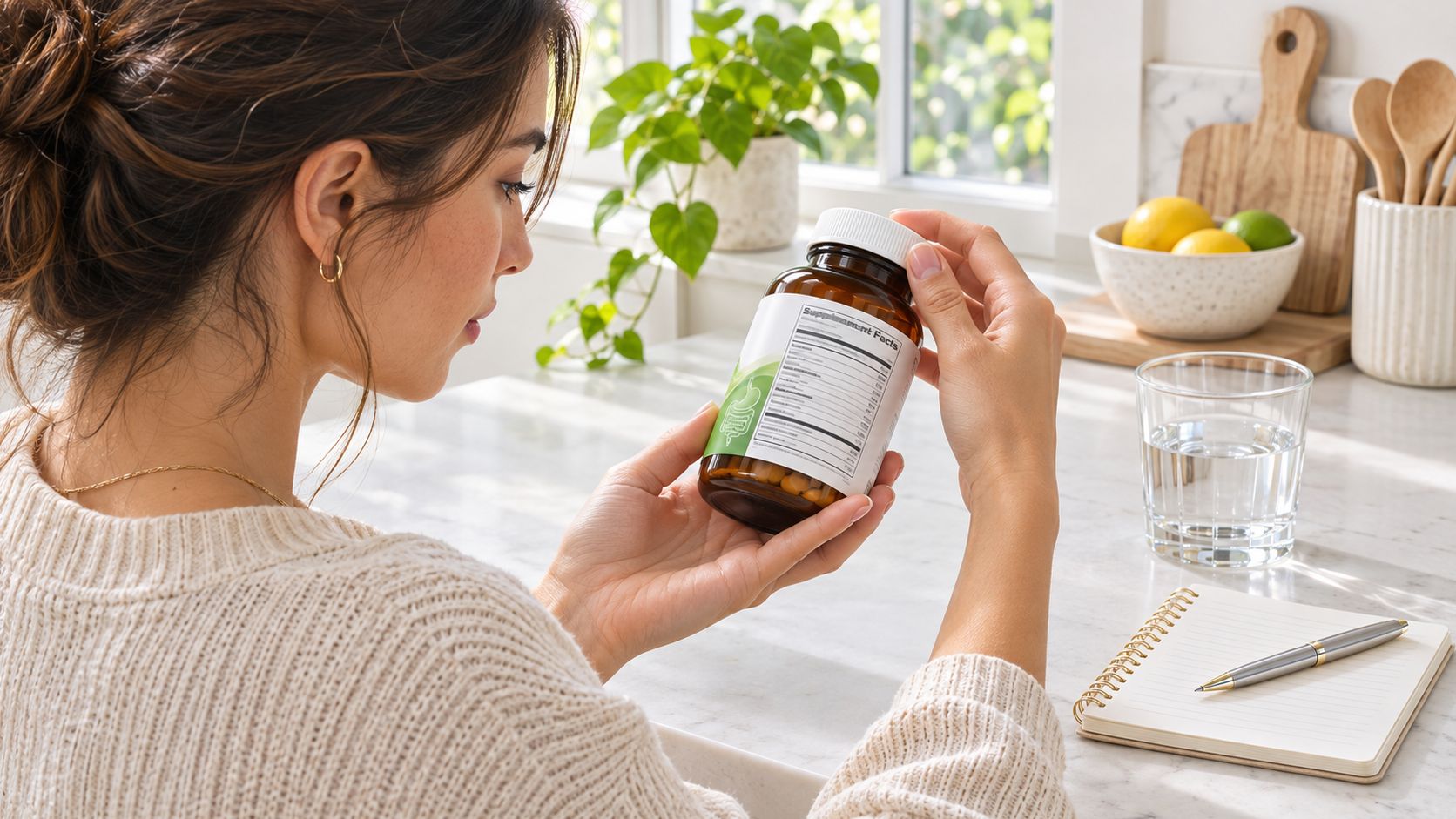
Poor timing is surprisingly common even among people who take enzymes every single day. A 2024 PubMed-indexed real-world study found that 56% of respondents taking prescription pancreatic enzymes swallowed them solely before or after eating, while 36% reported suboptimal doses. Readers who are still weighing why to take digestive enzyme supplements often focus on the ingredient list first, yet getting the clock right matters just as much as choosing the blend.
When a late capsule feels underwhelming, many people assume they need two or three capsules next time. Adding more capsules doesn't fix a two-hour timing gap, because a larger dose swallowed late still misses the food it was meant to meet. A 2025 Springer systematic review pointed to incorrect timing, sporadic use, and dietary factors as major reasons enzyme routines fall short, confirming that extra capsules can't make up for poor meal alignment.
Taking a bigger dose two hours after dinner doesn't catch up to the meal. It just puts more capsules into an empty stomach.
Another frequent source of confusion comes from searching enzyme dosages online and stumbling onto hospital or dietitian handouts written for prescription-only formulas. For example, UK clinical consensus guidance published in BMJ Open Gastroenterology recommends at least 50,000 lipase units with a meal and 25,000 lipase units with a snack for prescription pancreatic enzyme formulas. Those numbers are designed for clinically supervised formulas measured in standardized prescription units, not for over-the-counter blends.
Store-bought supplements combine different plant, microbial, or animal-derived enzymes at widely varying strengths and activity scales. Copying a prescription lipase target onto a retail bottle can lead you to take far more capsules than the product was formulated for. Your bottle's own directions, not a number borrowed from a clinical handout, always set your dose.
Before you swallow a single capsule, turn the bottle around and read the Supplement Facts panel. According to FDA dietary supplement Q&A guidance, that panel lists the serving size, servings per container, each dietary ingredient, and the amount provided per serving. Depending on the ingredient, the quantity may appear as a weight, as a percentage of Daily Value, or both, while anything not listed inside the box must appear in the separate Other Ingredients list right below it.
The graphic below summarizes how label reading connects directly to your mealtime timing before you take your first serving.
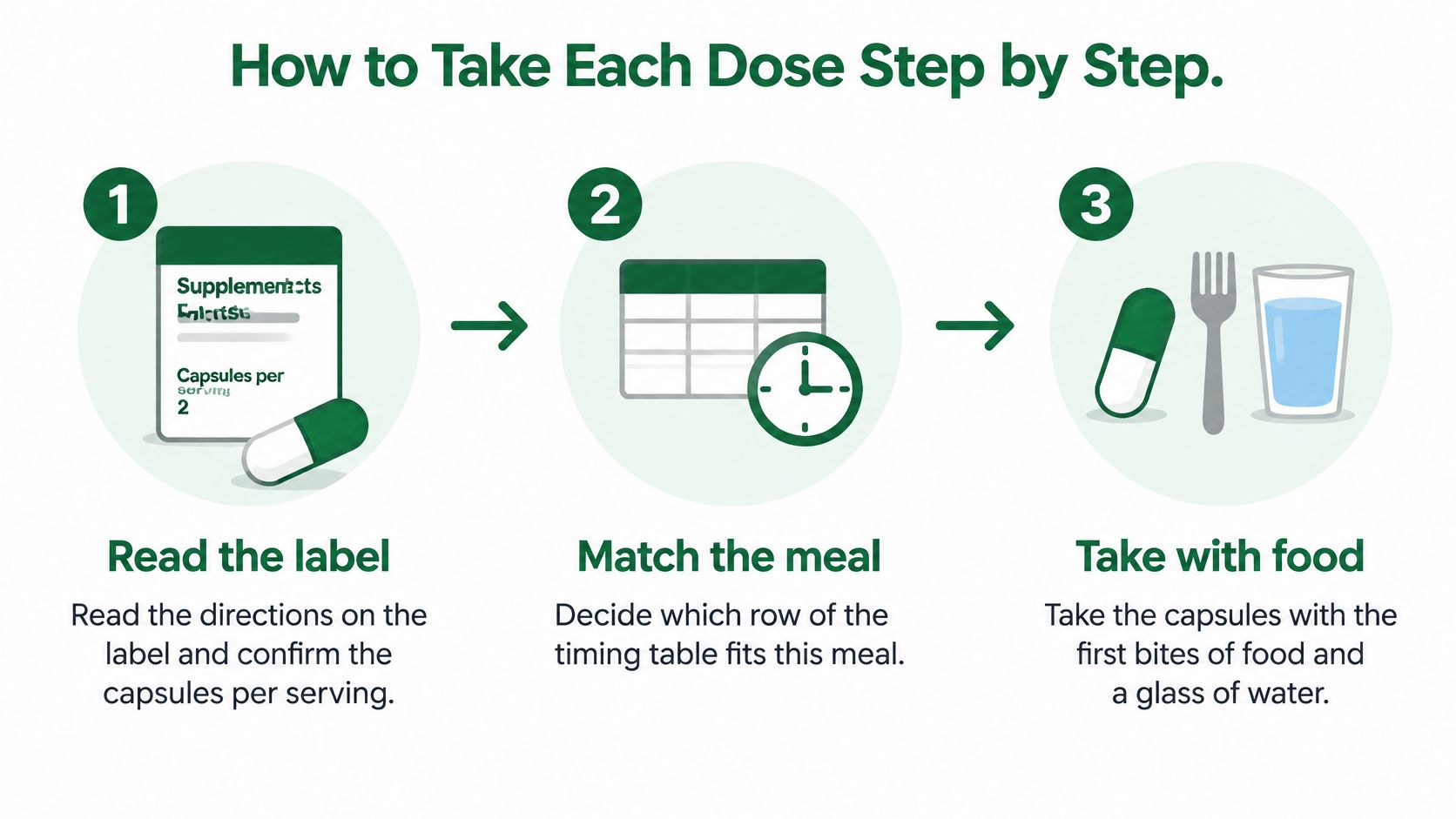
Treat the bottle like a short inspection checklist rather than fine print to skim past. Every row below answers a practical question about what you're taking and how long the container will last.
| Label item | Where to find it | What it tells you |
|---|---|---|
| Serving size | Top of the Supplement Facts panel | How much one dose equals |
| Servings per container | Supplement Facts panel | How many doses the bottle holds |
| Enzyme ingredients and amounts | Supplement Facts panel, per serving | Which enzymes are present and their listed strength |
| Other ingredients | Separate Other Ingredients list | Fillers, capsule material and additives |
| Directions | Usually below the panel | When to take the dose and how many capsules per meal |
| Storage and expiry | Bottom or side of the package | How to keep the product effective until the last dose |
Start with container math. If a bottle holds 60 capsules and the serving size is two capsules, you have 30 servings, not 60. Knowing how many doses sit inside the bottle lets you plan reorders without running out mid-week.
Next, check whether the directions mention snacks or only main meals, and verify the exact capsule count per meal. One product might call for a single capsule once daily with breakfast, while another lists two capsules with each main meal. If you want a deeper walkthrough of every box and footnote on a supplement bottle, review our guide on how to read supplement labels.
Never infer a dose from the word "enzyme" alone. Two bottles sitting side by side on a shelf can carry similar front-label names while holding completely different blends of protease, amylase, lipase, cellulase, or lactase at very different strengths. Checking quality standards matters just as much as checking milligrams, which is why our capsules are made in an American GMP and NSF certified facility.
If you prefer seeing a quick visual walkthrough of digestive enzymes in action alongside these label basics, watch the short overview below.
Before your first dose, grab a sticky note or open a notes app on your phone and jot down two numbers from your bottle: your exact serving size and your servings per container. Those two figures give you a clean baseline for tracking your routine over the coming week.
Turning good information into an easy habit works best when you follow the same sequence at every meal. The visual workflow below maps out the core steps from reading the directions through finishing your routine safely.
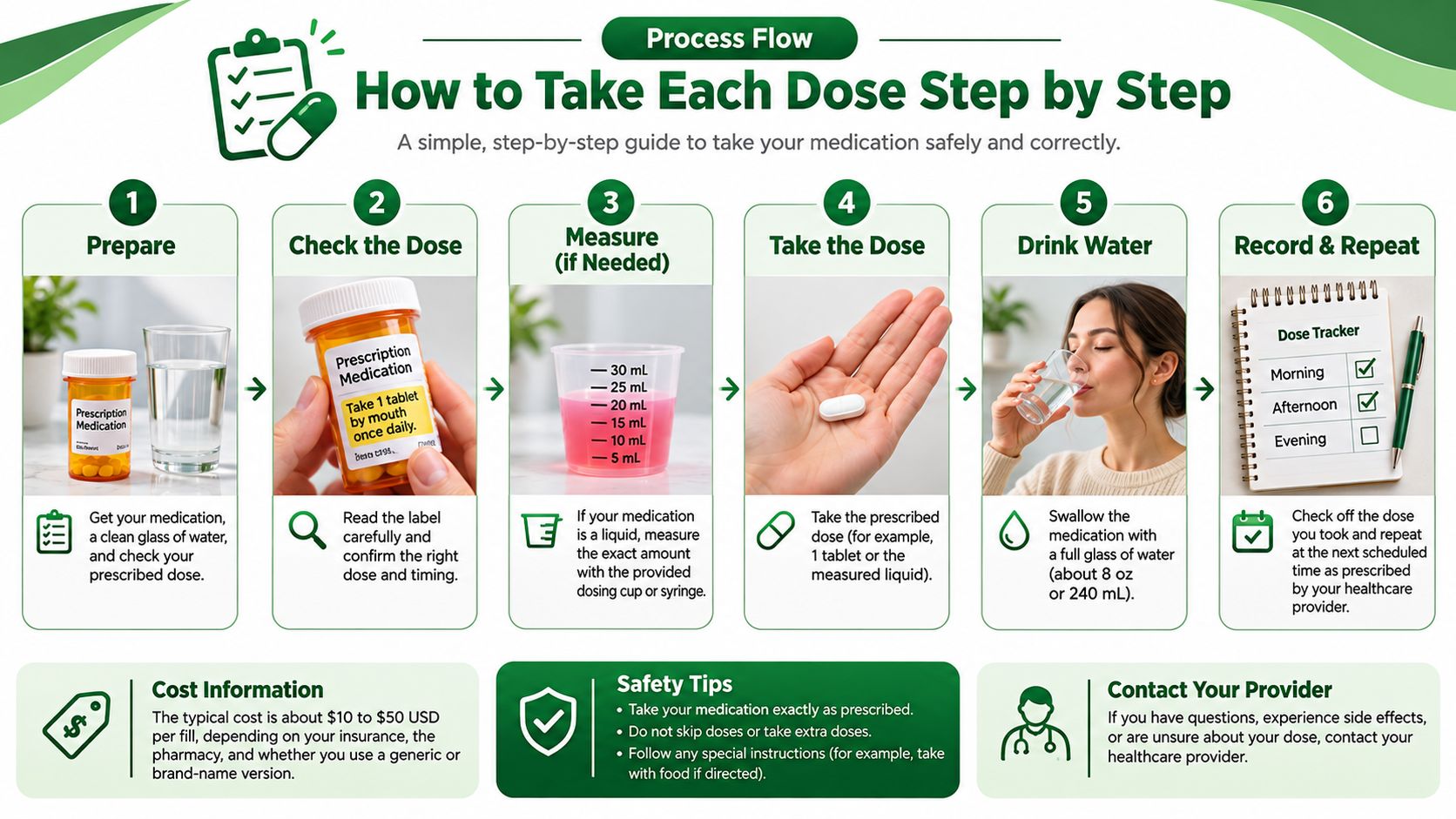
Use these six steps at your very next meal so nothing gets left to memory:
Consistency beats complexity every time. If a product calls for three capsules spread across multiple intervals and you keep forgetting the second half on packed workdays, the answer isn't shifting your dose to bedtime or swallowing everything an hour early.
Routine check: When a supplement schedule clashes with your workday, switch to a simpler once-daily or single-capsule formula rather than breaking the first-bite rule.
Keeping a bottle where you eat, whether that's on the dining table or inside your lunch bag, removes half the friction. Once the capsule sits beside your water glass, taking it with your first bite becomes as automatic as picking up your fork.
These statements have not been evaluated by the Food and Drug Administration. This product is not intended to diagnose, treat, cure, or prevent any disease.
Many shoppers assume that because a bottle sits in the wellness aisle without a prescription, its label works like a miniature medical textbook. Under FDA rules on structure/function claims, dietary supplement wording describes how an ingredient supports normal body structure or function, such as "supports healthy digestive function" or "assists the body's natural nutrient-breakdown process." The agency doesn't preapprove those claims, though the responsible firm must hold truthful, non-misleading substantiation and notify the FDA within 30 days of first marketing a product with that wording.
Reading labels through that lens helps you set realistic expectations. A digestive enzyme supplement is built to promote everyday gut comfort and support normal food breakdown alongside a balanced diet, not to replace a medical checkup when persistent warning signs show up.
Pause self-guided supplement experiments and book an appointment with a healthcare professional if you notice any of the following red flags:
Even without warning signs, a quick conversation with your doctor or pharmacist belongs at the front of the process in three situations. First, check in if you take any prescription medicines, since timing and absorption can overlap in ways a pharmacist can spot immediately. Second, ask your clinician before starting any new supplement if you're pregnant or nursing. Third, get pediatric guidance before giving a digestive enzyme product to a child, because adult supplement servings aren't scaled for smaller bodies.
Finish your safety check with three essential household rules. Never exceed the labeled dose on your bottle, never double up at dinner because you skipped lunch, and store every supplement out of reach of children in a cool, dry cabinet away from kitchen steam.
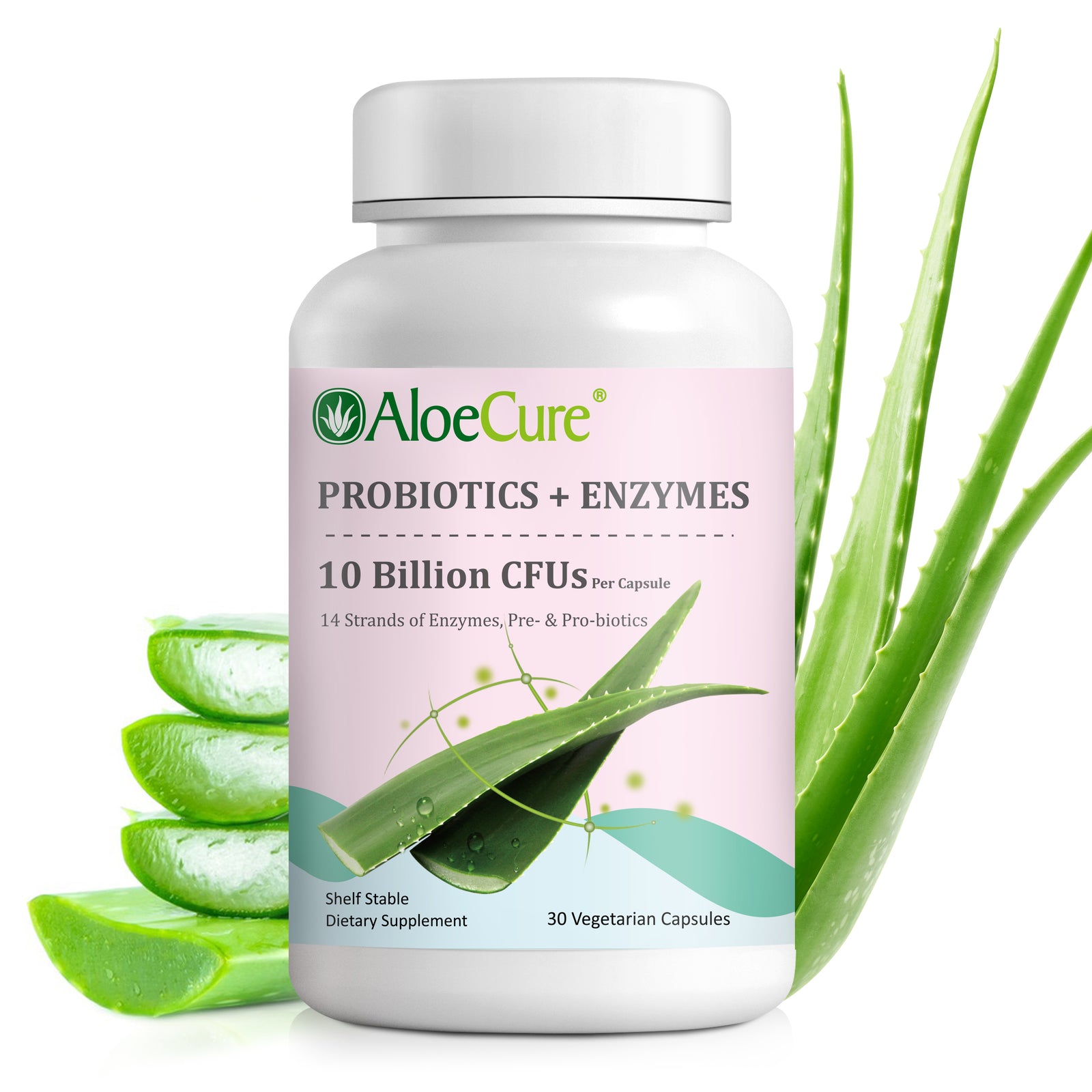
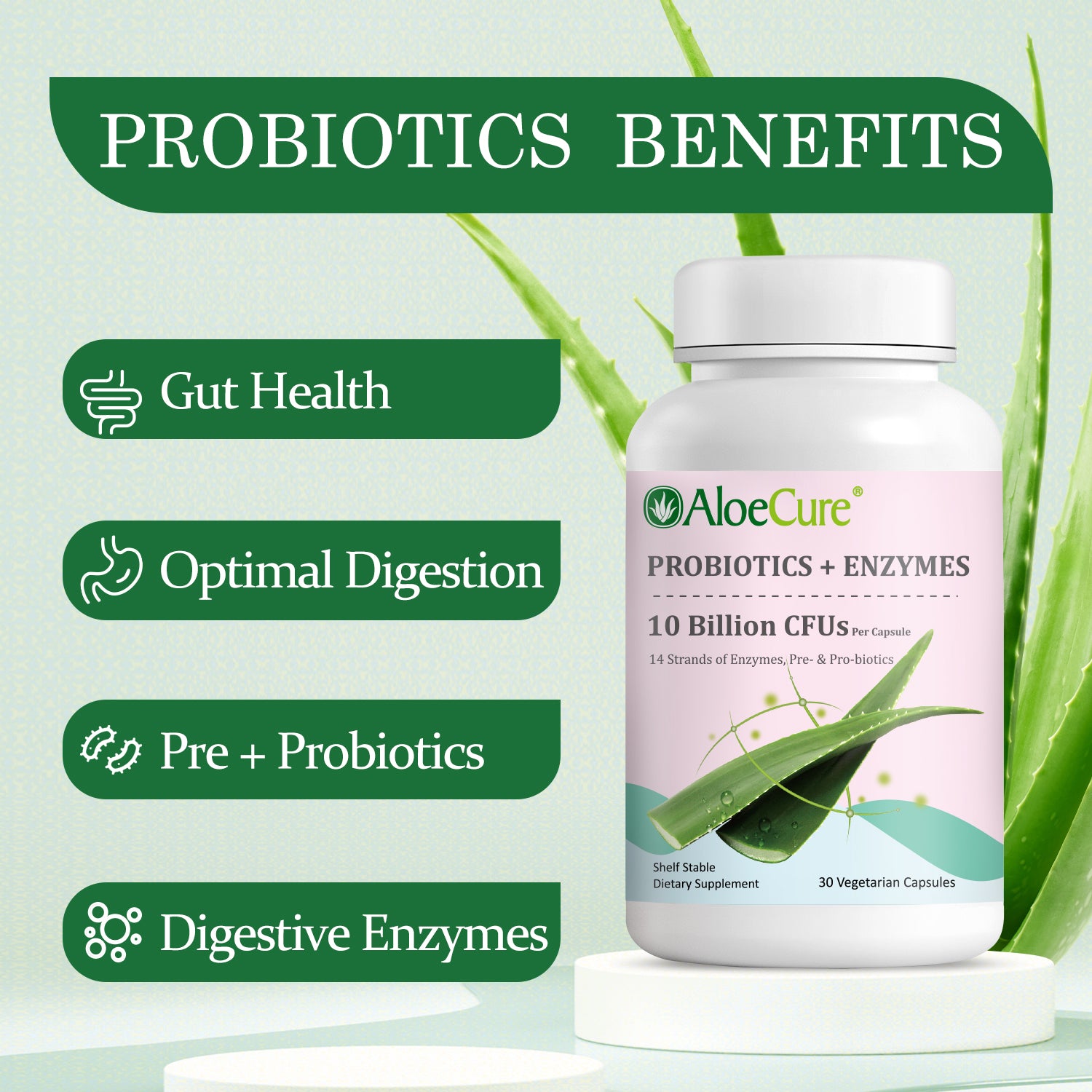
Once you know how to take digestive enzymes with your first bite, the final decision is picking a blend whose label and sourcing you can verify. Our Pre+Probiotic & Digestive Enzyme Blend, priced at $19.95 USD, combines aloe-based prebiotics and probiotics with digestive enzymes to support healthy digestive function and help maintain everyday gut balance in one straightforward formula.
Quality starts long before a capsule enters a bottle. We're fully vertically integrated, meaning we farm our own organic aloe, process it on-site within 12 hours of harvest without using chemicals, enzymes, or charcoal filtration, and produce our own products in-house rather than outsourcing key steps. That end-to-end control produces higher quality products than competitors that rely on harsh processing shortcuts, and you can also see how independent verification protects label accuracy in our guide on what third-party testing means for supplements.
Taking a label-first mindset pays off across your entire wellness shelf, not just with digestive support. If you're reviewing other daily formulas alongside your gut routine, clinicians at Restore Osteopathic Medicine offer a helpful guide to compare nutraceuticals for hormone balance so you can evaluate ingredients and transparency with the same discipline.
Open the product page on our website and read the Supplement Facts panel yourself before taking your first serving, and consider Subscribe & Save for 20% off if you want a steady routine delivered on schedule. Your next step is simple: take your first capsule at the start of your next meal, log it in your notes, and check the label again before you reorder.
Ready to build a consistent, label-verified mealtime routine with pure, vertically integrated aloe and targeted enzyme support? Explore our Pre+Probiotic & Digestive Enzyme Blend, check the full Supplement Facts panel, and save 20% with flexible Subscribe & Save delivery when you visit AloeCure.
Los comentarios se aprobarán antes de mostrarse.